FYfalse00019017991-for-7 Reverse Stock Split0.1428571430.1428571430.1428571430.1428571431-for-7 Reverse Stock Split0.142857143http://fasb.org/us-gaap/2025#UsefulLifeShorterOfTermOfLeaseOrAssetUtilityMemberhttp://fasb.org/us-gaap/2025#UsefulLifeShorterOfTermOfLeaseOrAssetUtilityMember1http://fasb.org/srt/2025#ChiefExecutiveOfficerMemberhttp://fasb.org/us-gaap/2025#IntangibleAssetsCurrentMarch 2033April 2033June 2033August 20330.1428571430.1428571430.1428571430.14285714318635340000019017992024-07-310001901799btm:TermLoanFacilityMember2024-01-012024-12-310001901799us-gaap:SalesRevenueNetMemberbtm:NoMajorCustomerMemberus-gaap:CustomerConcentrationRiskMember2025-01-012025-12-310001901799us-gaap:CommonClassAMember2026-03-120001901799btm:TotalEquityAttributedToLegacyBitcoinDepotMember2025-12-310001901799btm:PerformanceStockUnitsMember2024-12-310001901799btm:EarnoutUnitsMember2025-01-012025-12-310001901799btm:Up-CRestructuringMemberus-gaap:CommonClassAMemberbtm:BTHoldCoMember2025-05-302025-05-300001901799btm:BitAccessPlanMemberus-gaap:EmployeeStockOptionMember2023-12-310001901799btm:LuxVendingLLCMember2023-01-132023-01-130001901799btm:CoinCloudIncMember2025-01-012025-12-310001901799us-gaap:TradeNamesMember2025-12-310001901799us-gaap:AccumulatedOtherComprehensiveIncomeMember2024-01-012024-12-310001901799btm:CommonClassMMember2025-12-310001901799btm:LuxVendingLLCMembersrt:MinimumMember2023-01-130001901799btm:BitAccessMember2025-12-310001901799btm:OtherDebtMember2024-12-310001901799btm:TimeBasedRestrictedStockUnitsMember2025-12-310001901799btm:BitcoinDepotInc.Member2025-01-012025-12-310001901799btm:BitAccessPlanMemberus-gaap:EmployeeStockOptionMember2023-01-012023-12-3100019017992025-12-310001901799us-gaap:SeriesAPreferredStockMemberus-gaap:SubsequentEventMember2026-02-230001901799btm:BTHoldCoLLCMember2025-12-310001901799btm:NewNoteMember2023-06-230001901799us-gaap:AdditionalPaidInCapitalMember2023-12-310001901799btm:CreditAgreementMember2025-12-310001901799btm:CashCloudIncMember2025-01-012025-12-310001901799btm:CommonClassOMember2024-12-310001901799btm:OtherDebtMember2025-12-310001901799country:AU2025-01-012025-12-310001901799btm:TrancheATermLoansMember2025-12-1900019017992025-01-010001901799us-gaap:SeriesAPreferredStockMember2023-06-300001901799btm:BtmKioskLeasesMember2025-01-012025-12-310001901799us-gaap:ParentMember2024-01-012024-12-310001901799btm:ClassVCommonStockMember2025-01-012025-12-310001901799us-gaap:CommonStockMemberbtm:ClassECommonStockMember2023-12-310001901799btm:BitcoinMember2024-12-310001901799btm:FranchiseProfitSharingArrangementsThreeMember2025-01-012025-12-310001901799btm:LuxVendingLLCMembersrt:MaximumMember2023-01-130001901799us-gaap:RestrictedStockUnitsRSUMember2024-01-012024-12-310001901799btm:BitAccessMember2023-12-310001901799us-gaap:AccountingStandardsUpdate202307Member2025-12-310001901799btm:ClassOCommonStockMember2025-01-012025-12-310001901799btm:EthereumMemberbtm:CryptocurrenciesMember2024-12-310001901799btm:ClassECommonStockMemberbtm:SponsorMemberbtm:GSRMMember2025-12-310001901799btm:OriginalAtTheMarketEquityOfferingMember2024-11-200001901799btm:TrancheBTermLoansMember2025-12-190001901799us-gaap:ComputerSoftwareIntangibleAssetMember2024-12-310001901799btm:NonControllingInterestsBitAccessAndBitcoinDepotIncMember2023-12-310001901799btm:ClassECommonStockMemberbtm:SponsorMember2025-03-310001901799btm:ClassMCommonStockMemberbtm:Up-CRestructuringMemberbtm:BtAssetsMember2025-05-300001901799btm:FranchiseProfitSharingArrangementsOneMember2024-01-012024-12-310001901799btm:PerformanceStockUnitsMember2023-12-310001901799btm:BrandonMintzMember2025-12-310001901799us-gaap:CommonStockMemberus-gaap:CommonClassAMember2025-12-310001901799btm:ClassOCommonStockMember2025-12-310001901799btm:TwoThousandTwentyThreeOmnibusIncentivePlanMember2025-12-310001901799btm:ClassVCommonStockMemberus-gaap:CommonStockMember2025-01-012025-12-310001901799btm:FixedRateNoteMember2024-12-310001901799btm:DigitalGoldVenturesIncMemberbtm:BitAccessMember2025-12-310001901799us-gaap:RetainedEarningsMember2024-12-310001901799btm:BitcoinTellerMachineMember2024-12-310001901799us-gaap:CommonClassAMemberbtm:SharePriceEqualOrExceedsEighteenRupeesPerDollarMember2025-01-012025-12-310001901799btm:FranchiseProfitSharingArrangementsTwoMember2024-01-012024-12-310001901799us-gaap:CustomerRelationshipsMember2025-12-310001901799btm:Class1EarnoutUnitsMemberbtm:BtAssetsMember2023-01-012023-06-300001901799btm:KioskFranchiseProfitSharingArrangementsMember2025-01-012025-12-310001901799btm:GSRMMember2025-12-310001901799btm:OneThousandOneHundredEightySixBtmKioskLeaseMembersrt:MinimumMember2024-12-3100019017992025-10-012025-12-310001901799btm:NewAtTheMarketEquityOfferingProgramMember2025-07-012025-07-010001901799btm:DigitalGoldVenturesIncMembersrt:MaximumMember2025-12-310001901799us-gaap:PreferredStockMemberus-gaap:SeriesAPreferredStockMember2023-12-310001901799us-gaap:NoncontrollingInterestMember2025-01-012025-12-310001901799btm:ScottBuchananMember2025-10-012025-12-310001901799us-gaap:AccountingStandardsUpdate202308Member2025-12-310001901799btm:TwoThousandTwentyThreeOmnibusIncentivePlanMember2024-01-012024-12-310001901799btm:FixedRateNoteMemberus-gaap:EstimateOfFairValueFairValueDisclosureMember2024-12-310001901799btm:TimeBasedRestrictedStockUnitsMember2024-12-310001901799btm:PerformanceStockUnitsMember2024-01-012024-12-310001901799btm:BtmKioskLeasesMember2024-12-310001901799btm:Up-CRestructuringMemberbtm:BtAssetsMember2025-05-302025-05-300001901799us-gaap:SeriesAPreferredStockMember2024-12-310001901799us-gaap:LeaseholdImprovementsMember2025-12-310001901799btm:ClassECommonStockEarnoutsMember2024-01-012024-12-310001901799btm:MinorityShareholdersOfBitAccessMemberbtm:BitAccessMember2025-12-310001901799btm:CryptocurrenciesMember2024-12-310001901799btm:BitAccessMember2024-12-310001901799btm:FixedRateNoteMember2025-12-3100019017992024-01-012024-12-310001901799srt:MaximumMember2024-01-012024-12-310001901799us-gaap:CanadaRevenueAgencyMember2025-12-310001901799us-gaap:SalesRevenueNetMemberbtm:NoMajorCustomerMemberus-gaap:CustomerConcentrationRiskMember2024-01-012024-12-310001901799btm:ClassVCommonStockMemberbtm:Up-CRestructuringMember2025-05-300001901799btm:BTMKioskMember2024-01-012024-12-310001901799us-gaap:TreasuryStockCommonMember2023-12-310001901799btm:ClassMCommonStockMember2026-03-120001901799us-gaap:ComputerSoftwareIntangibleAssetMember2025-12-310001901799btm:BitcoinMemberbtm:CryptocurrenciesMember2025-01-012025-12-310001901799btm:PerformanceBasedRestrictedStockUnitsMember2024-01-012024-12-310001901799us-gaap:CommonStockMemberus-gaap:CommonClassAMember2025-01-012025-12-310001901799btm:KioskFranchiseProfitSharingArrangementsMember2024-01-012024-12-310001901799btm:TotalEquityAttributedToLegacyBitcoinDepotMember2025-01-012025-12-310001901799us-gaap:SeriesAPreferredStockMemberus-gaap:PreferredStockMember2025-01-012025-12-310001901799us-gaap:CommonClassAMember2025-01-012025-12-310001901799btm:BitcoinMemberbtm:CryptocurrenciesMember2023-12-310001901799btm:LuxVendingLLCMembersrt:MaximumMember2025-01-012025-12-310001901799us-gaap:CommonClassBMember2025-01-012025-12-310001901799btm:BitcoinMemberbtm:CryptocurrenciesMember2024-01-012024-12-310001901799btm:BitAccessPlanMemberus-gaap:EmployeeStockOptionMember2024-01-012024-12-310001901799btm:ClassE2CommonStockMember2025-12-310001901799us-gaap:AccountingStandardsUpdate202309Member2025-12-310001901799btm:ClassMCommonStockMemberbtm:Up-CRestructuringMember2025-05-302025-05-300001901799us-gaap:AustralianTaxationOfficeMemberus-gaap:CapitalLossCarryforwardMember2025-12-310001901799btm:KioskProfitShareFranchiseAgreementMember2025-12-310001901799us-gaap:AdditionalPaidInCapitalMember2024-01-012024-12-310001901799btm:BitcoinMemberbtm:CryptocurrenciesMember2024-12-310001901799btm:EthereumMemberbtm:CryptocurrenciesMember2025-12-310001901799us-gaap:SellingGeneralAndAdministrativeExpensesMember2024-01-012024-12-310001901799btm:CommonClassMMemberus-gaap:SubsequentEventMember2026-02-230001901799btm:DigitalGoldVenturesIncMembersrt:MinimumMember2025-12-310001901799btm:CommonClassMMemberus-gaap:SubsequentEventMember2026-02-220001901799btm:ClassVCommonStockMemberbtm:Up-CRestructuringMembersrt:MinimumMemberbtm:BTHoldCoMember2025-05-300001901799us-gaap:SubsequentEventMemberbtm:CommonClassOMember2026-02-230001901799us-gaap:SubsequentEventMemberus-gaap:CommonClassBMember2026-02-230001901799btm:ReportableSegmentMember2024-01-012024-12-310001901799us-gaap:RetainedEarningsMember2025-12-310001901799btm:ClassVCommonStockMemberus-gaap:CommonStockMember2024-01-012024-12-310001901799btm:KioskMachinesOwnedMember2025-12-310001901799us-gaap:StateAndLocalTaxJurisdictionOtherMember2025-01-012025-12-310001901799srt:CumulativeEffectPeriodOfAdoptionAdjustmentMemberus-gaap:RetainedEarningsMember2024-12-310001901799us-gaap:RetainedEarningsMember2023-12-310001901799btm:CommonClassVMember2024-12-310001901799btm:OneThousandOneHundredEightySixBtmKioskLeaseMember2024-01-012024-12-310001901799us-gaap:SubsequentEventMember2026-02-220001901799us-gaap:CommonStockMemberbtm:ClassECommonStockMember2024-12-310001901799btm:TaxReceivableAgreementMemberbtm:BtAssetsMember2025-05-302025-05-300001901799us-gaap:FurnitureAndFixturesMember2025-12-310001901799us-gaap:AccumulatedOtherComprehensiveIncomeMember2024-12-310001901799us-gaap:WarrantMember2025-01-012025-12-310001901799btm:ClassMCommonStockMember2025-12-310001901799btm:BitAccessMember2025-12-310001901799srt:MaximumMember2025-01-012025-12-3100019017992025-12-190001901799btm:CommonClassVMember2025-12-310001901799btm:BrandonMintzOneMember2025-12-310001901799us-gaap:TradeNamesMember2024-12-310001901799us-gaap:PreferredStockMemberus-gaap:SeriesAPreferredStockMember2024-12-310001901799btm:ClassECommonStockMember2026-03-120001901799btm:IntuitiveSoftwareLLCMember2025-12-3100019017992024-12-310001901799btm:OriginalAtTheMarketEquityOfferingMember2025-07-012025-07-010001901799btm:PublicAndPrivateWarrantsMember2025-01-012025-12-310001901799btm:CommonwealthOfMassachusettsMember2025-01-012025-12-310001901799btm:OtherRevenueMember2024-01-012024-12-310001901799btm:FranchiseProfitSharingArrangementsOneMember2024-12-310001901799btm:ClassECommonStockMemberbtm:Up-CRestructuringMember2025-05-300001901799btm:ExchangeableNciMember2024-01-012024-12-310001901799srt:MaximumMember2025-07-012025-07-010001901799btm:BitcoinDepotInc.Memberus-gaap:CommonStockMember2023-06-3000019017992025-06-300001901799btm:ClassVCommonStockMemberbtm:Up-CRestructuringMemberbtm:BTHoldCoMember2025-05-300001901799btm:DigitalGoldVenturesIncMember2025-01-012025-12-310001901799srt:CumulativeEffectPeriodOfAdoptionAdjustmentMember2024-12-310001901799btm:BitAccessMember2025-01-012025-12-310001901799us-gaap:RestrictedStockUnitsRSUMember2025-12-310001901799btm:BitAccessMember2024-01-012024-12-310001901799btm:PerformanceBasedRestrictedStockUnitsMember2025-12-310001901799btm:DefinedContributionPlanMember2025-01-012025-12-310001901799us-gaap:ParentMember2025-12-310001901799btm:CryptocurrenciesMember2024-01-012024-12-310001901799us-gaap:AdditionalPaidInCapitalMember2025-12-310001901799us-gaap:ParentMember2023-12-310001901799btm:BitcoinDepotInc.Member2024-01-012024-12-310001901799btm:PublicWarrantsMember2025-12-310001901799us-gaap:AdditionalPaidInCapitalMember2024-12-310001901799btm:ClassE1CommonStockMember2025-12-310001901799btm:NonControllingInterestsBitAccessAndBitcoinDepotIncMember2024-01-012024-12-310001901799btm:ClassECommonStockMember2025-12-310001901799us-gaap:SubsequentEventMemberbtm:CommonClassVMember2026-02-230001901799us-gaap:AccumulatedOtherComprehensiveIncomeMember2023-12-310001901799btm:ClassMCommonStockMember2025-01-012025-12-310001901799btm:Up-CRestructuringMemberbtm:BTHoldCoMemberus-gaap:CommonStockMember2025-05-300001901799btm:OriginalAtTheMarketEquityOfferingMember2025-07-010001901799btm:CommonClassOMember2025-12-310001901799btm:TwoThousandTwentyThreeOmnibusIncentivePlanMember2025-01-012025-12-310001901799us-gaap:CommonClassAMemberus-gaap:SubsequentEventMember2026-02-230001901799us-gaap:ParentMember2024-12-310001901799btm:DigitalGoldVenturesIncMember2025-12-310001901799us-gaap:SellingGeneralAndAdministrativeExpensesMember2025-01-012025-12-310001901799us-gaap:RetainedEarningsMember2025-01-012025-12-310001901799us-gaap:ForeignTaxJurisdictionOtherMember2025-01-012025-12-310001901799btm:NonControllingInterestsBitAccessAndBitcoinDepotIncMember2025-12-310001901799us-gaap:PreferredStockMemberus-gaap:SeriesAPreferredStockMember2024-01-012024-12-310001901799btm:FranchiseProfitSharingArrangementsOneMember2025-01-012025-12-310001901799btm:NewTermLoanMember2024-03-260001901799btm:BitAccessPlanMemberus-gaap:EmployeeStockOptionMember2025-12-310001901799btm:DefinedContributionPlanMember2024-01-012024-12-3100019017992025-01-012025-12-310001901799btm:GSRMMemberbtm:PublicWarrantsMember2025-12-310001901799btm:ClassECommonStockEarnoutsMember2025-01-012025-12-310001901799btm:KioskProfitShareFranchiseAgreementMember2024-12-310001901799btm:BitcoinMember2025-12-310001901799btm:ClassVCommonStockMemberus-gaap:CommonStockMember2024-12-310001901799btm:AttorneyGeneralOfTheStateOfLowaMember2025-01-012025-12-310001901799us-gaap:AccumulatedOtherComprehensiveIncomeMember2025-01-012025-12-310001901799btm:FloorspaceLeasesMemberbtm:NonCashTransactionMember2024-12-310001901799btm:Class2EarnoutUnitsMemberbtm:BtAssetsMember2023-01-012023-06-300001901799btm:BTHoldCoMember2024-12-012024-12-310001901799us-gaap:CommonClassAMember2024-12-310001901799btm:PublicAndPrivateWarrantsMember2024-01-012024-12-310001901799us-gaap:SeriesAPreferredStockMember2026-03-120001901799us-gaap:CommonClassAMemberbtm:Up-CRestructuringMemberbtm:BTHoldCoMember2025-05-300001901799btm:TwoThousandTwentyThreeIncentivePlanRSUMember2025-01-012025-12-310001901799btm:BtAssetsMemberbtm:Class3EarnoutUnitsMember2023-01-012023-06-300001901799us-gaap:CommonClassAMember2025-12-310001901799btm:FranchiseProfitSharingArrangementsFourMember2025-01-012025-12-310001901799us-gaap:CommonClassAMemberbtm:AtTheMarketEquityOfferingMember2025-01-012025-12-310001901799us-gaap:NoncontrollingInterestMember2024-12-310001901799us-gaap:CommonClassAMemberbtm:AtTheMarketEquityOfferingMember2024-11-200001901799btm:ClassMCommonStockMemberbtm:Up-CRestructuringMemberbtm:BtAssetsMember2025-05-302025-05-300001901799us-gaap:RetainedEarningsMember2024-01-012024-12-310001901799us-gaap:CommonClassAMemberbtm:AtTheMarketEquityOfferingMember2024-11-202024-11-200001901799us-gaap:MajorityShareholderMember2024-01-012024-12-310001901799btm:BrandonMintzOneMember2025-10-012025-12-310001901799btm:PrivateWarrantsMember2025-12-310001901799btm:FloorspaceLeasesMemberbtm:NonCashTransactionMember2025-12-310001901799us-gaap:NoncontrollingInterestMember2024-01-012024-12-310001901799btm:MaineSettlementMember2025-12-012025-12-010001901799btm:ExpressVendingIncMember2025-12-310001901799btm:Up-CRestructuringMemberbtm:BtAssetsMemberus-gaap:CommonStockMember2025-05-300001901799us-gaap:ParentMember2025-01-012025-12-310001901799btm:BTMKioskMember2024-01-012024-12-310001901799btm:BrandonMintzMember2025-10-012025-12-310001901799btm:OtherRevenueMember2025-01-012025-12-310001901799btm:ClassE3CommonStockMember2025-12-310001901799btm:ClassVCommonStockMemberus-gaap:CommonStockMember2023-12-310001901799btm:FixedRateNoteMemberus-gaap:EstimateOfFairValueFairValueDisclosureMember2025-12-310001901799btm:KioskServiceAgreementMember2024-07-102024-07-100001901799btm:ScottBuchananMember2025-12-310001901799btm:CreditAgreementMember2024-12-310001901799btm:ExchangeableNciMember2025-01-012025-12-310001901799btm:BTMKioskMember2025-01-012025-12-310001901799btm:ClassMCommonStockMemberus-gaap:CommonStockMember2025-12-310001901799btm:NewNoteMember2024-03-260001901799btm:BitcoinMemberbtm:CryptocurrenciesMember2025-12-310001901799btm:BitcoinMembersrt:CumulativeEffectPeriodOfAdoptionAdjustedBalanceMemberbtm:CryptocurrenciesMember2024-12-310001901799btm:TermLoanFacilityMember2025-01-012025-12-310001901799us-gaap:SubsequentEventMember2026-02-230001901799us-gaap:SubsequentEventMember2026-02-232026-02-230001901799btm:TotalEquityAttributedToLegacyBitcoinDepotMember2023-12-310001901799btm:ThirtySixMonthCollateralizedTermLoansOneMemberbtm:TermLoanFacilityMember2024-12-310001901799btm:OfficeSpaceLeasesMember2025-01-012025-12-310001901799btm:BTMKioskMember2025-01-012025-12-310001901799btm:ClassECommonStockMemberbtm:SponsorMember2025-12-310001901799us-gaap:CommonStockMemberus-gaap:CommonClassAMember2024-12-310001901799us-gaap:CommonClassBMember2024-12-310001901799us-gaap:NoncontrollingInterestMember2025-12-310001901799country:CA2025-01-012025-12-310001901799us-gaap:RestrictedStockUnitsRSUMember2024-12-3100019017992023-01-012023-12-310001901799us-gaap:MajorityShareholderMember2025-01-012025-12-310001901799btm:BitAccessPlanMemberus-gaap:EmployeeStockOptionMember2024-12-310001901799us-gaap:TreasuryStockCommonMember2024-01-012024-12-310001901799btm:OldNoteMember2020-12-210001901799us-gaap:CustomerRelationshipsMember2024-12-310001901799us-gaap:SeriesAPreferredStockMember2025-12-310001901799btm:BTHoldCoMember2025-12-310001901799btm:TermLoanFacilityMember2024-03-260001901799btm:CryptocurrenciesMember2025-12-310001901799us-gaap:CommonClassAMember2024-01-012024-12-310001901799us-gaap:AccumulatedOtherComprehensiveIncomeMember2025-12-3100019017992023-12-310001901799btm:TimeBasedRestrictedStockUnitsMember2024-01-012024-12-310001901799us-gaap:CommonClassAMemberbtm:SharePriceEqualOrExceedsEighteenRupeesPerDollarMember2025-12-310001901799btm:TotalEquityAttributedToLegacyBitcoinDepotMember2024-01-012024-12-310001901799btm:NonControllingInterestsBitAccessAndBitcoinDepotIncMember2025-05-300001901799btm:ClassECommonStockMemberus-gaap:SubsequentEventMember2026-02-230001901799btm:ThirtySixMonthCollateralizedTermLoansTwoMemberbtm:TermLoanFacilityMember2024-12-310001901799btm:ClassMCommonStockMemberbtm:Up-CRestructuringMemberbtm:BTHoldCoMembersrt:MinimumMember2025-05-300001901799btm:BtAssetsMember2023-06-302023-06-300001901799us-gaap:RestrictedStockUnitsRSUMember2025-01-012025-12-3100019017992024-08-010001901799us-gaap:CommonClassAMemberus-gaap:SubsequentEventMember2026-02-2200019017992025-12-192025-12-190001901799btm:FranchiseProfitSharingArrangementsTwoMember2025-01-012025-12-310001901799btm:NonControllingInterestsBitAccessAndBitcoinDepotIncMember2024-12-310001901799srt:CumulativeEffectPeriodOfAdoptionAdjustmentMemberus-gaap:AccountingStandardsUpdate202308Member2025-01-010001901799us-gaap:TreasuryStockCommonMember2025-12-310001901799btm:ClassMCommonStockMemberus-gaap:CommonStockMember2025-01-012025-12-310001901799btm:BitcoinTellerMachineMember2025-12-310001901799btm:BTHoldCoMember2025-01-012025-12-310001901799btm:PerformanceBasedRestrictedStockUnitsMember2024-12-310001901799btm:ReportableSegmentMember2025-01-012025-12-310001901799us-gaap:CommonStockMemberus-gaap:CommonClassAMember2023-12-310001901799btm:KioskMachinesLeasedMember2025-12-310001901799btm:EarnoutUnitsMember2024-01-012024-12-310001901799btm:FranchiseProfitSharingArrangementsOneMember2025-12-3100019017992024-03-262024-03-260001901799btm:BtAssetsMemberbtm:FounderPreferredStockMember2023-06-300001901799btm:BitAccessPlanMemberus-gaap:EmployeeStockOptionMember2025-01-012025-12-310001901799us-gaap:TreasuryStockCommonMember2024-12-310001901799btm:BTHoldCoMember2024-01-012024-12-310001901799btm:TimeBasedRestrictedStockUnitsMember2025-01-012025-12-310001901799btm:OldTermLoanMember2024-03-260001901799btm:CommonClassMMember2024-12-310001901799us-gaap:CommonStockMemberus-gaap:CommonClassAMember2024-01-012024-12-310001901799btm:NonCashTransactionMember2024-12-310001901799btm:OneThousandOneHundredEightySixBtmKioskLeaseMembersrt:MaximumMember2024-12-310001901799us-gaap:NoncontrollingInterestMember2023-12-310001901799btm:ClassECommonStockMemberus-gaap:CommonStockMember2025-01-012025-12-310001901799btm:ClassECommonStockMember2024-12-310001901799btm:TwoThousandTwentyThreeIncentivePlanRSUMember2024-01-012024-12-310001901799btm:BTHoldCoMember2025-01-012025-12-310001901799us-gaap:CommonClassBMember2025-12-310001901799btm:NonControllingInterestsBitAccessAndBitcoinDepotIncMember2025-01-012025-12-310001901799srt:CumulativeEffectPeriodOfAdoptionAdjustmentMemberbtm:TotalEquityAttributedToLegacyBitcoinDepotMember2024-12-310001901799us-gaap:RestrictedStockUnitsRSUMember2023-12-310001901799btm:TotalEquityAttributedToLegacyBitcoinDepotMember2024-12-310001901799btm:PrivateWarrantsMemberbtm:GSRMMember2025-12-310001901799us-gaap:AdditionalPaidInCapitalMember2025-01-012025-12-3100019017992025-04-012025-06-300001901799btm:ClassVCommonStockMember2025-12-310001901799btm:BitcoinDepotInc.Member2023-06-30xbrli:purexbrli:sharesbtm:Arrangementbtm:Bitcoinmachinebtm:TermLoansbtm:Segmentbtm:Seriesbtm:Unitiso4217:USD
UNITED STATES
SECURITIES AND EXCHANGE COMMISSION
Washington, D.C. 20549
FORM 10-K
(Mark One)
|
|
☒ |
ANNUAL REPORT PURSUANT TO SECTION 13 OR 15(d) OF THE SECURITIES EXCHANGE ACT OF 1934 |
For the annual period ended December 31, 2025
OR
|
|
☐ |
TRANSITION REPORT PURSUANT TO SECTION 13 OR 15(d) OF THE SECURITIES EXCHANGE ACT OF 1934 |
For the transition period from __________ to __________
Commission File Number: 001-41305
Bitcoin Depot Inc.
(Exact name of registrant as specified in its charter)
|
|
Delaware |
87-3219029 |
(State or other jurisdiction of incorporation or organization) |
(IRS Employer Identification No.) |
|
|
8601 Dunwoody Place, Sandy Springs, GA |
30350 |
(Address of principal executive offices) |
(Zip Code) |
(678) 435-9604
(Registrant’s telephone number, including area code)
Not applicable
(Former name, former address and former fiscal year, if changed since last report)
Securities registered pursuant to Section 12(b) of the Act:
|
|
|
|
|
Title of each class |
|
Trading Symbol(s) |
|
Name of each exchange on which registered |
|
|
|
|
|
Class A common stock, par value $0.0001 per share |
|
BTM |
|
The NASDAQ Stock Market LLC |
Warrants, each whole warrant exercisable for one share of Class A common stock at an exercise price of $11.50 per share |
|
BTMWW |
|
The NASDAQ Stock Market LLC |
Indicate by check mark if the registrant is a well-known seasoned issuer, as defined in Rule 405 of the Securities Act. ☐ Yes ☑ No
Indicate by check mark if the registrant is not required to file reports pursuant to Section 13 or Section 15(d) of the Act. ☐ Yes ☑ No
Indicate by check mark whether the registrant (1) has filed all reports required to be filed by Section 13 or 15(d) of the Securities Exchange Act of 1934 during the preceding 12 months (or for such shorter period that the registrant was required to file such reports), and (2) has been subject to such filing requirements for the past 90 days. Yes ☒ No ☐
Indicate by check mark whether the registrant has submitted electronically every Interactive Data File required to be submitted pursuant to Rule 405 of Regulation S-T (§ 232.405 of this chapter) during the preceding 12 months (or for such shorter period that the registrant was required to submit such files). Yes ☒ No ☐
Indicate by check mark whether the registrant has filed a report on and attestation to its management’s assessment of the effectiveness of its internal control over financial reporting under Section 404(b) of the Sarbanes-Oxley Act (15 U.S.C. 7262(b)) by the registered public accounting firm that prepared or issued its audit report. ☐
If securities are registered pursuant to Section 12(b) of the Act, indicate by check mark whether the financial statements of the registrant included in the filing reflect the correction of an error to previously issued financial statements. ☐
Indicate by check mark whether any of those error corrections are restatements that required a recovery analysis of incentive-based compensation received by any of the registrant’s executive officers during the relevant recovery period pursuant to §240.10D-1(b). ☐
Indicate by check mark whether the registrant is a shell company (as defined in Rule 12b-2 of the Act). ☐ Yes ☑ No
Indicate by check mark whether the registrant is a large accelerated filer, an accelerated filer, a non-accelerated filer, a smaller reporting company, or an emerging growth company. See the definitions of “large accelerated filer,” “accelerated filer,” “smaller reporting company,” and “emerging growth company” in Rule 12b-2 of the Exchange Act.
|
|
|
|
☐ |
Large accelerated filer |
☒ |
Accelerated filer |
|
|
|
|
|
|
|
|
☐ |
Non-accelerated filer |
☒ |
Smaller reporting company |
|
|
|
|
|
|
☒ |
Emerging growth company |
If an emerging growth company, indicate by check mark if the registrant has elected not to use the extended transition period for complying with any new or revised financial accounting standards provided pursuant to Section 13(a) of the Exchange Act. ☐
The aggregate market value of voting and non-voting common equity held by non-affiliates of the registrant as of June 30, 2025 was approximately $114 million (based upon the $5.07 closing price on the NASDAQ).
As of March 12, 2026, the registrant had 5,722,398 shares outstanding of Class A common stock, par value $0.0001 per share, no shares outstanding of Series A preferred stock, par value $0.0001 per share, no shares outstanding of Class E common stock, par value $0.0001 per share, and 5,406,586 shares outstanding of Class M common stock, par value $0.0001 per share.
Bitcoin Depot Inc.
Annual Report on Form 10-K
Table of Contents
Cautionary Statement Regarding Forward-Looking Statements
Certain statements in this Annual Report on Form 10-K may constitute “forward-looking statements” for purposes of the federal securities laws. Our forward-looking statements include, but are not limited to, statements regarding our and our management team’s expectations, hopes, beliefs, intentions or strategies regarding the future. In addition, any statements that refer to projections, forecasts or other characterizations of future events or circumstances, including any underlying assumptions, are forward-looking statements. The words “anticipate,” “believe,” “continue,” “could,” “estimate,” “expect,” “intends,” “may,” “might,” “plan,” “possible,” “potential,” “predict,” “project,” “should,” “will,” “would” and similar expressions may identify forward-looking statements, but the absence of these words does not mean that a statement is not forward-looking. These forward-looking statements are provided for illustrative purposes only and are not intended to serve as, and must not be relied on by any investor as, a guarantee, an assurance, a prediction or a definitive statement of fact or probability. Actual events and circumstances are difficult or impossible to predict and will differ from assumptions. Many actual events and circumstances are beyond the control of Bitcoin Depot Inc. (the “Company” or “Bitcoin Depot”). Some risks of achieving any of these forward-looking statements include:
•changes in domestic and foreign business, market, financial, political and legal conditions;
•general macroeconomic conditions, including interest rates, inflation, changes in tariffs and trade restrictions, instability in the global banking system, economic downturns, and other global events, including regional wars and conflicts and government shutdowns;
•failure to realize the anticipated benefits of the Merger (as defined herein);
•future global, regional or local economic and market conditions;
•the development, effects and enforcement of laws and regulations;
•the Company’s business plan and its ability to manage future growth;
•the Company’s ability to develop new products and services, bring them to market in a timely manner, and make enhancements to its business;
•market adoption and future performance of cryptocurrencies;
•anticipated trends, growth rates, and challenges in our business, the price, and market capitalization of crypto assets and in the markets in which we operate;
•market acceptance of our products and services;
•our ability to maintain, expand, and further penetrate our existing customer base;
•future acquisitions of or investments in complementary companies, products, services, or technologies and our ability to successfully integrate such companies or assets;
•the effects of competition on the Company’s business;
•the Company’s ability to issue equity or equity-linked securities, to obtain debt financing or refinance existing indebtedness on satisfactory terms, or otherwise raise financing in the future;
•the liquidity and trading of the Class A common stock, par value $0.0001 per share (the “Class A common stock”), and the warrants to purchase shares of Class A common stock (the “Warrants”);
•the Company’s future financial performance;
•the Company’s success in retaining or recruiting, or changes required in, its officers, key employees or directors;
•the outcome of any potential litigation, government and regulatory proceedings, investigations and inquiries; and
•other risks noted in this Annual Report on Form 10-K under the heading “Risk Factors,” and other documents that the Company will file, from time to time with the Securities and Exchange Commission (“SEC”).
If any of these risks materialize or our assumptions prove incorrect, actual results could differ materially from the results implied by these forward-looking statements. There may be additional risks that we do not presently know or that we currently believe are immaterial that could also cause actual results to differ from those contained in the forward-looking statements.
In addition, forward-looking statements reflect our expectations, plans or forecasts of future events and views as of the date hereof. We anticipate that subsequent events and developments will cause our assessments to change. We specifically disclaim any obligation to update these forward-looking statements except as otherwise required by applicable law. These forward-looking statements should not be relied upon as representing our assessment as of any date subsequent to the date hereof.
These statements are inherently uncertain, and investors are cautioned not to unduly rely upon these statements. As a result of a number of known and unknown risks and uncertainties, actual results or our performance of the Company may be materially different from those expressed or implied by these forward-looking statements.
You should read this Annual Report on Form 10-K and the documents that we reference in and have filed as exhibits to this Annual Report on Form 10-K completely and with the understanding that our actual future results may be materially different from what we expect. We qualify all of our forward-looking statements by these cautionary statements.
PART I
Item 1. Business
Our Business
Business Overview
Bitcoin Depot owns and operates the largest network of Bitcoin ATMs (“BTMs” or, “kiosks”) across North America where customers can buy and sell Bitcoin. Bitcoin Depot helps power the digital economy for users of cash.
Our mission is to bring Crypto to the MassesTM. Digital means and systems dominate the way that consumers send money, make purchases, and invest; however, we believe that many people still utilize cash as their primary means of initiating a transaction, either as a necessity or as a preference. These individuals have largely been excluded from the digital financial system and associated technological advancements in our global and digitally interconnected society. Bitcoin Depot’s simple and convenient process to convert cash into Bitcoin via our BTMs and BDCheckout products, as supported by our full-service mobile app, enables not only these users, but also the broader public, to access the digital financial system. Our mobile app includes a buy online feature that connects consumers to a third-party service, Simplex powered by Nuvei, that allows consumers to buy Bitcoin without going to a kiosk or using BDCheckout.
As of December 31, 2025, our offerings included approximately 9,700 BTMs in retailer locations throughout the U.S., Canada, Australia and Hong Kong, our BDCheckout product, which is accepted at approximately 16,300 retail locations, and our mobile app. We maintain the leading position among cash-to-Bitcoin BTM operators in the U.S., representing an approximate 23% market share in the U.S., and a strong position in Canada. Our BTMs offer one-way exchange of cash-to-Bitcoin. We also operate a leading BTM device and transaction processing system, BitAccess, which provides software and operational capabilities to third-party BTM operators, which generates software revenue for the Company.
The charts below illustrate the number of BTMs and corresponding market shares for the leading BTM operators in the U.S. and Canada, as of December 31, 2025 (Note data is delayed from our actual active kiosks, please see “Management’s Discussion and Analysis of Financial Condition and Results of Operations” for additional information regarding kiosk information.):
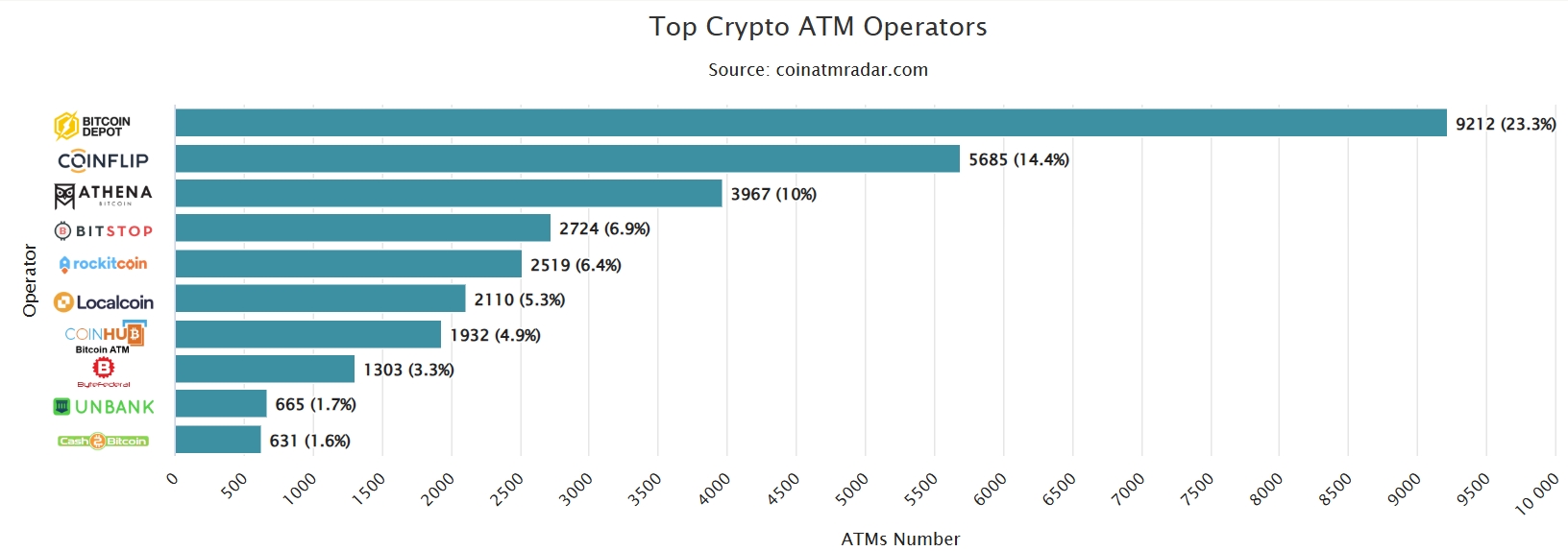
(1) Source: coinatmradar.com as of December 31, 2025. Figures only account for cash-to-Bitcoin ATMs, which results in the exclusion of LibertyX.
Our diverse retail locations and intuitive transaction process make us a convenient option for our users, and our predictable minimum monthly rent payments to our retail partners where our kiosks are located make us an attractive option for these retailers. We have locations across the U.S., Canada, Australia and Hong Kong at, among others, the following type of retailers:
•Convenience Stores and Gas Station Chains: Our largest BTM deployment to date is with Circle K, a convenience store chain with over 9,000 locations in North America and over 5,000 stores in Europe and other international markets. We are the exclusive provider and operator of BTMs for Circle K in the U.S. and Canada, and as of December 31, 2025, we have installed our BTMs in approximately 800 Circle K stores. As of December 31, 2025, Circle K has provided notice that it will not renew its contract with us.
•Pharmacies and Grocers: In addition to our installed BTMs at pharmacy and grocery chains, we have thousands of additional access points via our BDCheckout product. Our BDCheckout locations are sourced and connected through our relationship with a leading global payments technology company. See "Our Products".
•Mall Operators: Further, we have installed our BTMs at shopping malls across North America, including those operated by Simon Property Group, CBL Properties and others.
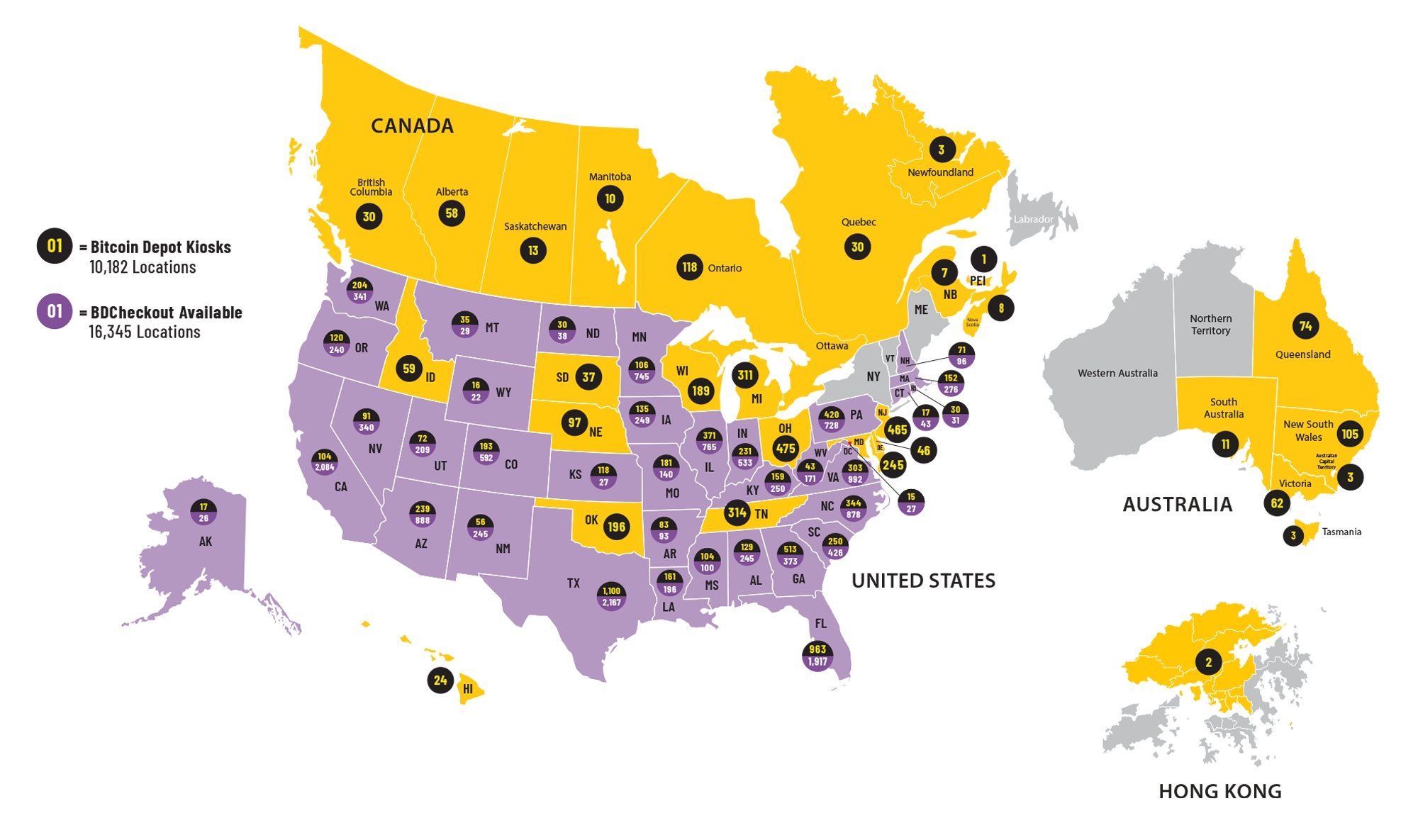
The following map illustrates the number of BTMs we operate by U.S. and Australian state, Canadian province and Hong Kong as of January 31, 2026:
Both our revenue and transaction volumes have historically grown despite volatility in market prices for Bitcoin and other cryptocurrencies.
Our focus on robust compliance procedures and ease of use of our BTMs have helped create a powerful compounding effect: the convenience and quality of our platform provides a seamless experience for users transacting at our BTMs; thereby driving increased traffic and business at our retail partners; attracting more retailers to partner with us; and in turn driving even more users to our BTMs. Our scale and leadership position has enabled us to develop a deeper understanding of our users’ needs and continually innovate and launch new products and services, such as BDCheckout, further enhancing the value of our platform.
From our inception in July 2016 through December 31, 2025, we have completed more than 4.0 million user transactions, equating to approximately $3.4 billion in total transaction value. During the quarter ended December 31, 2025, we averaged approximately 16,602 new users, which we define as the total number of users who completed their first transaction during the quarter. In light of the nature of our transactions, no customer is close to accounting for 10% of our revenue. For the year ended December 31, 2025, we generated approximately $614.9 million of revenue, $4.7 million of net income, $56.4 million in Adjusted EBITDA (non-GAAP), and 17.2% of Gross Profit Margin for the same period. For the year ended December 31, 2024, we generated approximately $573.7 million of revenue, $7.8 million of net income, $39.7 million in Adjusted EBITDA (non-GAAP), and 15.9% of Gross Profit Margin for the same period. See the sections titled “Management’s Discussion and Analysis of Financial Condition and Results of Operations—Key Business Metrics” and “Management’s Discussion and Analysis of Financial Condition and Results of Operations—Non- GAAP Financial Measures” for information regarding our use of non-GAAP financial measures and a reconciliation of such financial measures.
Our Products
As of December 31, 2025, we operated a portfolio of approximately 9,700 owned and leased kiosks across 48 U.S. states, 10 Canadian provinces, 6 Australian states and Hong Kong. Within the United States, our kiosks and BDCheckout access points are located in zip codes containing approximately 69% of the U.S. population. While we are currently not operating kiosks in New York, we have applied for the license required to operate in New York. See “Risk Factors—Risks Related to Government Regulation and Privacy Matters” for more information.
BTM
Our kiosks are located in convenience stores, gas stations, pharmacies, grocery chains and shopping malls across North America and Australia. Our largest deployment across a single retail chain is with Circle K, which accounted for approximately 800 of our total number of deployed kiosks as of December 31, 2025. As of December 31, 2025, Circle K has provided notice that it will not renew its
contract with us. We continuously monitor our BTM performance at each location, and at various times we relocate our BTMs to more profitable locations. The majority of our contracts contractually allow us to move our BTMs with a limited notification to our retail partners. At December 31, 2025, we had approximately 1,700 BTMs with our logistics providers to redeploy to new locations.
Our kiosks, with the operating software pre-loaded, are manufactured and deployed by multiple providers. This gives us the flexibility to acquire additional hardware as the need arises. Because utilization is below that of typical cash ATMs, we believe that that the functional life of our kiosks is extended relative to manufacturer specifications. We have contracted with a network of providers to service our kiosks on an as-needed basis to support kiosk up-time, but our kiosks have typically not required frequent repair or maintenance.
We have found that a key factor affecting transaction volumes at any particular kiosk is its location. Our strategy in deploying our BTMs is to identify locations that are expected to generate high visibility and high transaction volume. Site selection for kiosk deployment is also determined based on an analysis of historical business trends and a determination of the proximity and density of competitors’ kiosks.
Our retail deployments are secured through negotiation with our retail partners. Contract terms are generally similar across the portfolio of retail partners, such as payment terms, service level agreements, rent, placement, and access. These contracts provide a recurring and stable source of revenue for our retail partners over a typical initial term of approximately five years, although our terms vary because of negotiations at the time of execution. As of December 31, 2025, our contracts with our top 10 retail partners had a weighted average remaining life of 1.2 years. Many of our contracts include auto-renewal features providing for additional one-year terms following the expiration of the initial term. Such contracts may be terminated at either party’s option by giving proper notice in accordance with the subject contract. Contracts with over a 12-month term allow for kiosks to be removed at our discretion, and this overall flexibility to move our BTMs allows us to not record a liability on the balance sheet related to these retail location leases.
The software that resides on the kiosk is designed to provide an intuitive user interface for our users. Upon using a Bitcoin Depot kiosk for the first time, users will be prompted to provide certain information for account creation and verification. Users are required to select from three ranges of cash amounts to be inserted in the kiosk for purchasing Bitcoin. The user then provides the address of their digital wallet by scanning a QR code; the user can create and use a Bitcoin Depot-branded wallet (un-hosted and non-custodial), or their other existing digital wallet. Bitcoin Depot’s branded wallet is facilitated through an unaffiliated third party. Bitcoin Depot utilizes this wallet infrastructure to offer users the ability to use an un-hosted non-custodial wallet within the Bitcoin Depot mobile app or through other third-party apps which allow access to non-custodial wallets. Bitcoin Depot is not liable for any losses users may experience because Bitcoin Depot does not have access to users’ wallets or their private keys. Cash is then inserted by the user into the kiosk, and the kiosk will confirm the dollar amount and other details of the transaction, including quantity of Bitcoin being purchased. Once the transaction
is complete, the Bitcoin is electronically delivered to the user’s digital wallet and the user is provided with a physical receipt as well as a receipt via SMS text.
Prior to the time at which a user inserts cash in the BTM to purchase Bitcoin, Bitcoin Depot has control of such Bitcoin, and maintains such control until the transaction is completed at the kiosk and Bitcoin Depot initiates a transaction on the blockchain to send Bitcoin to the user. Bitcoin Depot never custodies a user’s Bitcoin. Bitcoin Depot takes custody of the user’s cash at the time the same is inserted into the BTM.
BDCheckout
Bitcoin Depot also sells Bitcoin without the use of kiosks at several thousand additional retailer locations through a relationship with a leading global payments technology company. This product, called BDCheckout, allows users similar functionality to our kiosks, enabling them to load cash into their accounts at the checkout counter at retailer locations, and then use those funds to purchase Bitcoin. The transaction is initiated on the Bitcoin Depot mobile app, which is available for download from major app stores for free. We believe that BDCheckout offers an attractive value proposition for retailers, providing fee income and potentially increasing shopper foot traffic, without Bitcoin Depot incurring upfront out-of-pocket hardware costs and certain operational expenses, such as rent.
The primary difference between a BDCheckout transaction and a BTM kiosk transaction is that the former is completed via interaction with a cashier at a retail location and relies more heavily on the use of the Bitcoin Depot mobile app, while the latter involves a user interfacing with a kiosk.
Bitcoin Depot’s costs associated with a BDCheckout transaction are lower than its costs associated with a BTM transaction, primarily due to significantly greater operating expenses associated with the BTMs, including cash collection fees and short-term lease payments to the retail locations where the kiosks are placed. However, the profitability of the two services is similar because of the higher markup that Bitcoin Depot applies to BTM transactions to support the higher costs associated therewith.
Industry Trends
The adoption of cryptocurrencies as a medium of exchange has grown significantly since Bitcoin’s introduction in 2009 and cryptocurrency is continuing to become more mainstream among consumers. In 2025, centralized and decentralized exchanges reported approximately $86 trillion in cryptocurrency trading volume, and an estimated 30% of the U.S. adult population owns cryptocurrency.
Several notable developments have contributed to this growth, including broader acceptance of cryptocurrency on payment platforms, the proliferation of financial products offering investors exposure to cryptocurrencies, and market participants looking for ways to simplify transactions for the everyday consumer.
At the same time, consumers have become attracted to the accessibility and user experience of BTMs as an entry ramp into the digital financial system. Several companies began to work on BTM prototypes as early as 2013, and the BTM market has shown rapid growth since then. According to Coin ATM Radar, from January 1, 2017 to December 31, 2025, the total number of BTMs deployed grew from approximately 1,000 to 40,000, representing a CAGR of approximately 42%, with the vast majority of BTMs now located in North America. According to Coin ATM Radar, as of December 31, 2024, approximately 90% of installed BTMs worldwide reside in the U.S. and Canada, in which Bitcoin Depot had a market share of 25% and 8%, respectively.
Market Opportunity
Although U.S. consumers continued to use credit cards and debit cards for a majority of their payments, market studies indicate there is still a significant desire to utilize cash for various purposes in the U.S. The 2024 Diary of Consumer Payment Choice, a study conducted by Federal Reserve Bank of San Francisco found that while it has declined over time, the share of payments in cash was 16% in 2023, which was a decrease from the data in 2021. As of December 2024, the value of currency in circulation passed $2.36 trillion, a 36% increase compared to February 2020, but with slower growth since 2021. In addition, according to a study by Travis Credit Union conducted in 2020, 29% of U.S. adults sampled prefer to use cash to purchase goods. We believe a portion of this population finds obtaining cryptocurrencies through online cryptocurrency exchanges challenging and inconvenient and prefers to directly convert their cash to cryptocurrencies. The chart below shows the proportions of various methods of payments since 2016. The 2024 Diary of Consumer Payment Choice also shows that a significant percentage of person-to-person payments continue to be made in cash, and credit cards, the percentage of these payments made with credit cards has been steadily increasing compared to the prior years. According to a user survey we conducted, many of our users report that the reason they used our BTMs was to send cryptocurrency to others. This use case can represent a more efficient means of sending money for those who are using cash to make person-to-person payments, or an alternative means of sending money for those who are using mobile apps.
Share of payment instrument use for all payments (1)

(1) Source: 2025 Findings from the Diary of Consumer Payment Choice.
Our Competitive Strengths
We believe the below competitive strengths differentiate us from our competition and enhance our ability to compete.
•Largest BTM Operator in North America
We are the largest operator of BTMs in North America with an approximately 23% market share as of December 31, 2025, according to Coin ATM Radar. As of December 31, 2025, we have approximately 9,700 active kiosks across 48 states in the U.S., 10 provinces in Canada, 6 states in Australia and Hong Kong. across convenience stores, gas stations, pharmacies, grocery chains and shopping malls. Bitcoin Depot’s strategically placed network of BTMs and BDCheckout access points are located in zip codes addressing approximately 69% of the U.S. population. Our strong presence has given us increased visibility among users and retail partners and has helped drive user traffic to our kiosks.
•Superior User and Retailer Experience
In addition to offering intuitive user interfaces at our BTMs for transactions, we believe we offer a streamlined alternative to online exchanges for transacting in Bitcoin. Online exchanges can in certain instances require users to wait over three business days to convert money to Bitcoin, and they also require a user to have a bank account and therefore provide no cash conversion options. Our users can purchase Bitcoin without a bank account through our kiosks in typically under two minutes for new accounts and in under a minute for returning users. Our streamlined mobile app offers an easy way for our users to locate points-of-transaction, create a digital wallet, transfer Bitcoin between digital wallets and initiate BDCheckout transactions. We provide telephone customer service almost around the clock to address questions or concerns from our users and to facilitate a smooth transaction process.
We have flexible hosting contract terms with our retail partners that offer location payments tied to a predictable minimum rate monthly rent (which, for certain locations, may be increased based on transaction volumes, thereby aligning partners’ success with our own performance). Based on our observations, our kiosks provide the benefit of driving additional foot traffic at retail locations, which as a result potentially drives additional business to our partners, thereby increasing their revenue.
•Robust Compliance Procedures
We complete our customer Know Your Customer (“KYC”) process prior to permitting a user to transact. In October 2025 we announced the roll out of new compliance standards that make Bitcoin Depot one of the only operators in the industry to require customers to provide identification before transacting for any amount of money. We have invested in and maintain robust, multi-layer compliance procedures to evaluate potential users, open user accounts and monitor transactions at our BTMs. Our compliance team, comprised of 20 individuals, has over 100 years of combined experience in Anti-Money Laundering ("AML"), Bank Secrecy Act ("BSA"), Office of Foreign Assets Control ("OFAC") and Consumer Protection compliance. For KYC verification for any given user transacting at our kiosks is generally based on the user’s proposed transaction amount with us. Generally, verification involves collecting users’ names, email addresses, phone numbers, driver’s licenses or other ID, social security numbers and photos of each user. Further, our BTMs take photos throughout the transaction process, which allows us to verify that users match the identifying information that has been provided
during the KYC process. We utilize blockchain analytics and work with various third parties for transaction monitoring, case management and regulatory filings and reporting. We prioritize proactive reporting procedures in accordance with local, state, and federal requirements. Our compliance systems routinely reject user applicants that fail authentication requirements, and bans users from transacting at our kiosks and via BDCheckout when our compliance team discovers suspicious activity or when the users violate our terms of service (which can be accessed on our website) to which users agree prior to transacting at a BTM or during the BDCheckout transaction process, as applicable. These user bans represent approximately 4% of our overall transaction volumes in a given month. We do not believe there are any material challenges related to conducting KYC at a kiosk. We believe many of our retail partners have selected us to be their BTM provider based on our focus and commitment to robust compliance.
•Prudent Bitcoin Management
We use a sophisticated Bitcoin management process to reduce our exposure to volatility in Bitcoin prices by maintaining a relatively low balance (typically less than $1.0 million) of Bitcoin at any given time in our hot wallets to fulfill orders from users while we are automatically placing orders with liquidity providers and exchanges to replenish the Bitcoin we have sold to users, which we believe differentiates us from our competition. We do not act as an agent or exchange for users in our transactions; we maintain balances of Bitcoin from which we satisfy our users’ demand from kiosk or BDCheckout transactions. As we send users Bitcoin, we replenish our Bitcoin balance on an ongoing basis to meet user demand. Our typical practice is to purchase Bitcoin through a liquidity provider such as Cumberland DRW. We replenish our Bitcoin only through purchases from leading Bitcoin liquidity providers and do not engage in any mining of Bitcoin ourselves. Our sophisticated replenishment process enables us to satisfy our users’ Bitcoin purchases with our own Bitcoin holdings, yet maintain relatively small balances of Bitcoin to effectively manage our principal risk.
•Management Team With Deep Industry Experience
We are led by a management team that built our business from the ground up to become the largest operator of BTMs in North America. Our founder and other executive officers bring extensive multidisciplinary experience in technology and business. We believe our management team has a competitive advantage in their ability to attract a highly talented pool of experienced engineers and seasoned industry professionals. We believe our management team’s expertise in this industry enables them to pursue attractive and opportunistic acquisition targets to further strengthen our competitive advantage.
Our Strategies
We intend to continue to grow our business by employing the following strategies:
•Geographical and Retailer Expansion
We intend to continue to expand into more physical locations at our existing partners as well as build new partner relationships for further greenfield market penetration. Our broad footprint and user base present an opportunity for us to offer additional products and services in the future, which we believe will further strengthen and grow our user base. To expand into new geographies, we have applied for a license to operate in the state of New York, a market we believe could support thousands of kiosks, an estimate we adopted based on other states with more established BTM networks and comparable populations, such as Florida. Finally, approximately 90% of BTMs worldwide are in North America, according to Coin ATM Radar as of December 31, 2024, presenting an attractive international expansion opportunity for us. Various countries have begun accepting cryptocurrency as a legal form of payment, which we believe is going to accelerate the adoption of cryptocurrency and offer us an opportunity to establish a presence in these countries.
•Leverage Scale and Profitability to Reinvest in the Business
We operate the largest network of BTMs in North America. We have generated positive net income and cash flow from operations every year since our inception. For the years ended December 31, 2025 and 2024, we generated revenue of approximately $614.9 million and $573.7 million, respectively, gross profit of $113.3 million and $81.5 million, respectively, and cash from operations of $34.0 million and $22.5 million, respectively. We currently intend to reinvest the majority of the profits back in our business to continue to develop new products and services to address the needs of our users, allowing us to achieve further brand recognition and brand loyalty and grow our user base.
•Strategic Acquisitions and Partnerships
Provided we are able to secure appropriate opportunities, we intend to pursue inorganic growth in the form of strategic bolt-on acquisitions to build on our leading market position and to supplement our in-house capabilities in both hardware kiosks and software that run on these kiosks as well as any product or service that provides Bitcoin access in a retail setting. In addition, we continue to look for potential acquisitions to diversify into near neighbor and complimentary lines of business where we can leverage our leading compliance structure and know how.
•Grow Volume of Retail Transactions Through BDCheckout
We launched BDCheckout in June 2022 and as of December 31, 2025, it is available at approximately 16,000 retail locations across North America, including convenience stores, gas stations, pharmacies, grocery chains and shopping malls. BDCheckout enables our users to load cash into their accounts at the checkout counter at retailer locations, and then use those funds to purchase Bitcoin using the same fee structure in place at our kiosks, thereby lowering our required upfront capital expenditures and operating expenses and providing us with additional revenues from the sale of Bitcoin. For more information about how we generate our revenue, please see the section of this Annual Report on Form 10-K entitled “Management’s Discussion and Analysis of Financial Condition and Results of Operations—Components of Results of Operations—Revenue.” We intend to fully capitalize on this by actively targeting our users with BDCheckout through online advertising and our free mobile app. We believe the expansion of BDCheckout to new locations across the U.S. and Canada will diversify our revenue streams as well as further grow our transaction volumes, revenue and profitability.
Recent Highlights
Entering January 2024, we signed a master placement agreement with EG America LLC, in one of the largest retail partner deals in the Company's history. With this agreement, we are set to install our BTMs in approximately 900+ locations, a significant leap forward in our expansion trajectory.
In February 2024, we were able to secure a deal with CEFCO for 72 out of their 200+ locations which marks a significant milestone for our company. This partnership not only expands our market reach but also diversifies us within the convenience store industry. By aligning with CEFCO, a reputable and rapidly growing chain, we gain access to a broader customer base and increase brand visibility.
During 2024 and 2025, we entered into twelve franchise profit sharing arrangements. Under the terms of the agreements, the counterparties receive a share in the profits generated by a group of specifically identified kiosks. The agreements mature between February 2029 and February 2033.
In January 2025, we deployed 50 additional Bitcoin ATMs through a partnership with a prominent operator in the Texas Panhandle. This expansion directly addressed growing demand for cash-to-crypto access in the Southwest, further strengthening our regional footprint.
The latter half of 2025 was defined by aggressive network scaling. Through the strategic acquisitions of Pelicoin and National Bitcoin ATM, we integrated over 500 kiosks across 27 states, effectively consolidating our domestic footprint. We also achieved a major international milestone by launching in Hong Kong, marking our strategic entry into the Asian market, proving further scalability of our kiosk footprint beyond North America
Entering January 2026, we completed a strategic leadership transition, appointing Scott Buchanan as CEO while founder Brandon Mintz moved to an Executive Chairman role. Simultaneously, we finalized the acquisition of Instant Coin Bank, further consolidating our presence in Texas and Oklahoma and reinforcing our position as the leading BTM operator in North America.
On February 27, 2026, the Company acquired Kutt, Inc., a peer-to-peer (“P2P”) social betting platform that enables users to create and participate in wagers directly with one another on publicly verifiable outcomes. The acquisition marks Bitcoin Depot’s first entry into the P2P social betting market and reflects the Company’s broader strategy to diversify its product offerings beyond its core Bitcoin ATM business. Founded in 2019, Kutt lets users set the terms of their bets across a range of markets, including sports, entertainment, and other real-world events. Unlike traditional sportsbooks, Kutt does not act as the counterparty to wagers. Instead, Kutt provides a consumer-friendly platform for users to engage directly with one another in a social, community-driven environment.
Competition
We operate in a highly competitive industry with an increasing number of participants. Industries adjacent to the digital financial system are highly fragmented, quickly evolving, intensely competitive, and subject to growing global regulatory scrutiny and oversight.
There are several publicly traded companies that operate cash to Bitcoin ATMs, including Athena Bitcoin Inc. and Bitcoin Well Inc. We believe we do not have any direct, pure-play competitors, traded on major exchanges, who operate cash to Bitcoin ATMs at scale.
Several private companies and wholly-owned subsidiaries of other publicly traded companies may be considered to be our competitors, including BitNational, Bitstop, Byte Federal, Inc., Cash2Bitcoin.com, Coin Hub, Coin Flip Bitcoin ATMs, Coinme, Instacoin, Moon Inc., dba LibertyX, a division of NCR Atleos Corporation, Localcoin, National Bitcoin ATM, and RockItCoin, among others.
Separately, given our mission to Bring Bitcoin to the Masses™ by enabling our users to transact on everyday activities using Bitcoin, from paying bills to sending money transfers to a variety of other use cases, other established payment processing and money transfer businesses may become our competitors, including PayPal, Block, Global Payments, Coinbase, Jack Henry, and MoneyGram, among others.
Sales and Marketing
Our sales team focuses principally on maintaining relationships with our existing retail partners and developing new relationships with national, regional and local retailers. The team is organized into groups that specialize in marketing to specific retail industry segments, which allows us to tailor our offering to the specific requirements of each retail partner. As of December 31, 2025, our sales and marketing teams consisted of 19 employees. Those who are exclusively focused on sales typically receive a combination of base salary and an incentive-based compensation.
In addition to targeting new business opportunities, our sales team supports our business initiatives by building and maintaining relationships with new retail partners. We seek to identify growth opportunities within each account by analyzing the retailer’s sales at each of its locations, foot traffic, and various demographic data to determine the best opportunities for new BTM placements.
Our marketing team is focused on attracting users to our BTMs as well as to our BDCheckout retail locations. Our marketing team primarily uses digital marketing tools, such as Google AdWords, to acquire and retain users but also deploys email, SEO, and physical marketing presences as applicable. Our marketing team also supports the sales team in attracting new retail partners.
Intellectual Property, Patents and Trademarks
Although we believe our success depends upon our technical and marketing expertise more than our proprietary rights, our future success and ability to compete depend in part upon our proprietary technology. We have registered or filed applications for our primary trademarks. Most of our technology is not patented. Instead, we rely on a combination of contractual rights, copyrights, trademarks, and trade secrets to establish and protect our proprietary technology. We generally enter into confidentiality agreements with our employees, consultants, third-party contractors, and retail partners. Access to, and distribution of, our source code is restricted, and the disclosure and use of other proprietary information is further limited. Despite our efforts to protect our proprietary rights, unauthorized parties can attempt to copy or otherwise obtain, or use our products or technology. We cannot be certain that the steps taken in this regard will be adequate to prevent misappropriation of our technology or that our competitors will not independently develop technologies that are substantially equivalent or superior to our technology in a manner that would avoid our intellectual property rights.
Research and Development
We invest in ongoing research to develop new software solutions and services and enhance existing solutions with additional functionality and features required to ensure regulatory compliance. Product-specific enhancements are largely user-driven with recommended enhancements formally gathered through survey results, strategic initiatives meetings and ongoing user contact. We also continually evaluate and implement process improvements that expedite the delivery of new products, services and enhancements to our users and reduce related costs. For instance, our research and development capabilities and efforts resulted in the successful launch and deployment of BDCheckout, recently at thousands of major retailers. Associated costs are recorded in Selling, general and administrative expense on the Consolidated Statements of Income and are not material.
Our Retail Partners
In the U.S., we have contracts with over 50 major national and regional retailers, including convenience stores, supermarkets, drug stores, and other high-traffic retail chains, which represent approximately 2,700 BTMs. Circle K was the largest retailer in our portfolio, representing approximately 18% and 23% of our total revenues for the years ended December 31, 2025 and 2024, respectively. The underlying retail agreement with Circle K had an initial term of five years. As of December 31, 2025, our contract with Circle K had a remaining life of 0.5 years and Circle K has provided notice that it will not be renewed. We intend to relocate kiosks currently located at Circle K stores. The number of kiosks that will require relocation is in line with our preexisting relocation plan and as a result we do not expect the expiration of the Circle K agreement to have a materially negative impact on our revenues going forward. Our other top ten retail partners (excluding Circle K) comprise 8.2% of our retail locations. Contracts with these other nine retail partners have a weighted average remaining life of 2.0 years as of December 31, 2025. Many of our contracts include auto-renewal features providing for additional one-year terms following the expiration of the initial term. Such contracts may be terminated at either party’s option by giving proper notice in accordance with the subject contract. The terms of our retail partner contracts vary because of negotiations at the
time of execution. In addition, through BDCheckout, our users can now load cash into their accounts at the checkout counter at approximately 16,000 retailer locations, and then use those funds to purchase Bitcoin.
Our Vendors/Suppliers
Cumberland DRW
Cumberland DRW ("Cumberland") is one of our co-primary liquidity providers from whom we purchase Bitcoin that we sell to our users. We have had a relationship with Cumberland for over four years. Cumberland is a leading OTC liquidity provider in the digital financial system. The company has operations globally and is owned by DRW, a diversified principal trading firm with more than 25 years of experience in multiple asset classes around the world.
Abra
Abra is one of our co-primary liquidity providers from whom we purchase Bitcoin that we sell to our users. We have had a relationship with Abra for almost two years. Abra is a financial services and technology company that operates a cryptocurrency wallet service including a trading service for buying and selling cryptocurrencies and a service for earning interest on cryptocurrencies and stablecoins.
Genmega
Genmega is a global provider of kiosks and traditional cash ATMs and is currently the largest provider of our BTM kiosks. The company was founded over ten years ago and has cumulatively delivered more than 150,000 ATMs worldwide. Since 2016, Genmega has supplied more than 8,000 kiosks to us.
Gemini
Gemini is an American cryptocurrency exchange and custodian that allows customers to buy, sell, and store digital assets. To place orders for Bitcoin on the Gemini exchange, we are required to have USD on account and available which facilitates the purchasing process. We maintain a minimum USD balance needed for anticipated Bitcoin purchases for the day. We replenish the account with USD as needed. Gemini is the sole cryptocurrency exchange with which we hold USD balances.
Cash Transportation
We contract with large and reputable armored courier services to transport and transfer funds to and from our kiosks. We use leading armored couriers such as Loomis, Brinks and Garda in the U.S. and Canada to collect and transport cash. Under these arrangements, the armored couriers collect cash either on a regular schedule or pickups are initiated when cash in a particular kiosk has reached a specified threshold dollar amount, which we can track on a real-time basis. The armored couriers then confirm cash counts and our bank accounts are then credited.
ATM Operations
We contract with large and reputable service providers that support the various activities of our BTMs operations related to deployment, repairs and maintenance, and wireless communications. Operations vendors include, but are not limited to, Bibbeo, Burroughs, Cennox, DropPin, Fiserv, National Services, and OptConnect. We also supplement our vendors by insourcing some field activities with several employees who travel to various markets as needed.
Lease Providers
We utilize three major lessors to finance approximately 3,500 of our BTMs. We believe these lessors are experienced in lease transactions and have adequate equity reserves. We have been able to negotiate with several lease providers and are able to receive market rates for these lease arrangements. As of December 31, 2025, we have lease commitments to acquire all the kiosks for a bargain purchase option at the end the lease term.
User Transactions
We hold an amount of Bitcoin in a hot wallet that we own and send Bitcoin to users from that wallet when transactions are completed at a BTM or through BDCheckout. We replenish our hot wallet from time to time through open market purchases of Bitcoin with certain liquidity providers. When a user buys Bitcoin from us, the purchase price is based on the spot price of Bitcoin at the time of the user’s
transaction. When a user sells Bitcoin to us, such Bitcoin is held in a Bitcoin Depot hot wallet for a period of time, which could be up to several days, until such Bitcoin is later sold through a liquidity provider to fund operations or is resold to users transacting at BTM kiosks or through BDCheckout; however, the volume of transactions of this type are de minimis. Our policy for transfers from our hot wallet (the private keys to which are stored in geographically dispersed locations throughout the U.S.) that do not involve fulfilling user purchases require dual approval by our Chief Executive Officer and Executive Chairman. Transfers from our hot wallet to fulfill user purchases occur automatically through an application program interface that is secured by passwords and login credentials.
We do not custody Bitcoin for our kiosk users. Our relationship with our primary liquidity provider allows us to purchase Bitcoin to quickly replenish amounts sold to users, which means that we hold relatively small amounts of Bitcoin for customer sales at any given time. Due to the minimal amount of Bitcoin held at any given time (typically less than $2.0 million) in our hot wallets to fulfill orders from users while we are automatically placing orders with liquidity providers and exchanges to replenish the Bitcoin we have sold to users, coupled with our high transaction volumes, we do not store Bitcoin in cold wallets.
Human Capital
As of December 31, 2025, we had 135 full-time employees, most of whom were in the United States. None of our employees are represented by a labor union or covered by collective bargaining agreements, and we have not experienced any work stoppages. We believe we have a positive relationship with our employees.
We believe that our success is driven by our employees. Therefore, we strive to drive their own professional growth, success and wellbeing. Our human capital strategy focuses on:
Equal Employment Opportunity: We recognize the value of a highly-qualified workforce and we believe employees with different skillsets, experiences and interests promotes collaboration, innovation, and creativity in our workplace and operations. We are committed to the principles of equal employment opportunity and make hiring and other employment-related decisions based on merit, skills, and qualifications.
Employee Benefits: We believe in the importance of offering our employees competitive salaries and wages, together with comprehensive insurance options. We recognize the importance of comprehensive healthcare benefits, including medical, prescription drug, vision and dental, and employees and their family members are provided with tools and resources to assist in adopting and maintaining a healthy lifestyle. We offer medical, dental, vision, short and long-term disability, life insurance, match 401K contributions up to 3%, and pay for a ClassPass membership.
Training and Talent Development: We are committed to the education of our employees and have committed to provide our employees with a variety of learning opportunities, including, but not limited to, technical skill development, soft skills development, workplace conduct guidance, and IT security training.
Facilities
Our principal executive offices and headquarters are located in leased premises at 8601 Dunwoody Place, Sandy Springs, Georgia 30350, consisting of approximately 5,406 square feet. We also lease office space in Canada, located at 267 Richmond Rd, 3rd Fl., Ottawa, Ontario K1Z 6X3 and consisting of approximately 1,000 square feet. We believe that these facilities are generally suitable to meet our needs.
Seasonality and Inflation
We have typically experienced seasonality in our revenue and the related cost of cryptocurrency, with lower activity in the fourth quarter which we believe is attributable to less business days in the quarter as a result of public holidays. Our costs of goods, services and labor and third-party services, have been impacted by the recent inflationary pressures. To date, we have been successful in managing these cost increases through pricing, productivity and cost-cutting initiatives. There can be no assurance that our operating results will not continue to be affected by inflation in the future or that we will be successful in managing such cost increases.
Governmental Regulation
Anti-money Laundering and Counter-Terrorist Financing
We are subject to various anti-money laundering and counter terrorist financing laws, including the BSA in the U.S. and similar laws and regulations in Canada. In the U.S. as a money services business registered with the FinCEN, the BSA requires us to develop, implement, and maintain a risk-based anti-money laundering program, provide an anti- money laundering-related training program,
report suspicious activities and transactions, comply with certain reporting and recordkeeping requirements, and collect and maintain information about our users. In addition, the BSA requires us to comply with certain user due diligence requirements as part of our anti-money laundering obligations, including developing risk-based policies, procedures, and internal controls reasonably designed to verify each user’s identity. We have implemented a compliance program designed to prevent our kiosks, products and services from being used to facilitate money laundering, terrorist financing, and other illicit activity in countries, or with persons or entities, included on designated lists issued by the OFAC, and equivalent foreign authorities. Our compliance program includes policies, procedures, reporting protocols, training and internal controls, and is designed to address legal and regulatory requirements as well as to assist us in managing business risks associated with money laundering and terrorist financing. See “Risk Factors—Risks Related to Government Regulation and Privacy Matters” for additional information.
Money Transmission and Virtual Currency Business Activity
In the U.S., we have obtained licenses to operate as a money transmitter, or the equivalent, in the states where we understand such licenses or equivalent are required to conduct our business. In addition, we have applied for a BitLicense from the NYDFS. As a licensed money transmitter, we are subject to a range of legal obligations and requirements including bonding, net worth maintenance, customer notice and disclosure, reporting and recordkeeping requirements, and obligations that apply to the safeguarding of third-party funds and crypto assets. In addition, the licensed entity within our corporate structure is subject to inspection and examination by the state licensing agencies and certain actions involving that entity, such as changes in controlling equity holders, board members, and senior management, may require regulatory approval. See “Risk Factors—Risks Related to Government Regulation and Privacy Matters” for additional information.
Privacy and Protection of User Data
We are subject to a number of laws, rules, directives, and regulations relating to the collection, use, retention, security, processing, and transfer of personally identifiable information about our users and employees in the jurisdictions where we operate. We are subject to privacy and information safeguarding requirements under the Gramm-Leach-Bliley Act and the California Consumer Privacy Act in the U.S., as well as the Personal Information Protection and Electronic Documents Act in Canada, which impose certain privacy protections and require the maintenance of a written, comprehensive information security program.
Our business relies on the processing of personal data in many jurisdictions and the movement of data across state and national borders. As a result, much of the personal data that we process, which may include certain financial information associated with individuals, is regulated by multiple privacy and data protection laws and, in some cases, the privacy and data protection laws of multiple jurisdictions. In many cases, these laws apply not only to third-party transactions, but also to transfers of information between or among us, our subsidiaries, and other parties with which we have commercial relationships.
Regulatory scrutiny of privacy, data protection, cybersecurity practices, and the processing of personal data is increasing in the U.S. and around the world. Regulatory authorities are continuously considering numerous new legislative and regulatory proposals and interpretive guidelines that may contain additional privacy and data protection obligations. Any expansion or changes in the application of these privacy, data protection and cybersecurity laws or other regulatory requirements could increase our compliance costs and have a material adverse impact on our business, results of operations, and financial condition. See “Risk Factors—Risks Related to Government Regulation and Privacy Matters” for additional information.
Consumer Protection
The FTC, the CFPB, and other U.S. federal, state, and local and foreign regulatory agencies regulate business activities, including money transfer services related to remittance or user-to-user transfers. These agencies, as well as certain other governmental bodies, including state attorneys general, have broad consumer protection mandates and discretion in enforcing consumer protection laws, including matters related to unfair or deceptive, and, in the case of the CFPB, abusive, acts or practices, or Unfair, deceptive, or abusive acts and practices (“UDAAPs”), and they promulgate, interpret, and enforce rules and regulations that affect our business. The CFPB has enforcement authority to prevent an entity that offers or provides financial services or products to consumers in the United States from committing or engaging in UDAAPs, including the ability to engage in joint investigations with other agencies, issue subpoenas and civil investigative demands, conduct hearings and adjudication proceedings, commence a civil action, grant relief (e.g., limit activities or functions; rescission of contracts), and refer matters for criminal proceedings. See “Risk Factors—Risks Related to Government Regulation and Privacy Matters” for additional information.
State Regulations
Several state and local governments have introduced or have pending legislation regarding cryptocurrency, digital or virtual currency and cryptocurrency kiosks specifically. We cannot be sure of the impact such pending or future legislation might have on our results of operations or financial condition, or the probability that such bills will be entered into law. While the enactment of this type of legislation in any single state might not be material, the cumulative impact of this type of legislation across a large number of states could materially
adversely impact our operations as a whole. See below for recently effective state regulations and how they have impacted our business thus far.
Arizona
Effective as of September 25, 2025, Arizona’s new Cryptocurrency Kiosk License Fraud Prevention law (Chapter 6, Article 1236, previously HB 2387) significantly increased the regulatory and consumer protection requirements for operators in the state. As expanded upon below, the law requires a kiosk operator to: (a) implement a 10-day "new customer" introductory period, and (b) abide by daily transaction limits of $2,000 for new customers and $10,500 for existing customers. Under the new framework, any consumer who has not been an active customer for at least 10 days is subject to the lower transaction cap. Notably, upon the law's effective date, the state required that all existing kiosk customers be reverted to "new customer" status for a ten-day period to ensure consistent application of the new fraud-prevention standards. The legislation also mandates that operators display clear, conspicuous, and easily understandable terms and conditions on the kiosk screen before a transaction may be initiated. Furthermore, operators in Arizona are now required to utilize blockchain analytics and tracing software to proactively identify and prevent fraudulent activity as part of their broader compliance infrastructure.
Arkansas
Effective as of August 3, 2025, the Arkansas Money Transmission Kiosk Act (H 1467) introduced some of the most stringent verification and communication standards currently in effect. As expanded upon below, the law requires a kiosk operator to: (a) limit the charges collected from a customer to a fee cap of the greater of $5 or 18%, and (b) abide by daily transaction limits of $2,000 for new customers and $7,500 for existing customers. The act defines a "new customer" as an individual conducting transactions within 72 hours of their initial account sign-up. A key operational requirement of this legislation is the mandate for verbal communication with any customer aged 60 years or older prior to their first transaction. Additionally, the law requires operators to collect and verify a government-issued photo ID from every customer before any transaction can be processed, regardless of the amount. Refund provisions are also established, requiring full refunds for fraudulent transactions made during the 72-hour new customer window, provided the request is made within 14 days of the transaction.
California
As expanded upon below, California passed certain legislation over the past year which limited our ability to operate effectively in that state. As a result, the Company has significantly reduced its footprint of kiosks in the state of California. However, we continue to evaluate the regulatory environment and our ability to comply with new regulations and reinstate operations there.
Effective as of January 1, 2025, the Digital Financial Assets Law of California requires a kiosk operator to: (a) limit the charges that may be collected from a customer, such that they may not collect direct or indirect charges from a customer related to a single digital financial asset transaction that exceeds the greater of (x) $5, or (y) 15% of the U.S. Dollar equivalent of digital financial assets involved in the transaction, and (b) provide written disclosures to a customer prior to completing a transaction, that includes the following certain minimum information.
Effective as of January 1, 2024, pursuant to the Digital Financial Assets Law of California, operators of digital financial asset transaction kiosks in California are required to 1) provide to the Department of Financial Protection and Innovation of California (“DFPI”) a list of all locations of kiosks that the operator owns, operates or manages in California and to provide the DFPI with any updates to these locations within 30 days of any change; 2) abide by transaction limits of $1,000 in a day from a customer via kiosk; and 3) provide customers with receipts that include certain information regarding the transaction.
Colorado
Effective as of January 1, 2026, the Vending of Digital Assets Act (previously SB 25-079) establishes a new regulatory framework for kiosk operations. As expanded upon below, the law requires a kiosk operator to: (a) display a mandated on-screen disclosure stating "WARNING: THIS TECHNOLOGY CAN BE USED TO DEFRAUD YOU" which must be affirmatively acknowledged before proceeding, and (b) provide both printed and electronic receipts containing the transaction hash, recipient address, and a toll-free customer service number.
The Act separates daily transaction limits based on the customer’s history: a $2,000 limit for "new customers" and a $10,500 limit for "existing customers." A "new customer" is defined as any individual for whom less than seven days have elapsed since their first transaction. Additionally, the bill mandates a full refund for a customer's first transaction if it is verified as fraudulent and the assets were sent to a wallet or exchange outside of the United States, provided the request is made within 60 days.
Connecticut
On October 1, 2024, the Connecticut Act Concerning Digital Assets became effective, placing heavy regulatory, process and compliance burdens on our operations in the state. This bill allows the banking commissioner to adopt regulations, forms and orders governing the business use of digital assets by entities that, and individuals who, are under his regulatory jurisdiction (e.g. state-chartered banks and credit unions). The regulations, forms, and orders must ensure consumer protection and the commissioner may consult with federal and other states’ financial services regulators, other stakeholders, and industry professionals to ensure that digital assets receive, to the extent practicable, consistent treatment. Further, the bill created a transaction limit of $2,000 for new customers and a $5,000 transaction limit for existing customers and capped fees for all transactions at 15%.
The bill also imposes several disclosure and receipt requirements on virtual currency kiosk owners and operators. It further requires them to allow customers to cancel and receive a full refund for a virtual currency transaction within seventy-two hours
after the new customer registered as a customer of such owner or operator if, not later than thirty days after the last virtual currency transaction that occurred during such seventy-two-hour period. Lastly, the bill allows the banking commissioner to establish a schedule of maximum fees that an owner or operator of a virtual currency kiosk may charge for specific services.
Illinois
Effective as of August 18, 2025, Illinois SB 2319 established a detailed regulatory structure that emphasizes transparency and consumer remediation. As expanded upon below, the law requires a kiosk operator to: (a) limit charges to a fee cap of 18%, and (b) abide by daily transaction limits of $2,500 for new customers and $10,500 for existing customers. A customer retains the "new customer" classification until the earlier of (1) the completion of their first three transactions or (2) 7 days after opening their account. The legislation imposes specific refund requirements that vary by customer status; operators must provide a full refund for the first three fraudulent transactions made during the new customer period, while only fee refunds are required for fraudulent transactions involving existing customers. All refund requests must be submitted within 30 days of the last fraudulent transaction to be eligible for consideration.
Iowa
Effective as of July 1, 2025, Iowa Code § 533C.1004 (previously SF 449) introduced a restrictive operating environment focused on curbing high-velocity fraud. As expanded upon below, the law requires a kiosk operator to: (a) limit charges to a fee cap of the greater of $5 or 15%, and (b) abide by a flat daily transaction limit of $1,000 for all customers. Furthermore, the law imposes an aggregate transaction limit of $10,000 for any new customer during their first 30 days of activity. The state has also established specific refund protocols for victims of fraud; new customers are entitled to a full refund of fraudulent transactions made within their first 30 days, whereas existing customers are eligible for a refund of fees only. Both classes of customers must submit their refund requests within 90 days of the fraudulent transaction to be eligible.
Louisiana
Effective as of August 1, 2025, Louisiana H 483 introduced procedural mandates intended to provide a "cooling-off" period for consumers. As expanded upon below, the law requires a kiosk operator to: (a) abide by a flat daily transaction limit of $3,000 for all customers, and (b) implement a 72-hour delay in transaction processing. The legislation allows operators an alternative to the 72-hour hold: they may process transactions immediately if they allow customers to request a full refund for any reason within 72 hours of the transaction. Notably, under this 72-hour window, a customer is not required to provide proof of fraud to receive their refund, significantly increasing the operator's administrative and financial liability. Operators must also navigate these requirements alongside broad consumer protection mandates enforced by state authorities, including potential scrutiny from the state's Attorney General regarding deceptive acts or practices.
Maine
Effective as of June 12, 2025, Maine’s legislation (S.P. 553 - L.D. 1339) established some of the most restrictive fee and limit requirements in the nation. As expanded upon below, the law requires a kiosk operator to: (a) limit charges to a fee cap of the greater of $5 or 3%, and (b) abide by a flat daily transaction limit of $1,000 for all customers. The act also mandates that operators must provide full refunds for all fraudulent transactions made within 90 days of a customer’s very first virtual currency kiosk transaction. To secure a refund, the customer must submit a request within one year of the last fraudulent transaction. The 3% fee cap represents a significant downward pressure on the traditional revenue models for kiosks.
Maryland
Effective as of July 1, 2025, Maryland S 305 created a tiered limit system while focusing on the remediation of transaction fees in fraud cases. As expanded upon below, the law requires a kiosk operator to: (a) limit charges to a fee cap of the greater of $5 or 15%, and (b) abide by daily transaction limits of $2,000 for new customers and $10,500 for existing customers. A "new customer" is defined as any individual conducting a transaction within 72 hours of their initial sign-up. The legislation specifically mandates that operators must
refund transaction fees if a transaction is verified as fraudulent. The law also empowers the Commissioner of Financial Regulation to establish additional rules regarding these fee refunds, indicating an ongoing regulatory evolution in the state.
Minnesota
On August 1, 2024, the Minnesota Act Regulating Disclosures and Consumer Protections Related to Virtual-Currency Kiosks became effective, which placed additional compliance burdens on our operations and increased the risk of deterring consumers or decreasing market confidence in cryptocurrency. This bill requires virtual currency kiosk operators to (1) disclosure to consumers the relevant terms and conditions of the transactions; (2) issue full refunds for transactions made within seventy two hours of becoming a new customer if fraudulently induced to engage in virtual currency transactions and is reported within 14 days of the last transaction during the seventy two hour window and the customer contacts the virtual currency kiosk operator and a government or law enforcement agency informing of them of the fraudulent nature of the transaction; and (3) set maximum daily transaction limits of $2,000 for new customers. The disclosures on material risks must be made to customers before entering into the virtual currency transaction, and must include at least certain enumerated risks.
Missouri
Effective as of August 28, 2025, the Virtual Currency Kiosk Consumer Protection Act (previously SB 98) was enacted. As expanded upon below, the law requires a kiosk operator to: (a) comply with comprehensive licensing and disclosure requirements, and (b) maintain robust internal compliance and anti-money laundering policies. Missouri's legislation does not currently impose specific daily transaction limits, fee caps, or mandatory refund windows. The focus of the act is to bring kiosks under the state's formal regulatory umbrella, ensuring that operators meet basic transparency standards and provide necessary risk disclosures to consumers before they engage in virtual currency activity.
Nebraska
On September 1, 2025, LB 609 will take effect in Nebraska. The law establishes a transaction limit of $2,000 for new customers (defined as individuals within 14 days of signing up), while existing customers will be permitted to transact up to $10,500 per day. Additionally, LB 609 imposes an 18% fee cap on transactions and requires operators to issue full refunds for transactions conducted by new customers within their first 14 days of registration, with refund requests permitted up to 90 days after the transaction.
North Dakota
Effective as of August 1, 2025, ND H 1447 established a formal regulatory framework for virtual currency kiosks. As expanded upon below, the law requires a kiosk operator to: (a) abide by a flat daily transaction limit of $2,000 for all customers, and (b) provide users with a choice of a paper or digital receipt for every transaction.
Unlike other jurisdictions enacted in 2025, the North Dakota statute does not currently mandate specific fee caps or refund provisions. The legislation focuses primarily on capping transaction volumes and ensuring basic record-keeping through mandatory receipts to assist in fraud investigations.
Oklahoma
Effective as of November 1, 2025, Oklahoma S 1083 established a regulatory framework that prioritizes the protection of new users while allowing flexibility for established customers. As expanded upon below, the law requires a kiosk operator to: (a) limit transaction charges to a fee cap of 15%, and (b) abide by a daily transaction limit of $2,000 for new customers, while transactions for existing customers remain uncapped. The law defines the "new customer" period as the first 72 hours following a consumer's initial transaction. Refund mandates are also tiered; operators must provide full refunds for fraudulent transactions occurring within the 72-hour new customer window, but only fee refunds are required for fraudulent transactions involving existing customers. All refund requests must be submitted within 14 days of the last fraudulent transaction to be valid.
Rhode Island
Effective as of June 23, 2025, SB 16 requires all kiosk operators to be licensed money transmitters and obtain prior approval from the Department of Business Regulation ("DBR") before activating new terminals. As expanded upon below, the law requires a kiosk operator to: (a) submit quarterly reports to the DBR detailing all physical kiosk locations, and (b) abide by daily transaction limits of $2,000 for "new customers" and $5,000 for "existing customers".
A customer is classified as "new" for the first 30 days following their initial transaction. The Act also mandates specific refund protections: operators must provide full refunds for fraudulent transactions made by new customers within their first 30 days, while existing customers are entitled to a refund of fees for verified fraud. All refund requests must be filed within 90 days of the fraudulent activity to be eligible.
Vermont
Effective as of July 1, 2025, H.137 updated the state's regulatory framework, replacing several of the highly restrictive measures from the previous year. As expanded upon below, the law requires a kiosk operator to: (a) limit charges to a fee cap of the greater of $5.00 or 15%, and (b) abide by daily transaction limits of $2,000 for "new customers" and $5,000 for "existing customers".
The law defines a "new customer" as an individual whose second transaction occurred within the last 72 hours. While the legislation extended the moratorium on new kiosk installations until July 1, 2026, it created a pathway for recovery by requiring full refunds, including all fees, for new customers who are victims of fraud, provided they report the incident within 90 days. Additionally, operators are now required to provide both paper and electronic receipts and must use blockchain analytics to screen for high-risk wallet addresses.
Wisconsin (DFI Guidance)
On May 28, 2025, the Wisconsin Department of Financial Institutions ("DFI") published formal guidance for virtual currency kiosk operators based on its authority to regulate money transmission and fraud. As expanded upon below, this guidance requires operators to abide by a flat daily transaction limit of $2,000 for all customers.
City Ordinances
In addition, a number of local ordinances have been passed recently applicable to cryptocurrency kiosks which either (1) ban cryptocurrency kiosks completely, or (2) mandate specific warning signs, disclosure and transaction limits.
Bans on Kiosks
•St. Paul, Minnesota: Effective December 21, 2025.
•Spokane, Washington: Effective August 15, 2025.
•Waltham, Massachusetts: Effective September 8, 2025.
•Gloucester, Massachusetts: Effective September 9, 2025.
•Stillwater, Minnesota: This ban was passed on April 18, 2025, but the city recently dropped the ban following litigation and is currently pursuing alternative zoning restrictions.
Signs, Disclosure or Transaction Limits
•Lincoln, Nebraska: This ordinance requires any business operating a crypto or Bitcoin ATM to post a written warning notice provided by law enforcement. The sign must be placed in a highly visible location near the machine to inform users of potential fraud or scam risks.
•Evansville, Indiana: Effective September 8, 2025, this ordinance requires operators to display a prominent written warning regarding consumer fraud and the irreversible nature of transactions. It also mandates the provision of written receipts and the display of the operator's contact information for customer assistance.
•Forest Lake, Minnesota: Effective July 6, 2025, hosting businesses must prominently display a city-provided sign with warnings about kiosk scams. Additionally, the ordinance requires a $2,000 annual registration fee and mandates dedicated closed-circuit camera coverage of the kiosk. This ordinance also requires formal registration, compliance checks, and allows for license revocation. Registration duties are placed on the owner of the commercial space where the kiosk sits.
•Grosse Pointe Farms, Michigan: Effective August 5, 2025, this ordinance imposes a $1,000 transaction limit for new customers and caps total transactions at $5,000 during a 14-day "new customer" period. It also requires verbal confirmation for any first-time transaction exceeding $500.
•Sterling Heights, Michigan: This ordinance establishes a $1,000 limit for new customers and a $2,000 limit for existing customers. It also requires ID for every transaction, specific on-screen disclosures and warnings, and a city-specific license for each kiosk.
Zoning and Registration Restrictions
•Albany, Oregon: Passed on July 9, 2025, this ordinance prohibits kiosks within residential zones or within a quarter-mile of schools, public transportation, or senior care facilities
Pending Federal Legislation
Certain federal agencies and representatives have introduced or have pending legislation regarding cryptocurrency, digital or virtual currency and cryptocurrency kiosks. We cannot be sure of the impact such pending or future legislation might have on our results of operations or financial condition, or the probability that such bills will be entered into law. We continue to monitor the status of pending legislation.
FinCEN has issued a notice of proposed rulemaking to see public comments on a proposal to require banks and money service businesses to submit reports, keep records, and verify the identity of customers in relation to transactions involving convertible virtual currency (“CVS”) or digital assets with legal tender status (“LTDA”) held in unhosted wallets (as defined below), or held in wallets hosted in a jurisdiction identified by FinCEN. FinCEN is proposing to adopt these requirements pursuant to the BSA. To effectuate certain of these proposed requirements, FinCEN proposes to prescribe by regulation that CVC and LTDA are “monetary instruments” for purposes of the BSA. However, FinCEN is not proposing to modify the regulatory definition of “monetary instruments” or otherwise alter existing BSA regulatory requirements applicable to “monetary instruments” in FinCEN's regulations, including the existing currency transaction reporting (“CTR”) requirement and the existing transportation of currency or monetary instruments reporting requirement.
On February 25, 2025, the Crypto ATM Fraud Prevention Act was introduced by Senator Dick Durbin (D-IL), proposing significant regulatory changes that could materially adversely impact our operations. If enacted, the bill would impose new customer transaction limits, fee caps, refund requirements, and additional compliance measures for cryptocurrency kiosk operators. The bill defines “new customers” as individuals who have signed up within the past 14 days and imposes a transaction limit of $2,000 per day and $10,000 in total transactions during that period. Existing customers would be subject to a $5,000 daily transaction limit. Specifically, operators would be required to issue full refunds for transactions conducted by new customers within the first 14 days of signing up, with refund requests allowed up to 30 days after the transaction. For existing customers, fee refunds would be required if requested within 30 days. The bill also mandates verbal confirmation for transactions exceeding $500, which may introduce operational challenges and increased processing times. We are unable to predict whether or not the proposed legislation will be passed into law (or even if it will be voted upon).
Additional regulatory developments
Various regulatory authorities continue to evaluate and implement laws, rules and regulations governing a wide variety of issues, including cryptocurrencies, identity theft, account management guidelines, disclosure rules, cybersecurity, marketing, ESG performance, transparency, and reporting, including requirements related to overall corporate ESG disclosures and climate-related financial disclosures which may impact our business. For an additional discussion on the impact of governmental regulation on our business, please see “Risk Factors” included in this Annual Report on Form 10-K.
Corporate Information
Our principal executive office is located at 8601 Dunwoody Place, Sandy Springs, Georgia 30350, which is where our records are kept and the principal business address for our executive officers. Our mailing address is 2870 Peachtree Road #327, Atlanta, Georgia, 30305 and our telephone number is (678) 435-9604. Our internet website is located at https://bitcoindepot.com. The information on our website is not a part of or incorporated by reference into this Annual Report on Form 10-K.
Lux Vending, LLC was incorporated as a Georgia limited liability company on June 7, 2016. On June 30, 2023, Lux Vending, LLC merged with and into Bitcoin Depot Operating LLC, a Delaware limited liability Company, with Bitcoin Depot Operating LLC surviving the merger (the “Merger”).
Item 1A. Risk Factors
Investing in our securities involves a high degree of risk. You should carefully consider the risks and uncertainties described below, together with all of the other information in this Annual Report on Form 10-K, including the section titled “Management’s Discussion and Analysis of Financial Condition and Results of Operations” and the consolidated financial statements and related notes. The risks and uncertainties described below are not the only ones we face. Additional risks and uncertainties that we are unaware of or that we deem immaterial may also become important factors that adversely affect our business. If any of the following risks occur, our business, operating results, financial condition, and future prospects could be materially and adversely affected. Many risks affect more than one category, and the risks are not in order of significance or probability of occurrence because they have been grouped by categories. In that event, the market price of our Class A common stock could decline, and you could lose part or all of your investment.
Summary of Risk Factors
The following is a summary of the principal risks that could adversely affect our business, operations and financial results.
Risks Related to our Business and Industry
•Our total revenue is substantially dependent on the price and volume of transactions conducted by our customers. Furthermore, our transaction volume may be partially dependent on the prices of Bitcoin we sell, which can be volatile.
•Our long-term success depends on our ability to develop new and innovative products and services to address and keep pace with the rapidly evolving market for payments and financial services.
•Our risk management efforts may not be effective, which could expose us to losses and liability and harm our business.
•We obtain and process a large amount of sensitive user data. Any real or perceived improper use of, disclosure of, or access to such data could harm our reputation, as well as have an adverse effect on our business.
•We face intense competition, and if we are unable to continue to compete effectively for any reason, our business, financial condition, and results of operations could be adversely affected.
•Converting cash into cryptocurrency (and vice versa) involves risks, which could result in loss of user assets, user disputes and other liabilities, which could adversely impact our business.
•Disputes with our users could adversely impact our brand, reputation, business, operating results, and financial condition.
•There are a number of risks associated with our non-U.S. operations that could adversely affect our business.
•From time to time, it is reported to us that our products and services are exploited to facilitate illegal activity such as fraud, scams, drug trafficking, money laundering, and tax evasion. If any users use our business to further such activities, our business could be adversely affected.
•If we fail to retain existing users or add new users, or if our users decrease their level of engagement with our products and services, our business, operating results, and financial condition may be significantly harmed.
•Our products and services are from time to time negatively characterized by consumer advocacy groups, the media or certain federal, state and local government officials.
•Our strategy and focus on delivering high-quality, compliant, easy-to-use, and secure Bitcoin-related services may not maximize short-term or medium-term financial results.
•Any significant disruption in our kiosks or software, information technology systems, or any of the blockchain networks related to our business, could adversely impact our reputation and our business, operating results, and financial condition.
•Banks and financial institutions may not provide banking services, or may cut off services, to businesses that engage in Bitcoin and/or other cryptocurrency-related activities, or accept Bitcoin as payment, including financial institutions of investors in our securities, and we may be exposed to counterparty risk as a result.
•Due to unfamiliarity and some negative publicity associated with cryptocurrency-related businesses, existing and potential users may lose confidence in cryptocurrency-related products and services, which could negatively affect our business.
•We have entered into, and may in the future enter into, acquisitions, strategic investments, partnerships or relationships, entries into new businesses, joint ventures, divestitures, and other transactions which could fail to achieve strategic objectives, harm our business, and negatively impact our results of operations in a variety of ways.
•Our business could be harmed if we are unable to accurately forecast demand for Bitcoin and to adequately manage our Bitcoin balances and kiosk inventory.
•Cryptocurrency balances, including the balances we maintain for our own account or balances that may be maintained for us, and any investments in cryptocurrency, is subject to volatile market prices, impairment, and other risks of loss.
•Our failure to safeguard and manage our third-party operators' crypto assets could adversely impact our business.
•Cybersecurity threats continue to increase in frequency and sophistication; a successful cybersecurity attack could interrupt or disrupt our information or operational technology systems or cause the loss of confidential or protected data which could disrupt our business, force us to incur excessive costs, cause reputational harm and adversely affect our business.
•Litigation or investigations involving us, our agents or other contractual counterparties could result in material settlements, fines or penalties and may adversely affect our business, financial condition and results of operations.
•Major bank failure or sustained financial market illiquidity, or illiquidity at our clearing, cash management and custodial financial institutions, could adversely affect our business, financial condition and results of operations.
•Our recent rapid growth, including in our transaction volume, may not be indicative of our future growth. Our rapid growth also makes it difficult to evaluate our future prospects and may increase the risk that we will not be successful.
•The further development and acceptance of cryptocurrency networks and other cryptocurrencies, which represent a new and rapidly changing industry, are subject to a variety of factors that are difficult to predict and evaluate.
•Adverse developments affecting the financial services industry could adversely affect our current and projected business operations, our financial condition, and results of operations.
•If we are unable to adequately protect our brands and the intellectual property rights related to our existing and any new or enhanced products and services, or if we infringe on the rights of others, our business, prospects, financial condition, and results of operations could be adversely affected.
•BitAccess provides operating software to other BTM operators to run their machines, which could lead to access to information about the operations of our competitors, giving us an anti-competitive advantage that could result in a higher risk of litigation if sufficient controls are not in place.
•We face risks related to heightened inflation, which could adversely affect our business and results operations.
•We are subject to economic and geopolitical risk, business cycles, and the overall level of consumer, business and government spending, which could negatively affect our business, financial condition and results of operations.
•We depend on major mobile operating systems and third-party platforms. If Google Play, the Apple App Store, or other platforms prevent users from downloading our mobile app, our ability to grow may be adversely affected.
•If miners or validators of Bitcoin demand high transaction fees, our operating results may be adversely affected.
•We rely on search engines, social networking sites, and other web-based platforms to attract a meaningful portion of our users, and if those search engines, social networking sites and other web-based platforms change their listings or policies regarding advertising, or increase their pricing or suffer problems, it may limit our ability to attract new users.
•The nature of our business requires the application of complex financial accounting rules. If financial accounting standards undergo significant changes, our operating results could be adversely affected.
Risks Related to Government Regulation and Privacy Matters
•Any failure to obtain or maintain necessary money transmission registrations and licenses could adversely affect our operations.
•We are subject to an extensive and highly evolving regulatory landscape and any adverse changes to, or our failure to comply with, any laws, rules, and regulations could adversely affect our business, and financial condition.
•It may become illegal to acquire, own, hold, sell, or use Bitcoin or other cryptocurrencies, participate in blockchains or utilize cryptocurrencies in other countries, which would adversely affect us.
•The theft, loss, or destruction of private keys required to access any Bitcoin may be irreversible. If we are unable to access our private keys or if we experience a hack or other data loss relating to our ability to access any Bitcoin, it could cause regulatory scrutiny, reputational harm, and other losses.
•The digital financial system is novel. If we are unable to effectively react to future proposed legislation and regulation of cryptocurrencies or cryptocurrency businesses, our business, and financial condition could be adversely affected.
•Our obligations to comply with the laws, rules, regulations, and policies of a variety of jurisdictions may increase and we may be subject to inquiries, investigations, and enforcement actions by U.S. and non-U.S. regulators and governmental authorities, including those related to drug trafficking, sanctions, export control, anti-corruption, and anti-money laundering.
•Complex and evolving U.S. and international laws, rules and regulation regarding privacy and data protection could result in claims, changes to our business practices, penalties, increased cost of operations, or otherwise harm our business.
•We are subject to compliance with applicable anti-money laundering laws and anti-corruption laws, including the U.S. Foreign Corrupt Practices Act of 1977, and numerous related laws and regulations.
•Future developments in tax laws or regulations regarding the treatment and reporting of cryptocurrencies for U.S. and foreign tax purposes could adversely impact our tax expense and liabilities, reporting obligations, liquidity, and business.
•Changing environmental and safety regulations, including those regarding climate change, coupled with investors’ expectations of our performance relating to sustainability may impose additional costs and expose us to new risks.
Other categories of risk discussed in more detail below include risks related to third parties, our management and employees, and our capital structure.
Risks Related to our Business and Industry
Our total revenue is substantially dependent on the price and volume of transactions conducted by our customers. If either declines, our business would be adversely affected. Furthermore, our transaction volume may be partially dependent on the prices of Bitcoin we sell, which can be volatile. If such prices decline, the volume of user transactions could decrease and our business, operating results, and financial condition would be adversely affected.
We generate substantially all of our revenue from the cash paid by customers to purchase Bitcoin from our kiosks. Revenue is based on the prices we charge our customers based on prevailing market prices and may fluctuate based on the price of Bitcoin. Additionally, the number of user transactions and our transaction volumes may be partially dependent on the prices of Bitcoin, as well as the associated demand for buying, selling and trading Bitcoin, which can be and historically have been volatile. If such prices decline, the number of user transactions or our transaction volumes could decrease. As such, any declines in the volume of transactions, or any declines in the price of Bitcoin or market liquidity for cryptocurrency generally, may result in lower total revenue to us. For example, from January 1, 2020 through March 2026, the trading price of Bitcoin appreciated significantly, from a low of approximately $3,800 per Bitcoin in March 2020, to a high of approximately $125,000 per Bitcoin in October 2025. The price and trading volume of any cryptocurrency, including Bitcoin, is subject to significant uncertainty and volatility, depending on a number of factors, including:
•market conditions of, and overall sentiment towards, cryptocurrency;
•changes in liquidity, market-making volume, and trading activities;
•trading activities in cryptocurrency, including on other cryptocurrency platforms worldwide, many of which may be unregulated, and may include manipulative activities;
•investment and trading activities of highly active retail and institutional users, speculators, miners, and investors;
•the speed and rate at which cryptocurrency is able to gain adoption as a medium of exchange, utility, store of value, consumptive asset, security instrument, or other financial assets worldwide, if at all;
•changes in user and investor confidence in cryptocurrency and cryptocurrency platforms;
•negative publicity and events relating to the digital financial system;
•unpredictable social media coverage or “trending” of, or other rumors and market speculation regarding cryptocurrency;
•the ability for cryptocurrency to meet user and investor demands;
•the functionality and utility of cryptocurrency and its associated ecosystems and networks, including cryptocurrency designed for use in various applications;
•retail user preferences and perceived value of cryptocurrency and cryptocurrency markets;
•increased competition from other payment services or cryptocurrency for which we do not sell that exhibit better speed, security, scalability, or other characteristics;
•federal and state regulatory or legislative changes and updates affecting the digital financial system;
•the characterization of cryptocurrency under the laws of various jurisdictions around the world;
•the adoption of unfavorable taxation policies on cryptocurrency investments by governmental entities;
•the maintenance, troubleshooting, and development of the blockchain networks underlying cryptocurrency, including by miners, validators, and the development community;
•the ability for cryptocurrency networks to attract and retain miners or validators to secure and confirm transactions accurately and efficiently;
•legal and regulatory changes affecting the operations of miners and validators of blockchain networks, including limitations and prohibitions on mining activities, or new legislative or regulatory requirements as a result of growing
environmental concerns around the use of energy in mining cryptocurrency, including Bitcoin, and other proof-of-work mining activities;
•ongoing technological viability and security of cryptocurrency and its associated smart contracts, applications and networks, including vulnerabilities against hacks and scalability, particularly given the evolution and increased adoption of artificial intelligence (“AI”) technologies, which amplifies these concerns;
•fees and speed associated with processing cryptocurrency transactions, including on the underlying blockchain networks and on cryptocurrency platforms;
•financial strength of market participants;
•the availability and cost of funding and capital;
•interruptions in service from or failures of major cryptocurrency platforms;
•availability of an active derivatives market for various cryptocurrencies;
•availability of banking and payment services to support cryptocurrency-related projects;
•level of interest rates and inflation;
•monetary policies of governments, trade restrictions, and fiat currency devaluations; and
•national, North American and international economic and political conditions and the proliferation of global and regional conflicts and political instability, including the war in Ukraine, continued tensions between China and the United States and sustained conflicts in the Middle East.
There is no assurance that any given cryptocurrency will maintain or increase in value or that there will be meaningful transaction volumes from our users. In the event that the price or trading of, or demand for, cryptocurrency declines, our business, operating results, and financial condition would be adversely affected.
Our long-term success depends on our ability to develop new and innovative products and services to address and keep pace with the rapidly evolving market for payments and financial services, and, if we are not able to implement successful enhancements and new features for our products and services, our business, operating results and financial condition could be materially and adversely affected.
Rapid and significant technological changes continue to confront the industries in which we operate, including developments in digital banking, mobile financial apps, ATMs and BTMs, and point-of-service solutions, as well as developments in cryptocurrency and in tokenization, which replaces sensitive data (e.g., payment card information) with symbols (tokens) to keep the data safe in the event that sensitive data is stolen or viewed by unauthorized third parties.
These new and evolving services and technologies may be superior to, impair, or render obsolete the products and services we currently offer or the technologies we currently use to provide them. Incorporating new technologies into our products and services may require substantial expenditures and take considerable time, and we may not be successful in realizing a return on these development efforts in a timely manner or at all. Our ability to develop new and innovative products and services may be inhibited by industry-wide standards, payment networks, existing and future laws and regulations, resistance to change from our users or third parties’ intellectual property rights. Our success will depend on our ability to develop new technologies and to adapt to technological changes and evolving industry standards. If we are unable to provide enhancements and new features for our products and services or to develop new and innovative products and services that achieve market acceptance or that keep pace with rapid technological developments and evolving industry standards, our business, operating results and financial condition would be materially and adversely affected.
We often rely not only on our own initiatives and innovations, but also on third parties, including some of our competitors, for the development of and access to new technologies and development of a robust market for these new products and technologies. Failure to accurately predict or to respond effectively to developments in our industry may significantly impair our business.
In addition, because our BitAccess software is designed to operate with a variety of systems and devices, we need to continuously modify and enhance our products and services to keep pace with changes in technologies. Any failure of our BitAccess software to continue to operate effectively with new technologies could reduce our growth opportunities, the demand for our products and services, result in dissatisfaction of our users, and materially and adversely affect our business.
Our risk management efforts may not be effective, which could expose us to losses and liability and otherwise harm our business.
We offer payments and other products and services to a large number of users. We have programs designed to vet and monitor these users and the transactions we process for them as part of our risk management efforts, but such programs require continuous improvement. No risk management system can be perfectly effective in detecting and preventing fraud or illegitimate transactions, particularly given the increase in sophistication of techniques used to conduct cyberattacks and rapid evolution and increased adoption of AI technologies. From time to time, it is reported to us that fraudulent or illegitimate transactions occur using our BTMs. When our services are used to process illicit transactions, and we settle those funds to users and are unable to recover them, we suffer losses and liability. Additionally, illicit transactions can also expose us to governmental and regulatory enforcement actions.
The highly automated nature of, and liquidity offered by, our services make us and our users a target for illegal or improper uses, including scams and fraud directed at our users, fraudulent or illegal sales of goods or services, money laundering, drug trafficking, and terrorist financing. Our risk management policies, procedures, techniques, and processes may not be sufficient to identify all risks to which we are exposed, to enable us to prevent or mitigate the risks we have identified, or to identify additional risks to which we may become subject in the future. Our current business, changing and uncertain economic, geopolitical, and regulatory environment, and anticipated domestic and international growth will continue to place significant demands on our risk management and compliance efforts, and we will need to continue developing and improving our existing risk management infrastructure, techniques, and processes.
As of the date of this Report, we maintain insurance policies providing general liability, umbrella and excess liability coverage, each of which has an aggregate limit between $2 million to $9 million, as well as coverage relating to cyber-related incidents, having an aggregate policy limit of approximately $5 million. Typically, these insurance policies have one-year terms, and we are able to apply for term renewal at the end of each calendar year. With respect to termination provisions included in the subject policies, we have the option to terminate each policy by providing notice to the applicable provider and fulfilling our obligation to pay the minimum earned premium due under the applicable policy. While we maintain a program of insurance coverage for various types of liabilities, we may self-insure against certain business risks and expenses where we believe we can adequately self-insure against the anticipated exposure and risk or where insurance is either not available or deemed not cost-effective.
We may not be able to maintain or obtain insurance of the type and amount we desire at commercially reasonable rates and exclusions from coverage may limit our ability to recover the amount of the full loss in all situations. In some instances, certain insurance has become unavailable or has become available only for reduced amounts of coverage or at a significantly increased cost. We cannot assure you that our insurers will renew our insurance coverage on acceptable terms, if at all, or that we will be able to arrange for adequate alternative coverage in the event of non-renewal. Further, our underwriters could have credit issues that affect their ability to pay claims.
There can be no assurance that insurance will cover all or any damages, losses or expenses resulting from these types of risks. If a significant incident or event occurs that is self-insured or not fully insured, it could have a material adverse effect on our business, financial condition and results of operations.
We obtain and process a large amount of sensitive user data. Any real or perceived improper use of, disclosure of, or access to such data could harm our reputation, as well as have an adverse effect on our business.
We obtain and process large amounts of sensitive data, including personal data related to our users and their transactions, such as their names, addresses, social security or tax identification numbers, copies of government-issued identification, facial recognition data (from scanning of photographs for identity verification), bank statements and transaction data. We face risks, including to our reputation, in the handling and protection of this data, and these risks will increase as our business expands, including through our acquisition of, and investment in, other companies and technologies. Federal, state, and international laws and regulations governing privacy, data protection, and e-commerce transactions require us to safeguard our users’, employees’, and service providers’ personal data.
We have administrative, technical, and physical security measures and controls in place and maintain an information security program. While no system failures, cyberattacks or security breaches have been material to date, we may be unable to anticipate, detect or prevent such events. Despite ongoing efforts to improve our ability to protect our information and operational technology systems and data stored thereon or transmitted thereby from compromise, we may not be able to protect all of our information and operational technology systems or data. Our security measures, or the security measures of companies we acquire, may be inadequate or breached as a result of third-party action, employee or service provider error, malfeasance, malware, phishing, hacking attacks, system error, trickery, advances in computer capabilities, new discoveries in the field of cryptography, inadequate facility security or otherwise, and, as a result, someone may be able to obtain unauthorized access to sensitive information, including personal data, on our systems. We could be the target of a cyber security incident, which could result in harm to our reputation and financial losses. Additionally, our users have been and could be targeted in cyber security incidents like an account takeover, which could result in harm to our reputation and financial losses. Notably, the techniques and sophistication used to conduct cyberattacks and compromise information or operational technology systems, as well as the sources and targets of these attacks, change and are often not recognized until such attacks are launched or have been in
place for some time. Furthermore, there has been an increase in state sponsored cyberattacks which are often conducted by capable, well-funded groups. The rapid evolution and increased adoption of AI technologies amplifies these concerns. Any unauthorized access to or material failure of our information or operational technology systems, or systems used by our third-party suppliers or service providers, could result in negative consequences, including damage to our reputation or competitiveness, compliance, remediation or increased protection costs, or litigation or regulatory action, all of which could have a material and adverse effect on our business, financial condition, operations, or cash flows.
Additionally, privacy and data protection laws are evolving, and these laws may be interpreted and applied in a manner that is inconsistent with our data handling safeguards and practices that could result in litigation or regulatory action, fines or penalties, and significant changes to our business practices and products and services. Violation of privacy laws in the U.S. (especially in California), even if inadvertent, can lead to significant financial consequences, including significant fines and sanctions. Our future success depends on the reliability and security of our products and services. To the extent that the measures we or any companies we acquire have taken prove to be insufficient or inadequate, or to the extent we discover a security breach suffered by a company we acquire following the closing of such acquisition, we may become subject to litigation, breach notification obligations, or regulatory or administrative sanctions, which could result in significant fines, penalties, damages, compliance, remediation or increased protection costs, harm to our reputation, or loss of users. If our own confidential business information or sensitive user information were improperly disclosed, our business could be adversely affected. Additionally, a party who circumvents our security measures could, among other effects, appropriate user information or other proprietary data, cause interruptions in our operations, or expose users to hacks, viruses, and other disruptions. Any of the above could have a material and adverse effect on our business, financial condition, operations, or cash flows.
We face intense competition, and if we are unable to continue to compete effectively for any reason, our business, financial condition, and results of operations could be adversely affected.
The markets in which we compete are highly competitive, and we face a variety of current and potential competitors that may have larger and more established user bases and substantially greater financial, operational, marketing and other resources than we have. The digital financial system is highly innovative, rapidly evolving, and characterized by healthy competition, experimentation, changing user needs, frequent introductions of new products and services, and subject to uncertain and evolving industry and regulatory requirements. We expect competition to intensify as existing and new competitors introduce new products and services or enhance existing ones. We compete against a number of companies operating both within the U.S. and abroad, including traditional financial institutions, financial technology companies and brokerage firms that have entered the cryptocurrency market in recent years, digital and mobile payment companies offering overlapping features targeted at our users, and companies focused on cryptocurrency.
The products and services provided by our competitors are differentiated by features and functionalities, including brand recognition, user service, reliability, distribution network and options, information technology infrastructure, price, speed, and convenience. Distribution channels such as online, mobile solutions, account deposit and kiosk-based services continue to evolve and impact the competitive environment for cryptocurrency transactions. For example, traditional financial institutions could offer competing cryptocurrency-related products and services to our existing and prospective users. Additionally, we expect our competitors to continue to improve their information technology systems and user interfaces, including through the use of AI and machine learning solutions, to further enhance operations and their exchange or trading platforms.
Our future growth depends on our ability to compete effectively in Bitcoin transaction-related services, including through innovation of our own technology infrastructure and appropriate addressing user experience. For example, if our products and services do not offer competitive features and functionalities or if we do not keep up with technological advances, we may lose users to our competitors, which could adversely affect our business, financial condition and results of operations. In addition, if we fail to charge our users comparable and appropriate transaction and other fees relative to our competitors, users may not use our services, which could adversely affect our business, financial condition and results of operations. For example, transaction volume, where we face intense competition, could be adversely affected by pricing pressures between our services and those of some of our competitors, which could reduce the markup at which we sell Bitcoin to users and the separate flat transaction fee that we charge and adversely affect our financial condition and results of operations. We have the ability to implement fee adjustments from time to time in response to competition and other factors. Fee reductions could adversely affect our financial condition and results of operations in the short-term and may also adversely affect our financial condition and results of operations in the long-term if transaction volumes do not increase sufficiently in response.
Many innovative start-up companies and larger companies have made, and continue to make, significant investments in research and development, and we expect these companies to continue to develop similar or superior products and technologies that compete with our products and services. Further, more traditional financial and non-financial services businesses may choose to offer
cryptocurrency-related services in the future as cryptocurrencies gain adoption. Our current and potential competitors may establish cooperative relationships among themselves or with third parties that may further enhance their resources.
Our existing competitors have, and our potential competitors are expected to have, various competitive advantages over us, such as:
•the ability to trade cryptocurrencies, and offer products and services, that we do not support or offer (due to constraints from regulatory authorities, our banking partners, and other factors) such as tokens that constitute securities or derivative instruments under U.S. or foreign laws;
•greater name recognition, longer operating histories, larger user bases, and larger market shares;
•larger sales and marketing budgets and organizations;
•more established marketing, banking, and compliance relationships;
•greater user support resources;
•greater resources to make acquisitions;
•lower labor, compliance, risk mitigation, and research and development costs;
•larger and more mature intellectual property portfolios;
•greater number of applicable licenses, registrations or similar authorizations;
•established core business models outside of facilitating cryptocurrency transactions, allowing them to operate on lesser margins or at a loss;
•operations in certain jurisdictions with lower compliance costs and greater flexibility to explore new product offerings; and
•substantially greater financial, technical, and other resources.
If we are unable to compete successfully, or if competing successfully requires us to take costly actions in response to the actions of our competitors, our business, operating results, and financial condition could be adversely affected.
Converting cash into cryptocurrency (and vice versa) involves risks, which could result in loss of user assets, user disputes and other liabilities, which could adversely impact our business.
To own, transfer and use a cryptocurrency on its underlying blockchain network, a person must have a private and public key pair associated with a network address, commonly referred to as a “wallet.” Each wallet is associated with a unique “public key” and “private key” pair, each of which is a string of alphanumerical characters. Our mobile app allows our users to receive and transfer Bitcoin using an un-hosted digital wallet (which can be created by a user via our mobile app) or by inputting the information for any other digital wallet. Also, some blockchain networks may require additional information to be provided in connection with any transfer of Bitcoin to or from a user’s wallet. A number of errors can occur in the process of converting cash into or transferring Bitcoin by way of our mobile platform, such as typos, mistakes, or the failure to include the information required by the blockchain network. For instance, a user may incorrectly enter the desired recipient’s public key. Alternatively, a user may transfer Bitcoin to a wallet address that such user does not own, control, or hold the private keys to. In addition, each wallet address is only compatible with the underlying blockchain network on which it is created. For instance, a Bitcoin wallet address can only be used to send and receive Bitcoin. If any Ethereum or other cryptocurrency is sent to a Bitcoin wallet address, or if any of the foregoing errors occur, all of the user’s sent cryptocurrency will be permanently and irretrievably lost with no means of recovery. We have encountered and expect to encounter similar incidents with our users. Such incidents could result in user disputes, damage to our brand and reputation, legal claims against us, and financial liabilities, any of which could adversely affect our business.
Disputes with our users could adversely impact our brand and reputation and our business, operating results, and financial condition.
From time to time we have been, and may in the future be, subject to claims and disputes with our users with respect to our products and services, such as regarding the execution and settlement of cryptocurrency trades, fraudulent or unauthorized transactions, account takeovers, deposits and withdrawals of cryptocurrency, failures or malfunctions of our systems and services, or other issues relating to our products and services. Additionally, the ingenuity of criminal fraudsters may cause our users to be subject to ongoing account takeovers and identity fraud issues. While we have taken measures to detect and reduce the risk of fraud, there is no guarantee that they will be successful and, in any case, require continuous improvement and optimization for continually evolving forms of fraud to be effective. There can be no guarantee that we will be successful in detecting and resolving these disputes or defending ourselves in any of these matters, and any failure may result in impaired relationships with our users, damage to our brand and reputation, and substantial
fines and damages. In some cases, the measures we have implemented to detect and deter fraud have led to poor user experiences, including indefinite account inaccessibility for some of our users, which increases our user support costs and can compound damages. We could incur significant costs in compensating our users, such as if a transaction was unauthorized, erroneous, or fraudulent. We could also incur significant legal expenses resolving and defending claims, even those without merit. To the extent we are found to have failed to fulfill our regulatory obligations, we could also lose our authorizations, registrations or licenses or become subject to conditions that could make future operations more costly, impair our ability to grow, and adversely impact our operating results. We are subject to investigation and enforcement action by state, federal, and international consumer protection agencies, including the Consumer Financial Protection Bureau, the Federal Trade Commission (“FTC”), state agencies and attorneys general in the U.S., the Canadian Office of Consumer Affairs, and other similar U.S. and Canadian government authorities, each of which monitors user complaints against us and, from time to time, escalates matters for investigation and potential enforcement against us.
While certain of our agreements with users contain arbitration provisions with class action waiver provisions that may limit our exposure to class action litigation, some federal, state, and foreign courts have refused or may refuse to enforce one or more of these provisions, and there can be no assurance that we will be successful in enforcing these arbitration provisions, including the class action waiver provisions, in the future or in any given case. Legislative, administrative, or regulatory developments may directly or indirectly prohibit or limit the use of pre-dispute arbitration clauses and class action waiver provisions. Any such prohibitions or limitations on or discontinuation of the use of such arbitration or class action waiver provisions could subject us to additional lawsuits, including additional class action litigation, and significantly limit our ability to avoid exposure from class action litigation.
There are a number of risks associated with our non-U.S. operations that could adversely affect our business.
We provide products and services in the U.S. and Canada and may in the future expand in various international markets. Our ability to grow in international markets and our future results could be adversely affected by a number of factors, including:
•difficulty in attracting a sufficient number of users or retail partners, or a lack of acceptance of our products and services;
•failure to anticipate competitive conditions and competition with service providers or other market players that have grater experience in the local markets than we do;
•difficulty in recruiting and retaining qualified employees and managing foreign operations in an environment of diverse cultures, laws and customs;
•challenges caused by distance, language and cultural differences and the increased travel, infrastructure and other resources associated with international operations;
•failure to conform with applicable business customs, including translation into foreign languages, cultural context and associated expenses;
•any inability or difficulties supporting or integrating with local third-party providers;
•changes in political and economic conditions and potential instability in certain regions, including in particular the recent civil unrest, terrorism, political turmoil and economic uncertainty in Africa, the Middle East, Europe (including Ukraine), and other regions;
•changes in the political and economic relationships between the U.S. and other nations, including the continued uncertainty in U.S. trade policy;
•restrictions on money transfers to, from and between certain countries;
•currency controls, new currency adoptions and repatriation issues;
•changes in regulatory requirements or in foreign policy, including the adoption of domestic or foreign laws, regulations and interpretations detrimental to our business (including, but not limited to, with respect to payments, privacy, data protection, information security and tax);
•difficulty in gaining acceptance from industry self-regulating bodies;
•possible increased costs and additional regulatory burdens imposed on our business, including tariffs, sanctions, fines or other trade restrictions;
•changes to or the implementation of new U.S. sanctions, resulting in bank closures in certain countries, the ultimate freezing of our assets, adverse effects on existing business relationships, and/or restrictions on entering into new business relationships where carrying on business would violate such sanctions;
•burdens of complying with a wide variety of laws and regulations;
•potential increased exposure to public health issues such as pandemics, and related industry and governmental actions to address these issues;
•possible fraud or theft losses and lack of compliance by international representatives in foreign legal jurisdictions where collection and legal enforcement may be difficult or costly;
•reduced protection of our intellectual property rights;
•unfavorable tax rules or trade barriers; and
•failure to successfully manage our exposure to non-U.S. dollar exchange rates.
In the future, if a material portion of our revenue is generated in currencies other than the U.S. dollar, we will be subject to risks associated with changes in the value of our revenues denominated in non-U.S. dollars. As exchange rates among the U.S. dollar and other currencies fluctuate, the impact of these fluctuations may have a material adverse effect on our results of operations or financial condition as reported in U.S. dollars.
From time to time, it is reported to us that our products and services are exploited to facilitate illegal activity such as fraud, scams, drug trafficking, money laundering, and tax evasion. If any of our users use our business to further such illegal activities, our business could be adversely affected.
From time to time, it is reported to us, or our compliance processes discover, that our products and services are exploited to facilitate illegal activity, which may include fraud, scams, drug trafficking, money laundering, and tax evasion. Like others in the crypto ATM industry, we have recently observed an increase in the prevalence of our services being utilized by bad actors to conduct consumer fraud transactions on our platform. We may be specifically targeted by individuals seeking to conduct fraudulent transfers, and it may be difficult or impossible for us to detect and avoid such transactions in certain circumstances. The use of our products and services for illegal or other illicit purposes could and does subject us to claims, individual and class action lawsuits, and government and regulatory investigations, prosecutions, enforcement actions, inquiries, or requests that could result in liability and reputational harm for us. Moreover, certain activities that may be legal in one jurisdiction may be illegal in another jurisdiction, and certain activities that are at one time legal may in the future be deemed illegal in the same jurisdiction. As a result, there is significant uncertainty and cost associated with detecting and monitoring transactions for compliance with local laws. In the event that a user is found responsible for intentionally or inadvertently violating the laws in any jurisdiction, we are from time to time and may be in the future subject to governmental inquiries, enforcement actions, prosecuted, or otherwise held secondarily liable for aiding or facilitating such activities. Changes in law have also increased the penalties for money transmitters for certain illegal activities, and government authorities may consider increased or additional penalties from time to time. Government authorities may seek to bring legal action against money transmitters, including us, for involvement in the sale of infringing or allegedly infringing items. Any threatened or resulting claims could result in reputational harm, and any resulting liabilities, loss of transaction volume, or increased costs could harm our business.
Moreover, while fiat currencies can be used to facilitate illegal activities, cryptocurrencies are relatively new and, in many jurisdictions, may be lightly regulated or largely unregulated. Many types of cryptocurrencies have characteristics, such as the speed with which cryptocurrency transactions can be conducted, the ability to conduct transactions without the involvement of regulated intermediaries, the ability to engage in transactions across multiple jurisdictions, the irreversible nature of certain cryptocurrency transactions, and encryption technology that anonymizes these transactions, that make cryptocurrency susceptible to use in illegal activity. U.S. federal and state and foreign regulatory authorities and law enforcement agencies, such as the Department of Justice, SEC, U.S. Commodity Futures Trading Commission, FTC, or the Internal Revenue Service (“IRS”), and various state securities and financial regulators have taken and continue to take legal action against persons and entities alleged to be engaged in fraudulent schemes or other illicit activity involving cryptocurrency. Facilitating transactions in cryptocurrency, including those that obscure the identities of the sender and/or receiver, may cause us to be at increased risk of liability arising out of anti-money laundering and economic sanctions laws and regulations.
Like many money service businesses, we face a variety of unique challenges when it comes to anti-money laundering compliance, which require us to implement compliance programs unique in comparison to a bank or large financial institution. Our kiosks operate in retail store fronts detached from the store’s core business operations which necessitates all KYC and anti-money laundering data collection to be automated at the kiosk without any interpersonal interactions. Further, individuals attempting to shield the ultimate beneficiary of these transactions often move funds from these transactions multiple times. In addition, we do not typically trace where the Bitcoin is sent following the delivery of the Bitcoin from Bitcoin Depot to the user which could make it easier for users to obscure the ultimate beneficiary or end use of the Bitcoin purchased from us, especially when those looking to commit fraud or launder money could present different or even fictitious, counterfeit, or altered identification on separate occasions.
While we have designed our risk management and compliance framework to detect significant illicit activities conducted by our potential or existing users, we cannot ensure that we will be able to detect all illegal or other illicit activity on our platform. While our fraud mitigation efforts have been effective in mitigating consumer fraud and protecting our customers, we do expect that these efforts will result in the Company recording materially lower levels of revenue than we have seen in prior years. The Company expects revenue for the core business in 2026 to be down in the range of 30% to 40%. In addition, consumer fraud has been the major focus of regulatory efforts aimed at our industry which has imposed, and will continue to impose, significant restrictions on our business. Such regulatory efforts have had, and we expect such regulatory efforts to continue to have, a material adverse impact on our revenues, profitability and business prospects. Increased compliance costs, transaction limitations, and enhanced verification requirements may reduce transaction volumes and deter potential customers. Furthermore, these regulatory efforts, combined with the costs of adapting compliance infrastructure, are expected to result in sustained pressure on our financial performance. Continued use of our platform to further such illegal or other illicit activities could continue to adversely affect our business.
If we fail to retain existing users or add new users, or if our users decrease their level of engagement with our products and services, our business, operating results, and financial condition may be significantly harmed.
Our success depends on our ability to retain existing users and attract new users to increase engagement with our products and services. To do so, we must continue to offer leading technologies and ensure that our products and services are secure, reliable, and engaging. We must also expand our products and services and offer competitive transaction and other fees in an increasingly crowded and price-sensitive market. There is no assurance that we will be able to continue to do so, that we will be able to retain our current users or attract new users, or keep our users engaged. Any number of factors can negatively affect user retention, growth, and engagement, including if:
•we fail to increase awareness of our brand and successfully compete with the offerings and prices other companies, or if our users otherwise increasingly engage with competing products and services, including those that we are unable to offer due to regulatory reasons;
•we fail to introduce new and improved products and services, or if we introduce new products or services that are not favorably received;
•we fail to successfully identify and acquire or invest in businesses, products or technologies that we believe could complement or expand our business;
•we fail to support new and in-demand cryptocurrencies or if we elect to support cryptocurrencies with negative reputations;
•there are changes in sentiment about the quality or usefulness of our products and services or concerns related to privacy, security, or other factors including, without limitation, changes in macro-level user preference for using cash to purchase Bitcoin;
•there are adverse changes in our products and services that are mandated by legislation, regulatory authorities, or litigation;
•we fail to maintain existing authorizations as well as obtain newly required authorizations, registrations and licenses for our products;
•users perceiving Bitcoin and other cryptocurrencies to be a bad investment, or experiencing significant losses in Bitcoin or other cryptocurrencies, may not desire to utilize our products and services;
•technical or other problems prevent us from delivering our products and services with the speed, functionality, security and reliability that our users expect, or if we fail to otherwise gain and maintain the trust and confidence of our users;
•there are cyber security incidents, employee or service provider misconduct or other unforeseen activities that cause losses to us or our users;
•there are modifications to our fee model, including as a result of changes in or the adoption of any laws or regulations imposing restrictions or limitations on the markup at which we sell Bitcoin to users or the separate flat transaction fee that we are able to charge our users, or modifications by competitors to their fee models;
•we fail to provide adequate customer service for our users and retail partners;
•regulatory and governmental bodies in countries that we target for expansion express negative views towards cryptocurrency-related services and, more broadly, the digital financial system; or
•we or other companies in our industry are the subject of adverse media reports or other negative publicity.
From time to time, certain of these factors have negatively affected user retention, growth, and engagement to varying degrees. If we are unable to maintain or increase our user base and user engagement, our revenue and financial results may be adversely affected. Any
decrease in user retention, growth, or engagement could render our products and services less attractive to users, which may have an adverse impact on our revenue, business, operating results, and financial condition. If our user growth rate slows or declines, we will become increasingly dependent on our ability to maintain or increase levels of user engagement and monetization in order to drive growth of revenue.
Our products and services are from time to time negatively characterized by consumer advocacy groups, the media or certain federal, state and local government officials, and if those negative characterizations result in restrictions on the fees we charge to users or become increasingly accepted by current or potential new users and/or our retail partners, our reputation could be significantly impacted, all of which could materially and adversely impact our business.
Certain media reports have asserted that laws and regulations regarding cryptocurrencies and related transactions and activities should be broader and more restrictive. In many cases, these media reports can focus on fees charged to users, which are often alleged to be higher than the fees typically charged by banks or similar institutions, as well as marketing tactics, which are alleged to target socioeconomically vulnerable communities. The fees and marketing strategies associated with our kiosks are from time to time characterized by consumer advocacy groups and media reports as predatory or abusive without discussing the numerous benefits to users. If the negative characterization of our marketing strategies and/or fee structure becomes increasingly accepted by current or potential new users or our retail partners, demand for our products and services could decrease, which could have a material adverse effect on our business, results of operations and financial condition.
If we are unable to quickly and effectively respond to such characterizations, or if there are modifications to our fee model, including as a result of changes in or the adoption of any laws or regulations imposing restrictions or limitations on the markup at which we sell Bitcoin to users, we may experience declines in user loyalty and transactions and our relationships with our retail partners may suffer, which could have a material adverse effect on our business, results of operations and financial condition. Additionally, any actions by our competitors that are challenged by users, advocacy groups, the media or governmental agencies or entities as being abusive or predatory, could result in our products and services being perceived as unlawful or inappropriate activities or business practices, merely because we operate in the same general industries as such competitors. Such perception, whether or not accurate, could have a material adverse effect on our business, results of operations and financial condition.
Our strategy and focus on delivering high-quality, compliant, easy-to-use, and secure Bitcoin-related services may not maximize short-term or medium-term financial results.
We have taken, and expect to continue to take, actions that we believe are in the best interests of our users and the long-term interests of our business, even if those actions do not necessarily maximize short-term or medium-term results. These include expending significant managerial, technical, and legal efforts on complying with laws and regulations that are applicable to our products and services and protecting our and our users’ data. For instance, our compliance personnel costs are approximately $2.0 million annually. Substantially all of our operating costs with respect to regulation and compliance are correlated with our transaction volumes, and mainly driven by payroll to employ a growing number of personnel to support the expansion of our business. We also focus on driving long-term engagement with our users through innovation and developing new industry-leading products and technologies. These decisions may not be consistent with the short-term and medium-term expectations of our stockholders and may not produce the long-term benefits that we expect, which could have an adverse effect on our business, operating results, and financial condition.
Any significant disruption in our kiosks or software, information or operational technology systems, or any of the blockchain networks related to our business, could result in a loss of users or funds and adversely impact our brand and reputation and our business, operating results, and financial condition.
Our reputation and ability to attract and retain users and grow our business depends on our ability to operate our products and services at high levels of reliability, scalability, and performance, including the ability to process and monitor, on a daily basis, the transactions that occur across multiple systems. Our kiosks and software, the ability of our users to transact in Bitcoin, and our ability to operate at a high level, are dependent on our ability to access the blockchain networks underlying the supported Bitcoin, for which access is dependent on our systems’ ability to access the internet. Further, the successful and continued operations of such blockchain networks will depend on a network of computers, miners, or validators, and their continued operations, all of which may be impacted by service interruptions.
Our kiosks and certain cryptocurrency and blockchain networks have experienced, and may experience in the future, service interruptions or degradation because of hardware and software defects or malfunctions, distributed denial-of-service and other cyberattacks, insider threats, break-ins, sabotage, human error, vandalism, earthquakes, hurricanes, floods, fires, and other natural disasters, power losses, disruptions in telecommunications services, fraud, military or political conflicts, terrorist attacks, computer viruses or other malware, or other events. As noted earlier, the techniques and sophistication used to conduct cyberattacks, as well as the sources and targets of these attacks, change and are often not recognized until such attacks are launched or have been in place for
some time, which could elongate the interruption. The rapid evolution and increased adoption of AI technologies amplifies these concerns. In addition, extraordinary transactions or site usage could cause our kiosks to operate at an unacceptably slow speed or even fail.
If any of our kiosks are disrupted for any reason, our products and services may fail, resulting in unanticipated disruptions, slower response times and delays in our users’ transaction execution and processing, failed transactions, incomplete or inaccurate accounting, recording or processing of transactions, unauthorized transactions, loss of user information, increased demand on limited user support resources, user claims, complaints with regulatory organizations, lawsuits, or enforcement actions. A prolonged interruption in the availability or reduction in the availability, speed, or functionality of our products and services could harm our business. Significant or persistent interruptions in our services could cause current or potential users to believe that our kiosks or software are unreliable, leading them to switch to our competitors or to avoid or reduce the use of our products and services, and could permanently harm our reputation and brands. Moreover, to the extent that any system failure or similar event results in damages to our users, these users could seek significant compensation from us for their losses, and those claims, even if unsuccessful, would likely be time-consuming and costly for us to address. Problems with the reliability or security of our kiosks or software would harm our reputation, and damage to our reputation and the cost of remedying these problems could negatively affect our business, operating results, and financial condition.
Because we are a regulated money services business in certain jurisdictions, interruptions have resulted in and in the future may result in regulatory scrutiny, and significant or persistent interruptions could lead to significant fines and penalties, and mandatory and costly changes to our business practices, and ultimately could cause us to lose existing licenses or banking and other relationships that we need to operate or prevent or delay us from obtaining additional authorizations, registrations or licenses that may be required for our business.
In addition, we are continually improving and upgrading our information and operational systems and technologies. We also rely on technologies developed by others, and if we are unable to continue to obtain licenses for such technologies or licenses to substitute for similar technologies, our business could be adversely impacted. Implementation of new systems and technologies is complex, expensive, time-consuming, and may not be successful. If we fail to timely and successfully implement new information or operational systems and technologies, or improvements or upgrades to existing information or operational systems and technologies, or if such systems and technologies do not operate as intended, it could have an adverse impact on our business, internal controls (including internal controls over financial reporting), operating results, and financial condition.
Banks and financial institutions may not provide banking services, or may cut off services, to businesses that engage in Bitcoin and/or other cryptocurrency-related activities, or accept Bitcoin as payment, including financial institutions of investors in our securities, and we may be exposed to counterparty risk as a result.
Although a number of significant U.S. banks and investment institutions, such as Goldman Sachs, Citi Group, J.P. Morgan, Bank of America and BlackRock, have indicated they plan to begin allowing their customers to carry and invest in Bitcoin and other cryptocurrencies, the acceptance and use of Bitcoin and other cryptocurrencies by banks is relatively uncommon and may never become mainstream. Indeed, a number of companies and individuals engaged in Bitcoin and/or other cryptocurrency-related activities have been unable to find banks or financial institutions that are willing to provide them with banking services. Similarly, a number of companies and individuals or businesses associated with Bitcoin or other cryptocurrencies may have had and may continue to have their existing banking services discontinued with financial institutions in response to government action, particularly in China, where the regulatory response to cryptocurrencies has been to exclude their use for ordinary consumer transactions within China. We also may be unable to obtain or maintain these services for our business. To date, we have not experienced such issues in finding banks or financial institutions willing to provide services to us that has had a material impact on our business, financial condition or results of operations. The difficulty that many businesses that provide Bitcoin and/or derivatives on other digital asset-related activities have and may continue to have in finding banks and financial institutions willing to provide them services may be decreasing the usefulness of cryptocurrency as a payment system and harming public perception of cryptocurrency and could decrease cryptocurrency’s usefulness and harm its public perception in the future.
The public perception of Bitcoin or cryptocurrency could be damaged if banks or financial institutions were to close the accounts of businesses engaging in Bitcoin and/or other cryptocurrency-related activities. This could occur as a result of compliance risk, cost, government regulation, or public pressure. The risk applies to securities firms, clearance and settlement firms, national stock and derivatives on commodities exchanges, the over-the-counter market and the Depository Trust Company. The adoption or implementation of similar policies, rules or regulations by these or similar entities could negatively affect our relationships with financial institutions and impede our ability to convert Bitcoin and other cryptocurrencies to fiat currencies. Such factors could have a material adverse effect on our ability to continue as a going concern or to pursue our strategy at all, which could ultimately have a material adverse effect on our business, prospects, or operations and harm investors.
Due to unfamiliarity and some negative publicity associated with cryptocurrency-related businesses, existing and potential users may lose confidence in cryptocurrency-related products and services, which could negatively affect our business.
Cryptocurrency and related products and services are relatively new. Many of our competitors are unlicensed, unregulated, operate without supervision by any governmental authorities, and do not provide the public with significant information regarding their ownership structure, management team, corporate practices, cybersecurity, and regulatory compliance. As a result, users and the general public may lose confidence in cryptocurrency businesses, including regulated businesses like ours.
Since the inception of the digital financial system, numerous cryptocurrency businesses have been sued, investigated, or shut down due to fraud, manipulative practices, business failure, and security breaches. In many of these instances, customers of these businesses were not compensated or made whole for their losses. Larger businesses like us are more appealing targets for hackers and malware and may also be more likely to be targets of regulatory enforcement actions. For example, in May 2019, Binance, one of the world’s largest platforms, was hacked, resulting in losses of approximately $40 million, and in February 2021, Bitfinex settled a long-running legal dispute with the State of New York related to Bitfinex’s alleged misuse of over $800 million of customer assets. Further, in the first half of 2022, major cryptocurrency lending platforms declared bankruptcy, resulting in a loss of confidence in participants of the digital financial system and negative publicity surrounding cryptocurrency more broadly.
In addition, there have been reports that a significant amount of cryptocurrency trading volume on cryptocurrency businesses is fabricated and false in nature, with a specific focus on unregulated businesses located outside the U.S. Such reports may indicate that the market for cryptocurrency business activities is significantly smaller than otherwise understood.
We have entered into, and may in the future enter into, acquisitions, strategic investments, partnerships or relationships, entries into new businesses, joint ventures, divestitures, and other transactions which could fail to achieve strategic objectives, disrupt our ongoing operations or result in operating difficulties, divert the attention of management, liabilities and expenses, harm our business, and negatively impact our results of operations.
In pursuing our business strategy, we routinely conduct discussions and evaluate opportunities for possible acquisitions, strategic investments, partnerships and relationships, entries into new businesses, joint ventures, divestitures, and other transactions. We have in the past acquired or invested in, and we continue to seek to acquire or invest, in businesses, technologies, or other assets that we believe could complement or expand our business, including acquisitions of new lines of business that are adjacent to or outside of our existing products and services. As we grow, the pace and scale of our acquisitions may increase and may include larger acquisitions than we have done historically. The identification, evaluation, and negotiation of potential acquisition or strategic investment transactions may divert the attention of management and entail various expenses, whether or not such transactions are ultimately completed. There can be no assurance that we will be successful in identifying, negotiating, and consummating favorable transaction opportunities. In addition to transaction and opportunity costs, these transactions involve large challenges and risks, whether or not such transactions are completed, any of which could harm our business and negatively impact our results of operations, including risks that:
•the transaction may not advance our business strategy or may harm our growth or profitability;
•we may not be able to secure required regulatory approvals or otherwise satisfy closing conditions for a proposed transaction in a timely manner, or at all;
•the transaction may subject us to additional regulatory burdens that affect our business in potentially unanticipated and significantly negative ways;
•we may not realize a satisfactory return on our investment or increase our revenue;
•we may experience difficulty, and may not be successful in, integrating technologies, IT or business enterprise systems, culture, or management or other personnel of the acquired business;
•we may incur significant acquisition costs and transition costs, including in connection with the assumption of ongoing expenses of the acquired business;
•we may not realize the expected benefits or synergies from the transaction in the expected time period, or at all;
•we may be unable to retain key personnel;
•acquired businesses or businesses that we invest in may not have adequate controls, processes, and procedures to ensure compliance with laws and regulations, including with respect to data privacy, data protection, and information security, and our due diligence process may not identify compliance issues or other liabilities;
•acquired businesses’ technology stacks may add complexity, resource constraints, and legacy technological challenges that make it difficult and time consuming to achieve such adequate controls, processes, and procedures;
•we may fail to identify or assess the magnitude of certain liabilities, shortcomings, or other circumstances prior to acquiring or investing in a business, which could result in additional financial,
•legal, regulatory, or tax exposure and may subject us to additional controls, policies, procedures, liabilities, litigation, costs of compliance or remediation, or other adverse effects on our business, operating results, or financial condition;
•we may have difficulty entering into new market segments or new geographic territories;
•we may be unable to retain the users, vendors, and partners of acquired businesses;
•there may be lawsuits or regulatory actions resulting from the transaction;
•there may be risks associated with undetected security weaknesses, cyberattacks, or security breaches or incidents at companies that we acquire or with which we may combine or partner;
•there may be local and foreign regulations applicable to the international activities of our business and the businesses we acquire; and
•acquisitions could result in dilutive issuances of equity securities or the incurrence of debt.
Also, in the future we may choose to divest certain businesses, products, or services. If we decide to sell assets or a business, we may have difficulty obtaining terms acceptable to us in a timely manner, or at all. Additionally, we may experience difficulty separating out portions of, or entire, businesses, incur loss of revenue or experience negative impact on margins, or we may not achieve the desired strategic and financial benefits. Such potential transactions may also delay achievement of our strategic objectives, cause us to incur additional expenses, disrupt user or employee relationships, and expose us to unanticipated or ongoing obligations and liabilities, including as a result of our indemnification obligations. Further, during the pendency of a divestiture, we may be subject to risks such as a decline in the business to be divested, loss of employees, users, or suppliers and the risk that the transaction may not close, any of which would have a material adverse effect on the business to be divested and our retained business. If a divestiture is not completed for any reason, we may not be able to find another buyer on the same terms, and we may have incurred significant costs without the corresponding benefit.
Joint ventures and minority investments inherently involve a lesser degree of control over business operations, thereby potentially increasing the financial, legal, operational, regulatory, and/or compliance risks associated with the joint venture or minority investment. In addition, we may be dependent on joint venture partners, controlling stockholders, management, or other persons or entities who control them and who may have business interests, strategies, or goals that are inconsistent with ours. Business decisions or other actions or omissions of the joint venture partners, controlling stockholders, management, or other persons or entities who control them may adversely affect the value of our investment, result in litigation or regulatory action against us, and may otherwise damage our reputation and brand.
Our business could be harmed if we are unable to accurately forecast demand for Bitcoin and to adequately manage our Bitcoin balances and kiosk inventory.
We invest broadly in our business, and such investments are partially driven by our expectations of the future success of Bitcoin. An inability to correctly forecast the success of Bitcoin could harm our business. For example, we must forecast kiosk inventory needs and expenses based on our estimates of future demand for Bitcoin and our products and services, and place orders for kiosks sufficiently in advance with our third-party suppliers. In addition, we must forecast demand for Bitcoin to maintain our holdings of Bitcoin at sufficient levels to meet customer needs, while minimizing the potential to hold Bitcoin at levels that could subject us to significant exposure to price volatility. Our ability to accurately forecast demand for Bitcoin and consequently, our products and services, could be affected by many factors, including an increase or decrease in demand for Bitcoin or for our competitors’ products or services, changes in general market or economic conditions, and business closures.
If we underestimate demand for our products or services, the suppliers of our kiosks may not be able to deliver sufficient quantities to meet the demand, and we may experience a shortage of kiosks for deployment. If we overestimate demand for our products and services, we may purchase or lease excess kiosks and the excess kiosks may become obsolete or out-of-date, which may result in write-downs or write-offs and the sale of excess kiosks at discounted prices, which could negatively impact our operating results and our business.
Cryptocurrency balances, including the cryptocurrency balances we maintain for our own account or cryptocurrency balances that may be maintained for us, and any investments in cryptocurrency, is subject to volatile market prices, impairment, and other risks of loss.
We had approximately $10.9 million and $1.5 million of cryptocurrency as of December 31, 2025 and December 31, 2024, respectively. The prices of cryptocurrencies have been highly volatile and may continue to be volatile in the future, including as a result of various
associated risks and uncertainties. For example, the prevalence of cryptocurrency is a relatively recent trend, and the long-term adoption of cryptocurrency by investors, consumers, and businesses remains uncertain. The lack of a physical form, reliance on technology for creation, existence, and transactional validation, and decentralization may subject cryptocurrencies’ integrity to the threat of malicious attacks and technological obsolescence. We currently hold cryptocurrency both as an investment and for operational purposes. To the extent the market value of the Bitcoin we hold continues to decrease relative to the purchase prices, our financial condition may be adversely impacted.
Moreover, pursuant to Accounting Standards Update No. 2023-08, Intangibles—Goodwill and Other—Crypto Assets, we account for our qualifying crypto assets at fair value, with changes in fair value recognized in net income each reporting period. Accordingly, increases and decreases in the market value of our crypto assets are reflected in our operating results in the period in which such changes occur. As a result, our results of operations may be subject to increased volatility due to fluctuations in the market prices of our crypto assets.
Prior to the adoption of this guidance, crypto assets were accounted for as indefinite-lived intangible assets, under which decreases in market value below carrying value were recognized as impairment charges, while subsequent increases in market value were not recognized until disposition. The adoption of ASU 2023-08 eliminates this asymmetric impairment model for qualifying crypto assets.
If there are future changes in applicable accounting rules or interpretations that require us to change the manner in which we account for our crypto assets, such changes could have a material effect on our financial results and the market price of our Class A common stock.
Our failure to safeguard and manage our third-party operators' crypto assets could adversely impact our business, operating results, and financial condition.
We believe our policies, procedures, operational controls and controls over financial reporting, protect us from material risks surrounding the safeguarding of these assets and conflicts of interest. Our financial statements and disclosures, as a whole, are available through periodic filings on a quarterly basis, and compliant with annual audit requirements of Article 3 of Regulation S-X.
Any inability by us to maintain our safeguarding procedures, perceived or otherwise, could harm our business, operating results, and financial condition. Accordingly, we take steps to ensure third-party operator wallets are always secure. Third-party operator wallets are maintained in their own segregated wallet. We safeguard crypto assets using proprietary technology and operational processes. Crypto assets are not guaranteed by any government or government agency, however we have insurance against loss of these assets are insured under our insurance policy coverage as our own crypto assets for operational purposes.
Any material failure by us to maintain the necessary controls, policies, procedures or to manage the crypto assets we hold for our own operating purposes could also adversely impact our business, operating results, and financial condition.
Cybersecurity threats continue to increase in frequency and sophistication; a successful cybersecurity attack could interrupt or disrupt our information or operational technology systems or cause the loss of confidential or protected data which could disrupt our business, force us to incur excessive costs, cause reputational harm and adversely affect our business.
The size and complexity of our information and operational technology systems make such systems potentially vulnerable to service interruptions or to security breaches from inadvertent or intentional actions by our employees or vendors, or from attacks by malicious third parties. Such attacks are of ever-increasing levels of sophistication and are made by groups and individuals with a wide range of motives and expertise. While we have invested in the protection of data and information and operational technology, there can be no assurance that our efforts will prevent or quickly identify service interruptions or security breaches. We maintain cyber liability insurance; however, this insurance may not be sufficient to cover the financial, legal, business or reputational losses that may result from an interruption or breach of our systems. Any such interruption or breach of our systems could adversely affect our business operations and result in the loss of critical or sensitive confidential information or intellectual property and could result in financial, legal, business and reputational harm to us.
Litigation or investigations involving us, our agents or other contractual counterparties could result in material settlements, fines or penalties and may adversely affect our business, financial condition and results of operations.
We have been, and in the future may be, subject to allegations and complaints that individuals or entities have used our products and services for fraud-induced money transfers, as well as certain money laundering activities, or as part of other criminal activities, which may result in fines, penalties, judgments, settlements and litigation expenses. We also are the subject from time to time of litigation related to our business. The outcome of such allegations, complaints, claims and litigation cannot be predicted.
Regulatory and judicial proceedings and potential adverse developments in connection with ongoing litigation may adversely affect our business, financial condition and results of operations. There may also be adverse publicity associated with lawsuits and investigations
that could decrease third-party and consumer use and acceptance of our products and services. Additionally, our business may be the subject of class action lawsuits including securities litigation, regulatory actions and investigations and other general litigation. The outcome of class action lawsuits, including securities litigation, regulatory actions and investigations and other litigation is difficult to assess or quantify but may include substantial fines and expenses, as well as the revocation of required authorizations, registrations or licenses or the loss of approved status, which could have a material adverse effect on our business, financial position, and results of operations or users’ confidence in our business. Plaintiffs or regulatory agencies in these lawsuits, actions or investigations may seek recovery of very large or indeterminate amounts, and the magnitude of these actions may remain unknown for substantial periods of time. The cost to defend or settle future lawsuits or investigations may be significant. In addition, improper activities, lawsuits or investigations involving third parties may adversely impact our business operations or reputation even if we are not directly involved.
Major bank failure or sustained financial market illiquidity, or illiquidity at our clearing, cash management and custodial financial institutions, could adversely affect our business, financial condition and results of operations.
We face certain risks in the event of a sustained deterioration of financial market liquidity, as well as in the event of sustained deterioration in the liquidity, or failure, of our clearing, cash management and custodial financial institutions. In particular:
•we may be unable to access funds in our deposit accounts on a timely basis. Any resulting need to access other sources of liquidity or short-term borrowing would increase our costs. Any delay or inability to settle transactions with users or our contractual counterparties could adversely impact our business, financial condition and results of operations;
•in the event of a major bank failure or other adverse financial event impacting where our cash, cash equivalents and interest-bearing deposits are held, we could face major risks to the recovery of such deposits. As of December 31, 2025, approximately $34.1 million of our $63.8 million in cash, cash equivalents and interest-bearing deposits was not subject to insurance protection against loss or was in excess of the deposit insurance limits at banks;
•further, to facilitate the purchasing process for Bitcoin on the cryptocurrency exchange operated by Gemini Trust Company, LLC, we maintain a minimum USD balance needed for anticipated Bitcoin purchases for any given day, all or a portion of which may not be subject to insurance protection against loss;
•our existing debt financing agreements are sources of funding for our corporate transactions and liquidity needs. If any of the lenders participating in our debt financing agreements were unable or unwilling to fulfill its lending commitment to us, our short-term liquidity and ability to engage in corporate transactions, such as acquisitions, could be adversely affected; and
•we may be unable to borrow from financial institutions or institutional investors on favorable terms, which could adversely impact our ability to pursue our growth strategy and fund key strategic initiatives.
If financial liquidity deteriorates, there can be no assurance we will not experience an adverse effect, which may be material, on our ability to access capital and on our business, financial condition and results of operations.
Our recent rapid growth, including in our transaction volume, may not be indicative of our future growth. Our rapid growth also makes it difficult to evaluate our future prospects and may increase the risk that we will not be successful.
Our revenue was approximately $614.9 million in 2025 and $573.7 million in 2024. We have recently experienced growth in our transaction volume from the years ended December 31, 2024 to December 31, 2025. However, even if our transaction volume continues to increase, we expect that our growth rate will decline in the future as a result of a variety of factors, including the increasing scale of our business, new entrants into the market and the maturation of the BTM operator industry. Overall growth of our transaction volume depends on a number of factors, and we may not successfully accomplish our objectives, which makes it difficult for us to forecast our future operating results. If the assumptions that we use to plan our business are incorrect or change in reaction to changes in our market, or if we are unable to maintain or grow transaction volumes, our stock price could be volatile, and it may be difficult to achieve and maintain profitability. Additionally, if we fail to address the risks and difficulties that we face, including those associated with the factors listed above as well as those described elsewhere in this “Risk Factors” section, our growth rate will be adversely affected. You should not rely on our results for any prior quarterly or annual periods as any indication of our future transaction volumes or revenue growth.
The further development and acceptance of cryptocurrency networks and other cryptocurrencies, which represent a new and rapidly changing industry, are subject to a variety of factors that are difficult to predict and evaluate. The slowing or stopping of the development or acceptance of digital asset systems may adversely affect an investment in us.
Cryptocurrency that may be used to buy and sell goods and services, among other things, are a new and rapidly evolving industry which is subject to a high degree of uncertainty. The factors affecting the further development of the digital asset industry, as well as the digital asset networks, include:
•continued worldwide growth in the adoption and use of cryptocurrencies;
•governmental and quasi-governmental regulation of cryptocurrencies and their use, or restrictions on or regulation of access to and operation of the digital asset network or similar cryptocurrency systems;
•the maintenance and development of the open-source software protocol of cryptocurrency networks;
•changes in consumer demographics and public tastes and preferences;
•the availability and popularity of other forms or methods of buying and selling goods and services, including new means of using fiat currencies;
•general economic conditions and the regulatory environment relating to cryptocurrency; and
•the impact of regulators focusing on cryptocurrencies and digital securities and the costs associated with such regulatory oversight.
•A decline in the popularity or acceptance of the digital asset networks could adversely affect an investment in us.
We are, or may in the future, be susceptible to risks arising from disruptions in crypto asset markets. Such risks could potentially result in, among other things:
•the depreciation of investments held in us, including the depreciation in the price of our publicly traded stock;
•decreased user demand for our products and services;
•financing risks to us, including relating to our ability to obtain equity and debt financing;
•increased losses or impairments of the crypto assets held by us;
•legal proceedings and government investigations involving us or our affiliates or other third-parties with which we do business; or
•indirect risks to our business due to any adverse impact of recent or future crypto market disruptions on our users, suppliers or other counterparties.
Additionally, although we are not directly connected to recent crypto market events, we may still suffer reputational harm due to our association with the cryptocurrency industry in light of the recent disruption in, or as a result of any future disruptions in, the crypto asset markets. Specifically, recent negative publicity stemming from these market disruptions and speculation of potential future disruptions increases our risk of reputational harm simply by association with the industry.
Further, any future market disruptions resulting in overall decreased interest in Bitcoin could harm our business. The prevalence of cryptocurrency is a relatively recent trend, and the long-term adoption of cryptocurrency by investors, consumers, and businesses remains uncertain.
The number of user transactions and our transaction volumes is partially dependent on the price of Bitcoin, as well as the associated demand for buying, selling, and trading Bitcoin, which can be and historically have been volatile. If such prices decline, the number of user transactions or our transaction volumes could decrease. As such, any such declines, or any declines in the price of Bitcoin or market liquidity for cryptocurrency generally, may result in lower total revenue to us due to an associated decrease in demand for our products and services. The price and trading volume of any cryptocurrency, including Bitcoin, is subject to significant uncertainty and volatility, depending on a number of factors, as discussed elsewhere in this section under the subheading “—Our transaction volume may be partially dependent on the prices of Bitcoin we sell, which can be volatile. If such prices decline, the volume of user transactions could decrease and our business, operating results, and financial condition would be adversely affected.”
Adverse developments affecting the financial services industry, such as actual events or concerns involving liquidity, defaults, or non-performance by financial institutions or transactional counterparties, could adversely affect our current and projected business operations, our financial condition, and results of operations.
Actual events involving limited liquidity, defaults, non-performance, or other adverse developments that affect financial institutions, transactional counterparties or other companies in the financial services industry or the financial services industry generally, or concerns or rumors about any events of these kinds or other similar risks, have in the past and may in the future lead to market-wide liquidity problems. For example, on March 10, 2023, Silicon Valley Bank (“SVB”), was closed by the California Department of Financial Protection and Innovation, which appointed the Federal Deposit Insurance Corporation (“FDIC”), as receiver. Similarly, on March 12, 2023, Signature Bank Corp. (“Signature”), and Silvergate Capital Corp. were each swept into receivership. Although a statement by the U.S. Department of the Treasury, the U.S. Federal Reserve and the FDIC indicated that all depositors of SVB would have access to all of their money after only one business day of closure, including funds held in uninsured deposit accounts, borrowers under credit agreements, letters of credit and certain other financial instruments with SVB, Signature or any other financial institution that is placed into receivership by the FDIC may be unable to access undrawn amounts thereunder. Although we are not a borrower under or party to any material letter of credit or any other such instruments with SVB, Signature or any other financial institution currently in receivership, and we are not a borrower under or party to any credit agreement with such institutions, if we enter into any such instruments and any of our lenders or counterparties to such instruments were to be placed into receivership, we may be unable to access such funds. In addition, if any of our partners, suppliers or other parties with whom we conduct business are unable to access funds pursuant to such instruments or lending arrangements with such a financial institution, such parties’ ability to pay their obligations to us or to enter into new commercial arrangements requiring additional payments to us could be adversely affected. In this regard, counterparties to SVB credit agreements and arrangements, and third parties such as beneficiaries of letters of credit (among others), may experience direct impacts from the closure of SVB and uncertainty remains over liquidity concerns in the broader financial services industry. Similar impacts have occurred in the past, such as during the 2008 to 2010 financial crisis.
Inflation and rapid increases in interest rates have led to a decline in the trading value of previously issued government securities with interest rates below current market interest rates. Although the U.S. Department of the Treasury, the FDIC and the Federal Reserve Board have announced a program to provide up to $25 billion of loans to financial institutions secured by certain of such government securities held by financial institutions to mitigate the risk of potential losses on the sale of such instruments, widespread demands for customer withdrawals or other liquidity needs of financial institutions for immediate liquidity may exceed the capacity of such program. Additionally, we regularly maintain cash balances at third-party financial institutions in excess of the FDIC standard insurance limit, and there is no guarantee that the U.S. Department of the Treasury, the FDIC and the Federal Reserve Board will provide access to uninsured funds in the future in the event of the closure of such banks or financial institutions, or that they would do so in a timely fashion.
Our access to funding sources and other credit arrangements in amounts adequate to finance or capitalize our current and projected future business operations could be significantly impaired by factors that affect us, any financial institutions with which we enter into credit agreements or arrangements directly, or the financial services industry or economy in general. These factors could include, among others, events such as liquidity constraints or failures, the ability to perform obligations under various types of financial, credit or liquidity agreements or arrangements, disruptions or instability in the financial services industry or financial markets, or concerns or negative expectations about the prospects for companies in the financial services industry. These factors could involve financial institutions or financial services industry companies with which we have financial or business relationships but could also include factors involving financial markets or the financial services industry generally. We have not materially modified or updated our policies and practices as they relate to our banking partners and related counterparties in light of the recent financial services industry instability.
The results of events or concerns that involve one or more of these factors could include a variety of material adverse effects on our current and projected business operations and our financial condition and results of operations. These risks include, but may not be limited to, the following:
•delayed access to deposits or other financial assets or the uninsured loss of deposits or other financial assets;
•inability to enter into credit facilities or other working capital resources;
•potential or actual breach of contractual obligations that require us to maintain letters of credit or other credit support arrangements; or
•termination of cash management arrangements and/or delays in accessing or actual loss of funds subject to cash management arrangements.
In addition, investor concerns regarding the U.S. or international financial systems could result in less favorable commercial financing terms, including higher interest rates or costs and tighter financial and operating covenants, or systemic limitations on access to credit and liquidity sources, thereby making it more difficult for us to acquire financing on acceptable terms or at all. Any decline in available
funding or access to our cash and liquidity resources could, among other risks, adversely impact our ability to meet our operating expenses or other obligations, financial or otherwise, result in breaches of our financial and/or contractual obligations or result in violations of federal or state wage and hour laws. Any of these impacts, or any other impacts resulting from the factors described above or other related or similar factors, could have material adverse effects on our liquidity and our current and/or projected business operations and financial condition and results of operations.
In addition, any further deterioration in the macroeconomic economy or financial services industry could lead to losses or defaults by our partners, vendors or suppliers, which in turn could have a material adverse effect on our current and/or projected business operations and results of operations and financial condition. For example, a partner may fail to make payments when due, default under their agreements with us, become insolvent or declare bankruptcy, or a supplier may determine that it will no longer deal with us as a customer. In addition, a vendor or supplier could be adversely affected by any of the liquidity or other risks that are described above as factors that could result in material adverse effects on us, including but not limited to delayed access or loss of access to uninsured deposits or loss of the ability to draw on existing credit facilities involving a troubled or failed financial institution. The bankruptcy or insolvency of any partner, vendor or supplier, or the failure of any partner to make payments when due, or any breach or default by a partner, vendor or supplier or the loss of any significant supplier relationships, could cause us to suffer material losses and may have a material adverse effect on our business.
If we are unable to adequately protect our brands and the intellectual property rights related to our existing and any new or enhanced products and services, or if we infringe on the rights of others, our business, prospects, financial condition, and results of operations could be adversely affected.
Our brands are important to our business. We utilize trademark registrations in the countries we operate and other tools to protect our brands. Our business would be harmed if we were unable to adequately protect our brands and the value of our brands was to decrease as a result.
We rely on a combination of patent, trademark and copyright laws, trade secret protection and confidentiality and license agreements to protect the intellectual property rights related to our products and services. We also investigate the intellectual property rights of third parties to prevent our infringement of those rights. We may be subject to third-party claims alleging that we infringe their intellectual property rights or have misappropriated other proprietary rights. We may be required to spend resources to defend such claims or to protect and police our own rights, including maintenance costs as well as expenses associated with sending and responding to demand letters and with administrative proceedings or litigation. We cannot be certain of the outcome of any such allegations. Some of our intellectual property rights may not be protected by intellectual property laws, particularly in foreign jurisdictions.
The loss of our intellectual property protection, the inability to secure or enforce intellectual property protection or to successfully defend against claims of intellectual property infringement could harm our business, prospects, financial condition, and results of operation.
BitAccess provides operating software to third-party BTM operators to run their machines, which could lead to access to information about the operations of our competitors, giving us an anti-competitive advantage that could result in a higher risk of litigation if sufficient controls are not in place.
BitAccess provides operating software to multiple BTM operators. Through our acquisition of BitAccess, we supply software to some of our competitors. If a party (whether internal, external, an affiliate or unrelated third-party) is able to circumvent our data security systems or those of the competitors to whom we supply software, or engage in cyber-attacks, such party could obtain our competitors’ proprietary information, resulting in the loss, theft or inaccessibility of, unauthorized access to, or improper use or disclosure of, our competitors’ data and/or significant interruptions in our competitors’ operations. Further, if sufficient controls are not in place, or if we fail to implement adequate data security practices or fail to comply with our policies or otherwise suffer a network or other security breach, our competitors’ information may be improperly (even if inadvertently) accessed, used or disclosed. If any of the foregoing were to occur, we could have visibility into the operations of our competitors, which may give us an unfair, anti-competitive advantage. As a result, we could be subject to claims of alleged infringement, misappropriation, or other violations of the intellectual property rights of our competitors or other third parties in the operation of our business, including for our use of our competitors’ or other third-party intellectual property rights or our internally developed or acquired intellectual property and technologies. Consequently, this could lead to a higher litigation risk. We maintain a comprehensive portfolio of insurance policies to meet both our legal obligations and to cover
perceived risks within our business, but we cannot ensure our coverage and the deductibles under these policies will be adequate to protect us against the aforementioned risks that we face.
We are subject to economic and geopolitical risk, business cycles, and the overall level of consumer, business and government spending, which could negatively affect our business, financial condition, results of operations, and cash flows.
The cryptocurrency payments technology industry depends heavily on the overall level of consumer, business and government spending. We are exposed to general economic conditions that affect consumer confidence, spending, and discretionary income and changes in consumer purchasing habits. A sustained deterioration in general economic conditions in the markets in which we operate, supply chain disruptions, inflationary pressure or interest rate fluctuations may adversely affect our financial performance by reducing demand for cryptocurrencies and cryptocurrency-based services and thereby reducing transaction volumes. A reduction in transaction volumes could result in a decrease in our revenues and profits.
A downturn in the economy could force retailers or financial institutions to close or petition for bankruptcy protection, resulting in lower revenue and earnings for us. We also have a certain amount of fixed costs, such as rents, debt service, and salaries, which could limit our ability to quickly adjust costs and respond to changes in our business and the economy. Changes in economic conditions could also adversely affect our future revenues and profits and cause a materially adverse effect on our business, financial condition, results of operations, and cash flows.
In addition, our business, growth, financial condition or results of operations could be materially adversely affected by instability or changes in a country’s or region’s economic conditions; inflation; changes in laws or regulations or in the interpretation of existing laws or regulations, whether caused by a change in government or otherwise; increased difficulty of conducting business in a country or region due to actual or potential political or military conflict; or action by the U.S. or foreign governments that may restrict our ability to transact business in a foreign country or with certain foreign individuals or entities. A possible slowdown in global trade caused by increasing tariffs or other restrictions could decrease consumer or corporate confidence and reduce consumer, government and corporate spending in countries inside or outside the U.S., which could adversely affect our operations. Climate-related events, including extreme weather events and natural disasters and their effect on critical infrastructure in the U.S. or internationally, could have similar adverse effects on our operations, users, or third-party suppliers.
We depend on major mobile operating systems and third-party platforms. If Google Play, the Apple App Store, or other platforms prevent users from downloading our mobile app, our ability to grow may be adversely affected.
We rely upon third-party platforms for the distribution of certain products and services. Our mobile app is provided as a free application through both the Apple App Store and the Google Play Store. The Google Play Store and Apple App Store are global application distribution platforms and the main distribution channels for our mobile app. As such, the promotion, distribution, and operation of our mobile app is subject to the respective platforms’ terms and policies for application developers, which are very broad and subject to frequent changes and re-interpretation.
The terms and conditions under which we access these distribution platforms may contain restrictions related to cryptocurrencies that could be broadly construed, and if construed to encompass the functionality of our mobile app, could limit the nature and scope of services that can be offered. If our products and services are found to be in violation of any such terms and conditions, we may no longer be able to offer our products and services through such third-party platforms. There can be no guarantee that third-party platforms will continue to support our mobile application, or that users will be able to continue to use our products and services. Any changes, bugs, technical or regulatory issues with third-party platforms, our relationships with mobile manufacturers and carriers, or changes to their terms of service or policies could degrade our app’s functionalities, reduce or eliminate our ability to distribute our app, give preferential treatment to competitive products and services, limit our ability to deliver high quality offerings, or impose fees or other charges, any of which could affect usage of our products and services and harm our business.
If miners or validators of Bitcoin demand high transaction fees, our operating results may be adversely affected.
Miners and validators are individuals or entities who operate a computer or group of computers that add new transactions to blocks, and verify blocks created by other miners. Miners collect transaction fees and are rewarded with new tokens for their services, which such fees and rewards can be unpredictable. When a user buys Bitcoin from a kiosk, miner fees incurred to process the withdrawal transaction on the underlying blockchain network are an inherent component of the transaction costs. If the block rewards for miners on any blockchain network are not sufficiently high to incentivize miners, miners may demand higher transaction fees, or collude to reject low transaction fees and force users to pay higher fees. Although we generally attempt to pass miner fees through to our users, we may incur from time to time, reduced margins related to higher miner fees in excess of what we expect when we charge a transaction fee to our users, resulting in adverse impacts on our operating results.
We rely on search engines, social networking sites, and other web-based platforms to attract a meaningful portion of our users, and if those search engines, social networking sites and other web-based platforms change their listings or policies regarding advertising, or increase their pricing or suffer problems, it may limit our ability to attract new users.
Many users locate our website and kiosks through internet search engines, such as Google, and advertisements on social networking sites and other web-based platforms. If we are listed less prominently or fail to appear in search results for any reason, downloads of our mobile application, and visits to our website and kiosks, could decline significantly, and we may not be able to replace this traffic. Search engines revise their algorithms from time to time in an attempt to optimize their search results. If the search engines on which we rely for algorithmic listings modify their algorithms, we may appear less prominently or not at all in search results, which could result in reduced traffic to our website or kiosks that we may not be able to replace. Additionally, if the costs of search engine marketing services, such as Google AdWords, increase, we may incur additional marketing expenses, we may be required to allocate a larger portion of our marketing spend to this channel or we may be forced to attempt to replace it with another channel (which may not be available at reasonable prices, if at all), and our business, financial condition and results of operations could be adversely affected.
Furthermore, competitors may in the future bid on search terms that we use to drive traffic to our website and engagement with current and potential users. Such actions could increase our marketing costs and result in decreased traffic to our website or use of our application and kiosks. In addition, search engines, social networking sites and other web-based platforms may change their advertising policies from time to time. If any change to these policies delays or prevents us from advertising through these channels, it could result in reduced traffic to our website or use of our application and kiosks. Additionally, new search engines, social networking sites and other web-based platforms may develop in specific jurisdictions or more broadly that reduce traffic on existing search engines, social networking sites and other web-based platforms. Moreover, the use of voice recognition technology such as Alexa, Google Assistant, Cortana, or Siri may drive traffic away from search engines, potentially resulting in reduced traffic to our website or use of our application and kiosks. If we are not able to achieve awareness through advertising or otherwise, we may not achieve significant traffic to our website, mobile application or kiosks.
The nature of our business requires the application of complex financial accounting rules. If financial accounting standards undergo significant changes, our operating results could be adversely affected.
The accounting rules and regulations that we must comply with are complex and subject to interpretation by the Financial Accounting Standards Board (the “FASB”), the SEC, and various bodies formed to promulgate and interpret appropriate accounting principles. A change in these principles or interpretations could have a significant effect on our reported financial results, and may even affect the reporting of transactions completed before the announcement or effectiveness of a change. For example recent actions and public comments from the FASB and the SEC have focused on the integrity of financial reporting and internal controls. In addition, many companies’ accounting policies are being subjected to heightened scrutiny by regulators and the public. Further, there has been limited precedent for the financial accounting of crypto assets and related valuation and revenue recognition. Currently, we account for the crypto assets we hold for operating purposes as intangible assets with indefinite useful lives, which requires us to measure these crypto assets at cost less impairment. As a result of the high volatility in the crypto economy and of crypto asset prices, which may continue to experience significant declines, we may continue to record impairment charges on the crypto assets we hold in a particular period.
In December 2023, the FASB issued Accounting Standards Update No. 2023-08, Intangibles - Goodwill and Other - Crypto Assets (ASU 2023-08): Accounting for and Disclosure of Crypto Assets, which represented a significant change in how entities that hold crypto assets account for certain of those holdings. ASU 2023-08 requires us to measure crypto assets that meet the scope criteria at fair value and to reflect changes in fair value in net income each reporting period. The amendments in ASU 2023-08 also require us to present crypto assets measured at fair value separately from other intangible assets on the balance sheet and changes in the fair value measurement of crypto assets separately from changes in the carrying amounts of other intangible assets on the income statement. The amendments in ASU 2023-08 were effective for fiscal years beginning after December 15, 2024. We adopted ASU 2023-08 effective January 1, 2025.
Uncertainties in or changes to regulatory or financial accounting standards could result in the need to change our accounting methods and restate our financial statements and impair our ability to provide timely and accurate financial information, which could adversely affect our financial statements, result in a loss of investor confidence, and more generally impact our business, operating results, and financial condition.
Risks Related to Government Regulation and Privacy Matters
Any failure to obtain or maintain necessary money transmission registrations and licenses could adversely affect our operations.
We currently operate in states where we have obtained the requisite licenses to the extent that the laws and regulations of such states clearly indicate that a license is required or where state regulators have advised us that we need a license to operate. In the U.S., we are registered as a money services business with the Financial Crimes Enforcement Network of the U.S. Department of the Treasury
(“FinCEN”) and are currently also licensed to operate as a money transmitter in Alabama, Alaska, Arkansas, Connecticut, Florida, Georgia, Iowa, Louisiana, Nevada, New Mexico, Ohio, Rhode Island, Vermont, Washington, Puerto Rico, and the District of Columbia. In Canada, we are registered with the Financial Transactions and Reports Analysis Centre of Canada as a money services business. We have applied for a BitLicense from the New York State Department of Financial Services and we hold a Virtual Currency Business License from Louisiana and have money transmitter license applications pending in Arizona, Delaware, Illinois, Kentucky, Maine, Maryland, Massachusetts, Minnesota, Missouri, North Carolina, North Dakota, Oklahoma, Pennsylvania and Tennessee. We also currently operate in states where we do not believe we are required, or have been informed by the relevant jurisdiction that we are not required, to obtain money transmitter licenses or any other required licenses. This belief is based on our analysis of the applicable laws and regulations and/or our communications with the regulators in the relevant jurisdiction. We plan to apply for money transmitter or virtual currency licenses or their equivalents in additional jurisdictions as needed. As we obtain additional licenses, we may be required to bear ongoing costs to comply with the requirements of the additional states or jurisdictions. If our licenses are not renewed, we are denied licenses in additional states or jurisdictions where we choose to apply for a license, or jurisdictions that have previously not required a license require a license in the future, we could be forced to seek a license or change our business practices.
As a money services business and a money transmitter, we are subject to a range of legal obligations and requirements including bonding, net worth maintenance, user notice and disclosure, reporting, recordkeeping and cybersecurity requirements, and obligations that apply to the safeguarding of third-party funds and crypto assets. In addition, the licensed entity within our corporate structure is subject to inspection and examination by the state licensing agencies and certain actions involving that entity, such as changes in controlling equity holders, board members, and senior management, may require regulatory approval. Further, if we were found by these regulators to be in violation of any applicable laws, rules, or regulations, we could be subject to fines, penalties, lawsuits, and enforcement actions, additional compliance requirements, increased regulatory scrutiny of our business, restriction of our operations, or damage to our reputation or brand. Regulatory requirements are constantly evolving, and we cannot predict whether we will be able to meet changes to existing regulations or the introduction of new regulations without such compliance harming our business, financial condition, and operating results.
Certain jurisdictions have enacted rules that require money transmitters, money services businesses, or virtual currency businesses to establish and maintain transaction monitoring, filtering, scanning and cybersecurity programs. Wherever we are subject to these rules, we are required to adopt business practices that require additional expenditures and impact our operating results.
Additionally, if federal, state, or international regulators were to take actions that limit or prohibit us or our business partners from continuing to operate our business or their businesses as currently operated, whether by imposing additional requirements, compliance obligations or sanctions, such actions could harm our business. Any change to our business practices that makes our service less attractive to users or prohibits use of our services by residents of a particular jurisdiction could decrease our transaction volume and harm our business.
We are subject to an extensive and highly evolving regulatory landscape and any adverse changes to, or our failure to comply with, any laws, rules, and regulations could adversely affect our brand, reputation, business, operating results, and financial condition.
Our business is subject to extensive laws, rules, regulations, policies, orders, determinations, directives, and legal and regulatory interpretations and guidance in the markets in which we operate. The scope of laws, rules, and regulations that can impact our business is expansive and includes certain of the requirements that apply to financial services, money transmission, privacy protection, cybersecurity, electronic payments, securities and commodities regulation, data governance, data protection, fraud detection, marketing (including the Telephone Consumer Protection Act of 1991), civil rights (including the Americans with Disabilities Act, which generally requires, among other things, that our BTMs be accessible to individuals with disabilities, such as visually- impaired persons), competition, bankruptcy, tax, anti-bribery, economic and trade sanctions, anti-money laundering, and counter-terrorist financing as well as bespoke cryptocurrency and cryptocurrency laws that have been adopted in some jurisdictions that can impact cryptocurrency custody, exchange, and transfer, cross-border and domestic cryptocurrency transmission.
Many of these legal and regulatory regimes were adopted prior to the advent of the internet, mobile technologies, cryptocurrencies, and related technologies. As a result, some applicable laws, rules and regulations do not contemplate or address unique issues associated with cryptocurrencies or the digital financial system, are subject to significant uncertainty, and vary widely across U.S. federal, state, and local and international jurisdictions. These legal and regulatory regimes evolve frequently and may be modified, interpreted, and applied in an inconsistent manner from one jurisdiction to another, and may conflict with one another. Moreover, the complexity and evolving nature of our business and the significant uncertainty surrounding the regulation of cryptocurrencies and the digital financial system requires us to exercise our judgment as to whether certain laws, rules, and regulations apply to us, and it is possible that governmental bodies and regulators may disagree with our conclusions. For example, in light of the regulatory uncertainty around what
digital assets qualify as “securities” under U.S. federal securities laws, we elected to only transact in Bitcoin and stop offering transactions of Litecoin and Ethereum.
To the extent we have not complied with such laws, rules, and regulations, we could be subject to significant fines, revocation of authorizations, registrations or licenses, limitations on our products and services, whistleblower complaints, reputational harm, and other regulatory consequences, each of which may be significant and could adversely affect our business, operating results, and financial condition.
In addition to existing laws, rules and regulations, various governmental and regulatory bodies, including legislative and executive bodies, in the U. S. and in other jurisdictions may adopt new laws, rules, regulations and regulatory requirements. For example, we could become subject to laws, regulations or other regulatory action imposing restrictions, disclosure requirements or limitations on the transaction fees that we are able to charge our users for Bitcoin transactions, including the markup at which we sell Bitcoin to users and the separate flat transaction fee that we charge. As a result, we may not be able to sell Bitcoin at a profitable margin, which would adversely affect our revenue and financial condition. Furthermore, new interpretations of existing laws, rules, and regulations may be issued by such bodies or the judiciary, which may adversely impact the development of the digital financial system as a whole and our legal and regulatory status in particular by changing how we operate our business, how our products and services are regulated, and what products or services we and our competitors can offer, requiring changes to our compliance and risk mitigation measures, imposing new registration or licensing requirements, or imposing a total ban on certain Bitcoin transactions, as has occurred in certain jurisdictions in the past. See “Business—Governmental Regulation—State Regulations,” “Business—Governmental Regulation—City Ordinances” and “Business—Governmental Regulation—Pending Federal Legislation” for additional information.
We are subject to ongoing supervision, examination, oversight, and reviews and currently are, and expect in the future, to be subject to investigations and inquiries, by U.S. federal and state regulators, and foreign financial service regulators. As a result of findings from these reviews and examinations, regulators have, are, and may in the future require us to take certain actions, including amending, updating, or revising our compliance policies and procedures from time to time, limiting the kinds of users that we provide services to, changing, terminating, or delaying our registrations or licenses and the introduction of our existing or new product and services, and undertaking further external audits. From time to time, we may receive examination reports citing violations of rules and regulations, inadequacies in existing compliance programs, and requiring us to enhance certain practices with respect to our compliance program, including user due diligence, transaction monitoring, training, and regulatory reporting and recordkeeping. Implementing appropriate measures to properly remediate these examination findings may require us to incur significant costs, and if we fail to properly remediate any of these examination findings, we could face civil litigation, significant fines, damage awards, forced removal of certain employees including members of our executive team, barring of certain employees from participating in our business in whole or in part, revocation of existing authorizations, registrations or licenses, limitations on existing and new products and services, reputational harm, negative impact to our existing relationships with regulators, exposure to criminal liability, or other regulatory consequences. Further, we believe increasingly strict legal and regulatory requirements and additional regulatory investigations and enforcement, any of which could occur or intensify, may continue to result in changes to our business practices, as well as increased costs, and supervision and examination for ourselves and our service providers. Moreover, new laws, rules, regulations, or interpretations may result in additional litigation, regulatory investigations, and enforcement or other actions, including preventing or delaying us from offering certain products or services offered by our competitors or could impact how we offer such products and services. Adverse changes to, or our failure to comply with, any laws, rules, and regulations have had, and may continue to have, an adverse effect on our reputation and brand and our business, operating results, and financial condition.
The above risks are exacerbated by the uncertainty dominating the current regulatory environment. In June 2024, the U.S. Supreme Court reversed its longstanding approach under the Chevron doctrine, which provided for judicial deference to regulatory agencies. As a result of this decision, we cannot be sure whether there will be increased challenges to existing agency regulations or how lower courts will apply the decision in the context of other regulatory schemes without more specific guidance from the U.S. Supreme Court. For example, the U.S. Supreme Court’s decision could significantly impact financial services, money transmission environmental regulation, consumer protection, advertising, privacy, artificial intelligence, and other regulatory regimes with which we are required to comply.
New approaches to policymaking and legislation may also produce unintended harms for our business, which may impact our ability to operate our business in the manner in which we are accustomed. Any of these regulations could negatively affect how we market our offerings and increase our regulatory compliance costs. It will become increasingly difficult to predict which new laws will apply to our business and when, especially with the potential for an increase in legal challenges to new laws. This uncertainty could, in turn, have a material adverse effect on our business, financial condition and results of operations. See “Business—Governmental
Regulation” for additional information.
It may become illegal to acquire, own, hold, sell, or use Bitcoin or other cryptocurrencies, participate in blockchains or utilize cryptocurrencies in other countries, which would adversely affect us.
Although currently the use of cryptocurrencies generally is not restricted in most countries, countries such as China and Russia have taken harsh regulatory actions to curb the use of cryptocurrencies and may continue to take regulatory actions in the future that could severely restrict the right to acquire, own, hold, sell or use cryptocurrencies or to exchange them for fiat currency. In September 2021, China instituted a blanket ban on all cryptocurrency transactions and mining, including services provided by overseas cryptocurrency exchanges in mainland China, effectively making all cryptocurrency-related activities illegal in China. In other nations, including Russia, it is illegal to accept payment in cryptocurrency for consumer transactions, and banking institutions are barred from accepting deposits of Bitcoin or other cryptocurrencies. In January 2022, the Central Bank of Russia called for a ban on cryptocurrency activities ranging from mining to trading. While our operations are currently limited to the U.S., Puerto Rico and Canada, such restrictions may adversely affect our growth potential or us if the restrictions limit the large-scale use of cryptocurrency or if the use of cryptocurrency becomes confined to certain regions globally. Such circumstances could have a material adverse effect on our business, prospects, operating results, and financial condition.
The theft, loss, or destruction of private keys required to access any Bitcoin may be irreversible. If we are unable to access our private keys or if we experience a hack or other data loss relating to our ability to access any Bitcoin, it could cause regulatory scrutiny, reputational harm, and other losses.
Bitcoin is generally accessible only by the possessor of the unique private key relating to the digital wallet in which the Bitcoin is held. While blockchain protocols typically require public addresses to be published when used in a transaction, private keys must be safeguarded and kept private to prevent a third-party from accessing the Bitcoin held in the applicable wallet. To the extent that any of the private keys relating to our wallets containing Bitcoin held for our own account or our users’ private keys relating to their un-hosted wallets is lost, destroyed, or otherwise compromised or unavailable, and no backup of the private key is accessible, we or our users will be unable to access the Bitcoin held in the related wallet. Further, we cannot provide assurance that our or our users’ wallets will not be hacked or otherwise compromised. Cryptocurrency and blockchain technologies have been, and may in the future be, subject to security breaches, hacking, or other malicious activities. Any loss of private keys relating to, or any hack or other compromise of, digital wallets used to store our users’ Bitcoin could adversely affect our users’ ability to access or sell their Bitcoin, as well as result in loss of user trust in us. As such, any loss of private keys due to a hack, employee or service provider misconduct or error, or other compromise by third parties could hurt our brand and reputation, result in significant losses, and adversely impact our business. The balance in Bitcoin Depot’s hot wallets as of December 31, 2025 and 2024, was approximately $2.1 million and $0.9 million, respectively. The average balance in Bitcoin Depot’s hot wallets during the year ended December 31, 2025 and 2024, was $1.3 million and $0.6 million, respectively.
The digital financial system is novel. As a result, policymakers are just beginning to consider what a regulatory regime for cryptocurrencies should look like and the elements that would serve as the foundation for such a regime. If we are unable to effectively react to future proposed legislation and regulation of cryptocurrencies or cryptocurrency businesses, our business, operating results, and financial condition could be adversely affected.
The digital financial system is novel. As a result, many policymakers are just beginning to consider what a regulatory regime for cryptocurrency should look like and the elements that would serve as the foundation for such a regime. As cryptocurrency has grown in both popularity and market size, various U.S. federal, state, and local and foreign governmental organizations, consumer protection agencies, and public advocacy groups have been examining the operations of cryptocurrency networks, users and platforms, with a focus on how cryptocurrencies can be used to launder the proceeds of illicit activities, fund criminal or terrorist enterprises, and the safety and soundness of platforms and other service providers that hold cryptocurrencies for users. Many of these entities have called for heightened regulatory oversight, and have proposed legislation and regulations, undertaken enforcement actions and/or issued consumer advisories describing the risks posed by cryptocurrencies to users and investors. The impacts of such potential and proposed heightened regulatory oversight are not yet known. For examples of recent and proposed legislation and regulations, see
“Business—Governmental Regulation—State Regulations,” “Business—Governmental Regulation—City Ordinances” and
“Business—Governmental Regulation—Pending Federal Legislation.”
In addition, other state agencies may propose and adopt new regulations (or interpret existing regulations) in ways that could result in significant adverse changes in the regulatory landscape for cryptocurrencies, regardless of whether these or other new laws are adopted. Competitors, including providers of traditional financial services, have spent years cultivating professional relationships with relevant policymakers on behalf of their industry so that those policymakers may understand that industry, the current legal landscape affecting that industry, and the specific policy proposals that could be implemented to responsibly develop that industry. The lobbyists working for these competitors have similarly spent years developing and working to implement strategies to advance these industries. Members of the digital financial system have started to engage policymakers directly and with the help of external advisors and lobbyists, but this work is still in a relatively nascent stage. As a result, our industry may not be able to adequately engage with legislators regarding new laws, rules, and regulations that may be proposed and adopted in the U.S. and internationally, or regarding interpretations of existing
laws, rules, and regulations that may be interpreted in new ways, that harm the digital financial system or digital asset businesses, and which could in turn adversely impact our business.
Our obligations to comply with the laws, rules, regulations, and policies of a variety of jurisdictions may increase and we may be subject to inquiries, investigations, and enforcement actions by U.S. and non-U.S. regulators and governmental authorities, including those related to drug trafficking, sanctions, export control, anti-corruption, and anti-money laundering.
If we expand our non-U.S. activities, we may become obligated to comply with additional laws, rules, regulations, policies, and legal interpretations of both the jurisdictions in which we operate and those into which we offer products and services on a cross-border basis. For instance, financial regulators outside the U.S. have recently increased their scrutiny of digital asset exchanges, such as by requiring digital asset exchanges operating in their local jurisdictions to be regulated and licensed under local laws. Moreover, laws regulating financial services, the internet, mobile technologies, cryptocurrencies, and related technologies outside of the U.S. are evolving, extensive and could impose different, more specific, or even conflicting obligations on us, as well as broader liability. In addition, we are required to comply with laws, rules, and regulations related to economic sanctions enforced by the Office of Foreign Assets Control (“OFAC”) of the U.S. Department of the Treasury and the U.S. Department of State and export controls enforced by U.S. Department of Commerce’s Bureau of Industry and Security, U.S. anti-money laundering and counter-terrorist financing laws, rules, and regulations enforced by FinCEN and certain state financial services regulators, and anti-corruption laws enforced by a variety of regulators. U.S. sanctions and export control laws and regulations generally restrict dealings by persons subject to U.S. jurisdiction with certain jurisdictions that are the target of comprehensive embargoes, currently the Crimea Region, the Donetsk People’s Republic of Ukraine, the Luhansk People’s Republic of Ukraine, Cuba, Iran, and North Korea, as well as with persons, entities, and governments identified on certain prohibited party lists. Moreover, as a result of the Russian invasion of Ukraine, the U.S., the E.U., the United Kingdom, and other jurisdictions have imposed wide-ranging sanctions on Russia and Belarus and persons and entities associated with Russia and Belarus. There can be no certainty regarding whether such governments or other governments will impose additional sanctions, or other economic or military measures against Russia or Belarus.
Additionally, policy makers in our core markets, including the United States, Canada, and Australia, have intensified their focus on the use of digital assets in narcotics trafficking, the fentanyl precursor supply chain, and related money laundering networks. U.S. authorities, in particular, have emphasized the use of cryptocurrency by transnational criminal organizations and terrorist actors and have prioritized sanctions and prosecutions targeting the financial infrastructure that enables these activities. If the U.S. or other jurisdictions expand sanctions authorities, designate additional persons or networks connected to narcotics trafficking under terrorism‑related programs, or otherwise increase the expectations placed on financial intermediaries serving retail cash‑entry points, our bitcoin ATM business could face significant new compliance and enforcement exposure.
We have an OFAC compliance program in place that includes monitoring of IP addresses to identify prohibited jurisdictions and of blockchain addresses that have either been identified by OFAC as prohibited or that otherwise are believed by us to be associated with prohibited persons or jurisdictions. Nonetheless, while we are committed to compliance, no compliance program can mitigate all risks. As we expand into additional jurisdictions, we may be exposed to additional compliance risks related to the potential use of our services by sanctioned persons.
From time to time, we have submitted voluntary disclosures to OFAC or responded to administrative subpoenas from OFAC. Certain of these voluntary self-disclosures are currently under review by OFAC. To date, none of those proceedings has resulted in a monetary penalty or finding of violation. Any present or future government inquiries relating to sanctions could result in negative consequences for us, including costs related to government investigations, financial penalties, and harm to our reputation. Such matters could have an adverse effect on our business, financial condition, or results of operations. Although we have implemented controls and are working to implement additional controls and screening tools designed to prevent sanctions violations, no compliance program can mitigate all sanctions compliance risks including the risk of inadvertent provision of access to our products and services to sanctioned parties or jurisdictions.
Regulators worldwide frequently study each other’s approaches to the regulation of the digital financial system. Consequently, developments in any jurisdiction may influence other jurisdictions. New developments in one jurisdiction may be extended to additional services and other jurisdictions. As a result, the risks created by any new law or regulation in one jurisdiction are magnified by the potential that they may be replicated, affecting our business in another place or involving another service. Conversely, if regulations diverge worldwide, we may face difficulty adjusting our products, services, and other aspects of our business with the same effect.
The complexity of U.S. federal and state and international regulatory and enforcement regimes could result in a single event prompting numerous overlapping investigations and legal and regulatory proceedings by multiple government authorities across different jurisdictions. Any of the foregoing could, individually or in the aggregate, harm our reputation, damage our brands and business, and adversely affect our operating results and financial condition. Due to the uncertain application of existing laws, rules, and regulations, it may be that, despite our regulatory and legal analysis concluding that certain products and services are currently unregulated, such products or services may indeed be subject to financial regulation, licensing, or authorization obligations that we have not obtained or
with which we have not complied. As a result, we are at a heightened risk of enforcement action, litigation, regulatory, and legal scrutiny which could lead to financial penalties, cease and desist orders, or other penalties and censures which could significantly and adversely affect our continued operations and financial condition.
Complex and evolving U.S. and international laws, rules and regulation regarding privacy and data protection could result in claims, changes to our business practices, penalties, increased cost of operations, or otherwise harm our business.
We are subject to requirements relating to data privacy and the collection, processing, storage, transfer, and use of data under U.S. federal, state and foreign laws. For example, the FTC routinely investigates the privacy practices of companies and has commenced enforcement actions against many, resulting in multi-million dollar settlements and multi-year agreements governing the settling companies’ privacy practices. As the number of jurisdictions enacting privacy and related laws increases and the scope of these laws and enforcement efforts expands, we will increasingly become subject to new and varying requirements. Failure to comply with existing or future data privacy laws, rules, regulations and requirements, including by reason of inadvertent disclosure of personal information, could result in significant adverse consequences, including reputational harm, civil litigation, regulatory enforcement, costs of remediation, increased expenses for security systems and personnel, and harm to our users. These consequences could materially adversely affect our business, financial condition and results of operations.
In addition, we make information available to certain U.S. federal and state, as well as certain foreign, government agencies in connection with regulatory requirements to assist in the prevention of money laundering, drug trafficking, and terrorist financing and pursuant to legal obligations and authorizations. In recent years, we have experienced increasing data sharing requests by these agencies, particularly in connection with efforts to prevent terrorist financing or reduce the risk of identity theft. During the same period, there has also been increased public attention to the corporate use and disclosure of personal information, accompanied by legislation and regulations intended to strengthen data protection, information security, and consumer privacy. These regulatory goals may conflict, and the law in these areas may not be consistent or settled. While we believe that we are compliant with our regulatory responsibilities, the legal, political, and business environments in these areas are rapidly changing, and subsequent legislation, regulation, litigation, court rulings or other events could expose us to increased program costs, liability and reputational damage that could have a material adverse effect on our business, financial condition, and results of operations.
We are subject to compliance with applicable anti-money laundering laws and anti-corruption laws, including the U.S. Foreign Corrupt Practices Act of 1977 and numerous related laws and regulations. Failure to comply with these laws could result in material settlements, fines, penalties, and increased operating costs, all of which may adversely affect our business, financial condition and results of operations.
We are considered a money services business in the U.S. under the Bank Secrecy Act, as amended by the USA PATRIOT Act of 2001. As such, we are subject to reporting, recordkeeping and anti-money laundering provisions in the U.S. as well as other jurisdictions. Many of these laws are evolving, with requirements that may be unclear and inconsistent across jurisdictions, making compliance challenging. Subsequent legislation, regulation, litigation, court rulings or other events could expose us to increased program costs, liability and reputational damage. During 2017 and 2018, there were significant regulatory reviews and actions taken by U.S. and other regulators and law enforcement agencies against banks, money services businesses and other financial institutions related to money laundering. We are also subject to regulatory oversight and enforcement by FinCEN. Any determination that we have violated any anti-money-laundering laws could have an adverse effect on our business, financial condition, and results of operations.
We are also subject to regulations imposed by the FCPA in the U.S. and similar anti-bribery laws in other jurisdictions. To the extent we expand our non-U.S. operations, we could experience a higher risk associated with the FCPA and similar anti-bribery laws than other companies. Any investigation or negative finding in connection with such laws could result in significant fines or internal compliance cost, and could also harm our reputation, which would result in a negative impact on our business.
Future developments in tax laws or regulations, including regarding the treatment and reporting of cryptocurrencies for U.S. and foreign tax purposes, could adversely impact our tax expense and liabilities, reporting obligations, liquidity, and business.
We are subject to various complex, evolving U.S. federal, state and local tax laws. U.S. federal, state and local tax laws, policies, statutes, rules, regulations or ordinances could be interpreted, changed, modified or applied adversely to us, in each case, possibly with retroactive effect. From time to time, U.S. federal and state level legislation has been proposed that would, if enacted into law, make significant changes to tax laws. Furthermore, due to the new and evolving nature of cryptocurrencies and the absence of comprehensive legal and tax guidance with respect to digital asset products and transactions, many significant aspects of the U.S. and foreign tax treatment of transactions involving cryptocurrencies, such as the purchase and sale of cryptocurrencies, are uncertain, and it is unclear whether, when and what guidance may be issued in the future on the treatment of digital asset transactions for U.S. and foreign income tax purposes.
In 2014, the IRS released Notice 2014-21, discussing certain aspects of “virtual currency” for U.S. federal income tax purposes and, in particular, stating that such virtual currency (i) is “property,” (ii) is not “currency” for purposes of the rules relating to foreign currency gain or loss, and (iii) may be held as a capital asset. In 2019, the IRS released Revenue Ruling 2019-24 and a set of “Frequently Asked Questions” (which have been periodically updated) that provide additional guidance, including guidance to the effect that, under certain circumstances, hard forks of digital currencies are taxable events giving rise to ordinary income and guidance with respect to the determination of the tax basis of virtual currency. In 2023, the IRS released Revenue Ruling 2023-14 that provides a cash-method taxpayer that receives additional units of cryptocurrency from staking must include those rewards in gross income. In 2024, the IRS issued final regulations and other guidance on tax reporting requirements for cryptocurrency brokers. However, the guidance issued to date does not address other significant aspects of the U.S. federal income tax treatment of cryptocurrencies and related transactions.
There continues to be uncertainty with respect to the timing, character and amount of income inclusions for various digital asset transactions. Although we believe our treatment of digital asset transactions for U.S. federal income tax purposes is consistent with existing guidance provided by the IRS and existing U.S. federal income tax principles, because of the rapidly evolving nature of digital asset innovations and the increasing variety and complexity of digital asset transactions and products, it is possible the IRS and various U.S. states may disagree with our treatment of certain digital asset transactions for U.S. tax purposes, which could adversely affect our users and our business. Similar uncertainties exist in the foreign markets in which we operate, affecting our non-U.S. user base, and these uncertainties and potential adverse interpretations of tax law could affect our non-U.S. users and the vitality of our platforms outside of the U.S. There can be no assurance that the IRS, the U.S. state revenue agencies or other foreign tax authorities, will not alter their respective positions with respect to cryptocurrencies in the future or that a court would uphold the treatment set forth in existing guidance. It also is unclear what additional guidance may be issued in the future on the treatment of existing digital asset transactions and future digital asset innovations for purposes of U.S. tax or other foreign tax regulations. Any such alteration of existing IRS, U.S. state and foreign tax authority positions or additional guidance regarding digital asset products and transactions could result in adverse tax consequences for holders of cryptocurrencies and could have an adverse effect on the value of cryptocurrencies and the broader cryptocurrency markets. Future technological and operational developments that may arise with respect to cryptocurrencies may increase the uncertainty with respect to the treatment of cryptocurrency for U.S. and foreign tax purposes. The uncertainty regarding tax treatment of digital asset transactions impacts our users, and could adversely impact our business, including if the volume of cryptocurrency transactions decreases due to adverse tax effect.
The passage of any new legislation, any change or modification of current tax laws, any significant variance in our interpretation of current tax laws or a successful challenge of one or more of our tax positions by the IRS or other tax authorities could adversely impact our business, results of operations, financial condition and cash flows. Additionally, the uncertainty regarding tax treatment of digital asset transactions impacts our users, and could adversely impact our business, results of operations, financial condition and cash flows, including if the volume of cryptocurrency transactions decreases due to adverse tax effect.
Changing environmental and safety regulations, many of which we are subject to, including those regarding climate change, coupled with investors’ expectations of our performance relating to sustainability may impose additional costs and expose us to new risks.
Our operations, like those of other companies engaged in similar businesses, may require the manufacturing, deployment, use and disposal of certain regulated materials in connection with our kiosks. Furthermore, our business implicates certain environmental concerns about Bitcoin mining, as the system on which Bitcoin is currently based consumes large amounts of electricity, making it particularly taxing for the environment. As a result, we are subject to the requirements of federal, state and local environmental protection and occupational health and safety laws and regulations. Such laws may impose numerous obligations applicable to our operations, including the installation of certain equipment at our kiosks and the correction of environmental hazards, including the costs of remediation, as applicable. Additionally, these laws and regulations may require us to obtain and comply with a variety of environmental licenses, permits, and other approvals. We are subject to potentially significant civil or criminal fines or penalties if we fail to comply with any of these requirements. Furthermore, certain environmental laws may impose strict, joint and several liability for costs required to clean up and restore sites where hazardous substances have been disposed of or otherwise released into the environment, even under circumstances where the hazardous substances were released by prior owners or operators or the activities conducted from which the release emanated were in compliance with the law at that time. It is also not uncommon for neighboring landowners and other third parties to file claims for, as applicable, property damage caused by noise or the release of hazardous substances into the environment. We have made and will continue to make capital and other expenditures in order to comply with these laws and regulations. The requirements of these laws and regulations are complex, change frequently, and could become more stringent in the future. It is possible that these requirements will change, increase compliance and disclosure obligations, or give rise to liabilities in a manner that could have a material adverse effect on our business financial condition and results of operations.
In addition to the evolving nature of these regulations, there is also increased unpredictability in the regulatory and legislative processes, as well as the scope of such requirements and initiatives, due to the change in presidential administration and the overturning of the Chevron doctrine. For example, on January 20, 2025, President Trump signed an Executive Order entitled “Unleashing American Energy,” that, among other provisions, directed all agencies to adhere to only relevant legislated requirements for environmental
considerations and to prioritize energy production, and directed the Environmental Protection Agency (the “EPA”) to consider eliminating the social cost of carbon from permitting or regulatory decisions and reconsider its 2009 finding that greenhouse gas (“GHG”) emissions endanger public health and welfare, which provides legal support for EPA GHG emissions regulations. In February 2026, the EPA finalized a rule repealing the “Endangerment Finding.” The continued uncertainty around the evolution of the United States’ regulatory environment with regards to regulating GHGs and climate change issues renders it increasingly difficult to plan for future developments. Ultimately, these future regulatory developments could increase costs of operations for us or our customers, reduce demand and adversely impact our operations.
Further, there is an increasing focus from certain investors, employees, users and other stakeholders concerning corporate responsibility, specifically related to sustainability matters. Some investors may use these non-financial performance factors to guide their investment strategies and, in some cases, may choose not to invest in us if they believe our policies and actions relating to corporate responsibility are inadequate. The growing investor demand for measurement of non-financial performance is addressed by third-party providers of sustainability assessment and ratings on companies. The criteria by which our corporate responsibility practices are assessed may change due to the constant evolution of the sustainability landscape, which could result in greater expectations of us and cause us to undertake costly initiatives to satisfy such new criteria. If we elect not to or are unable to satisfy such new criteria, investors may conclude that our policies and actions with respect to corporate social responsibility are inadequate. We may face reputational damage in the event that we do not meet the sustainability standards set by various constituencies.
Furthermore, if our competitors’ corporate social responsibility performance is perceived to be better than ours, potential or current investors may elect to invest with our competitors instead. In addition, in the event that we communicate certain initiatives and goals regarding sustainability matters, we could fail, or be perceived to fail, in our achievement of such initiatives or goals, or we could be criticized for the scope of such initiatives or goals. If we fail to satisfy the expectations of investors, employees, and other stakeholders or our initiatives are not executed as planned, our reputation and business, operating results, and financial condition could be adversely impacted.
Risks Related to Third Parties
We currently rely on third-party service providers and their systems for certain aspects of our operations, and any interruptions in services provided by these third parties may impair our ability to support our users.
We rely on third parties and their systems in connection with many aspects of our business, including our kiosk manufacturers, our retail partners, logistics providers, and banks; cloud computing services and data centers that provide facilities, infrastructure, website functionality and access, components, and services, including databases and data center facilities and cloud computing; as well as third parties that provide outsourced user service, compliance support and product development functions, which are critical to our operations. Because we rely on third parties to provide these services and systems and to facilitate certain of our business activities, we face increased operational risks. We do not directly manage the operation of any of these third parties, including their data center facilities that we use. These third parties may be subject to financial, legal, regulatory, and labor issues, cybersecurity incidents, break-ins, computer viruses, denial-of-service attacks, sabotage, theft, acts of vandalism, privacy breaches, service terminations, disruptions, interruptions, and other misconduct. They are also vulnerable to damage or interruption from human error, power loss, telecommunications failures, fires, floods, earthquakes, hurricanes, tornadoes, pandemics or other public health emergencies, and similar events. For example, on February 24, 2021, the U.S. Federal Reserve’s payments network experienced an outage, which had the potential to result in reduced functionality for certain of our products. In addition, these third parties may breach their agreements with us, disagree with our interpretation of contract terms or applicable laws and regulations, refuse to continue or renew these agreements on commercially reasonable terms or at all, fail or refuse to process transactions or provide other services adequately, take actions that degrade the functionality of our services, impose additional costs or requirements on us or our users, or give preferential treatment to competitors. There can be no assurance that third parties that provide services to us or to our users on our behalf will continue to do so on acceptable terms, or at all. If any third parties do not adequately or appropriately provide their services or systems or perform their responsibilities to us or our users on our behalf, such as if third-party service providers close their data center facilities without adequate notice, are unable to restore operations and data, fail to perform as expected, or experience other unanticipated problems, we may be unable to procure alternatives in a timely and efficient manner and on acceptable terms, or at all, and we may be subject to business disruptions, losses or costs to remediate any of the deficiencies, user dissatisfaction, reputational damage, legal or regulatory proceedings, or other adverse consequences which could harm our business.
Many of our kiosks and key components to these kiosks are procured from a single or limited number of suppliers. Thus, we are at risk of shortage, price increases, tariffs, changes, delay, or discontinuation of these kiosks or components, which could disrupt and materially and adversely affect our business.
Due to our reliance on the components or products produced by certain of our suppliers, we are subject to the risk of shortages and long lead times or other disruptions in the supply of certain components or products. Our ongoing efforts to identify alternative manufacturers for the assembly of our products and for many of the single-sourced components used in our products may not be successful. In the case
of off-the-shelf and other hardware components of our kiosk-based equipment, we are subject to the risk that our suppliers may discontinue or modify them, or that the components may cease to be available on commercially reasonable terms, or at all. We have in the past experienced, and may in the future experience, component shortages or delays or other problems in product assembly, and the availability of these components or products may be difficult to predict. For example, our manufacturers may experience temporary or permanent disruptions in their manufacturing operations due to equipment breakdowns, labor strikes or shortages, natural disasters, the occurrence of a contagious disease or illness, component or material shortages, freight/shipping shortages, cost increases, acquisitions, insolvency, bankruptcy, business shutdowns, trade restrictions, changes in legal or regulatory requirements, or other similar problems. The current global supply chain disruptions and shortages, in particular with respect to integrated circuits, have affected our supply chain and resulted in low levels of inventory for some of our hardware products. Therefore, our suppliers may be unable to timely fulfill orders for some hardware products. These hardware shortages could negatively affect our ability to deploy our kiosks and serve our users, and if such shortages continue for an extended period of time, could materially and adversely impact our financial results.
Additionally, various sources of supply-chain risk, including strikes or shutdowns at delivery ports or loss of or damage to our products while they are in transit or storage, intellectual property theft, losses due to tampering, third- party vendor issues with quality or sourcing control, failure by our suppliers to comply with applicable laws and regulation, potential tariffs or other trade restrictions, or other similar problems could limit or delay the supply of our products or harm our reputation. In the event of a shortage or supply interruption from suppliers of these components, such as the current global shortage of integrated circuits, we may not be able to develop alternate sources quickly, cost-effectively, or at all. Any interruption or delay in manufacturing, component supply, any increases in component costs (or prices charged by our vendors generally), or the inability to obtain these parts or components from alternate sources at acceptable prices and within a reasonable amount of time, would harm our ability to provide our products and services to users. This could harm our relationships with our users and retail partners, prevent us from acquiring new users and merchants, and materially and adversely affect our business.
A substantial portion of our kiosks are placed with a small number of retailers today. The expiration, termination or renegotiation of any of these contracts with our top retail partners or if one or more of our top retail partners were to cease doing business with us or substantially reduce its dealings with us, could cause our revenues to decline significantly and our business, financial condition and results of operations could be adversely impacted.
For the years ended December 31, 2025 and 2024, we derived approximately 18% and 23%, respectively, of our total revenue from kiosks placed at the locations of our largest retail partner, Circle K, under individual corporate and franchisee lease agreements. As of December 31, 2025, Circle K has provided notice that it will not renew its contract with us. We intend to relocate kiosks currently
located at Circle K stores; however, if we are unable to successfully relocate such kiosks, our business and results of operations may
be adversely impacted.
Because a significant portion of our kiosks are placed with a small number of retailers, a portion of our future revenues and operating income depends upon the successful continuation of our relationship with our top retail partners and the loss of any of our largest retail partners, a decision by any one of them to reduce the number of our kiosks placed in their locations, or a decision to sell or close their locations could result in a decline in our revenues or otherwise adversely impact our business operations. Furthermore, if their financial conditions were to deteriorate in the future, and as a result, one or more of these retail partners were required to close a significant number of their store locations, our revenues would be significantly impacted.
Additionally, these retail partners may elect not to renew their contracts when they expire. Even if our major contracts are extended or renewed, the renewal terms may be less favorable to us than the current contracts. If any of our largest retail partners enters bankruptcy proceedings and rejects its contract with us, fails to renew its contract upon expiration, or if the renewal terms with any of them are less favorable to us than under our current contracts, it could result in a decline in our revenues and profits and have a material adverse impact on our operations and cash flows.
Risks Related to our Management and Employees
Our management team has limited experience managing a public company.
Our management team has limited experience managing a publicly traded company, interacting with public company investors, and complying with the increasingly complex laws pertaining to public companies. Our management team may not successfully or efficiently manage our transition to being a public company subject to significant regulatory oversight and reporting obligations under the federal securities laws and the continuous scrutiny of securities analysts and investors. These new obligations and constituents require significant attention from our senior management and could divert their attention away from the day-to-day management of our business, which could adversely affect our business, operating results, and financial condition.
The loss of one or more of our key personnel, or our failure to attract and retain other highly qualified personnel in the future, could adversely impact our business, operating results, and financial condition.
We operate in a relatively new industry that is not widely understood and requires highly skilled and technical personnel. We believe that our future success is highly dependent on the talents and contributions of our senior management team, members of our executive team, and other key employees across product, engineering, risk management, finance, compliance and legal, and marketing. Our future success depends on our ability to attract, develop, motivate, and retain highly qualified and skilled employees. Due to the nascent nature of the digital financial system, the pool of qualified talent is extremely limited, particularly with respect to executive talent, engineering, risk management, and financial regulatory expertise. We face intense competition for qualified individuals from numerous software and other technology companies. To attract and retain key personnel, we incur significant costs, including salaries and benefits and equity incentives. Even so, these measures may not be enough to attract and retain the personnel we require to operate our business effectively. The loss of even a few key employees or senior leaders, or an inability to attract, retain and motivate additional highly skilled employees required for the planned expansion of our business could adversely impact our operating results and impair our ability to grow.
Our officers, directors, employees, and large stockholders may encounter potential conflicts of interests with respect to their positions or interests in cryptocurrencies, entities, and other initiatives and digital asset-related businesses, which could adversely affect our business and reputation.
Certain of our officers, directors, and employees are involved with or active investors in certain digital asset-related businesses, such as cryptocurrency miners, as well as active investors in digital asset projects themselves, and may make investment decisions that favor projects that they have personally invested in. Our largest stockholders may also make investments in these digital asset projects. Similarly, certain of our directors, officers, employees, and large stockholders may hold cryptocurrencies that we are considering supporting, and may be more supportive of such listing notwithstanding legal, regulatory, and other issues associated with such cryptocurrencies. While we have instituted policies and procedures to limit and mitigate such risks, there is no assurance that such policies and procedures will be effective, or that we will be able to manage such conflicts of interests adequately. If we fail to manage these conflicts of interests, or we receive unfavorable media coverage with respect to actual or perceived conflicts of interest, our business may be harmed and the brand, reputation and credibility of our company may be adversely affected.
Risks Related to our Organizational Structure
We are a “controlled company” within the meaning of the Nasdaq rules and, as a result, we qualify for, and currently and may in the future rely on, certain exemptions from Nasdaq’s corporate governance requirements. As such, you may not have the same protections afforded to stockholders of companies that are subject to such requirements.
Because Brandon Mintz (including his affiliates) owns a majority of the voting power of our outstanding common stock, we qualify as a “controlled company” within the meaning of the corporate governance standards of Nasdaq. Under the Nasdaq rules, a listed company of which more than 50% of the voting power is held by another person or group of persons acting together is a controlled company and may elect not to comply with certain corporate governance requirements, including the requirements that:
•a majority of the board of directors consist of independent directors;
•the nominating and corporate governance committee of the Board be composed entirely of independent directors with a written charter addressing the committee’s purpose and responsibilities;
•the compensation committee be composed entirely of independent directors with a written charter addressing the committee’s purpose and responsibilities; and
•there be an annual performance evaluation of the nominating and corporate governance and compensation committees.
These requirements will not apply to us as long as we remain a controlled company. We currently rely on two of these exemptions. As a result, we will not have a fully independent compensation committee or a fully independent nominating and corporate governance committee. We may in the future also rely on the other exemptions so long as we qualify as a controlled company. To the extent we rely on any of these exemptions, holders of shares of Class A common stock will not have the same protections afforded to stockholders of companies that are subject to all of the corporate governance requirements of Nasdaq.
Brandon Mintz and his affiliates own a substantial majority of the common stock and have the right to appoint a majority of our board members, and his interests may conflict with those of other stockholders.
Holders of our voting stock will vote together as a single class on all matters presented to our stockholders for their vote or approval, except as otherwise required by applicable law or the Company’s Second Amended and Restated Certificate of Incorporation (as
amended, the “Amended and Restated Charter”). As a result of Brandon Mintz’s (including his affiliates) majority ownership, we are a “controlled company” within the meaning of Nasdaq corporate governance standards and Mr. Mintz will be able to substantially influence matters requiring stockholder or board approval, including the election of directors, approval of any potential acquisition of us, changes to our organizational documents and significant corporate transactions. In particular, for so long as Mr. Mintz continues to own a majority of our voting stock, Mr. Mintz will be able to substantially influence matters requiring stockholder or board approval, including the election of directors, approval of any potential acquisition of us, changes to our organizational documents and significant corporate transactions. This concentration of ownership makes it unlikely that any other holder or group of holders of common stock or preferred stock will be able to affect the way we are managed or the direction of our business. Furthermore, the concentration of ownership could deprive you of an opportunity to receive a premium for your shares of Class A common stock as part of a sale of us and ultimately might adversely affect the trading price of the Class A common stock to the extent investors perceive a disadvantage in owning stock of a company with a controlling stockholder. The interests of Mr. Mintz with respect to matters potentially or actually involving or affecting us, such as future acquisitions, financings, and other corporate opportunities and attempts to acquire us, may conflict with the interests of our other stockholders.
Risks Related to our Indebtedness
We are party to debt agreements (and we may in the future become party to new debt agreements) that could restrict our operations and impair our financial condition. The agreements governing our indebtedness will impose restrictions on us that limit the discretion of management in operating our business and that, in turn, could impair our ability to meet our obligations under our debt.
The agreements governing our Term Loan include restrictive covenants that, among other things, restrict our ability to:
•pay dividends and make distributions;
•make certain investments;
•repurchase equity interests and prepay certain indebtedness;
•enter into transactions with affiliates;
•modify the nature of our business;
•transfer and sell assets, including material intellectual property;
•enter into agreements prohibiting our ability to grant liens in favor of our senior secured creditors;
•amend or modify the terms of any junior financing arrangements;
•amend our organizational documents; and
•merge, dissolve, liquidate or consolidate.
In addition, our Term Loan includes other restrictions. Our failure to comply with the terms and covenants of our indebtedness could lead to a default under the terms of the governing documents, which would entitle the lenders to accelerate the indebtedness and declare all amounts owed due and payable.
As of December 31, 2025, our total indebtedness, excluding unamortized debt discounts and debt issuance costs of $0.4 million, was $60.5 million, including the accrual for the current note payable exit fee. We may also incur significant additional indebtedness in the future.
Risks Related to Ownership of Our Securities
The market price of our Class A common stock may be volatile, and could decline significantly and rapidly. Market volatility may affect the value of an investment in our Class A common stock and could subject us to litigation.
The market price of our Class A common stock could be subject to wide fluctuations in response to the risk factors described in this Annual Report on Form 10-K and others beyond our control, including:
•the number of shares of Class A common stock publicly owned and available for trading;
•overall performance of the equity markets or publicly-listed financial services, cryptocurrency and technology companies;
•our actual or anticipated operating performance and the operating performance of our competitors;
•changes in the projected operational and financial results we provide to the public or our failure to meet those projections;
•failure of securities analysts to initiate or maintain coverage of us, changes in financial estimates by any securities analysts who follow our company or our failure to meet the estimates or the expectations of investors;
•any major change in our board of directors, management or key personnel;
•issuance of shares of Class A common stock;
•the highly volatile nature of the digital financial system and the prices of cryptocurrencies;
•rumors and market speculation involving the digital financial system or us or other companies in our industry;
•announcements by us or our competitors of significant innovations, new products, services, features, integrations or capabilities, acquisitions, strategic investments, partnerships, joint ventures, or capital commitments; and
•other events or factors, including those resulting from political instability, and acts of war, or terrorism, or responses to these events, including the current conflict in Ukraine and the Middle East.
Furthermore, the stock market has recently experienced extreme price and volume fluctuations that have affected and continue to affect the market prices of equity securities of many companies and financial services, cryptocurrency and technology companies in particular. These fluctuations often have been unrelated or disproportionate to the operating performance of those companies. These broad market and industry fluctuations, as well as general macroeconomic, political and market conditions such as recessions, interest rate changes or international currency fluctuations, may negatively impact the market price of our Class A common stock. In the past, companies that have experienced volatility in the market price of their stock have been subject to securities class action litigation. Securities litigation against us could result in substantial costs and divert our management’s attention from other business concerns, which could harm our business.
An active, liquid trading market for our Class A common stock may not develop or be sustained, which may adversely affect the value of our Class A common stock.
Upon the closing of the Merger (the “Closing”), our Class A common stock commenced trading on Nasdaq under the symbol “BTM.” An active trading market for our shares may not develop or be sustained, which in turn would likely have a material adverse effect on the value of our Class A common stock. The market price of our Class A common stock may decline below the initial public offering price, and you may not be able to sell your shares of our Class A common stock at or above the price you paid, or at all. An inactive market may also impair our ability to raise capital to continue to fund operations by selling shares and may impair our ability to acquire other companies or technologies by using our shares as consideration.
The class structure of our common stock has the effect of concentrating voting control within Brandon Mintz and his affiliates, which limits or precludes your ability to influence corporate matters.
Shares of Class M common stock and Class V common stock each have ten votes per share, and shares of Class A common stock and Class O common stock each have one vote per share. Because of the ten-to-one voting ratio between the Class M common stock and the Class V common stock, on the one hand, and all other classes of our voting stock, on the other hand, the holder(s) of Class M common stock collectively hold more than a majority of the combined voting power of our common stock, and therefore such holders are able to control all matters submitted to our stockholders for approval. In the event Brandon Mintz and his affiliates transfer any shares of Class M common stock to any person other than another one of such affiliates, such shares of Class M common stock will automatically convert, upon such transfer, on a one-for-one basis, into one fully paid and non-assessable share of Class A common stock without any further action required on the part of the Company or any other person. Additionally, in the event Brandon Mintz and his affiliates cease to beneficially own in the aggregate (directly or indirectly) a number of shares of Class M common stock and Class V common stock that, in the aggregate, is at least 20% of the voting power represented by the shares of Class V common stock held by them, in the aggregate, as of immediately after the Closing, (i) each of the then-outstanding shares of Class M common stock will automatically convert, on a one-for-one basis, into one fully paid and non-assessable share of Class A common stock and (ii) each of the then-outstanding shares of Class V common stock will automatically convert, on a one-for-one basis, into one fully paid and non-assessable share of Class O common stock, in each case without any further action required on the part of the Company or any other person.
Any purported transfer or assignment of shares of Class O common stock or Class V common stock which is not permitted by or otherwise provided for under the Amended and Restated Charter will be null and void and not recognized or given effect. Transfers by holders of shares of Class M common stock will generally result in those shares converting to Class A common stock, subject to
limited exceptions. Such conversions of shares of Class M common stock to shares of Class A common stock upon transfer will have the effect, over time, of increasing the relative voting power of those other holders of shares of Class M common stock (if any) who retain their shares in the long-term. However, because of the nature of the relative voting power of classes of our common stock, the holders of Class V common stock and Class M common stock, notwithstanding conversions of shares thereof conversions, may continue to control a majority of the combined voting power of our outstanding capital stock.
We are not obligated to, and do not intend to pay dividends on any class of our common stock for the foreseeable future. Our ability to pay dividends to our stockholders will be subject to the discretion of our board of directors and may be limited by our holding company structure, our financing arrangements and applicable provisions of Delaware law.
We have never declared or paid any cash dividends on any class of common stock, are not obligated to pay, and do not intend to pay any cash dividends in the foreseeable future. We anticipate that for the foreseeable future we will retain all of our future earnings for use in the development of our business and for general corporate purposes. Any determination to pay dividends in the future will be at the discretion of our board of directors. Our payment of any dividends will be subject to contractual and legal restrictions and other factors that our board of directors deems relevant.
Our ability to declare and pay dividends to our stockholders is likewise subject to Delaware law (which may limit the amount of funds available for dividends). If, as a consequence of these various limitations and restrictions, we are unable to generate sufficient distributions from our business, we may not be able to make, or may be required to reduce or eliminate, the payment of future dividends, if any, on Class A common stock or Class M common stock.
Our Amended and Restated Charter contains an exclusive forum provision for certain claims, which could limit our stockholders’ ability to obtain a favorable judicial forum for disputes with us or our directors, officers or employees.
Our Amended and Restated Charter provides that, to the fullest extent permitted by law, and unless we provide consent in writing to the selection of an alternative forum, the Court of Chancery of the State of Delaware (or, in the event that the Chancery Court does not have jurisdiction, the federal district court for the District of Delaware or other state courts of the State of Delaware) will be the sole and exclusive forum for (i) any derivative action or proceeding brought on our behalf, (ii) any action asserting a claim of breach of a fiduciary duty owed by any current or former director, officer, employee or stockholder to us or our stockholders, (iii) any action asserting a claim arising pursuant to any provision of the DGCL, our Amended and Restated Charter or our Amended and Restated Bylaws or as to which the DGCL confers jurisdiction on the Court of Chancery of the State of Delaware or (iv) any action asserting a claim governed by the internal affairs doctrine, provided that this provision, including for any “derivative action,” will not apply to suits to enforce a duty or liability created by the Securities Act, the Exchange Act or any other claim for which the federal courts have exclusive jurisdiction.
Moreover, Section 22 of the Securities Act creates concurrent jurisdiction for federal and state courts over all claims brought to enforce any duty or liability created by the Securities Act or the rules and regulations thereunder and the Amended and Restated Charter provides that the federal district courts of the United States of America are, to the fullest extent permitted by law, the exclusive forum for resolving any complaint asserting a cause of action arising under the Securities Act, unless we consent in writing to the selection of an alternative forum. Our decision to adopt an exclusive forum provision followed a decision by the Supreme Court of the State of Delaware holding that such provisions are facially valid under Delaware law. While there can be no assurance that federal or state courts will follow the holding of the Delaware Supreme Court or determine that the exclusive forum provision should be enforced in a particular case, application of the exclusive forum provision means that suits brought by our stockholders to enforce any duty or liability created by the Securities Act must be brought in federal court and cannot be brought in state court. Section 27 of the Exchange Act creates exclusive federal jurisdiction over all claims brought to enforce any duty or liability created by the Exchange Act or the rules and regulations thereunder. The exclusive forum provision applies to suits brought to enforce any duty or liability created by the Exchange Act to the fullest extent permitted by law. Accordingly, actions by our stockholders to enforce any duty or liability created by the Exchange Act or the rules and regulations thereunder must be brought in federal court. Our stockholders will not be deemed to have waived our compliance with the federal securities laws and the regulations promulgated thereunder.
Any person or entity purchasing or otherwise acquiring or holding any interest in any of our securities will be deemed to have notice of and consented to our exclusive forum provisions. These provisions may limit our stockholders’ ability to bring a claim in a judicial forum they find favorable for disputes with us or our directors, officers or other employees, which may discourage lawsuits against us and our directors, officers and other employees. Alternatively, if a court were to find the choice of forum provision contained in the Amended and Restated Charter to be inapplicable or unenforceable in an action, we may incur additional costs associated with resolving such action in other jurisdictions, which could harm our business, operating results and financial condition.
Anti-takeover provisions contained in our Amended and Restated Charter, our Amended and Restated Bylaws and provisions of Delaware law could impair a takeover attempt.
Our Amended and Restated Charter, Amended and Restated Bylaws and Delaware law contain provisions that could have the effect of rendering more difficult, delaying or preventing an acquisition deemed undesirable by our board of directors and therefore depress the trading price of shares of Class A common stock. Among other things, the class structure of our common stock provides holders of Class M common stock and Class V common stock with the ability to significantly influence the outcome of matters requiring stockholder approval, even if they own significantly less than a majority of the outstanding shares of our common stock. Further, our Amended and Restated Charter and Amended and Restated Bylaws include provisions (i) providing our directors with the exclusive ability (subject to the rights of holders of any series of preferred stock) to fill a vacancy on the board of directors; (ii) authorizing our board of directors to designate the terms of and issue new series of preferred stock without stockholder approval, which could be used, among other things, to institute a rights plan that would have the effect of significantly diluting the stock ownership of a potential hostile acquirer, likely preventing acquisitions that have not been approved by our board of directors; (iii) after we no longer qualify as a “controlled company” under applicable Nasdaq listing rules, limiting stockholders’ ability (a) to call special meetings of stockholders, (b) to require special meetings of stockholders to be called and (c) to take action by written consent; (iv) requiring advance notice of stockholder proposals for business to be conducted at meetings of our stockholders and for nominations of candidates for election to our board of directors; and (v) not permitting cumulative voting rights. These provisions, alone or together, could delay or prevent hostile takeovers and changes in control or changes in our management.
As a Delaware corporation, we would normally be subject to certain provisions of Delaware law, including Section 203 of the DGCL, which prevents certain stockholders holding more than 15% of our outstanding capital stock from engaging in certain business combinations without the approval of our board of directors or the holders of at least two-thirds of our outstanding voting stock not held by such stockholder. We expressly elect not to be subject to Section 203 of the DGCL in our Amended and Restated Charter.
Any provision of our Amended and Restated Charter, Amended and Restated Bylaws or Delaware law that has the effect of delaying or preventing a change in control could limit the opportunity for our stockholders to receive a premium for their shares of our capital stock and could also affect the price that some investors are willing to pay for shares of Class A common stock.
Future sales of Class A common stock in the public market, or the perception that any such sales may occur, could cause the market price of Class A common stock to drop significantly, even if our business is doing well, and any additional capital raised by us through the sale of equity or convertible securities may dilute your ownership in us.
Transfers of shares of our Class M common stock result in automatic conversion into shares of Class A common stock, which may be sold into the market. This could cause the market price of the Class A common stock to drop significantly, even if our business is doing well. In addition, in July 2025, we instituted an “at-the-market” offering program pursuant to which we may offer and sell up to $50.0 million of shares of Class A common stock from time to time under (the “ATM Program”). As of the filing of this Annual Report, the Company is subject to the General Instruction I.B.6 to Form S-3, known as the “baby shelf” rule, which limits the amount of securities we can sell under shelf registration statements in any 12-month period. Sales of a substantial number of shares of Class A common stock in the public market could occur at any time. These sales, or the perception in the market that the holders of a large number of shares intend to sell shares, could reduce the market price of the Class A common stock. We may file additional registration statements to provide for the resale from time to time of restricted shares issued in connection with Closing. As restrictions on resale end and the registration statements are available for use, the market price of the Class A common stock could decline if the holders of currently restricted shares sell them or are perceived by the market as intending to sell them.
SEC regulations limit the amount of funds we can raise during any 12-month period pursuant to shelf registration statements on Form S-3.
Our ability to raise capital in the public capital markets, including through our ATM Program, has been and may in the future continue to be limited by, among other things, SEC rules and regulations impacting the eligibility of smaller companies to use Form S-3 for primary offerings of securities. Based on our public float as of the date of the filing of this Annual Report, we are only permitted to utilize a shelf registration statement subject to Instruction I.B.6 to Form S-3, which is referred to as the “baby shelf” rule. Pursuant to the “baby shelf” rule, we may not sell more than the equivalent of one-third of our public float during any 12 consecutive months until we again have a public float with a value in excess of $75 million, if ever. Accordingly, if our public float decreases, the number of securities we may sell under shelf registration statements on Form S-3 will also decrease. Although alternative public and private
transaction structures may be available, these may not be on attractive terms, may require additional time and cost or may impose operational restrictions on us.
Warrants will become exercisable for Class A common stock, which would increase the number of shares eligible for future resale in the public market and result in further dilution to our stockholders.
Outstanding warrants to purchase an aggregate of approximately 6,264,107 shares of Class A common stock are exercisable in accordance with the terms of the Warrant Agreement governing those securities. These Public Warrants and Private Placement Warrants are exercisable for $80.50 per share at any time. To the extent such Warrants are exercised, additional shares of Class A common stock will be issued, which will result in further dilution to the holders of shares of Class A common stock and increase the number of shares of Class A common stock eligible for resale in the public market. Sales of substantial numbers of such shares in the public market or the fact that such Warrants may be exercised could adversely affect the market price of shares of Class A common stock.
The Private Placement Warrants are identical to the Public Warrants except as otherwise set forth herein that: (i) the Company may not elect to redeem the Private Placement Warrants; (ii) the Private Placement Warrants (including the shares of Class A common stock issuable upon exercise of the Private Placement Warrants) may not, subject to certain limited exceptions, be transferred, assigned or sold by Sponsor; (iii) they may be exercised by the Sponsor or its permitted transferees on a cashless basis; and (iv) the Private Placement Warrants (including the shares of Class A common stock issuable upon exercise of the Private Placement Warrants) are entitled to registration rights.
The Warrants may not be “in the money” or expire worthless, and we may redeem unexpired Public Warrants prior to their exercise at a time that is disadvantageous to you, thereby making your Public Warrants worthless.
The exercise price for each Warrant is $80.50 per share, subject to adjustment, which is greater than the market price of our Class A common stock, which was $4.84 per share based on the closing price on March 10, 2026. There can be no assurance that the Warrants will be “in the money” prior to their expiration and, as such, the Warrants may expire worthless.
We also have the ability to redeem outstanding Public Warrants at any time after they become exercisable and prior to their expiration, at a price of $0.07 per Public Warrant, provided that the last reported sale price of Class A common stock for any 20 trading days within a 30-trading day period ending on the third trading day prior to the date on which we send the notice of redemption to the Public Warrant holders equals or exceeds $126.00 per share and provided certain other conditions are met. If and when the Public Warrants become redeemable, we may exercise its redemption right even if we are unable to register or qualify the underlying securities for sale under all applicable state securities laws. Redemption of the outstanding Public Warrants could force you (i) to exercise your Public Warrants and pay the exercise price therefor at a time when it may be disadvantageous for you to do so; (ii) to sell your Public Warrants at the then-current market price when you might otherwise wish to hold your Public Warrants; or (iii) to accept the nominal redemption price which, at the time the outstanding Public Warrants are called for redemption, is likely to be substantially less than the market value of your Public Warrants. In addition, such redemption may occur at a time when the Public Warrants are “out of the money,” in which case you would lose any potential embedded value from a subsequent increase in the value of our Class A common stock had your Public Warrants remained outstanding.
We may issue preferred stock whose terms could adversely affect the voting power or value of the Class A common stock.
The Amended and Restated Charter authorizes us to issue, without the approval of our stockholders, one or more classes or series of preferred stock having such designations, preferences, limitations and relative rights, including preferences over our common stock respecting dividends and distributions, as our board of directors may determine. On June 30, 2023, in connection with the Closing, we issued 4,300,000 shares of Series A Preferred Stock in a private placement to entities affiliated with Shaolin in connection with the previously announced PIPE Financing. As of December 31, 2025, all 4,300,000 shares of Series A Preferred Stock have been converted into Class A common stock. Although the Series A Preferred Stock do not carry voting rights (other than in relation to amendments to the certificate of designation itself or as required by the DGCL), the terms of one or more additional classes or series of preferred stock could adversely impact the voting power or value of our Class A common stock. For example, we might grant holders of preferred stock the right to elect some number of our directors in all events or on the happening of specified events or the right to veto specified transactions. Similarly, the repurchase or redemption rights or liquidation preferences we might assign to holders of preferred stock could affect the residual value of the Class A common stock.
Each share of Series A Preferred Stock (i) ranks senior to our common stock with respect to dividends, distributions, redemptions, and payments upon liquidation or dissolution, (ii) is entitled to participate in any distributions or dividends made to holders of Class A common stock, (iii) does not have voting rights (other than in relation to amendments to the certificate of designation itself or as required
by the DGCL), (iv) is initially convertible at any time at the election of the holder into one share of Class A common stock, subject to accrued and unpaid dividends, if any, and (v) be entitled to customary anti-dilution protections.
General Risk Factors
Adverse economic conditions may adversely affect our business.
Our performance is subject to general economic conditions, and their impact on the digital asset markets and our users. The U.S. and other key international economies have experienced cyclical downturns from time to time in which economic activity declined resulting in lower consumption rates, restricted credit, reduced profitability, weaknesses in financial markets, bankruptcies, and overall uncertainty with respect to the economy. The impact of general economic conditions on the digital financial system is highly uncertain and dependent on a variety of factors, including market adoption of cryptocurrencies, global trends in the digital financial system, central bank monetary policies, and other events beyond our control. Geopolitical developments, such as military conflicts and wars, trade wars and foreign exchange limitations can also increase the severity and levels of unpredictability globally and increase the volatility of global financial and digital asset markets. To the extent that conditions in the general economic and cryptocurrency markets materially deteriorate, our ability to attract and retain users may suffer.
We may be adversely affected by natural disasters, pandemics, and other catastrophic events, and by man-made problems such as geopolitical conflicts and terrorism, that could disrupt our business operations, and our business continuity and disaster recovery plans may not adequately protect us from a serious disaster.
Natural disasters or other catastrophic events may also cause damage or disruption to our operations, international commerce, and the global economy, and could have an adverse effect on our business, operating results, and financial condition. Our business operations are subject to interruption by natural disasters, fire, power shortages, and other events beyond our control. In addition, our non-U.S. operations expose us to risks associated with public health crises, such as pandemics and epidemics, which could harm our business and cause our operating results to suffer. For example, acts of terrorism, labor activism or unrest, and other geopolitical conflicts or unrest, including the ongoing conflicts in Ukraine and the Middle East, could cause disruptions in our business or the businesses of our partners or the economy as a whole. In the event of a natural disaster, including a major earthquake, blizzard, or hurricane, or a catastrophic event such as a fire, power loss, or telecommunications failure, we may be unable to continue our operations and may endure system interruptions, reputational harm, delays in development of our products and services, lengthy interruptions in service, breaches of data security, and loss of critical data, all of which could have an adverse effect on our future operating results. We do not maintain insurance sufficient to compensate us for the potentially significant losses that could result from disruptions to our services. Additionally, all the aforementioned risks may be further increased if we do not implement a disaster recovery plan or our disaster recovery plans prove to be inadequate. To the extent natural disasters or other catastrophic events concurrently impact data centers we rely on in connection with processing transactions, users will experience significant delays in withdrawing funds, or in the extreme we may suffer loss of user funds.
Global climate change may have an increasingly adverse impact on our business continuity and our ability to keep our employees safe and provide for our users and retail partners. We consider potential risks related to weather as part of our operations strategy and have business continuity and disaster recovery plans in place. However, they may not adequately protect us from serious disasters and adverse impacts. In addition, climate change events could have an impact on critical infrastructure in the U.S. and internationally, which has the potential to disrupt our business, our third-party suppliers, and the business of retail partners. They may also cause us to experience higher losses, attrition, and additional costs to maintain or resume operations.
The requirements of being a public company, including maintaining adequate internal control over our financial reporting in accordance with Section 404 of the Sarbanes-Oxley Act, may strain our resources, divert management’s attention, and affect our ability to attract and retain executive management and qualified board members.
As a public company we have and will continue to incur significant legal, accounting, and other expenses. Additionally, we are subject to reporting requirements of the Exchange Act, the Sarbanes-Oxley Act, the rules subsequently implemented by the SEC, the rules and regulations of the listing standards of Nasdaq, and other applicable securities rules and regulations. Stockholder activism, the current political and social environment and the current high level of government intervention and regulatory reform may lead to substantial new regulations and disclosure obligations, which has and will likely continue to result in additional compliance costs and could impact the manner in which we operate our business in ways we cannot currently anticipate. Compliance with these rules and regulations may strain our financial and management systems, internal controls, and employees. The Exchange Act requires, among other things, that we file annual, quarterly, and current reports with respect to our business and operating results. Moreover, the Sarbanes-Oxley Act requires, among other things, that we maintain effective disclosure controls and procedures, and internal control, over financial reporting. In order to maintain and, if required, improve our disclosure controls and procedures, and internal control, over financial reporting to meet this standard, significant resources and management oversight may be required. If we encounter material weaknesses or deficiencies in our internal control over financial reporting, we may not detect errors on a timely basis and our consolidated financial
statements may be materially misstated. Effective internal control is necessary for us to produce reliable financial reports and is important to prevent fraud.
The Company’s independent registered public accounting firm is not required to attest to the effectiveness of the internal control over financial reporting until after the Company is no longer an “emerging growth company” as defined in the JOBS Act. At such time, the Company’s independent registered public accounting firm may issue a report that is adverse in the event it is not satisfied with the level at which the internal control over financial reporting is documented, designed or operating. Any failure to implement and maintain effective internal control over financial reporting also could adversely affect the results of periodic management evaluations and annual independent registered public accounting firm attestation reports regarding the effectiveness of the internal control over financial reporting that will eventually be required to be included in Bitcoin Depot’s periodic reports that are filed with the SEC. Ineffective disclosure controls and procedures and internal control over financial reporting could also cause investors to lose confidence in Bitcoin Depot’s reported financial and other information, which would likely have a negative effect on the trading price of the Class A common stock. In addition, we will not be able to continue to be listed on Nasdaq, which could have an adverse effect on the liquidity of your investment.
For as long as we are an emerging growth company, we will not be required to comply with certain reporting requirements, including those relating to accounting standards and disclosure about our executive compensation, that apply to other public companies.
We are classified as an “emerging growth company” under the JOBS Act. For as long as we are an emerging growth company, which may be up to five full fiscal years, unlike other public companies, we will not be required to, among other things: (i) provide an auditor’s attestation report on management’s assessment of the effectiveness of our system of internal control over financial reporting pursuant to Section 404(b) of the Sarbanes-Oxley Act; (ii) comply with any new requirements adopted by the PCAOB requiring mandatory audit firm rotation or a supplement to the auditor’s report in which the auditor would be required to provide additional information about the audit and the financial statements of the issuer; (iii) provide certain disclosures regarding executive compensation required of larger public companies; or (iv) hold nonbinding advisory votes on executive compensation. We will remain an emerging growth company for up to five years (until January 1, 2027), although we will lose that status sooner if we have more than $1.235 billion of revenues in a fiscal year, have $700.0 million or more in market value of Class A common stock held by non-affiliates, or issue more than $1.0 billion of non-convertible debt over a three-year period.
To the extent that we rely on any of the exemptions available to emerging growth companies, you will receive less information about our executive compensation and internal control over financial reporting than issuers that are not emerging growth companies. Additionally, we intend to take advantage of the extended transition periods for the adoption of new or revised financial accounting standards under the JOBS Act until we are no longer an emerging growth company. Our election to use the transition periods permitted by this election may make it difficult to compare our financial statements to those of non-emerging growth companies and other emerging growth companies that have opted out of the extended transition periods permitted under the JOBS Act and who will comply with new or revised financial accounting standards.
If some investors find Class A common stock to be less attractive as a result, there may be a less active trading market for Class A common stock and our stock price may be more volatile.
We might require additional capital to support business growth, and this capital might not be available.
We have funded our operations since inception primarily through debt, financing lease arrangements, and revenue generated by our operations. While we believe that our existing cash and cash equivalents and availability under our debt financing agreements are sufficient to meet our working capital needs and planned capital expenditures, and to service our debt, there is no guarantee that this will continue to be true in the future. We cannot be certain when or if our operations will generate sufficient cash to fully fund our ongoing operations or the growth of our business. We intend to continue to make investments in our business to respond to business opportunities and challenges, including developing new products and services, enhancing our operating infrastructure, expanding our non-U.S. operations, and acquiring complementary businesses and technologies, all of which may require us to secure additional funds. In the future, we may also require additional capital due to refinancing needs, regulatory surety bond requirements, or unforeseen circumstances and may decide to engage in equity, equity-linked or debt financings, or enter into additional debt financing agreements for any of the foregoing reasons. We may not be able to secure any such additional financing on terms favorable to us, in a timely manner or at all.
Changes by any rating agency to our outlook or credit rating could negatively affect the value of any debt securities of ours as well as our equity securities, and increase our borrowing costs. If our credit ratings are downgraded or other negative action is taken, our ability to obtain additional financing in the future on favorable terms or at all could be adversely affected. In the event of a downgrade of our credit rating or if other negative action is taken, our ability to obtain additional financing may be adversely affected and any future debt offerings or credit arrangements we propose to enter into may be on less favorable terms or terms that may not be acceptable to us. In
addition, even if debt financing is available, the cost of additional financing may be significantly higher than our current debt. If we incur additional debt, the debt holders would have rights senior to holders of Class A common stock to make claims on our assets, and the terms of any debt could restrict our operations, including our ability to pay dividends on Class A common stock. Furthermore, we have authorized the issuance of “blank check” preferred stock. If we issue additional equity securities or other securities convertible into equity, including convertible debt securities, our existing stockholders could experience dilution in their percentage ownership of our company, and any such securities could have rights, preferences and privileges senior to those of our currently authorized and issued Class A common stock.
The trading prices for Class A common stock may be highly volatile, which may reduce our ability to access capital on favorable terms or at all. In addition, a slowdown or other sustained adverse downturn in the general economic or digital asset markets could adversely affect our business and the value of the Class A common stock. Because our decision to raise capital in the future will depend on numerous considerations, including factors beyond our control, we cannot predict or estimate the amount, timing, or nature of any future issuances of securities. As a result, our stockholders bear the risk of future issuances of debt or equity securities reducing the value of the Class A common stock and diluting their interests. Our inability to obtain adequate financing or financing on terms satisfactory to us, when we require it, could significantly limit our ability to continue supporting our business growth and responding to business challenges.
Key business metrics and other estimates are subject to inherent challenges in measurement, and our business, operating results, and financial condition could be adversely affected by real or perceived inaccuracies in those metrics.
We regularly review key business metrics, including installed kiosks, returning user transaction count, median transaction size and BDCheckout locations, and other measures to evaluate growth trends, measure our performance, and make strategic decisions. These key metrics are calculated using internal company data based on the activity we measure (and may be compiled from multiple systems) and have not been validated by an independent third-party. While these numbers are based on what we believe at the time to be reasonable estimates for the applicable period of measurement, there are inherent challenges in such measurements. If we fail to maintain an effective analytics platform, our key metrics calculations may be inaccurate, and we may not be able to identify those inaccuracies. We regularly review our processes for calculating these metrics, and from time to time we make adjustments to improve their accuracy. Additionally, certain of our key business metrics are measured at a point in time and as our products and internal processes for calculating these metrics evolve over time, a previously reported number could fluctuate. We generally will not update previously disclosed key business metrics for any such inaccuracies or adjustments that are immaterial.
Item 1B. Unresolved Staff Comments
None.
Item 1C. Cybersecurity
Cybersecurity Risk Management and Strategy
Identifying, assessing, and managing material risks associated with “cybersecurity threats,” as such term is defined in Item 106(a) of Regulation S-K, is important to Bitcoin Depot. Among the risks we strive to address and mitigate are the disruption of our business operations and the loss of personal and confidential data due to cybersecurity incidents, fraud, or extortion.
We integrate the identification, assessment, and management of cybersecurity risks into our overall risk management systems and processes. We detect and address such risks from cybersecurity threats in several ways, including through third-party assessments, internal governance, risk and compliance, participation in industry groups to obtain intel, IT audits, and IT security reviews. To protect against, detect, and respond to cybersecurity incidents, we, among other things, leverage intrusion prevention and detection systems, perform penetration testing, conduct employee training, monitor emerging laws and regulations related to data protection and information security, and implement appropriate changes to comply with the identified emerging laws and regulations. To effectuate these processes, we regularly engage third-party auditors and advisors to assess our cybersecurity programs and ensure compliance with applicable guidelines, standards, and industry best practices.
Senior management, including our Chief Technology Officer, Chief Information Security Officer, and Chief Financial Officer are responsible for implementing these security measures, as well as being involved in all aspects of cybersecurity incident response and data breach management processes. Bitcoin Depot’s incident management plan provides a roadmap for responding to and categorizing incidents. Bitcoin Depot’s IT and cybersecurity teams collaborate with other company stakeholders to develop strategies for mitigating and responding to identified cybersecurity events.
Our cybersecurity threat and risk management processes also involve assessing third-party risks. We maintain a Vendor Management Policy pursuant to which we assign a risk rating and assess third-party risks by conducting cybersecurity due diligence on our vendors, suppliers, and other entities with whom we do business. Due diligence includes, as appropriate, either requiring proof of security standard compliance or satisfactory responses to our Vendor Assessment Security Questionnaire. We also evaluate the cyber practices of, and cybersecurity risks associated with, the engagement of third-party service providers, including when we negotiate cybersecurity and data privacy contract terms, such as those relating to information security and audit rights.
We continuously evaluate cyber risks. As of the date of this Report, though we and our service providers have experienced certain cybersecurity incidents, we are unaware of any cybersecurity incidents that have materially affected or are reasonably likely to materially affect us, including our business strategy, results of operations, or financial conditions.
Cybersecurity Governance
Our Board of Directors and management prioritize cybersecurity. Although our full Board of Directors is generally responsible for cybersecurity risk management, it has assigned principal oversight responsibility of risks from cybersecurity threats to our Audit Committee. As described above, management is also responsible for assessing and managing risks from cybersecurity threats, and designated management personnel, including our Chief Technology Officer, Chief Information Security Officer and Chief Financial Officer, meet quarterly as a Risk Committee to determine cybersecurity matters to be shared with the Audit Committee. The Risk Committee provides the Audit Committee updates on such matters on at least a quarterly basis. The Audit Committee reports cybersecurity risks to the full Board during quarterly meetings.
The members of senior management responsible for managing our material risks from cybersecurity threats are our Chief Technology Officer, Chief Information Security Officer and Chief Financial Officer, who are experienced in data security matters and financial reporting matters. Our Chief Information Security Officer has more than 20 years of experience in information technology and has served in multiple technology executive roles, including security-compliance-related roles and holds a degree in Computer Information Systems from Harding University. Our Chief Technology Officer holds a computer science degree and Master of Engineering in Computer Science from Massachusetts Institute of Technology and has held engineering roles in multiple financial technology companies. Our Chief Financial Officer has over 20 years of experience in financial statement reporting and auditing.
Item 2. Properties
Our principal executive offices and headquarters are located in leased premises at 8601 Dunwoody Place, Sandy Springs, Georgia 30350, consisting of approximately 5,406 square feet. We also lease office space in Canada, located at 267 Richmond Rd, 3rd Fl., Ottawa, Ontario K1Z 6X3, consisting of approximately 1,000 square feet. We believe that these facilities are suitable to meet our needs.
Item 3. Legal Proceedings
Note 21 – Commitments and Contingencies to our consolidated financial statements for the year ended December 31, 2025 contained in this Annual Report on Form 10-K includes information on legal proceedings that constitute material contingencies for financial reporting purposes that could have a material adverse effect on our consolidated financial position, liquidity or results of operations if they were resolved in a manner that is adverse to us.
Item 4. Mine Safety Disclosures
Not applicable.
PART II
Item 5. Market for Registrant’s Common Equity, Related Stockholder Matters and Issuer Purchases of Equity Securities
Market Information for Common Stock
Our Class A common stock currently trades on the Nasdaq Capital Market under the symbol “BTM”.
Our Warrants currently trade on the Nasdaq Capital Market under the symbol “BTMWW”.
No other classes of our equity securities are listed or traded on any stock exchange.
Holders of Record
As of March 12, 2026, there were 39 registered holders of record of our Class A common stock and no registered holders of record of our Class B common stock. As of the filing date, there were 16 registered holders of record of our listed Warrants. Since many of our shares of Class A common stock and Warrants are held by brokers and other institutions on behalf of stockholders, we are unable to estimate the total number of stockholders represented by these record holders.
Dividend Policy
We have not paid any cash dividends on the Class A common stock to date (or any other outstanding class of common stock). As a holding company, our ability to pay dividends depends on our receipt of cash dividends from our operating subsidiaries. We may retain future earnings, if any, in order to pursue our business plan, cover operating costs and otherwise remain competitive. Any decision to declare and pay dividends in the future will be made at the discretion of the board of directors and will depend on, among other things, our results of operations, financial condition, cash requirements, contractual restrictions and other factors that the board of directors may deem relevant. In addition, under Delaware law, our board of directors may declare dividends only to the extent of our surplus (which is defined as total assets at fair market value minus total liabilities, minus statutory capital) or, if there is no surplus, out of our net profits for the then-current and/or immediately preceding fiscal year. In addition, our ability to pay dividends may be limited by covenants of any existing and future outstanding indebtedness we or our subsidiaries incur.
Holders of our Class A Preferred stock would participate in any dividend declared on our Class A common stock on an as converted basis.
Securities Authorized for Issuance Under Equity Compensation Plans
For certain information concerning securities authorized for issuance under our equity compensation plan, see "Security Ownership of Certain Beneficial Owners and Management and Related Stockholder Matters."
Recent Sales of Unregistered Securities; Use of Proceeds From Registered Securities
Unregistered Sales of Equity Securities
On February 27, 2026, in connection with the acquisition of Kutt, the Company issued 651,786 shares of Class A common stock to the stockholders of Kutt as partial consideration of the $4.5 million purchase price for the acquisition, which represented approximately 12.9% of the Company’s Class A common stock as of such date. The shares issued have not been registered under the Securities Act,in reliance upon an exemption from registration provided by Section 4(a)(2) of the Securities Act for transactions by an issuer not involving any public offering. The Company’s reliance upon Section 4(a)(2) of the Securities Act was based upon the following factors: (i) the issuance of the shares was an isolated private transaction by the Company that did not involve a public offering; and (ii) representations from such stockholders of Kutt to support such exemption, including with respect to their “accredited investor” status(as that term is defined in Rule 501(a) of Regulation D promulgated under Section 4(a)(2) of the Securities Act).
Issuer Purchases of Equity Securities
On September 22, 2023, the Company announced that its Board of Directors authorized a share repurchase program providing for repurchases of up to $10 million of the Company’s outstanding Class A common stock through June 30, 2024. Repurchases of shares are made in accordance with applicable securities laws and may be made from time to time in the open market or by negotiated transactions, including through entry into 10b5-1 trading plans. The amount and timing of repurchases are based on a variety of factors, including stock price, regulatory limitations, debt agreement limitations, and other market and economic factors. The share repurchase plan does not require the Company to repurchase any specific number of shares, and the Company may terminate the repurchase plan at any time. From the date of authorization through program expiration on June 30, 2024, 190,620 shares of the Company's Class A common stock had been repurchased with a total cost of $0.4 million.
The Company did not repurchase any shares of Class A common stock during 2025.
Item 7. Management’s Discussion and Analysis of Financial Condition and Results of Operations
The following discussion and analysis of our financial condition and results of operations should be read in conjunction with our consolidated financial statements and the accompanying notes thereto included elsewhere in this Annual Report on Form 10-K. The following discussion and analysis contain forward-looking statements that involve risks and uncertainties, as well as assumptions that, if they never materialize or prove incorrect, could cause our results to differ materially from those expressed or implied by such forward-looking statements. Factors that could cause or contribute to these differences include, but are not limited to, those identified below and those discussed in the section titled "Risk Factors" in Part I, Item 1A of this Annual Report on Form 10-K. Unless otherwise expressly stated or the context otherwise requires, references to “we,” “our,” “us,” “the Company,” and “Bitcoin Depot” refer to Bitcoin Depot Inc. and its consolidated subsidiaries. Management’s Discussion and Analysis of Financial Condition and
Results of Operations for the year ended December 31, 2024 as compared to the year ended December 31, 2023 can be found in Item
7 of our Annual Report on Form 10-K for the year ended December 31, 2024, as filed with the SEC on March 24, 2025, which is
incorporated by reference herein.
Business Overview
Bitcoin Depot owns and operates the largest network of BTMs across North America where customers can convert cash to Bitcoin. Bitcoin Depot helps power the digital economy for users of cash.
Our BTMs offer one-way exchange of cash-to-Bitcoin. We also operate a leading BTM device and transaction processing system, BitAccess, which provides software and operational capabilities to third-party BTM operators, which generates software revenue for the Company.
In August 2025, we acquired the assets of Westcliff Technologies Inc. dba. National Bitcoin ATM ("NBATM"). The acquisition added over 500 kiosks in 27 states to Bitcoin Depot’s network.
As of December 31, 2025, our offerings included approximately 9,700 BTMs in retailer locations throughout the U.S., Canada, Australia, and Hong Kong, as well as our BDCheckout product, which is accepted at approximately 16,300 retail locations, and our mobile app. We maintain a leading position among cash-to-Bitcoin BTM operators in the U.S. and Canada.
Up-C Restructuring
On May 30, 2025, the Company entered into and consummated the transactions contemplated by the Agreement and Plan of Merger (the “Merger Agreement”) with BT Assets, Inc ("BT Assets"), Brandon Mintz, BD Investment Holdings LLC, a Delaware limited liability company, BD Investment Holdings II LLC, a Delaware limited liability company, BT HoldCo, BCD Merger Sub LLC, a Delaware limited liability company and a direct wholly owned subsidiary of the Company (“Merger Sub LLC”), and BCD Merger Sub Inc., a Delaware corporation and a direct wholly owned subsidiary of the Company (“Merger Sub Inc.”), resulting in, among other things, BT HoldCo becoming a wholly owned subsidiary of the Company (the “Up-C Restructuring”). In addition, the Company and BT Assets agreed to terminate the Tax Receivable Agreement.
Under the Company’s organizational structure immediately prior to the consummation of the Up-C Restructuring, the Company was a holding company and its principal asset was its ownership of BT HoldCo Common Units and warrants to purchase BT HoldCo Common Units (“BT HoldCo Warrants”). The Company, BT Assets, which prior to the merger was an entity owned and controlled by Mr. Mintz, and certain entities affiliated with Mr. Mintz, were the only members of BT HoldCo. The Company’s public stockholders held shares of Class A common stock, which are entitled to one vote per share on all matters submitted to a vote of stockholders of the Company and have economic rights (including rights to dividends and distributions upon liquidation by the Company), and/or Warrants.
Following the consummation of the Up-C Restructuring, the public stockholders continue to hold their issued and outstanding Class A common stock and Warrants, and their respective voting and economic rights with respect to the Company did not change as a result of the Up-C Restructuring. In connection with the Up-C Restructuring, (a) the stockholders of BT Assets (which included Mr. Mintz and his affiliated entities), in consideration for 100% of the shares of capital stock of BT Assets, received a number of newly issued shares of the Company’s Class M common stock equivalent to one share of Class M common stock for each share of Class V common stock held by BT Assets immediately prior to the consummation of the Up-C Restructuring. The shares of Class M common stock are entitled to ten votes per share on all matters submitted to a vote of stockholders and have economic rights (including rights to dividends and distributions upon liquidation by the Company) that are the same as the Class A common stock.
As consideration under the Merger Agreement, the Company (i) issued to former stockholders of BT Assets 5,884,718 shares of Class M common stock in exchange for the shares of Class V common stock and BT HoldCo Common Units held by BT Assets immediately prior to the Up-C Restructuring, and (ii) entered into a contingent equity rights agreement with the former stockholders of BT Assets
which provides potential economic benefits equivalent to those provided to BT Assets by the earnout units in BT HoldCo held by BT Assets immediately prior to the Up-C Restructuring. As consideration for the termination of the Tax Receivable Agreement, as of December 31, 2025 the Company has made cash payments to the former stockholders of BT Assets (including Mr. Mintz and his affiliated entities) in the amount of $9.3 million.
Reverse Stock Split
On February 19, 2026, the Company filed a Certificate of Amendment to the Company’s Second Amended and Restated Certificate of Incorporation with the Secretary of State for the State of Delaware to effect a one-for-seven (1:7) reverse stock split of each class of the Company’s common stock, effective as of 12:01 a.m., Eastern time on February 23, 2026 (the "Reverse Stock Split"). The Class A common stock began trading on a Reverse Stock Split-adjusted basis on the Nasdaq on February 23, 2026. The trading symbol for the Class A common stock remains BTM. As a result of the Reverse Stock Split, the number of issued and outstanding shares was reduced from 35,495,968 shares of Class A common stock and 37,846,102 shares of Class M common stock to 5,070,852 shares of Class A common stock and 5,406,586 shares of Class M common stock as of February 23, 2026.
Kutt Acquisition
On February 27, 2026, the Company acquired Kutt, Inc. (“Kutt”), a peer-to-peer (“P2P”) social betting platform that enables users to create and participate in wagers directly with one another on publicly verifiable outcomes. The acquisition marks the Company’s first entry into the P2P social betting market and reflects the Company’s broader strategy to diversify its product offerings beyond its core Bitcoin ATM business. Founded in 2019, Kutt lets users set the terms of their bets across a range of markets, including sports, entertainment, and other real-world events. Unlike traditional sportsbooks, Kutt does not act as the counterparty to wagers. Instead, Kutt provides a consumer-friendly platform for users to engage directly with one another in a social, community-driven environment.
Trends Affecting our Business
Like others in the crypto ATM industry, we have recently observed an increase in the prevalence of our services being utilized by bad actors to conduct consumer fraud transactions on our platform. These bad actors use sophisticated and dynamic methods to bypass our compliance controls, which has required us to adopt increasingly stringent KYC and other compliance measures to effectively mitigate consumer fraud transactions. For example, in February of 2026, the Company implemented a new compliance enhancement requiring customers to provide identification for every transaction at its kiosks, strengthening the Company’s safeguards against potential misuse. Bitcoin Depot was the first major operator in the industry to implement per-transaction ID collection, representing a significant advancement in its compliance protocols and ongoing efforts to prevent fraud and other illicit activity.
While these fraud mitigation efforts have been effective in mitigating consumer fraud and protecting our customers, we do expect that these efforts will result in the Company recording materially lower levels of revenue than we have seen in prior years. The Company expects revenue for the core business in 2026 to be down in the range of 30% to 40%. In addition, consumer fraud has been the major focus of regulatory efforts aimed at our industry which has imposed, and will continue to impose, significant restrictions on our business. Such regulatory efforts have had, and we expect such regulatory efforts to continue to have, a material adverse impact on our revenues, profitability and business prospects. Increased compliance costs, transaction limitations, and enhanced verification requirements may reduce transaction volumes and deter potential customers. Furthermore, these regulatory efforts, combined with the costs of adapting compliance infrastructure, are expected to result in sustained pressure on our financial performance. See "Business - Governmental Regulation" for a discussion of the various state, federal and local legislation aimed at restricting the crypto ATM industry.
Kiosk Network and Retailer Relationships
Bitcoin Depot operates a network of kiosks that allow users to purchase Bitcoin with cash. Upon using a Bitcoin Depot kiosk for the first time, users will be prompted to provide certain information for account creation and verification. Users are required to select from three ranges of cash amounts to be inserted in the kiosk for purchasing Bitcoin. The user then provides the address of their digital wallet by scanning a QR code or manually inputting their unique wallet address; the user can create and use a Bitcoin Depot-branded wallet (un-hosted and non-custodial), or their own existing digital wallet. Cash is then inserted by the user into the kiosk, and the kiosk will confirm the dollar amount and other details of the transaction, including quantity of Bitcoin being purchased. Once the transaction is complete, the Bitcoin is electronically delivered to the user’s digital wallet and the user is provided with a physical receipt as well as a receipt via SMS text.
Our kiosks are deployed in convenience stores, gas stations, grocery stores, pharmacies, and shopping malls. We provide our retail partners with a predictable revenue stream and drive additional foot traffic, with a minimal footprint and no operational burden.
Cryptocurrencies
Our revenues, $614.9 million and $573.7 million for the years ended December 31, 2025 and 2024, respectively, have not been correlated to the price of Bitcoin historically, even in light of volatile Bitcoin prices. For example, our revenue for the year ended December 31, 2025 increased by 7.2% year-over-year, while the market price of Bitcoin decreased by 6.3% during the same period, and the average annual price increased 54% year-over-year. Based on our own user surveys, a majority of our users use our products and services for non-speculative purposes, including money transfers, international remittances, and online purchases, among others.
We use a sophisticated Bitcoin management process to reduce our exposure to volatility in Bitcoin prices by maintaining a relatively low balance (typically between $1.0 and $2.0 million) of Bitcoin at any given time specifically for revenue-generating operations, which we believe differentiates us from our competition. Our typical practice is to purchase Bitcoin through a liquidity provider such as Cumberland DRW or Abra. We replenish our Bitcoin only through purchases from leading Bitcoin liquidity providers and do not engage in any mining of Bitcoin ourselves. Our sophisticated replenishment process enables us to satisfy our users’ Bitcoin purchases with our own Bitcoin holdings yet maintain relatively small balances of Bitcoin to effectively manage our principal risk related to our operations. There are two main components of the working capital required in our operations. On the Bitcoin side, we maintain Bitcoin in our hot wallets to fulfill orders from users while we are automatically placing orders with liquidity providers and exchanges to replenish the Bitcoin we have sold to users. The second component to working capital is the cash that accumulates in our BTM kiosks. As users insert cash into the BTM kiosks, cash accumulates until armored carriers collect the cash and process it back to our bank accounts. We typically maintain a variable level of cash in the BTM kiosks at all times. As of December 31, 2025, cash in BTM kiosks was approximately 21.3% of average monthly revenues.
In June 2024, the Company began allocating a portion of its cash reserves to Bitcoin. As of December 31, 2025 and 2024, the Company held approximately $8.8 million and $0.6 million, respectively, of Bitcoin allocated to its treasury strategy.
Regulatory Environment
See “Business—Governmental Regulations” in Part I, Item 1.
Key Business Metrics
We monitor and evaluate the following key business metrics to measure performance, identify trends, develop and refine growth strategies and make strategic decisions. We believe these metrics and measures are useful to facilitate period-to-period comparisons of our business, and to facilitate comparisons of our performance to that of our competitors.
Our key metrics are calculated using internal company data based on the activity we measure on our platform and may be compiled from multiple systems. While the measurement of our key metrics is based on what we believe to be reasonable methodologies and estimates, there are inherent challenges and limitations in measuring our key metrics. The methodologies used to calculate our key metrics require judgment and we regularly review our processes for calculating these key metrics, and from time to time, we may make adjustments to improve their accuracy or relevance.
|
|
|
|
|
|
|
|
|
|
|
|
|
|
|
|
|
|
|
|
|
|
|
|
|
|
|
|
|
|
|
|
|
|
|
|
|
|
Three Months Ended |
|
|
December 31 |
|
September 30 |
|
June 30 |
|
March 31 |
|
December 31 |
|
September 30 |
|
June 30 |
|
March 31 |
|
December 31 |
|
September 30 |
|
June 30 |
|
March 31 |
|
|
2025 |
|
2024 |
|
2023 |
|
Installed kiosks (at period end) |
|
9,721 |
|
|
9,276 |
|
|
8,978 |
|
|
8,483 |
|
|
8,457 |
|
|
8,304 |
|
|
8,068 |
|
|
7,061 |
|
|
6,334 |
|
|
6,404 |
|
|
6,351 |
|
|
6,441 |
|
Kiosks held with logistics providers |
|
1,682 |
|
|
1,695 |
|
|
1,736 |
|
|
2,314 |
|
|
2,117 |
|
|
2,506 |
|
|
758 |
|
|
587 |
|
|
898 |
|
|
842 |
|
|
981 |
|
|
891 |
|
Returning user transaction count |
|
5.8 |
|
|
5.6 |
|
|
5.6 |
|
|
6.3 |
|
|
6.3 |
|
|
7.3 |
|
|
7.1 |
|
|
7.7 |
|
|
8.3 |
|
|
9.1 |
|
|
9.2 |
|
|
10.0 |
|
New user count |
|
16,602 |
|
|
25,254 |
|
|
25,007 |
|
|
23,426 |
|
|
22,490 |
|
|
20,818 |
|
|
20,971 |
|
|
20,689 |
|
|
22,229 |
|
|
27,685 |
|
|
30,710 |
|
|
32,260 |
|
Median kiosk transaction size (in $) |
|
400 |
|
|
350 |
|
|
300 |
|
|
300 |
|
|
280 |
|
|
250 |
|
|
230 |
|
|
205 |
|
|
200 |
|
|
200 |
|
|
200 |
|
|
200 |
|
Lifetime value |
|
5,311 |
|
|
5,269 |
|
|
5,221 |
|
|
5,146 |
|
|
5,065 |
|
|
5,022 |
|
|
4,960 |
|
|
4,838 |
|
|
4,755 |
|
|
4,659 |
|
|
4,539 |
|
|
4,387 |
|
Installed Kiosks
This metric provides an indicator of our market penetration, the growth of our business and our potential future business opportunities. We define installed kiosks as the number of kiosks installed at the end of the quarter in a retail location that are connected to our network. We monitor transaction volume at our kiosks on a continuous basis to maximize transaction volumes from each kiosk. Based on these monitoring activities, we may re-deploy certain of our kiosks, using third-party logistics providers, to new locations (e.g., those available with our new retail partners) that we believe will maximize transaction volumes and revenues.
Kiosks Held with Logistics Providers
This metric includes kiosks held with our logistics providers, the manufacturer, or kiosks that are in-transit to new locations, which we believe will result in higher transaction volume and revenue per kiosk once deployed.
Returning User Transaction Count
This metric provides an indicator of user retention and our competitive advantage relative to our peers, as well as the trajectory of cryptocurrency adoption, and allows us to make strategic decisions. We define returning user transaction count as the average number of aggregate transactions completed at any kiosk in the four quarters trailing the quarter in which a given user’s first transaction occurred, measured only for users who complete more than one transaction. For example, as of December 31, 2025, users who first transacted at one of our kiosks during the three months ended December 31, 2024 and who subsequently completed a second transaction completed an average of 5.8 transactions over the twelve months following their initial transaction.
New User Count
This metric provides an indication of the effectiveness of our advertising and marketing efforts. We define new user count as the number of users who complete their first transaction during the quarter reported.
Median Kiosk Transaction Size
This metric provides information to analyze user behavior as well as evaluate our performance and formulate financial projections. We calculate median kiosk transaction size based on the dollar value of all purchases and sales of Bitcoin at our kiosks, including transaction fees, during the rolling twelve month period.
Lifetime Value
This metric provides information to analyze user behavior as well as evaluate our performance and formulate financial projections. We define customer lifetime value as the average cumulative dollar value of all purchases by users acquired from inception through the current quarter. For example, as of December 31, 2025, users who have completed at least one transaction between 2016 and December 31, 2025 have transacted a total of $5,311 on average.
Segment Reporting
Our financial reporting is organized into one segment. We make specific disclosures concerning our products and services because such disclosure facilitates our discussion of trends and operational initiatives within our business and industry. Our products and services are aggregated and viewed by management as one reportable segment due to the similarity in the nature of the customers and overall economic characteristics, the nature of the products and services provided and the applicable regulatory environment.
Components of Results of Operations
Revenue
We generate substantially all of our revenue from the cash paid by customers to purchase Bitcoin from our kiosks. For example, approximately 99.9% of our revenue in the year ended December 31, 2025 was derived from the sale of our cryptocurrency, including the markup at which we sell cryptocurrency to users (which can vary between BDCheckout and BTM kiosks) and a separate flat transaction fee. These user-initiated transactions are governed by terms and conditions agreed to at the time of each point-of-sale transaction and do not extend beyond the transaction.
For the periods presented, the markup percentage for BTM kiosk transactions ranged between 15% and 50%, of the USD amount of the transaction with such markup rates historically having been, and continuing to be, subject to fluctuation as a result of our ongoing price strategy testing. The markup percentage for BDCheckout transactions has been 15% since the rollout of this type of transaction in 2022. Finally, the Company receives a commission as a percentage for our website transactions which was 12% through December 31, 2025. Markup percentages are determined by examining user transaction patterns in various geographic locations, based on ongoing markup rate testing, with the ultimate aim of optimizing profitability, growth and user base.
For each Bitcoin transaction on our kiosks and within BDCheckout, the cryptocurrency price displayed to users includes the exchange rate at which we sell Bitcoin to users as well as a separate flat transaction fee. As of December 31, 2025, we charge (i) a flat $3.00 fee on all transactions at BTM kiosks, which generally corresponds to the costs underlying such transactions and (ii) a flat $3.50 fee on BDCheckout transactions, which is what our payment provider, InComm, charges us to facilitate transactions using InComm’s network.
Cost of revenue (excluding depreciation and amortization)
Our cost of revenue (excluding depreciation and amortization), which is primarily driven by transaction volume, consists primarily of direct costs related to selling Bitcoin and operating our network of kiosks. Cost of revenue (excluding depreciation and amortization)
includes the cost of Bitcoin, fees paid to obtain Bitcoin, gains on sales of Bitcoin on an exchange, fees paid to operate the software on the BTMs, rent paid for floorspace for BTMs, fees paid to transfer Bitcoin to users, cost of BTM repair and maintenance, and the cost of armored trucks to collect and transport cash deposited into the BTMs.
Our costs associated with a BDCheckout transaction are lower than costs associated with a BTM transaction, primarily due to significantly greater operating expenses associated with the BTMs, including cash collection fees and short-term lease payments to the retail locations where the kiosks are placed. However, the profitability of the two services is similar because of the higher markup that Bitcoin Depot applies to BTM transactions to support the higher costs associated therewith.
Operating expenses
Operating expenses consist of selling, general and administrative expenses and depreciation and amortization.
Selling, general and administrative expenses consist primarily of expenses related to our customer support, marketing, finance, legal, compliance, operations, human resources, and administrative personnel. Selling, general and administrative expenses also include costs related to fees paid for professional services, including legal, tax, and accounting services.
Depreciation and amortization include depreciation on computer hardware and software, BTMs (including both BTMs owned by us and those subject to finance leases), office furniture, equipment and leasehold improvements and amortization of intangible assets.
Other income (expense)
Other income (expense) includes interest expense, interest income, the impact of lease modifications, gains and losses on Bitcoin treasury investment holdings, and gains and losses on foreign currency transactions.
Interest expense consists primarily of the interest expense on our borrowings and our finance leases and loss on extinguishment of debt.
Results of Operations
Comparison between Year Ended December 31, 2025 and Year Ended December 31, 2024
The following table sets forth selected historical operating data for the periods indicated:
|
|
|
|
|
|
|
|
|
|
|
|
|
|
|
|
|
|
|
Year Ended December 31, |
|
(in thousands) |
|
2025 |
|
|
2024 |
|
|
$ Change |
|
|
% Change |
|
|
|
|
|
|
|
|
|
|
|
Statements of Income information: |
|
|
|
|
|
|
|
|
|
|
|
|
Revenue |
|
$ |
614,851 |
|
|
$ |
573,703 |
|
|
$ |
41,148 |
|
|
|
7.2 |
% |
Cost of revenue (excluding depreciation and amortization reported separately below) |
|
|
501,555 |
|
|
|
482,263 |
|
|
|
19,292 |
|
|
|
4.0 |
% |
Operating expenses |
|
|
|
|
|
|
|
|
|
|
|
|
Selling, general and administrative |
|
|
64,413 |
|
|
|
57,158 |
|
|
|
7,255 |
|
|
|
12.7 |
% |
Depreciation and amortization |
|
|
7,670 |
|
|
|
10,072 |
|
|
|
(2,402 |
) |
|
|
(23.8 |
)% |
Total operating expenses |
|
|
72,083 |
|
|
|
67,230 |
|
|
|
4,853 |
|
|
|
7.2 |
% |
Income from operations |
|
|
41,213 |
|
|
|
24,210 |
|
|
|
17,003 |
|
|
|
70.2 |
% |
Other (expense) income |
|
|
|
|
|
|
|
|
|
|
|
|
Interest expense, net |
|
|
(14,413 |
) |
|
|
(14,199 |
) |
|
|
(214 |
) |
|
|
1.5 |
% |
Other (expense) income |
|
|
(19,927 |
) |
|
|
406 |
|
|
|
(20,333 |
) |
|
|
(5,008.1 |
)% |
Gain (loss) on foreign currency transactions |
|
|
124 |
|
|
|
(465 |
) |
|
|
589 |
|
|
|
(126.7 |
)% |
Income before provision for income taxes and non-controlling interest |
|
|
6,997 |
|
|
|
9,952 |
|
|
|
(2,955 |
) |
|
|
(29.7 |
)% |
Income tax (expense) |
|
|
(2,288 |
) |
|
|
(2,138 |
) |
|
|
(150 |
) |
|
|
7.0 |
% |
Net income |
|
$ |
4,709 |
|
|
$ |
7,814 |
|
|
$ |
(3,105 |
) |
|
|
(39.7 |
)% |
Net income attributable to non-controlling interest |
|
$ |
10,891 |
|
|
$ |
19,500 |
|
|
$ |
(8,609 |
) |
|
|
(44.1 |
)% |
Net income (loss) attributable to common stockholders |
|
$ |
(6,182 |
) |
|
$ |
(11,686 |
) |
|
$ |
5,504 |
|
|
|
(47.1 |
)% |
Revenue
Revenue increased by $41.1 million or 7.2% for the year ended December 31, 2025, as compared to the year ended December 31, 2024, primarily due to an increase in total kiosks in operation during 2025, and an increase in the median transaction size.
Cost of revenue (excluding depreciation and amortization)
Cost of revenue (excluding depreciation and amortization) increased by $19.3 million or 4.0% for the year ended December 31, 2025, as compared to the year ended December 31, 2024, primarily due to an increase in transaction volume.
The following table sets forth the components of cost of revenue for the periods indicated:
|
|
|
|
|
|
|
|
|
|
|
|
|
|
|
|
|
|
|
Year Ended December 31, |
|
|
|
|
|
|
|
(in thousands) |
|
2025 |
|
|
2024 |
|
|
$ Change |
|
|
% Change |
|
Cryptocurrency Expenses |
|
$ |
440,205 |
|
|
$ |
424,135 |
|
|
$ |
16,070 |
|
|
|
3.8 |
% |
Floorspace Leases |
|
|
38,688 |
|
|
|
37,522 |
|
|
|
1,166 |
|
|
|
3.1 |
% |
Kiosk Operations |
|
|
22,662 |
|
|
|
20,606 |
|
|
|
2,056 |
|
|
|
10.0 |
% |
Total Cost of Revenue (excluding Depreciation and Amortization) |
|
$ |
501,555 |
|
|
$ |
482,263 |
|
|
$ |
19,292 |
|
|
|
4.0 |
% |
Cryptocurrency Expenses
Our cryptocurrency expenses increased by $16.1 million or 3.8% for the year ended December 31, 2025, as compared to the year ended December 31, 2024. The increase was attributable to the growth in volume in 2025 as compared to 2024.
Floorspace Leases
Our floorspace lease expenses increased by $1.2 million or 3.1% for the year ended December 31, 2025, as compared to the year ended December 31, 2024. The increase was attributable to the growth in active kiosks deployed in 2025 as compared to 2024.
Kiosk Operations
Our kiosk operations expenses increased by $2.1 million or 10% for the year ended December 31, 2025, as compared to the year ended December 31, 2024. Our kiosk operations consisted of armored cash collection, bank fees, software costs, insurance. installation, and repair and maintenance. The increase in kiosk operations costs was attributable to the growth in active kiosks deployed in 2025 as compared to 2024.
Operating expenses
Selling, general and administrative expenses increased by approximately $7.3 million or 12.7% for the year ended December 31, 2025, as compared to the year ended December 31, 2024. The increase was primarily driven by higher legal services expenses in 2025 compared to 2024.
Depreciation and amortization expenses decreased by $2.4 million or 23.8% for the year ended December 31, 2025 as compared to the year ended December 31, 2024. The decrease was primarily due to the increase in the estimated useful life of BTM kiosks in July 2024.
Other expense (income)
Other expenses increased by $20.3 million for the year ended December 31, 2025, as compared to the year ended December 31, 2024, primarily driven by the recognition of an $18.5 million arbitration judgment liability.
Non-GAAP Financial Measures
Adjusted Gross Profit
We define Adjusted Gross Profit (a non-GAAP financial measure) as revenue less cost of revenue (excluding depreciation and amortization) and depreciation and amortization adjusted to add back depreciation and amortization. We believe Adjusted Gross Profit provides useful information to investors and others in understanding and evaluating our results of operations, as well as provides a useful measure for period-to-period comparisons of our business performance. Moreover, we have included Adjusted Gross Profit in this Annual Report on Form 10-K because it is a key measurement used internally by management to measure the efficiency of our business.
This non-GAAP financial measure should not be considered in isolation from, or as a substitute for, financial information prepared in accordance with U.S. GAAP. We compensate for these limitations by relying primarily on U.S. GAAP results and using Adjusted Gross Profit on a supplemental basis. Our computation of Adjusted Gross Profit may not be comparable to other similarly titled measures computed by other companies because not all companies calculate this measure in the same fashion. You should review the reconciliation of Gross Profit to Adjusted Gross Profit below and not rely on any single financial measure to evaluate our business.
The following table presents a reconciliation of revenue to Adjusted Gross Profit for the periods indicated:
|
|
|
|
|
|
|
|
|
Year Ended December 31, |
|
(in thousands) |
2025 |
|
|
2024 |
|
Revenue |
$ |
614,851 |
|
|
$ |
573,703 |
|
Cost of revenue (excluding depreciation and amortization) |
|
(501,555 |
) |
|
|
(482,263 |
) |
Depreciation and amortization excluded from cost of revenue |
|
(7,650 |
) |
|
|
(9,984 |
) |
Gross profit |
$ |
105,646 |
|
|
$ |
81,456 |
|
Adjustments: |
|
|
|
|
|
Depreciation and amortization excluded from cost of revenue |
$ |
7,650 |
|
|
$ |
9,984 |
|
Adjusted gross profit |
$ |
113,296 |
|
|
$ |
91,440 |
|
Gross profit margin (1) |
|
17.2 |
% |
|
|
14.2 |
% |
Adjusted gross profit margin (1) |
|
18.4 |
% |
|
|
15.9 |
% |
(1)Calculated as a percentage of revenue.
Adjusted EBITDA
We define Adjusted EBITDA (a non-GAAP financial measure) as net income before interest expense, income tax expense, depreciation and amortization, non-recurring expenses, unrealized gains and losses on cryptocurrency held for investment (as a result of adopting ASU 2023-08 on January 1, 2025), and share-based compensation.
These items are excluded from Adjusted EBITDA because these items are non-cash in nature, or because the amount and timing of these items is unpredictable, not driven by core results of operations and renders comparisons with prior periods and competitors less meaningful. We believe Adjusted EBITDA provides useful information to investors and others in understanding and evaluating our results of operations, as well as provides a useful measure for period-to-period comparisons of our business performance. Moreover, we have included Adjusted EBITDA in this Annual Report on Form 10-K because it is a key measurement used internally by management to make operating decisions, including those related to operating expenses, evaluate performance and perform strategic and financial planning. However, you should be aware that when evaluating Adjusted EBITDA, we may incur future expenses similar to those excluded when calculating these measures. The presentation of this measure should not be construed as an inference that our future results will be unaffected by unusual or non-recurring items. Further, this non-GAAP financial measure should not be considered in isolation from, or as a substitute for, financial information prepared in accordance with U.S. GAAP. We compensate for these limitations by relying primarily on U.S. GAAP results and using Adjusted EBITDA on a supplemental basis. Our computation of Adjusted EBITDA may not be comparable to other similarly titled measures computed by other companies because not all companies calculate this measure in the same fashion. You should review the reconciliation of net income to Adjusted EBITDA below and not rely on any single financial measure to evaluate our business.
The following table presents a reconciliation of net income to Adjusted EBITDA for the periods indicated:
|
|
|
|
|
|
|
|
|
Year Ended December 31, |
|
(in thousands) |
2025 |
|
|
2024 |
|
Net income |
$ |
4,709 |
|
|
$ |
7,814 |
|
Adjustments: |
|
|
|
|
|
Interest expense, net |
|
14,413 |
|
|
|
14,199 |
|
Income tax expense |
|
2,288 |
|
|
|
2,138 |
|
Depreciation and amortization |
|
7,670 |
|
|
|
10,072 |
|
Non-recurring expenses (1) |
|
21,722 |
|
|
|
2,085 |
|
Share-based compensation |
|
4,866 |
|
|
|
3,400 |
|
Loss on cryptocurrency investment |
|
748 |
|
|
|
— |
|
Adjusted EBITDA |
$ |
56,416 |
|
|
$ |
39,708 |
|
Adjusted EBITDA margin (2) |
|
9.2 |
% |
|
|
6.9 |
% |
(1)2024 amount includes the recognition of a special performance bonus of $0.7 million and professional services fees. 2025 amount includes an accrual of $18.5 million in respect of a ruling in an arbitration proceeding brought by Coin Cloud, Inc. against our Canadian subsidiary, BitAccess, Inc., a $1.9 million legal settlement, and a special bonus of $1.9 million.
(2)Adjusted EBITDA margin is defined as Adjusted EBITDA divided by revenue. The Company uses this measure to evaluate its overall profitability.
Liquidity and Capital Resources
On December 31, 2025, we had working capital of approximately $16.7 million, which included cash and cash equivalents and other current assets of approximately $80.3 million, offset by accounts payable and other current liabilities of approximately $63.7 million. We reported net income of approximately $4.7 million during the year ended December 31, 2025.
On December 31, 2024, we had negative working capital of approximately $(6.3) million, which included cash and cash equivalents and other current assets of approximately $34.3 million, offset by accounts payable and other current liabilities of approximately $40.6 million. We reported net income of approximately $7.8 million during the year ended December 31, 2024.
During the years ended December 31, 2025 and 2024, we had positive cash flow from operations of $34.0 million and $22.5 million, respectively.
We believe our existing cash and cash equivalents, together with cash provided by operations, will be sufficient to meet our needs for at least the next 12 months.
Our future capital requirements will depend on many factors including our revenue growth rate, the timing and extent of spending to support research and development efforts and the timing and extent of additional capital expenditures to purchase additional kiosks and invest in the expansion of our products and services. We may in the future enter into arrangements to acquire or invest in complementary businesses, products and technologies, including intellectual property rights. We may be required to seek additional equity or debt financing. If additional financing is required from outside sources, we may not be able to do so on acceptable terms or at all. If we are unable to raise additional capital when desired, our business, results of operations and financial condition would be materially and adversely affected.
Sources of Liquidity
ATM Program
On July 1, 2025, the Company terminated its original At Market Issuance Sales Agreement, pursuant to which the Company was permitted to sell, from time-to-time, shares of its Class A common stock, par value $0.0001 per share. The Company filed a new registration statement that provides for the sale of up to $100 million of a variety of equity securities, including the $50 million ATM Program. During the year December 31, 2025, the Company sold 1,295,776 shares of its Class A common stock for net proceeds of $35.1 million. As of December 31, 2025, $14.9 million of our ATM Program remained available for issuance. As of the filing of this Annual Report, the Company is subject to the General Instruction I.B.6 to Form S-3, known as the “baby shelf” rule, which limits the amount of securities we can sell under shelf registration statements in any 12-month period.
Credit Agreement
On December 21, 2020, the Company entered into a credit agreement with a financial institution which provided for initial term loans in an aggregate principal amount of $25.0 million. On June 23, 2023, the Company amended and restated its credit agreement (the "Amended and Restated Note") with its existing lender. Under the Amended and Restated Note, the Company refinanced $20.8 million of the note which is subject to an annual interest at a rate of 17% per annum.
On March 26, 2024, the Company entered into an amendment to the Amended and Restated Note dated June 23, 2023 to provide an additional $15.7 million in principal financing. This amendment increased the aggregate principal amount of the term loan facility to $35.6 million which consists of $19.9 million which was outstanding under the original loan and $15.7 million in additional principal resulting in net cash flow of $15.2 million related to the amendment. The Company accounted for the amendment as an extinguishment of debt in accordance with ASC 470, Debt. As such, the Company recognized the outstanding deferred financing costs of $3.2 million as a loss on extinguishment of debt in interest expense on the Consolidated Statements of Income which consisted of a $2.7 million write off unamortized deferred loan costs and $0.5 million in loan origination fees related to the amendment.
As a part of the amendment, the Company incurred an additional exit fee of $1.3 million which is due upon either maturity or the prepayment of the note. The total deferred financing costs associated with the amendment were $1.4 million (which includes the exit fee of $1.3 million) and are reflected as a reduction of the note proceeds. The Company will recognize these deferred financing costs, using the effective interest method over the term of the note.
On December 19, 2025, the Company entered into Amendment No. 2 to the Second Amended and Restated Credit Agreement (the “Amendment”). Pursuant to the Amendment, the Company paid to Silverview Credit Partners, LP (the “Administrative Agent”), for the benefit of the lenders party thereto, an amount equal to $7.0 million, which is to be applied to reduce (x) the aggregate principal amount of the Tranche A Term Loans (as defined therein) in the amount of $3.5 million and (y) the aggregate principal amount of the Tranche B Term Loans (as defined therein) in the amount of $3.5 million, and paid to the lenders. As a result, the remaining amortization payments were reduced for each of the following three prepayment periods. In addition, Section 8.01(h) of the Credit Agreement was amended to increase the threshold at which a monetary judgment could trigger an event of default under the Credit Agreement from $1.0 million to $3.5 million, and providing an event of default carveout for certain existing proceedings.
Other Debt
Kiosk Profit Share Franchise Arrangements:
During the year ended December 31, 2025, the Company entered into five kiosk franchise profit sharing arrangements. Under the terms of the agreements, the third parties receive a share in the profits generated by a group of specifically identified kiosks for a specified period of time. As a result of consideration received up front, the Company determined these arrangements were accounted for as debt in accordance with ASC 470, Debt. The Company recorded debt of $20.7 million during the year ended December 31, 2025, as a result of these franchise profit sharing arrangements, maturing in March, April, June and August of 2033, with principal and interest paid monthly via profit sharing payments.
During the year ended December 31, 2024, the Company entered into seven franchise profit sharing arrangements. The Company recorded debt of $15.8 million as a result of these franchise profit sharing arrangements, maturing between February 2029 and February 2033, with principal and interest paid monthly via profit sharing payments.
The carrying values of the notes payable related to the Company's franchise profit sharing arrangements were initially determined as the initial investment and are updated quarterly using a retrospective interest method. The effective interest rate used in the calculation of monthly interest is determined based on actual and projected profit sharing payments and is updated on a quarterly basis under the retrospective interest method.
Equipment Financing:
The Company did not enter into any equipment financing agreements during the year ended December 31, 2025. During the year ended December 31, 2024, the Company entered into five, 36-month collateralized term loans for a total amount of $2.6 million to facilitate the purchase of BTM kiosks. In accordance with the term loans, the kiosks are collateral for the loans. The loans are subject to annual interest rates between 16.86% and 17.42%, with interest and principal payments due monthly.
Cash Flows
The following table presents the sources of cash and cash equivalents for the periods indicated:
|
|
|
|
|
|
|
|
|
|
|
|
|
|
|
|
|
|
|
Year Ended December 31, |
|
|
|
|
|
|
|
|
|
2025 |
|
|
2024 |
|
|
$ Change |
|
|
% Change |
|
Cash provided by operating activities |
|
$ |
33,978 |
|
|
$ |
22,544 |
|
|
$ |
11,434 |
|
|
|
50.7 |
% |
Cash (used) in investing activities |
|
$ |
(13,874 |
) |
|
$ |
(11,370 |
) |
|
$ |
(2,504 |
) |
|
|
22.0 |
% |
Cash provided by (used) in financing activities |
|
$ |
16,184 |
|
|
$ |
(11,576 |
) |
|
$ |
27,760 |
|
|
|
(239.8 |
)% |
Net increase (decrease) in cash and cash equivalents (1) |
|
$ |
36,160 |
|
|
$ |
(287 |
) |
|
$ |
36,447 |
|
|
N/A |
|
(1)Includes effect of foreign exchange rate changes on cash.
Operating Activities
Net cash provided by operating activities increased by $11.4 million for the year ended December 31, 2025, as compared to the year ended December 31, 2024, primarily due to stronger Operating Profit and an increase in accrued expenses and other current liabilities as of December 31, 2025.
Investing Activities
Net cash used in investing activities increased $2.5 million for the year ended December 31, 2025, as compared to the year ended December 31, 2024, primarily due to a $7.9 million increase in acquisition of Bitcoin for investment, offset by a $5.3 million decrease in acquisition of property and equipment.
Financing Activities
Net cash provided by financing activities increased $27.8 million for the year ended December 31, 2025, as compared to the year ended December 31, 2024, primarily due to an increase in proceeds from the issuance of common stock of $35.1 million, and a decrease in distributions of $27.1 million, offset by an increase in principal payments on notes payable of $16.6 million and a decrease in proceeds from notes payable of $9.3 million.
Commitments and Contractual Obligations
As of December 31, 2025, the aggregate amount of our operating and finance lease obligations was approximately $4.9 million. As of December 31, 2025, we had no open purchase orders for kiosks.
See Note 14 to our audited consolidated financial statements included elsewhere in this Annual Report on Form 10-K for additional information about our notes payable.
See Note 20 to our audited consolidated financial statements included elsewhere in this Annual Report on Form 10-K for additional information about our leases.
See Note 21 to our audited consolidated financial statements included elsewhere in this Annual Report on Form 10-K for additional information about our material commitments and contingencies.
Summary of Critical Accounting Policies and Accounting Estimates
The preparation of financial statements in conformity with U.S. GAAP requires management to make estimates and assumptions about future events that affect the amounts reported in the financial statements and accompanying notes. Future events and their effects cannot be determined with absolute certainty. Therefore, the determination of estimates requires the exercise of judgment. Actual results inevitably will differ from those estimates, and such differences may be material to the financial statements. Estimates are used for, but not limited to, cryptocurrencies and the associated impairment, recoverability of intangible assets and goodwill, revenue recognition, valuation of current and deferred income taxes, the determination of the useful lives of property and equipment, for share-based compensation specifically the performance-based awards and the probability of achieving the performance criteria, fair value of long-term debt, present value of lease liabilities and right of use assets, assumptions and inputs for fair value measurements used in business combinations and contingencies, including liabilities that we deem are not probable of assertion. We base our estimates on historical experience and on various other assumptions that are believed to be reasonable under the circumstances, actual results could differ from these estimates.
Critical accounting policies are those that reflect significant judgments of uncertainties and potentially result in materially different results under different assumptions and conditions. The critical accounting policies should be read in connection with the discussion of significant accounting policies included in the notes of the consolidated financial statements.
Our financial position, results of operations and cash flows are impacted by the accounting policies we have adopted. To get a full understanding of our financial statements, one must have a clear understanding of the accounting policies employed. A summary of our critical accounting policies follows:
Cryptocurrencies
We determine and record the fair value of our cryptocurrencies in accordance with ASC 820, Fair Value Measurement (“ASC 820”), based on quoted prices on the active exchange that we have determined is the principal market for such assets (Level 1 inputs). We determine the cost basis of our cryptocurrencies using the first-in-first-out method. For all cryptocurrencies during periods prior to January 1, 2025, impairment losses were recognized within Cost of Revenue in the Consolidated Statements of Income in the period in which the impairment was identified. For periods after January 1, 2025, realized and unrealized gains and losses for cryptocurrencies held as investments are recorded in Other income (expense), net, and realized and unrealized gains and losses and cryptocurrencies used to facilitate sales are recorded in Cost of Revenue in our Consolidated Statements of Income.
Goodwill and intangible assets, net
Goodwill represents the excess of the consideration transferred over the estimated fair value of the acquired assets, assumed liabilities, and any non-controlling interest in the acquired entity in a business combination. We test for impairment at least annually, or more frequently if an event occurs or circumstances change that would more likely than not reduce the fair value of the reporting unit below its carrying value. We perform our annual test for impairment as of October 1 at the reporting unit level. There was no impairment of goodwill for the year ended December 31, 2025.
During 2024, we changed our annual impairment testing date from December 31 to October 1. We believe this new date is preferable as it allows for more timely completion of the annual goodwill impairment test prior to the end of our annual financial reporting period. We applied the change in annual impairment testing date prospectively beginning October 1, 2024.
Intangible assets, net consist of tradenames, customer relationships, and software applications. Intangible assets with finite lives are amortized over their estimated lives and evaluated for impairment when an event or change in circumstances occurs that warrants such a review. Management periodically evaluates whether changes to estimated useful lives of intangible assets are necessary to ensure its estimates accurately reflect the economic use of the related intangible assets.
Revenue Recognition
BTM Kiosks and BDCheckout
Revenue is principally derived from the sale of cryptocurrencies at the point-of-sale on transactions initiated by customers. These customer-initiated transactions are governed by terms and conditions agreed to at the time of each point-of-sale transaction and do not extend beyond the transaction. The Company charges a fee at the transaction level. The transaction price for the customer is the price of the cryptocurrency, which is based on the exchange value at the time of the transaction, plus a markup, and a flat fee. The exchange value is determined using real-time exchange prices and the markup percentage is determined by the Company and depends on the current market, competition, the geography of the location of the sale, and the method of purchase.
The Company’s revenue from contracts with customers is principally comprised of a single performance obligation to provide cryptocurrencies when customers buy cryptocurrencies at a BTM kiosk or through BDCheckout. BDCheckout sales are similar to sales from BTM kiosks in that, customers buy cryptocurrencies with cash; however, the BDCheckout transactions are completed at the checkout counter of retail locations, initiated using the Bitcoin Depot mobile app instead of through the BTM kiosks. Regardless of the method by which the customer purchases the cryptocurrency, the Company considers its performance obligation satisfied when control of the cryptocurrency is transferred to the customer, which is at the point in time the cryptocurrency is transferred to the customer’s cryptocurrency wallet and the transaction is validated on the blockchain.
The typical processing time for our transactions with customers is 30 minutes or less. Contract liabilities are amounts received from customers in advance of the Company transferring the cryptocurrencies to the customer’s wallet and the transaction validated on the blockchain. Contract liabilities are presented in “Deferred revenue” on the Consolidated Balance Sheets and are not material as of December 31, 2025.
Judgment is required in determining whether we are the principal or the agent in transactions with customers. We evaluate the presentation of revenue on a gross or net basis based on whether it controls the cryptocurrency before control is transferred to the customer (gross) or whether it acts as an agent by arranging for other customers on the platform to provide the cryptocurrency to the customer (net). We control the cryptocurrency before it is transferred to the customer, has ownership risk related to the cryptocurrency (including market price volatility), sets the transaction fee to be charged, and is responsible for transferring the cryptocurrency to the customer upon purchase. Therefore, the Company is the principal in transactions with customers and presents revenue and cost of revenue (excluding depreciation and amortization) from the sale of cryptocurrencies on a gross basis.
Off-Balance Sheet Arrangements
None.
Recent Accounting Pronouncements
See Note 3. Recent Accounting Pronouncements—of the Notes to our Consolidated Financial Statements included in Part II, Item 8 of this Annual Report on Form 10-K for a discussion of new accounting pronouncements adopted and not yet adopted as of the date of this Annual Report on Form 10-K.
Item 7A. Quantitative and Qualitative Disclosures About Market Risk
The primary objective of the following information is to provide forward-looking quantitative and qualitative information about our potential exposure to market risk. The term “market risk” refers to the risk of loss arising from adverse changes in cryptocurrency prices and interest rates. The disclosures are not meant to be precise indicators of expected future losses, but rather indicators of reasonably possible losses. This forward-looking information provides indicators of how we view and manage our ongoing market risk exposures.
Foreign Currency Exchange Rate Risk
Certain of our operations are conducted in foreign currencies. Consequently, a portion of our revenues and expenses may be affected by fluctuations in foreign currency exchange rates on cash residing in the kiosks. We have not historically hedged our translation risk on foreign currency exposure, but we may do so in the future. For the year ended December 31, 2025, and for the year ended December 31, 2024, currency exchange rate fluctuations had an insignificant impact on our consolidated revenues.
Generally, the functional currency of our various subsidiaries is their local currency except BitAccess whose functional currency is USD. We are exposed to currency fluctuations on transactions that are not denominated in the functional currency. Gains and losses on such transactions are included in determining net income for the period. We may seek to mitigate our foreign currency risk through timely settlement of transactions and cash flow matching, when possible. For the year ended December 31, 2025 and for the years ended December 31, 2024, our transaction gains and losses were insignificant.
We are also affected by fluctuations in exchange rates on our investments in foreign operations. Relative to our net investment in foreign operations, the assets and liabilities of subsidiaries whose functional currency is a foreign currency are translated at the period end rate of exchange. The resulting translation adjustment is recorded as a component of other comprehensive income and is included in Stockholders' equity.
Adoption and Market Price of Cryptocurrency
Our business is dependent on the broader use and adoption of Bitcoin, which can to an extent be impacted by the spot price of the cryptocurrency we sell. Bitcoin is our sole cryptocurrency offering. Bitcoin represents 99% of our total transaction volume for the year ended December 31, 2025. As the adoption of cryptocurrency continues to grow for the general public, we expect continued growth from our addressable market. The prices of cryptocurrencies, including the cryptocurrencies we sell, have experienced substantial volatility, and high or low prices may have little or no relationship to identifiable market forces, may be subject to rapidly changing investor sentiment, and may be influenced by factors such as technology, regulatory void or changes, fraudulent actors, manipulation and media reporting. Bitcoin (as well as other cryptocurrency) may have value based on various factors, including their acceptance as a means of exchange by consumers and producers, scarcity, and market demand.
Equipment Costs
The cost of new kiosks can be impacted significantly by inflation, supply constraints, and labor shortages, and could be significantly higher than our fair value for new kiosks. As a result, at times, we may obtain kiosks or other hardware from third parties at higher prices, to the extent they are available.
Competition
In addition to factors underlying kiosk business growth and profitability, our success greatly depends on our ability to compete. The markets in which we compete are highly competitive, and we face a variety of current and potential competitors that may have larger and more established customer bases and substantially greater financial, operational, marketing, and other resources than we have. The digital financial system is highly innovative, rapidly evolving, and characterized by healthy competition, experimentation, changing customer needs, frequent introductions of new products, and subject to uncertain and evolving industry and regulatory requirements. We expect competition to intensify as existing and new competitors introduce new products and services or enhance existing ones. We compete against a number of companies operating both within the United States and abroad, including traditional financial institutions,
financial technology companies and brokerage firms that have entered the cryptocurrency market in recent years, digital and mobile payment companies offering overlapping features targeted at our users, and companies focused on cryptocurrencies. To stay competitive in the evolving digital financial system, both against new entrants into the market and existing competitors, we anticipate that we will have to continue to offer competitive features and functionalities and keep up with technological advances at fair prices to our users relative to our competitors.
ITEM 8. FINANCIAL STATEMENTS AND SUPPLEMENTARY DATA
Report of Independent Registered Public Accounting Firm
To the Stockholders and the Board of Directors of Bitcoin Depot Inc.
Opinion on the Financial Statements
We have audited the accompanying consolidated balance sheets of Bitcoin Depot Inc. and subsidiaries (the "Company") as of December 31, 2025 and 2024, the related consolidated statements of income, comprehensive income, changes in stockholders’ equity (deficit) and cash flows, for the years then ended, and the related notes (collectively referred to as the "financial statements"). In our opinion, the financial statements present fairly, in all material respects, the financial position of the Company as of December 31, 2025 and 2024, and the results of its operations and its cash flows for the years then ended, in conformity with accounting principles generally accepted in the United States of America.
Emphasis of a Matter– Uncertainty Related to Litigation and Regulatory Matters
As discussed in Note 21 to the consolidated financial statements, the Company is subject to significant litigation and regulatory matters, the outcomes of which are inherently uncertain. The resolution of these matters could have a material effect on the Company’s financial position, results of operations, and cash flows. Our opinion is not modified with respect to this matter.
Basis for Opinion
These financial statements are the responsibility of the Company's management. Our responsibility is to express an opinion on the Company's financial statements based on our audits. We are a public accounting firm registered with the Public Company Accounting Oversight Board (United States) ("PCAOB") and are required to be independent with respect to the Company in accordance with the U.S. federal securities laws and the applicable rules and regulations of the Securities and Exchange Commission and the PCAOB.
We conducted our audits in accordance with the standards of the PCAOB. Those standards require that we plan and perform the audit to obtain reasonable assurance about whether the financial statements are free of material misstatement, whether due to error or fraud. The Company is not required to have, nor were we engaged to perform, an audit of its internal control over financial reporting. As part of our audit we are required to obtain an understanding of internal control over financial reporting but not for the purpose of expressing an opinion on the effectiveness of the Company’s internal control over financial reporting. Accordingly, we express no such opinion.
Our audits included performing procedures to assess the risks of material misstatement of the financial statements, whether due to error or fraud, and performing procedures that respond to those risks. Such procedures included examining, on a test basis, evidence regarding the amounts and disclosures in the financial statements. Our audits also included evaluating the accounting principles used and significant estimates made by management, as well as evaluating the overall presentation of the financial statements. We believe that our audits provide a reasonable basis for our opinion.
/s/ Wolf & Company, P.C.
We have served as the Company's auditor since 2024.
Boston, Massachusetts
March 18, 2026
BITCOIN DEPOT INC.
CONSOLIDATED STATEMENTS OF INCOME
(in thousands, except share and per share amounts)
|
|
|
|
|
|
|
|
|
Year Ended December 31, |
|
|
2025 |
|
|
2024 |
|
Revenue |
$ |
614,851 |
|
|
$ |
573,703 |
|
Cost of revenue (excluding depreciation and amortization) |
|
501,555 |
|
|
|
482,263 |
|
Operating expenses: |
|
|
|
|
|
Selling, general, and administrative |
|
64,413 |
|
|
|
57,158 |
|
Depreciation and amortization |
|
7,670 |
|
|
|
10,072 |
|
Total operating expenses |
|
72,083 |
|
|
|
67,230 |
|
Income from operations |
|
41,213 |
|
|
|
24,210 |
|
Other (expense) income: |
|
|
|
|
|
Interest expense, net |
|
(14,413 |
) |
|
|
(14,199 |
) |
Other (expense) income, net |
|
(19,927 |
) |
|
|
406 |
|
Gain (loss) on foreign currency transactions |
|
124 |
|
|
|
(465 |
) |
Income before provision for income taxes and non-controlling interest |
|
6,997 |
|
|
|
9,952 |
|
Income tax (expense) |
|
(2,288 |
) |
|
|
(2,138 |
) |
Net income |
$ |
4,709 |
|
|
$ |
7,814 |
|
Net income attributable to non-controlling interest |
|
10,891 |
|
|
|
19,500 |
|
Net loss attributable to common stockholders |
$ |
(6,182 |
) |
|
$ |
(11,686 |
) |
|
|
|
|
|
|
Net loss per share of common stock - basic and diluted * |
$ |
(0.86 |
) |
|
$ |
(4.21 |
) |
Weighted average number of common shares outstanding - basic and diluted * |
|
7,147,534 |
|
|
|
2,769,234 |
|
* On February 23, 2026, the Company effected a 1-for-7 reverse stock split (the “Reverse Stock Split”) of each class of its issued and outstanding shares of common stock, in each case with a par value of $0.0001 per share. As a result of the Reverse Stock Split, the number of issued and outstanding shares of common stock was reduced from 35,495,968 shares of Class A common stock and 37,846,102 shares of Class M common stock to 5,070,852 shares of Class A common stock and 5,406,586 shares of Class M common stock, retroactively adjusted for all periods presented. See Note 2(r) for further discussion of the calculation of weighted-average common shares outstanding.
The accompanying notes are an integral part of these audited consolidated financial statements.
BITCOIN DEPOT INC.
CONSOLIDATED STATEMENTS OF COMPREHENSIVE INCOME
(in thousands, except share and per share amounts)
|
|
|
|
|
|
|
|
|
Year Ended December 31, |
|
|
2025 |
|
|
2024 |
|
Net income |
|
4,709 |
|
|
|
7,814 |
|
Other comprehensive income, net of tax |
|
|
|
|
|
Foreign currency translation adjustments |
|
(43 |
) |
|
|
34 |
|
Total comprehensive income |
|
4,666 |
|
|
|
7,848 |
|
Less: Comprehensive income attributable to non-controlling interest |
|
10,891 |
|
|
|
19,500 |
|
Comprehensive (loss) attributable to common stockholders |
$ |
(6,225 |
) |
|
$ |
(11,652 |
) |
The accompanying notes are an integral part of these audited consolidated financial statements.
BITCOIN DEPOT INC.
CONSOLIDATED BALANCE SHEETS
(in thousands, except share and per share amounts)
|
|
|
|
|
|
|
|
|
|
|
As of December 31, |
|
|
|
2025 |
|
|
2024 |
|
Assets |
|
|
|
|
|
|
Current: |
|
|
|
|
|
|
Cash and cash equivalents |
|
$ |
65,632 |
|
|
$ |
29,472 |
|
Cryptocurrencies |
|
|
10,927 |
|
|
|
1,510 |
|
Accounts receivable |
|
|
639 |
|
|
|
275 |
|
Prepaid expenses and other current assets |
|
|
3,131 |
|
|
|
3,076 |
|
Total current assets |
|
|
80,329 |
|
|
|
34,333 |
|
Property and equipment: |
|
|
|
|
|
|
Furniture and fixtures |
|
|
635 |
|
|
|
635 |
|
Leasehold improvements |
|
|
172 |
|
|
|
172 |
|
Kiosk machines - owned |
|
|
42,903 |
|
|
|
36,831 |
|
Kiosk machines - leased |
|
|
8,987 |
|
|
|
10,367 |
|
Total property and equipment |
|
|
52,697 |
|
|
|
48,005 |
|
Less: accumulated depreciation |
|
|
(26,511 |
) |
|
|
(21,158 |
) |
Total property and equipment, net |
|
|
26,186 |
|
|
|
26,847 |
|
Intangible assets, net |
|
|
804 |
|
|
|
2,320 |
|
Goodwill |
|
|
8,717 |
|
|
|
8,717 |
|
Operating lease right-of-use assets, net |
|
|
2,917 |
|
|
|
2,595 |
|
Deposits |
|
|
1,042 |
|
|
|
734 |
|
Deferred tax assets, net |
|
|
10,580 |
|
|
|
4,558 |
|
Total assets |
|
$ |
130,575 |
|
|
$ |
80,104 |
|
The accompanying notes are an integral part of these audited consolidated financial statements.
BITCOIN DEPOT INC.
CONSOLIDATED BALANCE SHEETS
(in thousands, except share and per share amounts)
|
|
|
|
|
|
|
|
|
|
|
As of December 31, |
|
|
|
2025 |
|
|
2024 |
|
Liabilities and Stockholders’ Equity (Deficit) |
|
|
|
|
|
|
Current: |
|
|
|
|
|
|
Accounts payable |
|
$ |
10,667 |
|
|
$ |
11,557 |
|
Accrued expenses and other current liabilities |
|
|
41,052 |
|
|
|
14,260 |
|
Notes payable |
|
|
6,972 |
|
|
|
6,022 |
|
Income taxes payable |
|
|
1,732 |
|
|
|
2,207 |
|
Deferred revenue |
|
|
343 |
|
|
|
20 |
|
Operating lease liabilities, current portion |
|
|
1,300 |
|
|
|
858 |
|
Current installments of obligations under finance leases |
|
|
1,602 |
|
|
|
3,446 |
|
Other non-income tax payable |
|
|
— |
|
|
|
2,259 |
|
Total current liabilities |
|
|
63,668 |
|
|
|
40,629 |
|
Long-term liabilities |
|
|
|
|
|
|
Notes payable, non-current |
|
|
53,520 |
|
|
|
49,457 |
|
Operating lease liabilities, non-current |
|
|
1,610 |
|
|
|
1,774 |
|
Obligations under finance leases, non-current |
|
|
360 |
|
|
|
1,950 |
|
Deferred income tax, net |
|
|
— |
|
|
|
604 |
|
Tax receivable agreement liability due to related party |
|
|
— |
|
|
|
2,176 |
|
Total Liabilities |
|
|
119,158 |
|
|
|
96,590 |
|
Commitments and Contingencies (Note 21) |
|
|
|
|
|
|
Stockholders’ Equity (Deficit) |
|
|
|
|
|
|
Series A Preferred Stock, $0.0001 par value; 50,000,000 authorized, 0 and 1,733,884 shares issued and outstanding, at December 31, 2025 and 2024, respectively |
|
|
— |
|
|
|
— |
|
Class A common stock, $0.0001 par value; 800,000,000 authorized, 5,051,525 and 2,751,881 shares issued, and 5,024,293 and 2,724,649 shares outstanding at December 31, 2025 and 2024, respectively * |
|
|
4 |
|
|
|
1 |
|
Class B common stock, $0.0001 par value; 20,000,000 authorized, no shares issued and outstanding at December 31, 2025 and 2024, respectively * |
|
|
— |
|
|
|
— |
|
Class E common stock, $0.0001 par value; 2,250,000 authorized, 0 and 153,680 shares issued and outstanding at December 31, 2025 and 2024, respectively * |
|
|
— |
|
|
|
— |
|
Class M common stock, $0.0001 par value; 300,000,000 authorized, 5,406,586 and 0 shares issued and outstanding at December 31, 2025 and 2024, respectively * |
|
|
4 |
|
|
|
— |
|
Class O common stock, $0.0001 par value; 800,000,000 authorized, no shares issued and outstanding at December 31, 2025 and 2024, respectively * |
|
|
— |
|
|
|
— |
|
Class V common stock, $0.0001 par value; 300,000,000 authorized, 0 and 5,884,718 shares issued and outstanding at December 31, 2025 and 2024, respectively * |
|
|
— |
|
|
|
4 |
|
Treasury stock |
|
|
(437 |
) |
|
|
(437 |
) |
Additional paid-in capital |
|
|
62,553 |
|
|
|
21,491 |
|
Accumulated deficit |
|
|
(49,612 |
) |
|
|
(44,349 |
) |
Accumulated other comprehensive loss |
|
|
(255 |
) |
|
|
(342 |
) |
Total Stockholders’ Equity (Deficit) Attributable to Bitcoin Depot Inc. |
|
|
12,257 |
|
|
|
(23,632 |
) |
(Deficit) equity attributable to non-controlling interests |
|
|
(840 |
) |
|
|
7,146 |
|
Total Stockholders’ Equity (Deficit) |
|
|
11,417 |
|
|
|
(16,486 |
) |
Total Liabilities and Stockholders’ Equity (Deficit) |
|
$ |
130,575 |
|
|
$ |
80,104 |
|
* On February 23, 2026, the Company effected a 1-for-7 Reverse Stock Split of each class of its issued and outstanding shares of common stock, in each case with a par value of $0.0001 per share. As a result of the Reverse Stock Split, the number of issued and outstanding shares of common stock was reduced from 35,495,968 shares of Class A common stock and 37,846,102 shares of Class M common stock to 5,070,852 shares of Class A common stock and 5,406,586 shares of Class M common stock, retroactively adjusted for all periods presented.
The accompanying notes are an integral part of these audited consolidated financial statements.
BITCOIN DEPOT INC.
CONSOLIDATED STATEMENT OF CHANGES IN STOCKHOLDERS’ EQUITY (DEFICIT)
YEAR ENDED DECEMBER 31, 2025
(in thousands, except share amounts)
|
|
|
|
|
|
|
|
|
|
|
|
|
|
|
|
|
|
|
|
|
|
|
|
|
|
|
|
|
|
|
|
|
|
|
|
|
|
|
|
|
|
|
|
|
|
|
|
|
|
|
|
|
|
|
|
Series A
Preferred Stock |
|
Class A
Common Stock |
|
Class E
Common Stock |
|
Class M
Common Stock |
|
Class V
Common Stock |
|
Treasury Stock |
|
|
|
|
|
|
|
|
|
|
|
|
|
|
Shares |
|
Amount |
|
Shares * |
|
Amount |
|
Shares * |
|
Amount |
|
Shares * |
|
Amount |
|
Shares * |
|
Amount |
|
Shares * |
|
Amount |
|
Additional Paid-In Capital |
|
Accumulated Deficit |
|
Accumulated Other Comprehensive (Loss) |
|
Total Stockholders’ Equity (Deficit) Attributable to Bitcoin Depot Inc. |
|
Non-Controlling Interest |
|
Total Stockholders’ Equity (Deficit) |
|
January 1, 2025 |
|
1,733,884 |
|
$ |
— |
|
|
2,751,881 |
|
$ |
1 |
|
|
153,680 |
|
$ |
— |
|
|
— |
|
$ |
— |
|
|
5,884,718 |
|
$ |
4 |
|
|
(27,231 |
) |
$ |
(437 |
) |
$ |
21,491 |
|
$ |
(44,349 |
) |
$ |
(342 |
) |
$ |
(23,632 |
) |
$ |
7,146 |
|
$ |
(16,486 |
) |
Cumulative-effect adjustment due to the adoption of Accounting Standards Update 2023-08, net of tax |
|
— |
|
|
— |
|
|
— |
|
|
— |
|
|
— |
|
|
— |
|
|
— |
|
|
— |
|
|
— |
|
|
— |
|
|
— |
|
|
— |
|
|
— |
|
|
852 |
|
|
— |
|
|
852 |
|
|
— |
|
|
852 |
|
Distributions |
|
— |
|
|
— |
|
|
— |
|
|
— |
|
|
— |
|
|
— |
|
|
— |
|
|
— |
|
|
— |
|
|
— |
|
|
— |
|
|
— |
|
|
14 |
|
|
— |
|
|
— |
|
|
14 |
|
|
(10,116 |
) |
|
(10,102 |
) |
Foreign currency translation |
|
— |
|
|
— |
|
|
— |
|
|
— |
|
|
— |
|
|
— |
|
|
— |
|
|
— |
|
|
— |
|
|
— |
|
|
— |
|
|
— |
|
|
— |
|
|
67 |
|
|
87 |
|
|
154 |
|
|
(197 |
) |
|
(43 |
) |
Exchange of Class V common stock for Class M common stock pursuant to the Up-C Restructuring |
|
— |
|
|
— |
|
|
— |
|
|
— |
|
|
— |
|
|
— |
|
|
5,884,718 |
|
|
4 |
|
|
(5,884,718 |
) |
|
(4 |
) |
|
— |
|
|
— |
|
|
— |
|
|
— |
|
|
— |
|
|
— |
|
|
— |
|
|
— |
|
Cumulative impact of Up-C Restructuring |
|
— |
|
|
— |
|
|
— |
|
|
— |
|
|
— |
|
|
— |
|
|
— |
|
|
— |
|
|
— |
|
|
— |
|
|
— |
|
|
— |
|
|
1,108 |
|
|
— |
|
|
— |
|
|
1,108 |
|
|
(8,595 |
) |
|
(7,487 |
) |
Conversion to Class A common stock |
|
(1,733,884 |
) |
|
— |
|
|
879,510 |
|
|
— |
|
|
(153,680 |
) |
|
— |
|
|
(478,132 |
) |
|
— |
|
|
— |
|
|
— |
|
|
— |
|
|
— |
|
|
— |
|
|
— |
|
|
— |
|
|
— |
|
|
— |
|
|
— |
|
Shares issued for vested RSU awards |
|
— |
|
|
— |
|
|
124,358 |
|
|
— |
|
|
— |
|
|
— |
|
|
— |
|
|
— |
|
|
— |
|
|
— |
|
|
— |
|
|
— |
|
|
— |
|
|
— |
|
|
— |
|
|
— |
|
|
— |
|
|
— |
|
Issuance of Class A common stock, net of issuance costs |
|
— |
|
|
— |
|
|
1,295,776 |
|
|
3 |
|
|
— |
|
|
— |
|
|
— |
|
|
— |
|
|
— |
|
|
— |
|
|
— |
|
|
— |
|
|
35,105 |
|
|
— |
|
|
— |
|
|
35,108 |
|
|
— |
|
|
35,108 |
|
Share-based compensation expense |
|
— |
|
|
— |
|
|
— |
|
|
— |
|
|
— |
|
|
— |
|
|
— |
|
|
— |
|
|
— |
|
|
— |
|
|
— |
|
|
— |
|
|
4,835 |
|
|
— |
|
|
— |
|
|
4,835 |
|
|
31 |
|
|
4,866 |
|
Net (loss) income attributable to Bitcoin Depot Inc. |
|
— |
|
|
— |
|
|
— |
|
|
— |
|
|
— |
|
|
— |
|
|
— |
|
|
— |
|
|
— |
|
|
— |
|
|
— |
|
|
— |
|
|
— |
|
|
(6,182 |
) |
|
— |
|
|
(6,182 |
) |
|
10,891 |
|
|
4,709 |
|
December 31, 2025 |
|
— |
|
$ |
— |
|
|
5,051,525 |
|
$ |
4 |
|
|
— |
|
$ |
— |
|
|
5,406,586 |
|
$ |
4 |
|
|
— |
|
$ |
— |
|
|
(27,231 |
) |
$ |
(437 |
) |
$ |
62,553 |
|
$ |
(49,612 |
) |
$ |
(255 |
) |
$ |
12,257 |
|
$ |
(840 |
) |
$ |
11,417 |
|
* On February 23, 2026, the Company effected a 1-for-7 Reverse Stock Split of each class of its issued and outstanding shares of common stock, in each case with a par value of $0.0001 per share. As a result of the Reverse Stock Split, the number of issued and outstanding shares of common stock was reduced from 35,495,968 shares of Class A common stock and 37,846,102 shares of Class M common stock to approximately 5,070,852 shares of Class A common stock and 5,406,586 shares of Class M common stock, retroactively adjusted for all periods presented.
The accompanying notes are an integral part of these audited consolidated financial statements.
BITCOIN DEPOT INC.
CONSOLIDATED STATEMENT OF CHANGES IN STOCKHOLDERS' EQUITY (DEFICIT)
YEAR ENDED DECEMBER 31, 2024
(in thousands, except share amounts)
|
|
|
|
|
|
|
|
|
|
|
|
|
|
|
|
|
|
|
|
|
|
|
|
|
|
|
|
|
|
|
|
|
|
|
|
|
|
|
|
|
|
|
|
|
|
|
|
|
|
Series A
Preferred Stock |
|
Class A
Common Stock |
|
Class E
Common Stock |
|
Class V
Common Stock |
|
Treasury Stock |
|
|
|
|
|
|
|
|
|
|
|
|
|
|
Shares |
|
Amount |
|
Shares * |
|
Amount |
|
Shares * |
|
Amount |
|
Shares * |
|
Amount |
|
Shares * |
|
Amount |
|
Additional Paid-In Capital |
|
Accumulated Deficit |
|
Accumulated Other Comprehensive (Loss) |
|
Total Stockholders’ Deficit Attributable to Bitcoin Depot Inc. |
|
Non-Controlling Interest |
|
Total Stockholders’ Equity (Deficit) |
|
January 1, 2024 |
|
3,125,000 |
|
$ |
— |
|
|
1,943,242 |
|
$ |
1 |
|
|
153,680 |
|
$ |
— |
|
|
6,300,000 |
|
$ |
4 |
|
|
(17,235 |
) |
$ |
(279 |
) |
$ |
17,326 |
|
$ |
(32,663 |
) |
$ |
(203 |
) |
$ |
(15,814 |
) |
$ |
25,187 |
|
$ |
9,373 |
|
Distributions |
|
— |
|
|
— |
|
|
— |
|
|
— |
|
|
— |
|
|
— |
|
|
— |
|
|
— |
|
|
— |
|
|
— |
|
|
— |
|
|
— |
|
|
— |
|
|
— |
|
|
(37,160 |
) |
|
(37,160 |
) |
Foreign currency translation |
|
— |
|
|
— |
|
|
— |
|
|
— |
|
|
— |
|
|
— |
|
|
— |
|
|
— |
|
|
— |
|
|
— |
|
|
— |
|
|
— |
|
|
(139 |
) |
|
(139 |
) |
|
173 |
|
|
34 |
|
Conversion of Series A preferred stock to class A common stock |
|
(1,391,116 |
) |
|
— |
|
|
198,731 |
|
|
— |
|
|
— |
|
|
— |
|
|
— |
|
|
— |
|
|
— |
|
|
— |
|
|
— |
|
|
— |
|
|
— |
|
|
— |
|
|
— |
|
|
— |
|
Purchase of treasury shares |
|
— |
|
|
— |
|
|
— |
|
|
— |
|
|
— |
|
|
— |
|
|
— |
|
|
— |
|
|
(9,996 |
) |
|
(158 |
) |
|
— |
|
|
— |
|
|
— |
|
|
(158 |
) |
|
— |
|
|
(158 |
) |
Shares issued for vested RSU awards |
|
— |
|
|
— |
|
|
194,626 |
|
|
— |
|
|
— |
|
|
— |
|
|
— |
|
|
— |
|
|
— |
|
|
— |
|
|
— |
|
|
— |
|
|
— |
|
|
— |
|
|
— |
|
|
— |
|
Stock compensation |
|
— |
|
|
— |
|
|
— |
|
|
— |
|
|
— |
|
|
— |
|
|
— |
|
|
— |
|
|
— |
|
|
— |
|
|
3,369 |
|
|
— |
|
|
— |
|
|
3,369 |
|
|
31 |
|
|
3,400 |
|
Redemption of non-controlling interest |
|
— |
|
|
— |
|
|
415,282 |
|
|
— |
|
|
— |
|
|
— |
|
|
(415,282 |
) |
|
— |
|
|
— |
|
|
— |
|
|
585 |
|
|
— |
|
|
— |
|
|
585 |
|
|
(585 |
) |
|
— |
|
Change in tax basis in BT HoldCo due to redemption |
|
— |
|
|
— |
|
|
— |
|
|
— |
|
|
— |
|
|
— |
|
|
— |
|
|
— |
|
|
— |
|
|
— |
|
|
211 |
|
|
— |
|
|
— |
|
|
211 |
|
|
— |
|
|
211 |
|
Net (loss) income attributable to Bitcoin Depot Inc. |
|
— |
|
|
— |
|
|
— |
|
|
— |
|
|
— |
|
|
— |
|
|
— |
|
|
— |
|
|
— |
|
|
— |
|
|
— |
|
|
(11,686 |
) |
|
— |
|
|
(11,686 |
) |
|
19,500 |
|
|
7,814 |
|
December 31, 2024 |
|
1,733,884 |
|
$ |
— |
|
|
2,751,881 |
|
$ |
1 |
|
|
153,680 |
|
$ |
— |
|
|
5,884,718 |
|
$ |
4 |
|
|
(27,231 |
) |
$ |
(437 |
) |
$ |
21,491 |
|
$ |
(44,349 |
) |
$ |
(342 |
) |
$ |
(23,632 |
) |
$ |
7,146 |
|
$ |
(16,486 |
) |
* On February 23, 2026, the Company effected a 1-for-7 Reverse Stock Split of each class of its issued and outstanding shares of common stock, in each case with a par value of $0.0001 per share. As a result of the Reverse Stock Split, the number of issued and outstanding shares of common stock was reduced from 35,495,968 shares of Class A common stock and 37,846,102 shares of Class M common stock to approximately 5,070,852 shares of Class A common stock and 5,406,586 shares of Class M common stock, retroactively adjusted for all periods presented.
The accompanying notes are an integral part of these audited consolidated financial statements.
BITCOIN DEPOT INC.
CONSOLIDATED STATEMENTS OF CASH FLOWS
(in thousands, except share and per share amounts)
|
|
|
|
|
|
|
|
|
|
|
Year Ended December 31, |
|
|
|
2025 |
|
|
2024 |
|
Cash flows from operating activities: |
|
|
|
|
|
|
Net Income |
|
$ |
4,709 |
|
|
$ |
7,814 |
|
Adjustments to reconcile net income to net cash provided by operating activities: |
|
|
|
|
|
|
Amortization of deferred financing costs |
|
|
643 |
|
|
|
1,261 |
|
Depreciation and amortization |
|
|
7,670 |
|
|
|
10,072 |
|
Unrealized loss on cryptocurrencies |
|
|
2,576 |
|
|
|
— |
|
Non-cash stock compensation |
|
|
4,866 |
|
|
|
3,400 |
|
Purchase of services in cryptocurrencies |
|
|
915 |
|
|
|
1,238 |
|
Deferred taxes |
|
|
(6,628 |
) |
|
|
(2,997 |
) |
Write-off of deferred financing costs |
|
|
— |
|
|
|
3,136 |
|
Loss on debt extinguishment |
|
|
429 |
|
|
|
— |
|
Cryptocurrency received as payment |
|
|
(854 |
) |
|
|
(1,372 |
) |
Other |
|
|
439 |
|
|
|
754 |
|
Change in operating assets and liabilities: |
|
|
|
|
|
|
Deposits |
|
|
(308 |
) |
|
|
(322 |
) |
Accounts receivable |
|
|
(364 |
) |
|
|
(30 |
) |
Cryptocurrencies |
|
|
(2,730 |
) |
|
|
(44 |
) |
Prepaid expenses and other current assets |
|
|
(54 |
) |
|
|
438 |
|
Accounts payable |
|
|
(889 |
) |
|
|
3,222 |
|
Accrued expenses and other current liabilities |
|
|
26,792 |
|
|
|
(4,247 |
) |
Income taxes payable |
|
|
(475 |
) |
|
|
(276 |
) |
Other taxes payable |
|
|
(2,259 |
) |
|
|
(38 |
) |
Tax receivable agreement liability |
|
|
(331 |
) |
|
|
1,521 |
|
Deferred revenue |
|
|
322 |
|
|
|
(277 |
) |
Operating leases, net |
|
|
(491 |
) |
|
|
(709 |
) |
Net cash flows provided by operating activities |
|
|
33,978 |
|
|
|
22,544 |
|
Cash flows from investing activities: |
|
|
|
|
|
|
Acquisition of property and equipment |
|
|
(5,489 |
) |
|
|
(10,750 |
) |
Proceeds from sale of property and equipment |
|
|
88 |
|
|
|
— |
|
Acquisition of cryptocurrency for investment |
|
|
(8,473 |
) |
|
|
(620 |
) |
Net cash flows used in investing activities |
|
|
(13,874 |
) |
|
|
(11,370 |
) |
Cash flows from financing activities: |
|
|
|
|
|
|
Proceeds from issuance of notes payable |
|
|
25,252 |
|
|
|
34,514 |
|
Principal payments on notes payable |
|
|
(20,997 |
) |
|
|
(4,398 |
) |
Payment of debt issuance costs |
|
|
(313 |
) |
|
|
(121 |
) |
Principal payments on finance lease |
|
|
(3,433 |
) |
|
|
(7,635 |
) |
Proceeds from finance leases |
|
|
— |
|
|
|
3,382 |
|
Proceeds from issuance of common stock, net |
|
|
35,108 |
|
|
|
— |
|
Cash paid in connection with Up-C restructuring |
|
|
(9,331 |
) |
|
|
— |
|
Purchase of treasury stock |
|
|
— |
|
|
|
(158 |
) |
Distributions |
|
|
(10,102 |
) |
|
|
(37,160 |
) |
Net cash flows provided by (used in) financing activities |
|
|
16,184 |
|
|
|
(11,576 |
) |
Effect of foreign exchange rate changes on cash and cash equivalents |
|
|
(128 |
) |
|
|
115 |
|
Net change in cash and cash equivalents |
|
|
36,160 |
|
|
|
(287 |
) |
Cash and cash equivalents - beginning of period |
|
|
29,472 |
|
|
|
29,759 |
|
Cash and cash equivalents - end of period |
|
$ |
65,632 |
|
|
$ |
29,472 |
|
The accompanying notes are an integral part of these audited consolidated financial statements.
BITCOIN DEPOT INC.
CONSOLIDATED STATEMENTS OF CASH FLOWS
(in thousands, except share and per share amounts)
|
|
|
|
|
|
|
|
|
|
|
Year Ended December 31, |
|
|
|
2025 |
|
|
2024 |
|
Supplemental disclosures of cash flow information: |
|
|
|
|
|
|
Cash paid during the year ended December 31 for: |
|
|
|
|
|
|
Interest |
|
$ |
10,869 |
|
|
$ |
9,926 |
|
Income taxes |
|
$ |
9,651 |
|
|
$ |
4,243 |
|
Supplemental disclosures of non-cash investing and financing activities:
See Note 2 for information on non-cash exchange of Class V for Class M shares and write-off of the Tax Receivable Agreement (as defined below) related to the Up-C Restructuring.
See Note 5 for information on non-cash distribution to the Member.
See Note 14 for information on non-cash financing activity related to term loan agreements.
On March 26, 2024, the Company amended its term loan agreement with its lender. The total principal on the old term loan of $19.9 million was extinguished and the new term loan's principal balance with the same lender is $35.6 million. The net proceeds from the issuance is recorded as an inflow from financing activities of $15.2 million, net of fees paid of $0.5 million.
See Note 21 for information on non-cash activity related to a lease termination and new lease arrangements.
The accompanying notes are an integral part of these audited consolidated financial statements
BITCOIN DEPOT INC.
NOTES TO CONSOLIDATED FINANCIAL STATEMENTS
(1) Organization and Background
(a) Organization
Lux Vending, LLC (dba Bitcoin Depot) (“Legacy Bitcoin Depot”) was formed on June 7, 2016. Pursuant to a transaction with GSR II Meteora Acquisition Corp. (“GSRM”), a Delaware corporation formed on October 14, 2021, Legacy Bitcoin Depot merged with and into GSRM and GSRM was renamed Bitcoin Depot Inc. (“Bitcoin Depot”, or the “Company”) (see Note 2(a)). Bitcoin Depot owns and operates a network of cryptocurrency kiosks (“BTMs”) across North America and Australia where customers can buy and sell cryptocurrencies. In addition to the BTM network, Bitcoin Depot also sells cryptocurrency to consumers at a network of retail locations through its BDCheckout product offering and through its website. The BDCheckout offering allows users similar functionality to the BTM kiosks, enabling users to load cash into their accounts at the checkout counter at retailer locations, and use those funds to purchase cryptocurrency. The Company’s website allows users to purchase cryptocurrency online for which the Company earns a commission. Bitcoin Depot also offers a software solution to other BTM operators through its controlled subsidiary, BitAccess Inc. ("BitAccess").
(b) Background
Several factors affect the price of cryptocurrencies, including but not limited to: (a) global supply and demand; (b) investors’ expectations with respect to the rate of inflation; (c) interest rates; (d) currency exchange rates, including the rates at which cryptocurrencies may be exchanged for fiat currencies; (e) fiat currency withdrawal and deposit policies of electronic market places where traders may buy and sell cryptocurrencies based on bid-ask trading activity with the various exchanges and the liquidity of those exchanges; (f) interruptions in service from or failures of major cryptocurrency exchanges; (g) investment and trading activities of large investors, including private and registered funds, that may directly or indirectly invest in cryptocurrencies; (h) monetary policies of governments, trade restrictions, currency devaluations and revaluations; (i) regulatory measures, if any, that restrict the use of cryptocurrencies as a form of payment; (j) the maintenance and development of the open-source protocol governing the cryptocurrency’s network; (k) global or regional political, economic or financial events and situations; (l) expectations among market participants that the value of a cryptocurrency will soon change; and (m) the reduction in mining rewards of Bitcoin, including block reward halving events, which are events that occur after a specific period of time and reduces the block reward earned by miners.
Global supply for a particular cryptocurrency is determined by the asset’s network source code, which sets the rate at which assets may be awarded to network participants. Global demand for cryptocurrencies is influenced by such factors as the increase in acceptance by retail merchants and commercial businesses of a cryptocurrency as a payment alternative, the security of online exchanges and digital wallets, the perception that the use of cryptocurrencies is safe and secure, and the lack of regulatory restrictions on their use. Additionally, there is no assurance that any cryptocurrency will maintain its long-term value in terms of purchasing power. Any of these events could have a material adverse effect on the Company’s financial position and the results of its operations.
(c) Liquidity
As of December 31, 2025, the Company had current assets of $80.3 million, including cash and cash equivalents of $65.6 million, current liabilities of $63.7 million, total stockholders’ equity of $11.4 million and an accumulated deficit of $49.6 million. For the year ended December 31, 2025, the Company recognized net income of $4.7 million and generated cash flows from operations of $34.0 million. The Company expects its existing cash and cash equivalents, together with cash provided by operations, to be sufficient to fund its operations for a period of 12 months from the date that these consolidated financial statements are issued.
(d) Risks and Uncertainties
The operations of Bitcoin Depot are subject to various regulatory challenges and uncertainties. The Company's ability to operate and expand its cryptocurrency kiosk services in compliance with applicable laws and regulations is a significant risk factor that may impact its financial performance and overall business prospects. The regulatory landscape surrounding cryptocurrencies, including the operation of crypto kiosks, is rapidly evolving and can vary significantly from one jurisdiction to another. The impact of heightened regulatory oversight is not yet known. For example, recent legislation in California regulates digital financial asset transaction kiosks (“crypto kiosks”) by imposing the following: limiting to $1,000 per day the amount of funds the kiosk operator can accept from or dispense at its crypto kiosks; limiting the direct and indirect charges an operator may collect from a customer for a single transaction to the greater of $5 or 15% of the dollar equivalent of the digital assets involved in the transaction; (iii) requiring that specific information (including the amount of fees, expenses and charges, as well as any spread between the dollar price of the digital asset charged to the customer and the dollar price for that asset listed by a digital asset exchange) be disclosed both prior to a transaction and on transaction receipts printed by crypto kiosks following the transaction; and (iv) requiring operators to provide the California Department of Financial Protection
BITCOIN DEPOT INC.
NOTES TO CONSOLIDATED FINANCIAL STATEMENTS
and Innovation with a list of all locations of the crypto kiosks that the operator owns, operates or manages in California. Other state agencies may propose and adopt new regulations (or interpret existing regulations) in ways that could result in significant adverse changes in the regulatory landscape for cryptocurrencies, regardless of whether these or other new laws are adopted.
The Company's financial performance and ability to achieve its business objectives may be significantly impacted by the outcome of ongoing regulatory discussions and potential changes in the regulatory framework governing cryptocurrencies in California and in other states that have passed, or may pass, similar legislation. These uncertainties may result in increased compliance costs, operational restrictions, or limitations on the Company's ability to expand its services or enter new markets. Compliance with current and proposed legislation that has not yet been published may be more challenging than expected.
In addition, the Company's ability to obtain and maintain the necessary licenses, permits, and approvals from state regulatory authorities is subject to various factors beyond its control, including changes in laws, regulations, or interpretations thereof. Failure to comply with these requirements may result in penalties, fines, or even the suspension or termination of the Company's operations in the state.
(2) Basis of Presentation and Summary of Significant Accounting Policies
(a) Basis of Presentation
Reverse Stock Split
On February 23, 2026, the Company effected a 1-for-7 reverse stock split of each class of its issued and outstanding shares of common stock, in each case with a par value of $0.0001 per share. All share and per-share amounts presented in the consolidated financial statements and accompanying notes have been retrospectively adjusted to reflect the reverse stock split.
Reverse Recapitalization
GSR II Meteora Acquisition Corp. (“GSRM”) was a blank check company incorporated as a Delaware corporation on October 14, 2021, for the purpose of effecting a merger or similar business combination with one or more businesses. On March 1, 2022, GSRM consummated its Initial Public Offering (“IPO”). On August 24, 2022, GSRM entered into a Transaction Agreement, as subsequently amended (the “Transaction Agreement”), by and among GSRM, GSR II Meteora Sponsor LLC (the “Sponsor”), Lux Vending, LLC (dba Bitcoin Depot), and BT Assets, Inc. (“BT Assets”). Prior to the events contemplated in the Transaction Agreement (collectively, the "Merger"), BT Assets was the sole owner and member in Legacy Bitcoin Depot (the "Member").
On June 30, 2023 (the “Closing Date”), Legacy Bitcoin Depot merged with and into Bitcoin Depot Operating LLC (“BT OpCo”), with BT OpCo surviving the Merger as the post-transaction operating company owned solely by a newly formed entity, BT HoldCo, LLC (“BT HoldCo”) with common units (the “BT HoldCo Common Units”), preferred units (the “BT HoldCo Preferred Units”) and earnout units (the “BT HoldCo Earnout Units”) outstanding and issued to BT Assets. In connection with the Merger, GSRM changed its name to Bitcoin Depot Inc., purchased BT HoldCo Common Units owned by BT Assets and was issued BT HoldCo Earnout Units and warrants issued by BT HoldCo to the Company to purchase a number of BT HoldCo Common Units equal to the number of shares of Class A common stock that may be purchased upon the exercise in full of all Warrants outstanding immediately after the Closing Date (“BT HoldCo Matching Warrants”). The former owners of Legacy Bitcoin Depot (i.e., BT Assets and the owners thereof) were issued 6,300,000 non-economic, super voting shares of Class V common stock in Bitcoin Depot. The Class V common stock held by BT Assets corresponded to units held by BT Assets in BT HoldCo and represented non-controlling interests in the Company, as described in Note 11. Following the Closing Date, the Company was organized under an “Up-C” structure in which the business of the Company was operated by BT HoldCo and its subsidiaries, and Bitcoin Depot’s only material direct asset consisted of equity interests in BT HoldCo. At June 30, 2023, the Company had issued and outstanding 1,765,527 common units, 4,300,000 Series A Preferred Units and 6,264,107 warrants in BT HoldCo. Also at June 30, 2023, BT Assets owned 5,885,714 common units, 414,286 Founder Preferred Units, 714,286 Class 1 Earnout Units, 714,286 Class 2 Earnout Units and 714,286 Class 3 Earnout Units in BT HoldCo.
Notwithstanding the legal form of the Merger pursuant to the Transaction Agreement, the Merger was accounted for as a reverse recapitalization. The Merger was accounted for as a common control transaction and reverse recapitalization in accordance with U.S. generally accepted accounting principles (“U.S. GAAP”), as BT Assets controlled BT OpCo both before and after the transactions.
BITCOIN DEPOT INC.
NOTES TO CONSOLIDATED FINANCIAL STATEMENTS
Legacy Bitcoin Depot was determined to be the predecessor and represented a continuation of BT OpCo’s balance sheet and consolidated statement of Income (Loss) and Comprehensive Income (Loss), reflective of the recapitalization of the Merger.
As a result of the reverse capitalization accounting, the consolidated assets and liabilities of Legacy Bitcoin Depot are reflected by the Company at their historical cost with no additional goodwill or intangible assets recorded, accompanied by a recapitalization of the equity structure.
In connection with the Merger, the Company’s Class A common stock is now listed on the Nasdaq stock market under the symbol BTM and the Warrants to purchase the Class A common stock are listed on the Nasdaq stock market under the symbol BTMWW in lieu of the GSRM Ordinary Shares and GSRM’s warrants, respectively. GSRM’s units automatically separated into the GSRM’s Ordinary Shares and GSRM’s warrants and ceased trading separately on the Nasdaq stock market following the Closing Date. Prior to the Merger, GSRM neither engaged in any operations nor generated any revenue. Until the Merger, based on GSRM’s business activities, it was a shell company as defined under the Securities Exchange Act of 1934, as amended (the “Exchange Act”).
Up-C Restructuring
On May 30, 2025, the Company entered into and consummated the transactions contemplated by the Agreement and Plan of Merger (the “Merger Agreement”) with BT Assets, Brandon Mintz, BD Investment Holdings LLC, a Delaware limited liability company, BD Investment Holdings II LLC, a Delaware limited liability company, BT HoldCo, BCD Merger Sub LLC, a Delaware limited liability company and a direct wholly owned subsidiary of the Company (“Merger Sub LLC”), and BCD Merger Sub Inc., a Delaware corporation and a direct wholly owned subsidiary of the Company (“Merger Sub Inc.”), resulting in, among other things, BT HoldCo becoming a wholly owned subsidiary of the Company. In addition, the Company and BT Assets agreed to terminate the Tax Receivable Agreement, dated as of June 30, 2023 (the “Tax Receivable Agreement”), by and among the Company, BT HoldCo and BT Assets (the transactions contemplated by the Merger Agreement, the “Up-C Restructuring”).
Under the Company’s organizational structure immediately prior to the consummation of the Up-C Restructuring, the Company was a holding company and its principal asset was its ownership of BT HoldCo Common Units and warrants to purchase BT HoldCo Common Units (“BT HoldCo Warrants”). The Company, BT Assets, which prior to the merger was an entity owned and controlled by Mr. Mintz, and certain entities affiliated with Mr. Mintz, were the only members of BT HoldCo. The Company’s public stockholders held shares of Class A common stock, which are entitled to one vote per share on all matters submitted to a vote of stockholders of the Company and have economic rights (including rights to dividends and distributions upon liquidation by the Company), and/or Warrants, which are exercisable for shares of Class A common stock at a price of $80.50 per share. Mr. Mintz, through his ownership of BT Assets, held (i) 5,884,718 shares of the Company’s Class V common stock constituting all of the issued and outstanding shares of Class V common stock immediately prior to the consummation of the Up-C Restructuring, which were entitled to ten votes per share on all matters submitted to a vote of stockholders of the Company, but had no economic rights, and (ii) 5,884,718 BT HoldCo Common Units, constituting approximately 63.48% of the issued and outstanding BT HoldCo Common Units immediately prior to the consummation of the Up-C Restructuring, which have economic rights equivalent to the Class A common stock (including rights to distributions from BT HoldCo, including upon liquidation), but have no voting rights.
Following the consummation of the Up-C Restructuring, the public stockholders continue to hold their issued and outstanding Class A common stock and Warrants, and their respective voting and economic rights with respect to the Company did not change as a result of the Up-C Restructuring. In connection with the Up-C Restructuring, (a) the stockholders of BT Assets (which included Mr. Mintz and his affiliated entities), in consideration for 100% of the shares of capital stock of BT Assets, received a number of newly issued shares of the Company’s Class M common stock equivalent to one share of Class M common stock for each share of Class V common stock held by BT Assets immediately prior to the consummation of the Up-C Restructuring. The shares of Class M common stock are entitled to ten votes per share on all matters submitted to a vote of stockholders and have economic rights (including rights to dividends and distributions upon liquidation by the Company) that are the same as the Class A common stock. As a result, Mr. Mintz no longer has economic rights through BT HoldCo Common Units and instead participates, together with the public stockholders of the Company, directly in the economics of the Company through their ownership of Class M common stock and Class A common stock, respectively. Under the Company’s second amended and restated certificate of incorporation, shares of Class M common stock automatically convert on a one-for-one basis into fully paid and non-assessable shares of Class A common stock upon (a) the transfer of Class M common stock to any person other than Mr. Mintz or his affiliates and (b) Mr. Mintz and his affiliates ceasing to own shares of Class M common stock that represent at least 20% of the voting power represented by the shares of Class V common stock held by Mr. Mintz and his affiliates as of immediately after the closing of the Company’s de-SPAC transaction on June 30, 2023. In connection with the Up-C Restructuring, the Company and Mr. Mintz agreed to terminate the Tax Receivable Agreement.
BITCOIN DEPOT INC.
NOTES TO CONSOLIDATED FINANCIAL STATEMENTS
As consideration under the Merger Agreement, the Company (i) issued to former stockholders of BT Assets 5,884,718 shares of Class M common stock in exchange for the shares of Class V common stock and BT HoldCo Common Units held by BT Assets immediately prior to the Up-C Restructuring, and (ii) entered into a contingent equity rights agreement with the former stockholders of BT Assets which provides potential economic benefits equivalent to those provided to BT Assets by the earnout units in BT HoldCo held by BT Assets immediately prior to the Up-C Restructuring. As consideration for the termination of the Tax Receivable Agreement, as of December 31, 2025 the Company has made cash payments to the former stockholders of BT Assets (including Mr. Mintz and his affiliated entities) in the amount of $9.3 million. As the transaction involved an exchange of equity interests, with no change in control over net assets, it was accounted for as a common control transaction.
Basis of Consolidation
The Company consolidates business enterprises that it controls by ownership of a majority voting interest. However, there are situations in which consolidation is required even though the usual condition of consolidation (ownership of a majority voting interest) does not apply. An enterprise must consolidate a Variable Interest Entity (“VIE”) if it is determined to be the primary beneficiary of the VIE. The primary beneficiary has both (a) the power to direct the activities of the VIE that most significantly impact the entity’s economic performance, and (b) the obligation to absorb losses or the right to receive benefits from the VIE that could potentially be significant to the VIE. The Company consolidates all entities that it controls by ownership of a majority voting interest as well as VIEs for which the Company is the primary beneficiary.
In connection with the Merger, the Company became the sole managing member of BT HoldCo, which holds all of the Company’s operating subsidiaries, and has the sole authority to make the key operating decisions on behalf of BT HoldCo. As such, the Company determined that BT HoldCo is a VIE and the Company is the primary beneficiary. Accordingly, these consolidated financial statements include the assets, liabilities and results of operations of BT HoldCo.
The consolidated financial statements of the Company include the accounts of Bitcoin Depot Inc. and its controlled subsidiaries: BCD Merger Sub LLC, BT HoldCo, Kiosk HoldCo LLC, MCA Services Group, LLC, Bitcoin Depot Operating LLC, Lux Vending Kiosk, LLC, Mintz Assets, Inc., Brazil BTM Limitada, BTM Solutions India Private Limited, Express Vending, Inc., Kiosk Technicians LLC, NZ BTM Ltd., AUS BTM Pty Ltd., UK BTM LTD, HK BTM Limited, BTM International Holdings I LLC, BTM International Holdings II LLC, Bitcoin Depot, S. de R.L. de C.V., Intuitive Software, LLC, Digital Gold Ventures, Inc. (“Digital Gold”), and BitAccess Inc. BCD Merger Sub LLC is a holding company with ownership of BT Holdco. BT HoldCo is a holding company with ownership of Kiosk HoldCo LLC. Kiosk HoldCo LLC is a holding company with ownership of MCA Services Group, LLC and Bitcoin Depot Operating LLC. Bitcoin Depot Operating LLC is a holding company with ownership of Lux Vending Kiosk LLC, Mintz Assets, Inc. and Intuitive Software, LLC. Mintz Assets, Inc. is a holding company that holds the ownership of Brazil BTM Limitada, BTM Solutions India Private Limited, Express Vending, Inc., Kiosk Technicians LLC, NZ BTM Ltd., AUS BTM Pty Ltd., UK BTM LTD, HK BTM Limited, BTM International Holdings I LLC, and BTM International Holdings II LLC. BTM International Holdings I LLC and BTM International Holdings II LLC are holding companies that hold joint ownership of Bitcoin Depot, S. de R.L. de C.V. Express Vending, Inc. is a Canadian corporation whose business activities include owning and operating a network of BTM kiosks in Canada. Intuitive Software, LLC is a holding company that holds an 82.14% equity interest (through its ownership of Digital Gold) in BitAccess Inc., a Canadian corporation. The non-controlling interests held by investors directly in BT HoldCo and BitAccess are presented separately as further discussed in Note 11. Intercompany balances and transactions have been eliminated in consolidation.
The preparation of consolidated financial statements in conformity with U.S. GAAP requires management to make estimates and assumptions that affect the reported amounts of assets and liabilities and the disclosure of contingent assets and liabilities at the date of the consolidated financial statements, and the reported amounts of revenues and expenses during the reporting period. Estimates are used for, but not limited to, valuation of current and deferred income taxes, the determination of the useful lives of property and equipment, recoverability of intangible assets and goodwill, fair value of long-term debt, present value of lease liabilities and right-of-use assets, assumptions and inputs for fair value measurements used in business combinations and in the transaction, impairments of cryptocurrencies, share-based compensation, and contingencies, including liabilities that the Company deems are not probable of assertion. The Company bases its estimates on historical experience and on various other assumptions that are believed to be reasonable under the circumstances. Actual results could differ from these estimates.
BITCOIN DEPOT INC.
NOTES TO CONSOLIDATED FINANCIAL STATEMENTS
(c) Concentration of Credit Risk Arising from Cash Deposits in Excess of Insured Limits
The Company maintains cash in established U.S., Canadian and Australian financial institutions that often will exceed federally insured limits. The Company has not experienced any losses in such accounts that are maintained at the financial institutions.
The Company maintains cash balances in its BTMs and in fiat wallets with cryptocurrency exchanges to facilitate the purchase and sale of cryptocurrencies. The cash balances in the BTMs are not insured. The Company had cash of $10.9 million and $10.7 million in BTMs at December 31, 2025 and December 31, 2024, respectively. Cash maintained in fiat wallets with cryptocurrency exchanges was immaterial as of December 31, 2025 and 2024 and is not insured.
A significant customer concentration is defined as one from whom at least 10% of annual revenue is derived. The Company had no significant customer concentration for the years ended December 31, 2025 and 2024.
(d) Cash and Cash Equivalents
Cash and cash equivalents includes cash maintained at various financial institutions, cryptocurrency exchanges, cash in transit, and cash in BTMs owned and leased by the Company.
Cash in transit consists of cash that is picked up by armored truck companies from the Company’s BTM machines but not yet deposited in the Company’s bank accounts. As of December 31, 2025 and 2024, the Company had cash in transit of $3.3 million and $2.6 million, respectively. Management evaluates cash in transit based on outstanding cash deposits on cash picked up by the armored truck companies, historical cash deposits and cash that is lost during transit, which is immaterial. The armored truck companies maintain insurance over theft and losses.
(e) Cryptocurrencies
Cryptocurrencies are a unit of account that function as a medium of exchange on a respective blockchain network, a digital and decentralized ledger that keeps a record of all transactions that take place across a peer-to-peer network. The Company’s cryptocurrencies primarily consisted of Bitcoin (“BTC”) as of and for the year ended December 31, 2025 and 2024.
The Company purchases cryptocurrencies, which are held in the Company’s hot wallets, on a just-in-time basis to facilitate sales to customers and mitigate exposure to volatility in cryptocurrency prices. The Company sells its cryptocurrencies to its customers from its BTMs and BDCheckout locations in exchange for cash, for a prescribed transaction fee applied to the current market price of the cryptocurrency at the time of the transaction, plus a predetermined markup. When cryptocurrency is sold to customers, the Company relieves the carrying amount, measured at fair value as of the most recent remeasurement date, on a first-in, first-out basis within cost of revenue (excluding depreciation and amortization). The Company has control and ownership of its cryptocurrencies which are stored in both the Company’s proprietary hot wallets and hot wallets hosted by a third-party, BitGo, Inc.
In June 2024, the Company began allocating a portion of its cash reserves to Bitcoin. As of December 31, 2025 and 2024, the Company had Bitcoin of $8.8 million (recorded at fair value) and $0.6 million (recorded at adjusted cost basis), respectively, allocated to its treasury strategy within Cryptocurrencies on its Consolidated Balance Sheets.
On January 1, 2025, the Company adopted ASU 2023-08 "Intangibles—Goodwill and Other—Crypto Assets (Subtopic 350-60) Accounting for and Disclosure of Crypto Assets" (“ASU 2023-08”). See Note 3. Beginning January 1, 2025, cryptocurrencies are recorded on the Company’s Consolidated Balance Sheets at fair value. In 2024, prior to the adoption of ASU 2023-08, cryptocurrencies were recorded on the Company’s consolidated Balance Sheets at cost, less impairment charges, if any.
We determine and record the fair value of our cryptocurrencies in accordance with ASC 820, Fair Value Measurement (“ASC 820”), based on quoted prices on the active exchange that we have determined is the principal market for such assets (Level 1 inputs). We determine the cost basis of our cryptocurrencies using the first-in-first-out-method. For all cryptocurrencies during periods prior to January 1, 2025, impairment losses were recognized within Cost of Revenue in the Consolidated Statements of Income in the period in which the impairment was identified. For periods after January 1, 2025, realized and unrealized gains and losses for cryptocurrencies held as investments are recorded in Other income (expense), net, and realized and unrealized gains and losses and cryptocurrencies used to facilitate sales are recorded in Cost of Revenue in our Consolidated Statements of Income.
BITCOIN DEPOT INC.
NOTES TO CONSOLIDATED FINANCIAL STATEMENTS
The related cash flows from revenue generating cryptocurrency transactions are presented as cash flows from operating activities on the Consolidated Statements of Cash Flows. The related cash flows from investments in and sales of cryptocurrencies held for investment purposes are presented as cash flows from investing activities on the Consolidated Statements of Cash Flows.
The primary purpose of the Company’s operations is to buy and sell Bitcoin using its BTM network and other services. The Company does not engage in broker-dealer activities. The Company uses various exchanges and liquidity providers to purchase, liquidate and manage its cryptocurrency positions; however, this does not impact the accounting for these assets.
See Notes 2(j) and 2(k) to the consolidated financial statements for further information regarding the Company’s revenue recognition and cost of revenue related to the Company’s cryptocurrencies.
(f) Property and Equipment
Property and equipment are stated at cost, less accumulated depreciation. Finance leases for kiosk machines are stated at the present value of the future minimum lease payments, less accumulated depreciation. Expenditures for maintenance and repairs are expensed as incurred. The cost of assets sold, retired, or otherwise disposed of, and the related accumulated depreciation are eliminated from their respective accounts and any resulting gain or loss is recognized in the consolidated Statements of Income upon disposition.
Depreciation of property and equipment is determined using the straight-line method over the estimated useful lives of the assets, which are as follows:
|
|
Furniture and fixtures |
7 years |
Leasehold improvements |
Lesser of estimated useful life or life of the lease |
Kiosk machines - owned |
7 years |
Kiosk machines - leased |
7 years or life of the lease |
Depreciation expense for the years ended December 31, 2025 and 2024 totaled $6.2 million, and $8.6 million, respectively.
In connection with an assessment of the estimated useful lives of the Company's owned and leased kiosks conducted in July 2024, the Company determined that the estimated useful lives of its owned and leased kiosks should be increased from 5 years to 7 years. This change in accounting estimate was effective beginning August 1, 2024 and is being applied on a prospective basis to the owned and leased kiosks on the Company's balance sheet as of July 31, 2024, as well as to subsequent kiosk leases or purchases. Based on the net carrying amount of assets in use as of August 1, 2024, the impact of this change was a reduction of $2.3 million in depreciation expense and an increase of $0.12 in basic and diluted earnings per share for the year ended December 31, 2024.
(g) Collaborative Arrangement
In March 2025, the Company entered into a collaborative arrangement under ASC 808, Collaborative Arrangements (ASC 808) with an Australian digital currency exchange provider registered with the Australian Transaction Reports and Analysis Centre (AUSTRAC) ("Partner"), authorized to provide virtual asset exchange and bullion trading services within Australia. The purpose of the arrangement is the deployment and operation of an Australian BTM network. In connection with the arrangement, the Company funds and imports the BTMs, programs kiosk software for compliant transactions, procures Know Your Customer (KYC) and Anti-Money Laundering (AML) vendor support, and provides ongoing operational support, marketing, and day-to-day project management. The Partner provides the virtual-asset exchange services to BTM customers, including AML and Counter-Terrorism Financing (CTF) compliance. This arrangement is accounted for as a collaborative arrangement under ASC 808 due to both parties actively participating in the operation of the Australian BTM program and performing distinct, complementary activities in pursuing a common commercial objective, without the formation of a separate legal entity or shared equity ownership. Under the arrangement, the Partner is entitled to the greater of 6.5% of gross profit from Australian BTM operations or a minimum weekly retainer. The Company recognized revenue from third-party customer transactions on a gross basis under ASC 606, Revenue from Contracts with Customers (ASC 606) as principal. Amounts arising from transactions between the participants are recorded in cost of revenue or selling, general and administrative expenses based on the nature of the costs. During the year ended December 31, 2025, amounts attributable to transactions between the participants were immaterial.
BITCOIN DEPOT INC.
NOTES TO CONSOLIDATED FINANCIAL STATEMENTS
(h) Impairment of Long-Lived Assets
Long-lived assets are reviewed for impairment whenever events or changes in circumstances indicate that the carrying amount of an asset group may not be fully recoverable. Recoverability of assets to be held and used is measured by a comparison of the carrying amount of the asset group to its fair value, which is normally determined through analysis of the future net cash flows expected to be generated by the asset group. If such asset group is considered to be impaired, the impairment to be recognized is measured by the amount that the carrying amount of the asset group exceeds the fair value of the asset group. There were no impairments of long-lived assets for the year ended December 31, 2025.
(i) Goodwill and Intangible Assets, net
Goodwill represents the excess of the consideration transferred over the estimated fair value of the acquired assets, assumed liabilities, and any non-controlling interest in the acquired entity in a business combination. The Company tests for impairment at least annually, or more frequently if an event occurs or circumstances change that would more likely than not reduce the fair value of the reporting unit below its carrying value. The Company performs it's annual test for impairment as of October 1 at the reporting unit level. There was no impairment of goodwill for the year ended December 31, 2025.
During 2024, the Company changed its annual impairment testing date from December 31 to October 1. The Company believes this new date is preferable as it allows for more timely completion of the annual goodwill impairment test prior to the end of our annual financial reporting period. The Company applied the change in annual impairment testing date prospectively beginning October 1, 2024.
Intangible assets, net consist of tradenames, customer relationships, and software applications. Intangible assets with finite lives are amortized over their estimated lives and evaluated for impairment when an event or change in circumstances occurs that warrants such a review. Management periodically evaluates whether changes to estimated useful lives of intangible assets are necessary to ensure its estimates accurately reflect the economic use of the related intangible assets.
(j) Revenue Recognition
BTM Kiosks and BDCheckout
Revenue is principally derived from the sale of cryptocurrencies at the point-of-sale on transactions initiated by customers. These customer-initiated transactions are governed by terms and conditions agreed to at the time of each point-of-sale transaction and do not extend beyond the transaction. The Company charges a fee at the transaction level. The transaction price for the customer is the price of the cryptocurrency, which is based on the exchange value at the time of the transaction, plus a markup, and a flat fee. The exchange value is determined using real-time exchange prices and the markup percentage is determined by the Company and depends on the current market, competition, the geography of the location of the sale, and the method of purchase.
The Company’s revenue from contracts with customers is principally comprised of a single performance obligation to provide cryptocurrencies when customers buy cryptocurrencies at a BTM kiosk or through BDCheckout. BDCheckout sales are similar to sales from BTM kiosks in that, customers buy cryptocurrencies with cash; however, the BDCheckout transactions are completed at the checkout counter of retail locations, initiated using the Bitcoin Depot mobile app instead of through the BTM kiosks. Regardless of the method by which the customer purchases the cryptocurrency, the Company considers its performance obligation satisfied when control of the cryptocurrency is transferred to the customer, which is at the point in time the cryptocurrency is transferred to the customer’s cryptocurrency wallet and the transaction is validated on the blockchain.
The typical processing time for the Company's transactions with customers is 30 minutes or less. Contract liabilities are amounts received from customers in advance of the Company transferring the cryptocurrencies to the customer’s wallet and the transaction validated on the blockchain. Contract liabilities are presented in “Deferred revenue” on the Consolidated Balance Sheets and are not material as of December 31, 2025 and 2024.
Judgment is required in determining whether the Company is the principal or the agent in transactions with customers. The Company evaluates the presentation of revenue on a gross or net basis based on whether it controls the cryptocurrency before control is transferred to the customer (gross) or whether it acts as an agent by arranging for other customers on the platform to provide the cryptocurrency to the customer (net). The Company controls the cryptocurrency before it is transferred to the customer, has ownership risk related to the cryptocurrency (including market price volatility), sets the transaction fee to be charged, and is responsible for transferring the
BITCOIN DEPOT INC.
NOTES TO CONSOLIDATED FINANCIAL STATEMENTS
cryptocurrency to the customer upon purchase. Therefore, the Company is the principal in transactions with customers and presents revenue and cost of revenue (excluding depreciation and amortization) from the sale of cryptocurrencies on a gross basis.
(k) Cost of Revenue (excluding depreciation and amortization)
The Company’s cost of revenue consists primarily of direct costs related to selling cryptocurrencies and operating the Company’s network of BTMs. The cost of revenue (excluding depreciation and amortization) caption includes cryptocurrency expenses, floorspace expenses, and kiosk operations expenses.
Cryptocurrency expenses
Cryptocurrency expenses include the cost of cryptocurrencies, fees paid to obtain cryptocurrencies, gains on sales of cryptocurrencies on exchange, fees paid to operate the third-party software on the BTM kiosks, and fees paid to transfer cryptocurrencies to customers.
Floorspace lease expenses
Floorspace lease expenses include lease expenses related to the placement of BTM kiosks.
Kiosk Operations expenses
Kiosk operations expenses include the cost of kiosk repair and maintenance and the cost of armored trucks to collect and transport cash deposited into the BTM kiosks.
The Company presents cost of revenue in the consolidated Statements of Income exclusive of depreciation related to BTM kiosks and amortization of intangible assets related to software applications, tradenames and customer relationships.
(l) Advertising
The Company expenses advertising costs as incurred. Advertising expenses were $6.5 million and $6.1 million for the years ended December 31, 2025 and 2024, respectively. Amounts are included in selling, general and administrative expenses in the consolidated Statements of Income.
(m) Foreign Currency
The functional currency of the Company is the USD. The functional currency of Express Vending, Inc. is the Canadian Dollar. All revenue, cost and expense accounts recorded in foreign currencies are translated at an average of exchange rates in effect during the period. Assets and liabilities recorded in foreign currencies are translated at the exchange rate as of the balance sheet date. The resulting translation adjustments are recorded as a separate component of Stockholders’ Equity (Deficit), identified as accumulated other comprehensive income (loss).
(n) Income Taxes
The Company is treated as a corporation for U.S. federal income tax purposes.
The transactions in connection with the Up-C Restructuring were stepped together as a single-tax-free reorganization pursuant to Section 368(a)(1)(A) of the Internal Revenue Code of 1986, as amended (the “Code”), for U.S. federal income tax purposes. As a result of the Up-C Restructuring, BT HoldCo is now wholly owned by the Company through BCD Merger Sub, LLC and is treated as a disregarded entity for U.S. federal and applicable state and local income tax purposes. Bitcoin Depot Operating LLC is a single-member limited liability company owned by BT HoldCo through Kiosk HoldCo LLC and is treated as a disregarded entity for U.S. federal and applicable state and local income tax purposes. BCD Merger Sub, LLC is a single-member limited liability company owned by Bitcoin Depot Inc. and is treated as a disregarded entity for U.S. federal and applicable state and local income tax purposes. BT HoldCo’s, Bitcoin Depot Operating LLC’s and BCD Merger Sub, LLC’s operating results are reflected on the Company’s U.S. federal income tax return. As a result of the Up-C Restructuring, certain tax basis cumulative timing differences were shifted from BT HoldCo to the Company, which was booked as a discrete item through tax expense.
Mintz Assets, Inc., is treated as a corporation for U.S. federal and applicable state and local income tax purposes. Intuitive Software, LLC., and its wholly owned subsidiary, Digital Gold Ventures Inc. ("Digital Gold"), are treated as corporations for U.S. federal
BITCOIN DEPOT INC.
NOTES TO CONSOLIDATED FINANCIAL STATEMENTS
income tax purposes. Each of BitAccess Inc., Express Vending, Inc., and Digital Gold is a Canadian corporation. For the years ended December 31, 2025 and 2024, there was minimal activity for Mintz Assets, Inc. and Intuitive Software, LLC and no activity for Digital Gold. As such, there were no U.S. federal income taxes for these entities.
Deferred taxes are recognized for future tax consequences attributable to differences between the consolidated financial statement carrying amounts of existing assets and liabilities and their respective tax basis and net operating loss carryforwards. Deferred tax assets and liabilities are measured using enacted tax rates expected to apply to taxable income in the years in which those temporary differences are expected to be recovered or settled.
The effect of any tax rate change on deferred taxes is recognized in the period that includes the enactment date of the tax rate change. Realization of deferred tax assets is assessed on an annual basis and, unless a deferred tax asset is more likely than not to be utilized, a valuation allowance is recorded to write down the deferred tax assets to their net realizable value. In assessing the realizability of deferred income tax assets, management considers whether it is more-likely-than-not that some portion or all of the deferred income tax assets will be realized. The ultimate realization of deferred income tax assets is dependent upon the generation of future taxable income during the periods in which those deductible temporary differences reverse. Management considers the scheduled reversal of deferred income tax liabilities, projected future taxable income, and tax planning strategies in making this assessment. For uncertain income tax positions, the Company uses a more-likely-than-not recognition threshold based on the technical merits of the income tax position taken. Income tax positions that meet the more-likely-than-not recognition threshold are measured in order to determine the tax benefit recognized in the financial statements. The Company recognizes accrued interest related to unrecognized tax benefits as part of income tax expense. Penalties, if incurred, are recognized as a component of income tax expense.
(o) Fair Value of Financial Instruments
Certain assets and liabilities are reported or disclosed at fair value. Fair value is defined as the price that would be received to sell an asset or paid to transfer a liability in an orderly transaction between market participants at the measurement date in the Company’s principal market for such transactions. If the Company has not established a principal market for such transactions, fair value is determined based on the most advantageous market. The Company uses a three-level hierarchy that prioritizes fair value measurements based on the types of inputs used for the various valuation techniques. The three levels of the fair value hierarchy are described below:
•Level 1: Quoted (unadjusted) prices in active markets that are accessible at the measurement date for identical, unrestricted assets or liabilities.
•Level 2: Inputs other than quoted prices that are either directly or indirectly observable, such as quoted prices in active markets for similar assets or liabilities, quoted prices for identical or similar assets or liabilities in inactive markets, or other inputs that are observable or can be corroborated by observable market data for substantially the full term of the assets or liabilities.
•Level 3: Inputs that are generally unobservable, supported by little or no market activity, and typically reflect management’s estimates of assumptions that market participants would use in pricing the asset or liability.
The categorization of an asset or liability within the fair value hierarchy is based on the lowest level of input that is significant to the fair value measurement. The valuation techniques used by the Company when measuring fair value maximize the use of observable inputs and minimize the use of unobservable inputs.
(p) Share-Based Compensation
BitAccess
The Company maintains an equity award plan under which the officers and employees of BitAccess were awarded various types of share-based compensation, including options to purchase shares of BitAccess common stock and restricted stock units.
For stock options, share-based compensation expense is based on the fair value of the awards on the date of grant, as estimated using
the Black-Scholes option pricing model. The model requires management to make a number of assumptions, including the fair value
and expected volatility of BitAccess' underlying BitAccess common stock price, expected life of the option, risk-free interest rate, and expected dividend yield. The fair value of the underlying stock is the estimated fair value of BitAccess common stock on the date of grant. The expected stock price volatility assumption for BitAccess' stock is determined by using a weighted average of the historical stock price volatility of comparable companies from a representative peer group, as BitAccess stock is not actively traded. The Company
BITCOIN DEPOT INC.
NOTES TO CONSOLIDATED FINANCIAL STATEMENTS
uses historical exercise information and contractual terms of options to estimate the expected term. The risk-free interest rate for periods within the expected life of the option is based on the U.S. Treasury zero coupon bonds with terms consistent with the expected term of the award at the time of grant. The expected dividend yield assumption is based on BitAccess’ history and expectation of no dividend payouts.
2023 Omnibus Incentive Plan
In conjunction with the close of the Merger the Company established the Bitcoin Depot Inc. 2023 Omnibus Incentive Plan (the “Incentive Plan”) under which officers, directors, and employees may be awarded various types of share-based compensation, including but not limited to, restricted stock, stock options, and restricted stock units. Under the Incentive Plan, the Company has granted time-based and issued performance-based restricted stock units ("RSUs"). The Company recognizes compensation expense for the RSUs in accordance with ASC 718 - Compensation - Stock Compensation, ("ASC 718").
For RSUs, share-based compensation expense is based on the fair value of the Company’s Class A common stock at the closing price on the day before the date of grant. Share-based compensation expense associated with time-based RSUs is recognized on a straight-line basis over the award’s requisite service period (generally the vesting period). Share-based compensation expense associated with performance-based RSUs is determined based on the number of performance-based RSUs that are earned based on the Company's achievement of certain adjusted EBITDA targets that are determined and approved by the Company's Compensation Committee at its sole discretion. Forfeitures of awards granted under the Incentive Plan are accounted for at the time the forfeiture occurs.
(q) Segment Reporting
Operating segments are defined as components of an entity for which separate financial information is available and that is regularly reviewed by the Chief Operating Decision Maker (the “CODM”) in deciding how to allocate resources to an individual segment and in assessing performance. The Company’s Chief Executive Officer is the Company’s CODM. The CODM reviews financial information presented on a global, consolidated basis for purposes of making operating decisions, allocating resources, and evaluating financial performance. As such, the Company has determined that it operates as one operating segment and one reportable segment.
(r) Net Income Per Share Attributable to Class A Common Stock and Class M Common Stock
Basic earnings per share of Class A and Class M common stock is computed by dividing net income attributable to common stockholders by the weighted-average number of shares of Class A and Class M common stock outstanding and Series A Preferred Stock outstanding, which has similar economic rights to the Class A common stock during the same period. Diluted net income per share of Class A and Class M common stock is computed by dividing net income attributable to the Company by the weighted-average number of shares of Class A and Class M common stock outstanding adjusted to give effect to potentially dilutive securities. Potential shares of common stock consist of incremental shares issuable upon the assumed exercise of stock options and warrants and vesting of RSUs, as applicable. The weighted-average shares outstanding used to compute net income per common share, basic and diluted, were 7,147,534 and 2,769,234 for the year ended December 31, 2025 and 2024, respectively. These amounts have been adjusted for the Reverse Stock Split. The presentation of prior period number of shares of Series A Preferred Stock outstanding did not change as a result of the Reverse Stock Split. However, the Series A Preferred Stock charter contains an automatic adjustment provision to the number of shares of Class A common stock issuable upon conversion in the event of a stock split or reverse split. As a result, the number of shares of Series A Preferred Stock used in the calculation of weighted-average shares outstanding includes a 1-for-7 adjustment on an as-converted basis.
The Company assesses legal contingencies in accordance with ASC 450 - Contingencies and determines whether a legal contingency is probable, reasonably possible or remote. When contingencies become probable and can be reasonably estimated, the Company records an estimate of the probable loss. When contingencies are considered probable or reasonably possible but cannot be reasonably estimated, the Company discloses the contingency when the probable or reasonably possible loss could be material. Legal costs are expensed in the period in which the costs are incurred. During the year ended December 31, 2025, the Company incurred an $18.5 million expense related to the Cash Cloud arbitration award which is recognized in other (expense) income on the Consolidated Statements of Income. See Note 21 Commitments and Contingencies for further information on Cash Cloud and other open litigation matters.
(t) Earnouts
At the close of the Merger, GSRM received a total of 1,075,761 earnout shares ("Sponsor Earnout Shares") in the form of Class-E
BITCOIN DEPOT INC.
NOTES TO CONSOLIDATED FINANCIAL STATEMENTS
common stock of the Company. In December 2024, the BT HoldCo Founder Preferred Units were converted into BT HoldCo Common Units in connection with the payment of a $29 million distribution to the holders of the Founder Preferred Units. During the three months ended March 31, 2025, the holders of the Series A Preferred Stock exercised their option to convert the Series A Preferred Stock for Class A common stock on a 1:1 basis. In conjunction with the conversion of the Series A Preferred Stock, the BT HoldCo Preferred Units were automatically converted into BT HoldCo Common Units. The conversion of the outstanding BT HoldCo Preferred Units triggered the automatic conversion of the Class E common stock into Class A common stock. As of December 31, 2025, the Company did not have any Class E common stock outstanding.
In addition to the Sponsor Earnout Shares, certain owners of BT HoldCo are entitled to receive an additional 15,000,000 BT HoldCo Earnout Units (“BT Earnout”). Pursuant to the Up-C Restructuring, the BT Earnout Units were cancelled and replaced with an equal amount of Contingent Equity Rights (CERs). The CERs are structured similarly to the Sponsor Earnout Shares with consistent milestones and vesting conditions.
The Company evaluated the Sponsor Earnout Shares and CERs under ASC 815-40, Derivatives and Hedging—Contracts in Entity’s Own Equity, and concluded equity classification is appropriate. As equity-classified contracts, the Sponsor Earnout Shares are not subject to remeasurement provided the conditions for equity-classification continue to be met. The Sponsor Earnout Shares have been recorded in connection with the reverse recapitalization accounting as part of the adjustment to accumulated deficit due to the absence of additional paid in capital.
(u) Warrants
In connection with the Merger, the Company assumed a total of 43,848,750 Warrants, consisting of 31,625,000 Public Warrants and 12,223,750 Private Placement Warrants issued by GSRM which continue to be outstanding following the Merger. The outstanding Warrants are accounted for as freestanding equity contracts and are classified in equity under ASC 815-40, Derivatives and Hedging—Contracts in Entity’s Own Equity.
(v) Emerging Growth Company Status
The Company is an “emerging growth company,” as defined in Section 2(a) of the Securities Act of 1933, as amended (the “Securities Act”), as modified by the Jumpstart our Business Startups Act of 2012, (the “JOBS Act”), and it may take advantage of certain exemptions from various reporting requirements that are applicable to other public companies that are not emerging growth companies including, but not limited to, not being required to comply with the auditor attestation requirements of Section 404 of the Sarbanes-Oxley Act and reduced disclosure obligations regarding executive compensation in its periodic reports and proxy statements.
(3) Recent Accounting Pronouncements
Accounting Pronouncement Adopted
In November 2023, the FASB issued ASU 2023-07 "Segment Reporting (Topic 280): Improvements to Reportable Segment Disclosures". The amendments require entities to disclose significant segment expenses impacting profit and loss that are regularly provided to the CODM. In addition, the amendments enhance interim disclosure requirements, clarify circumstances in which an entity can disclose multiple segment measures of profit or loss, provide new segment disclosure requirements for entities with a single reportable segment, and contain other disclosure requirements. The update is required to be applied retrospectively to prior periods presented, based on the significant segment expense categories identified and disclosed in the period of adoption. The amendments are required to be adopted for fiscal years beginning after December 15, 2023, and interim periods within fiscal years beginning after December 15, 2024 with early adoption permitted. The Company adopted this accounting standard effective January 1, 2024, which resulted in additional segment disclosures primarily related to significant expenses that are regularly provided to the CODM.
In December 2023, the FASB issued ASU 2023-08 "Intangibles—Goodwill and Other—Crypto Assets (Subtopic 350-60) Accounting for and Disclosure of Crypto Assets". ASU 2023-08 requires entities to measure crypto assets that meet the scope criteria at fair value and to reflect changes in fair value in net income each reporting period. The amendments in ASU 2023-08 also require entities to present crypto assets measured at fair value separately from other intangible assets on the balance sheet and changes in the fair value measurement of crypto assets separately from changes in the carrying amounts of other intangible assets on the income statement. The amendments in the ASU are effective for all entities for fiscal years beginning after December 15, 2024, including interim periods within those fiscal years. Early adoption is permitted for both interim and annual financial statements that have not yet been issued or made
BITCOIN DEPOT INC.
NOTES TO CONSOLIDATED FINANCIAL STATEMENTS
available for issuance. The Company adopted this accounting standard on a modified retrospective approach effective January 1, 2025. See Note 12, Cryptocurrencies, for the inclusion of the new required disclosures. The cumulative effect of the changes made on our January 1, 2025 consolidated balance sheet for the adoption of ASU 2023-08 was as follows (in thousands):
|
|
|
|
|
|
|
|
|
|
|
|
|
|
|
Balances at December 31, 2024 |
|
|
Adjustments from Adoption of ASU 2023-08 |
|
|
Balances at January 1, 2025 |
|
Assets |
|
|
|
|
|
|
|
|
|
Cryptocurrencies |
|
$ |
1,510 |
|
|
$ |
852 |
|
|
$ |
2,362 |
|
Stockholders' (deficit) equity |
|
|
|
|
|
|
|
|
|
Accumulated deficit |
|
$ |
(44,349 |
) |
|
$ |
852 |
|
|
$ |
(43,497 |
) |
In December 2023, the FASB issued ASU 2023-09 "Improvements to Income Tax Disclosures (Topic 740)". The ASU requires companies to break out their income tax expense, income tax rate reconciliation and income tax payments made in more detail. For public companies, the requirements became effective for fiscal years beginning after December 15, 2024, with early adoption permitted. The Company adopted this accounting standard effective January 1, 2025 with no impact on interim financial statements.
Accounting Pronouncement Pending Adoption
In October 2023, the FASB issued ASU 2023-06, "Disclosure Improvements: Codification Amendments in Response to the SEC's Disclosures Update and Simplification Initiative". The guidance amends certain disclosure and presentation requirements related to the statement of cash flows, accounting changes and error corrections, earnings per share, interim reporting, commitments, debt, equity, derivatives, transfers and services and various industry specific guidance. For entities subject to the SEC's existing disclosure requirements, the effective date for each amendment will be the date on which the SEC's removal of that related disclosure from Regulation S-X or Regulation S-K becomes effective. However, if by June 30, 2027, the SEC has not removed the existing disclosure requirements, the amendments will not become effective. Early adoption is not permitted. The Company is still assessing the impacts of this guidance to its consolidated financial statements.
In November 2024, the FASB issued ASU 2024-03, "Income Statement - Reporting Comprehensive Income - Expense Disaggregation Disclosures (Subtopic 220-40)". The ASU requires expanded disclosures and disaggregation of certain expenses included within the income statement. The amendments become effective for annual reporting periods beginning after December 15, 2026, and interim periods beginning after December 15, 2027. Early adoption is permitted. The Company is still assessing the impacts of this guidance on its consolidated financial statements.
In May 2025, the FASB issued ASU 2025-03, "Business Combinations (Topic 805) and Consolidation (Topic 810): Determining the Accounting Acquirer in the Acquisition of a Variable Interest Entity". The ASU eliminates the presumption that the primary beneficiary of a VIE is automatically the accounting acquirer when a VIE business is obtained primarily through an exchange of equity interests. ASU 2025-03 becomes effective for annual reporting periods beginning after December 15, 2026 and is to be applied prospectively. Early adoption is permitted. The Company is still assessing the impacts of this guidance on its consolidated financial statements.
(4) Segment Reporting
The Company operates as a single operating segment, with the Chief Executive Officer ("CEO") serving as the CODM. The CODM evaluates performance and allocates resources on a consolidated basis, reviewing financial and operational information for the entire organization rather than assessing discrete product or service lines or geographic locations. The Company concluded that it has a single reportable segment based on the similarity of the Company's products and services, its common customer base, and the comparable regulatory environment in which it operates.
Revenue is primarily generated through cash paid by customers to purchase Bitcoin from the Company's kiosks with a minimal amount of revenue generated from other products and services. Refer to Note 6 - Revenue for more information on the Company's revenue generating products and services.
As of and for the year-ended December 31, 2025 and 2024, substantially all of the Company's revenue was generated in the US, and substantially all of its long-lived assets were located in the US.
BITCOIN DEPOT INC.
NOTES TO CONSOLIDATED FINANCIAL STATEMENTS
As the CODM focuses on overall Company performance, any asset information used for decision-making purposes aligns with the consolidated totals presented in the Consolidated Balance Sheets. See the Consolidated Balance Sheets for additional information on the Company's asset composition.
The CODM considers multiple measures of profit or loss such as, EBITDA, Adjusted EBITDA, and Net Income, and uses these measures to assess the Company's overall performance, compare actual results to budgets, and guide decisions on capital investments and other resource allocations. The table below summarizes net income related segment information used by the CODM to evaluate the Company's performance:
|
|
|
|
|
|
|
|
|
|
|
Year Ended December 31, |
|
|
|
2025 |
|
|
2024 |
|
Revenue |
|
$ |
614,851 |
|
|
$ |
573,703 |
|
Cost of cryptocurrency sold (1) |
|
|
440,205 |
|
|
|
424,135 |
|
Armored cash collection |
|
|
7,043 |
|
|
|
8,010 |
|
Wireless connectivity costs |
|
|
3,627 |
|
|
|
2,671 |
|
(Gain) loss on foreign currency transactions |
|
|
(124 |
) |
|
|
465 |
|
Share-based compensation |
|
|
4,866 |
|
|
|
3,400 |
|
Kiosk shipping and services |
|
|
2,902 |
|
|
|
6,139 |
|
Floorspace leases |
|
|
38,688 |
|
|
|
37,522 |
|
Bank fees |
|
|
3,112 |
|
|
|
2,901 |
|
Payroll costs |
|
|
23,267 |
|
|
|
24,428 |
|
Advertising and marketing costs |
|
|
6,496 |
|
|
|
6,076 |
|
Professional fees |
|
|
17,658 |
|
|
|
9,904 |
|
Operating software costs |
|
|
4,368 |
|
|
|
4,133 |
|
Interest expense, net |
|
|
14,413 |
|
|
|
14,199 |
|
Income tax expense |
|
|
2,288 |
|
|
|
2,138 |
|
Amortization |
|
|
1,516 |
|
|
|
1,516 |
|
Depreciation |
|
|
6,154 |
|
|
|
8,556 |
|
Other segment items (2) |
|
|
33,663 |
|
|
|
9,696 |
|
Net income |
|
$ |
4,709 |
|
|
$ |
7,814 |
|
(1) Includes cryptocurrency impairments for the years ended December 31, 2024 of $8.7 million.
(2) Includes an accrual of $18.5 million in respect of a ruling in an arbitration proceeding brought by Coin Cloud, Inc. against our Canadian subsidiary, BitAccess, Inc. in 2025, and insurance and other expenses in 2025 and 2024.
(5) Related Party Transactions
Total cash distributions made to BT Assets during the year ended December 31, 2025 and 2024 were $10.1 million and $36.7 million, respectively and are classified as cash outflows from financing activities in the Consolidated Statements of Cash Flows. The total cash and non-cash distributions are reflected in the consolidated Statement of Changes in Stockholders’ Equity (Deficit). Under the terms of the BT HoldCo Amended and Restated Limited Liability Company Agreement distributions made after the closing of the Merger were considered tax distributions.
In connection with the closing of the Merger, the Company entered into separate indemnification agreements with its directors and executive officers. These agreements, among other things, require the Company to indemnify its directors and executive officers for certain costs, charges and expenses, including attorneys’ fees, judgments, fines and settlement amounts, reasonably incurred by a director or executive officer in any action or proceeding because of their association with the Company or any of its subsidiaries. No amounts have been recognized related to these agreements as of December 31, 2025.
BITCOIN DEPOT INC.
NOTES TO CONSOLIDATED FINANCIAL STATEMENTS
During the year ended December 31, 2024, the Company declared and paid a $29.0 million preferred distribution to BT Assets as a return to BT Asset's on the preferred units it holds in BT HoldCo. The distribution amount reduced the preferred dividend attributable to the Non-Controlling Interest from $29.0 million to a remaining balance of $0.
On July 10, 2024, the Company entered into a Kiosk Service Agreement with an entity owned by the CEO, that owns and operates kiosks unrelated to the Company’s Bitcoin ATM business. The agreement provides for the following services: kiosk placement, treasury management and other back office services. The Company will receive 30% of the net profit as compensation. The Company did not have any revenue and only incurred an immaterial amount of start-up costs related to this agreement in the year ended December 31, 2025 and 2024.
(6) Revenue
Revenue disaggregated by revenue stream is as follows (in thousands):
|
|
|
|
|
|
|
|
|
Year Ended December 31, |
|
|
2025 |
|
|
2024 |
|
BTM Kiosks |
$ |
613,604 |
|
|
$ |
571,261 |
|
Other revenue |
|
1,247 |
|
|
|
2,442 |
|
Total Revenue |
$ |
614,851 |
|
|
$ |
573,703 |
|
(7) Cost of Revenue (Excluding Depreciation and Amortization)
The following table presents cost of revenue (excluding depreciation and amortization) by category (in thousands):
|
|
|
|
|
|
|
|
|
Year Ended December 31, |
|
|
2025 |
|
|
2024 |
|
Cryptocurrency expenses |
$ |
440,205 |
|
|
$ |
424,135 |
|
Floorspace lease expenses |
|
38,688 |
|
|
|
37,522 |
|
Kiosk operations expenses |
|
22,662 |
|
|
|
20,606 |
|
Total cost of revenue (excluding depreciation and amortization reported separately) |
$ |
501,555 |
|
|
$ |
482,263 |
|
The following table presents the components of cryptocurrency expenses (in thousands):
|
|
|
|
|
|
|
|
|
Year Ended December 31, |
|
|
2025 |
|
|
2024 |
|
Cost of Cryptocurrency (1) - BTM Kiosk |
$ |
439,901 |
|
|
$ |
422,873 |
|
Other cryptocurrency expenses |
|
304 |
|
|
|
1,262 |
|
Total cryptocurrency expenses |
$ |
440,205 |
|
|
$ |
424,135 |
|
(1)Prior to the adoption of ASC 2023-08, ("ASU 2023-08") Cost of Cryptocurrency included impairment losses recognized on cryptocurrencies net of any gains recognized from sales of cryptocurrencies on an exchange. Impairment charges of $8.7 million were included in Cost of Cryptocurrency during the year ended December 31, 2024. Subsequent to the adoption of ASU 2023-08 on January 1, 2025, realized and unrealized gains and losses on cryptocurrencies during the year ended December 31, 2025 included in Cost of Cryptocurrency were immaterial.
BITCOIN DEPOT INC.
NOTES TO CONSOLIDATED FINANCIAL STATEMENTS
The following table reconciles amounts excluded from the cost of revenue (excluding depreciation and amortization) caption in the Consolidated Statements of Income included in total depreciation and amortization expense in the Consolidated Statements of Income for the period presented (in thousands):
|
|
|
|
|
|
|
|
|
Year Ended December 31, |
|
|
2025 |
|
|
2024 |
|
Depreciation of owned BTM kiosks |
$ |
4,710 |
|
|
$ |
4,430 |
|
Depreciation of leased BTM kiosks |
|
1,424 |
|
|
|
4,038 |
|
Amortization of intangible assets |
|
1,516 |
|
|
|
1,516 |
|
Total depreciation and amortization excluded from cost of revenue |
|
7,650 |
|
|
|
9,984 |
|
Other depreciation and amortization included in operating expenses |
|
20 |
|
|
|
88 |
|
Total depreciation and amortization |
$ |
7,670 |
|
|
$ |
10,072 |
|
(8) Fair Value Measurements
Assets and Liabilities Measured at Fair Value on a Non-recurring Basis
The Company’s non-financial assets, such as goodwill, intangible assets, property and equipment, operating lease right-of-use assets, and cryptocurrencies in 2024 prior to the adoption of ASU 2023-08, are adjusted down to fair value when an impairment charge is recognized. Certain fair value measurements are based predominantly on Level 3 inputs. No impairment charges related to goodwill, intangible assets, operating lease right-of-use assets and property and equipment have been recognized for the years ended December 31, 2025 and 2024.
Assets and Liabilities Measured at Fair Value on a Recurring Basis
Subsequent to the adoption of ASU 2023-08 on January 1, 2025, cryptocurrencies are measured at fair value on a recurring basis.
Assets and Liabilities Not Measured and Recorded at Fair Value
The Company considers the carrying value of cash and cash equivalents, accounts receivable, accounts payable and accrued expenses (excluding contingent consideration) in the consolidated financial statements to approximate fair value due to their short maturities.
The Company estimates the fair value of its fixed-rate notes payable based on quoted prices in markets that are not active, which is considered a Level 2 valuation input. As of December 31, 2025, the estimated fair value of the fixed-rate notes were approximately $19.7 million and the carrying value was $20.3 million. As of December 31, 2024, the estimated fair value of the fixed-rate notes were approximately $39.3 million and the carrying value was $39.5 million.
The carrying value of the notes payable related to the Company's franchise profit sharing arrangements was initially determined as the initial investment amount and is updated quarterly using a retrospective interest method. The effective interest rate used is determined based on actual and projected profit sharing payments which are generally unobservable inputs and are considered Level 3 fair value estimates. As of December 31, 2025 and 2024, the estimated carrying value and fair value of the notes payable related to the franchise profit sharing arrangements was approximately $40.1 million and $16.7 million, respectively.
(9) Prepaid and Other Current Assets
The following table presents Prepaid and other current assets (in thousands):
|
|
|
|
|
|
|
|
|
|
|
As of December 31, |
|
|
|
2025 |
|
|
2024 |
|
Prepaid expenses |
|
$ |
1,854 |
|
|
$ |
1,828 |
|
Other current assets |
|
|
1,277 |
|
|
|
1,248 |
|
Prepaid expenses and other current assets |
|
$ |
3,131 |
|
|
$ |
3,076 |
|
BITCOIN DEPOT INC.
NOTES TO CONSOLIDATED FINANCIAL STATEMENTS
(10) Accrued Expenses and Other Current Liabilities
The following table presents Accrued expenses and other current liabilities (in thousands):
|
|
|
|
|
|
|
|
|
|
|
As of December 31, |
|
|
|
2025 |
|
|
2024 |
|
Payables to liquidity providers |
|
$ |
1,194 |
|
|
$ |
2,246 |
|
Accrued expenses |
|
|
39,858 |
|
|
|
12,014 |
|
Accrued expenses and other current liabilities |
|
$ |
41,052 |
|
|
$ |
14,260 |
|
(11) Non-controlling Interests
The following table presents the changes in the balances of non-controlling interests for the year ended December 31, 2025 and 2024 (in thousands):
|
|
|
|
|
|
|
|
|
|
|
|
|
BitAccess |
|
BT HoldCo |
|
Total |
|
Beginning balance January 1, 2024 |
|
$ |
2,707 |
|
$ |
22,480 |
|
$ |
25,187 |
|
Distributions |
|
|
— |
|
|
(37,160 |
) |
|
(37,160 |
) |
Share-based compensation expense |
|
|
31 |
|
|
— |
|
|
31 |
|
Foreign currency translation |
|
|
— |
|
|
173 |
|
|
173 |
|
Recapitalization |
|
|
— |
|
|
(585 |
) |
|
(585 |
) |
Net (loss) income |
|
|
(64 |
) |
|
19,564 |
|
|
19,500 |
|
Ending balance December 31, 2024 |
|
$ |
2,674 |
|
$ |
4,472 |
|
$ |
7,146 |
|
Distributions |
|
|
— |
|
|
(10,116 |
) |
|
(10,116 |
) |
Share-based compensation expense |
|
|
31 |
|
|
— |
|
|
31 |
|
Distribution related to Up-C Restructuring |
|
|
— |
|
|
(8,595 |
) |
|
(8,595 |
) |
Foreign currency translation |
|
|
(48 |
) |
|
(149 |
) |
|
(197 |
) |
Recapitalization |
|
|
— |
|
|
— |
|
|
— |
|
Net (loss) income |
|
|
(3,497 |
) |
|
14,388 |
|
|
10,891 |
|
Ending balance December 31, 2025 |
|
$ |
(840 |
) |
$ |
— |
|
$ |
(840 |
) |
Non-controlling Interest - BitAccess
In July 2021, the Company obtained a controlling interest in BitAccess Inc. in a business combination. The un-affiliated interest in BitAccess Inc. is reported as non-controlling interests in the accompanying consolidated financial statements. As of both December 31, 2025 and December 31, 2024, the non-controlling interest ownership was 17.86%.
The non-controlling interest has certain rights as defined in the Amended and Restated Shareholders Agreement, including the right, but not the obligation, to cause the Company to purchase the non-controlling interest immediately prior to a liquidity event (as defined in the Amended and Restated Shareholders Agreement) at the fair value of the non-controlling interest as of the liquidity event. The non-controlling interest is not mandatorily redeemable. The Company also holds a right, but not an obligation, to cause the non-controlling interest holders to sell the non-controlling interest under the same conditions. The Merger was not considered to be a liquidity event as defined in the agreement.
Non-controlling Interest - BT HoldCo
As a result of the Up-C Restructuring transaction, income attributable to BT HoldCo of $6.4 million was apportioned through the date of the transaction. As of May 30, 2025, there is no longer a balance in non-controlling interests in BT HoldCo. See Note 2a for further discussion of the Up-C Restructuring.
BITCOIN DEPOT INC.
NOTES TO CONSOLIDATED FINANCIAL STATEMENTS
(12) Cryptocurrencies
Cryptocurrency transactions
The following tables present additional information about the cost basis and fair value of cryptocurrencies, including those allocated to the Company's treasury strategy (in thousands, except units):
|
|
|
|
|
|
|
|
|
|
|
|
|
|
|
|
|
Cryptocurrency Inventory (1) |
|
December 31, 2025 |
|
|
December 31, 2024 |
|
|
|
Units |
|
|
Cost Basis |
|
|
Fair Value |
|
|
Carrying Value |
|
Bitcoin (BTC) |
|
|
24.51 |
|
|
$ |
2,390 |
|
|
$ |
2,146 |
|
|
$ |
949 |
|
(1) As of December 31, 2025 and 2024, the Company had an insignificant amount of Ethereum.
|
|
|
|
|
|
|
|
|
|
|
|
|
|
|
|
|
Cryptocurrency Investments |
|
December 31, 2025 |
|
|
December 31, 2024 |
|
|
|
Units |
|
|
Cost Basis |
|
|
Fair Value |
|
|
Carrying Value |
|
Bitcoin (BTC) |
|
|
100.35 |
|
|
$ |
9,096 |
|
|
$ |
8,781 |
|
|
$ |
561 |
|
Cryptocurrency investment balance is classified as a short-term asset due to anticipation that the assets will be used to provide short-term liquidity.
As of December 31, 2025 and December 31, 2024, the Company had $1.2 million and $2.2 million, respectively, due to liquidity providers related to Bitcoin purchased during the period. These amounts are paid in cash, generally within one week from which the expenses are incurred and are presented within “Accrued expenses and other current liabilities” on the Consolidated Balance Sheet.
|
|
|
|
|
2025 Cryptocurrency Rollforward |
|
BTC (1) |
|
Beginning balance—January 1, 2025 |
|
$ |
1,510 |
|
Cumulative-effect adjustment from adoption of ASU 2023-08 |
|
|
852 |
|
Purchase or receipts of cryptocurrency |
|
|
450,064 |
|
Cost of cryptocurrencies sold or distributed |
|
|
(438,923 |
) |
Unrealized loss on cryptocurrency (2) |
|
|
(2,576 |
) |
Balance—December 31, 2025 |
|
$ |
10,927 |
|
(1) As of December 31, 2025 and December 31, 2024, the Company had an insignificant amount of Ethereum.
(2) Unrealized loss on cryptocurrency during the year ended December 31, 2025 was primarily due to remeasurement of the fair value of cryptocurrencies inventory and cryptocurrencies held for investment to reflect decreases in the prices of Bitcoin and Ethereum.
|
|
|
|
|
2024 Cryptocurrency Rollforward |
|
BTC (1) |
|
Beginning balance—January 1, 2024 |
|
$ |
712 |
|
Purchase or receipts of cryptocurrency |
|
|
425,348 |
|
Cost of cryptocurrencies sold or distributed |
|
|
(415,863 |
) |
Impairment of cryptocurrencies (prior to adoption of ASU 2023-08) |
|
|
(8,687 |
) |
Balance—December 31, 2024 |
|
$ |
1,510 |
|
Purchases or receipts of cryptocurrency consists of: (a) cash paid by the Company to purchase cryptocurrencies on various exchanges and from liquidity providers and related transaction costs to acquire the cryptocurrencies, (b) receipts of cryptocurrency sold to the Company by customers at the BTM kiosks, and (c) receipts of cryptocurrency by the Company as consideration for company website and software services revenue. Costs of cryptocurrencies sold or distributed represents the adjusted cost basis of cryptocurrencies sold to customers or payments made in cryptocurrencies, recorded through the date of disposition.
BITCOIN DEPOT INC.
NOTES TO CONSOLIDATED FINANCIAL STATEMENTS
(13) Goodwill and Intangible Assets, net
Intangible assets, net were comprised of the following at December 31, 2025 (in thousands, except for weighted-average period):
|
|
|
|
|
|
|
|
|
|
|
|
|
|
|
|
|
|
|
|
|
Estimated
life |
|
Cost
Basis |
|
|
Accumulated
Amortization |
|
|
Net |
|
|
Remaining
Weighted-Average
Amortization
Period |
|
Tradenames |
|
5 years |
|
$ |
1,233 |
|
|
$ |
(1,102 |
) |
|
$ |
131 |
|
|
|
0.53 |
|
Customer relationships |
|
5 years |
|
|
2,574 |
|
|
|
(2,301 |
) |
|
|
273 |
|
|
|
0.53 |
|
Software applications |
|
5 years |
|
|
3,771 |
|
|
|
(3,371 |
) |
|
|
400 |
|
|
|
0.53 |
|
|
|
|
|
$ |
7,578 |
|
|
$ |
(6,774 |
) |
|
$ |
804 |
|
|
|
|
Intangible assets, net were comprised of the following at December 31, 2024 (in thousands, except for weighted-average period):
|
|
|
|
|
|
|
|
|
|
|
|
|
|
|
|
|
|
|
|
|
Estimated
life |
|
Cost
Basis |
|
|
Accumulated
Amortization |
|
|
Net |
|
|
Remaining
Weighted-Average
Amortization
Period |
|
Tradenames |
|
5 years |
|
$ |
1,233 |
|
|
$ |
(856 |
) |
|
$ |
377 |
|
|
|
1.53 |
|
Customer relationships |
|
5 years |
|
|
2,574 |
|
|
|
(1,786 |
) |
|
|
788 |
|
|
|
1.53 |
|
Software applications |
|
5 years |
|
|
3,771 |
|
|
|
(2,616 |
) |
|
|
1,155 |
|
|
|
1.53 |
|
|
|
|
|
$ |
7,578 |
|
|
$ |
(5,258 |
) |
|
$ |
2,320 |
|
|
|
|
Amortization expense related to the intangibles with estimated lives of five years totaled $1.5 million for each of the years ended December 31, 2025 and 2024. Amounts are included in depreciation and amortization in the Consolidated Statements of Income.
Estimated future amortization expense as of December 31, 2025 approximately as follows (in thousands):
|
|
|
|
|
|
|
Amount |
|
2026 |
|
$ |
804 |
|
Total |
|
$ |
804 |
|
In performing our annual goodwill impairment testing in 2025 we considered relevant events and circumstances that may affect the fair value or carrying amount of our reporting unit. The events and circumstances we considered included macroeconomic conditions, industry conditions, and our financial performance. Based on our qualitative assessment, we concluded that there were no conditions, changes in operations, or results that indicated a triggering event had occurred in 2025. Thus, a quantitative assessment was not required, and we determined that it was more likely than not that the fair value of the reporting unit was greater than its carrying value and there was no evidence of impairment. There was no change in the amount of goodwill for the year ended December 31, 2025 and 2024.
(14) Notes Payable
Credit Agreement
On December 21, 2020, the Company entered into a credit agreement with a financial institution which provided for initial term loans in an aggregate principal amount of $25.0 million. On June 23, 2023, the Company amended and restated its credit agreement (the "Amended and Restated Note") with its existing lender. Under the Amended and Restated Note, the Company refinanced $20.8 million of the note which is subject to an annual interest at a rate of 17% per annum.
On March 26, 2024, the Company entered into an amendment to the Amended and Restated Note dated June 23, 2023 to provide an additional $15.7 million in principal financing. This amendment increased the aggregate principal amount of the term loan facility to $35.6 million which consists of $19.9 million which was outstanding under the original loan and $15.7 million in additional principal resulting in net cash flow of $15.2 million related to the amendment. The Company accounted for the amendment as an extinguishment of debt in accordance with ASC 470, Debt. As such, the Company recognized the outstanding deferred financing costs of $3.2 million
BITCOIN DEPOT INC.
NOTES TO CONSOLIDATED FINANCIAL STATEMENTS
as a loss on extinguishment of debt in interest expense on the Consolidated Statements of Income which consisted of a $2.7 million write off unamortized deferred loan costs and $0.5 million in loan origination fees related to the amendment.
As a part of the amendment, the Company incurred an additional exit fee of $1.3 million which is due upon either maturity or the prepayment of the note. The total deferred financing costs associated with the amendment were $1.4 million (which includes the exit fee of $1.3 million) and are reflected as a reduction of the note proceeds. The Company will recognize these deferred financing costs, using the effective interest method over the term of the note.
On March 14, 2025, the Company entered into an amendment to the Second Amended and Restated Note ("Amendment No.1 of the Second Amended and Restated Note"). Pursuant to Amendment No.1 of the Second Amended and Restated Note, the maturity date of the loans was extended from June 23, 2026 to December 15, 2027 and the amortization schedule was revised to reflect the extended maturity date. The Company accounted for the amendment as a debt modification in accordance with ASC 470, Debt.
In the second quarter of 2025, the Company made an early repayment towards the outstanding loan amount, resulting in a reduction in the outstanding loan amount of $5.0 million. The early repayment did not result in any other changes to the loan and the maturity date remains December 15, 2027.
On December 19, 2025, the Company entered into Amendment No. 2 to the Second Amended and Restated Credit Agreement (the "Amendment"). Pursuant to the Amendment, Borrower paid to the Administrative Agent (as defined in the Amendment), for the benefit of the Lenders (as defined in the Amendment), an amount equal to $7.0 million, which is to be applied to reduce (x) the aggregate principal amount of the Tranche A Term Loans in the amount of $3.5 million and (y) the aggregate principal amount of the Tranche B Term Loans in the amount of $3.5 million, and paid to the Lenders in accordance with their respective Applicable Percentage (as defined in the Amendment). As a result, the remaining amortization schedule changed as set forth in the Amendment. In addition, Section 8.01(h) of the Credit Agreement was amended to increase the threshold at which a monetary judgment could trigger an Event of Default (as defined in the Amendment) to $3.5 million, and providing an Event of Default exception for certain existing matters. The Company accounted for the amendment as an extinguishment of debt in accordance with ASC 470, Debt. As such, the Company recognized the outstanding deferred financing costs of $0.4 million as a loss on extinguishment of debt in interest expense on the Consolidated Statements of Income.
Other Debt
Kiosk Profit Share Franchise Arrangements
During the year ended December 31, 2025, the Company entered into five kiosk franchise profit sharing arrangements. Under the terms of the agreements, the third parties receive a share in the profits generated by a group of specifically identified kiosks for a specified period of time. As a result of consideration received up front, the Company determined these arrangements were accounted for as debt in accordance with ASC 470, Debt. The Company recorded debt of $20.7 million during the year ended December 31, 2025, as a result of these franchise profit sharing arrangements, maturing in March, April, June and August of 2033, with principal and interest paid monthly via profit sharing payments.
During the year ended December 31, 2024, the Company entered into seven kiosk franchise profit sharing arrangements. Under the terms of the agreements, the third parties receive a share in the profits generated by a group of specifically identified kiosks for a specified period of time. As a result of consideration received up front, the Company determined these arrangements were accounted for as debt in accordance with ASC 470, Debt. The Company recorded debt of $15.8 million as a result of these franchise profit sharing arrangements, maturing between February 2029 and February 2033, with principal and interest paid monthly via profit sharing payments.
The carrying values of the notes payable related to the Company's franchise profit sharing arrangements were initially determined as the initial investment and are updated quarterly using a retrospective interest method. The effective interest rate used in the calculation of monthly interest is determined based on actual and projected profit sharing payments and is updated on a quarterly basis under the retrospective interest method.
Equipment Financing
The Company did not enter into any equipment financing agreements during the year ended December 31, 2025. During the year ended December 31, 2024, the Company entered into five, 36-month collateralized term loans for a total amount of $2.6 million to facilitate
BITCOIN DEPOT INC.
NOTES TO CONSOLIDATED FINANCIAL STATEMENTS
the purchase of BTM kiosks. In accordance with the term loans, the kiosks are collateral for the loans. The loans are subject to annual interest rates between 16.86% and 17.42%, with interest and principal payments due monthly.
Notes payable consisted of the following as of December 31, 2025 and 2024 (in thousands):
|
|
|
|
|
|
|
|
|
|
|
|
|
|
|
|
|
|
|
|
|
|
|
|
|
Notes Payable as of December 31, 2025 |
|
|
Notes Payable as of December 31, 2024 |
|
|
Credit Agreement |
|
|
Other Debt |
|
|
Total |
|
|
Credit Agreement |
|
|
Other Debt |
|
|
Total |
|
Credit agreement |
$ |
15,338 |
|
|
$ |
— |
|
|
$ |
15,338 |
|
|
$ |
33,338 |
|
|
$ |
— |
|
|
$ |
33,338 |
|
Other debt |
|
— |
|
|
|
42,056 |
|
|
|
42,056 |
|
|
|
— |
|
|
|
19,801 |
|
|
|
19,801 |
|
Plus: exit fee due upon repayment of debt |
|
3,098 |
|
|
|
— |
|
|
|
3,098 |
|
|
|
3,098 |
|
|
|
— |
|
|
|
3,098 |
|
Total notes payable principal outstanding |
|
18,436 |
|
|
|
42,056 |
|
|
|
60,492 |
|
|
|
36,436 |
|
|
|
19,801 |
|
|
|
56,237 |
|
Less: unamortized deferred financing costs |
|
— |
|
|
|
— |
|
|
|
— |
|
|
|
(758 |
) |
|
|
— |
|
|
|
(758 |
) |
Total notes payable |
|
18,436 |
|
|
|
42,056 |
|
|
|
60,492 |
|
|
|
35,678 |
|
|
|
19,801 |
|
|
|
55,479 |
|
Less: current portion of notes payable |
|
(4,250 |
) |
|
|
(2,722 |
) |
|
|
(6,972 |
) |
|
|
(4,733 |
) |
|
|
(1,289 |
) |
|
|
(6,022 |
) |
Notes payable, non-current |
$ |
14,186 |
|
|
$ |
39,334 |
|
|
$ |
53,520 |
|
|
$ |
30,945 |
|
|
$ |
18,512 |
|
|
$ |
49,457 |
|
At December 31, 2025, aggregate future principal payments are as follows (in thousands):
|
|
|
|
|
|
|
|
|
|
|
|
|
|
|
As of December 31, 2025 |
|
|
|
Credit Agreement |
|
|
Other Debt |
|
|
Total |
|
2026 |
|
$ |
4,250 |
|
|
$ |
2,722 |
|
|
$ |
6,972 |
|
2027 |
|
|
14,186 |
|
|
|
3,290 |
|
|
|
17,476 |
|
2028 |
|
|
— |
|
|
|
3,749 |
|
|
|
3,749 |
|
2029 |
|
|
— |
|
|
|
4,966 |
|
|
|
4,966 |
|
2030 |
|
|
— |
|
|
|
5,112 |
|
|
|
5,112 |
|
Thereafter |
|
|
— |
|
|
|
22,217 |
|
|
|
22,217 |
|
Total |
|
$ |
18,436 |
|
|
$ |
42,056 |
|
|
$ |
60,492 |
|
(15) Common Stock, Preferred Stock and Stockholders’ Equity
The Company is authorized to issue seven classes of stock to be designated, respectively, Class A common stock, Class B common stock, Class M common stock, Class O common stock, Class V common stock (together with Class A common stock, Class B common stock, Class M common stock and Class O common stock, the “Voting Common Stock”) and Class E common stock (together with the Voting Common Stock, the “Common Stock”) and Preferred Stock. The total number of shares of capital stock which the Company shall have authority to issue is 2,272,250,000, divided into the following:
|
|
|
|
|
|
|
|
|
|
|
|
|
|
|
|
|
|
|
|
|
|
|
As of December 31, 2025 |
|
|
Series A Preferred |
|
Class A |
|
Class B |
|
Class E |
|
Class M |
|
Class O |
|
Class V |
|
Shares authorized |
|
50,000,000 |
|
|
800,000,000 |
|
|
20,000,000 |
|
|
2,250,000 |
|
|
300,000,000 |
|
|
800,000,000 |
|
|
300,000,000 |
|
Shares outstanding * |
|
— |
|
|
5,024,293 |
|
|
— |
|
|
— |
|
|
5,406,586 |
|
|
— |
|
|
— |
|
Par value |
$ |
0.0001 |
|
$ |
0.0001 |
|
$ |
0.0001 |
|
$ |
0.0001 |
|
$ |
0.0001 |
|
$ |
0.0001 |
|
$ |
0.0001 |
|
* On February 23, 2026, the Company effected a 1-for-7 Reverse Stock Split of each class of its issued and outstanding shares of common stock, in each case with a par value of $0.0001 per share. All share and per-share amounts presented in the consolidated financial statements and accompanying notes have been retrospectively adjusted to reflect the reverse stock split.
Class A Common Stock - Holders of Class A common stock are entitled to one vote per share. Any dividends paid to the holders of Class A common stock will be paid on a pro rata basis. On a liquidation event, any distribution to common stockholders is made on a pro rata basis to the holders of the Class A common stock.
BITCOIN DEPOT INC.
NOTES TO CONSOLIDATED FINANCIAL STATEMENTS
Class B Common Stock - Holders of Class B common stock are entitled to one vote per share. Dividends shall not be declared or paid on shares of Class B common stock. On a liquidation event, the holders of shares of Class B common stock shall not be entitled to receive any assets of the Company in the event of any such liquidation.
Class M Common Stock - Holders of Class M common stock are entitled to ten votes per share. Any dividends paid to the holders of Class M common stock will be paid on a pro rata basis. On a liquidation event, any distribution to common stockholders is made on a pro rata basis to the holders of the Class M common stock.
Class O Common Stock - Holders of Class O common stock are entitled to one vote per share. Dividends shall not be declared or paid on shares of Class O common stock. On a liquidation event, the holders of shares of Class O common stock shall not be entitled to receive any assets of the Company in the event of any such liquidation.
Class V Common Stock - Class V common stock are voting, non-economic shares and exchangeable, along with common units of BT HoldCo, into Class A common stock. Shares of Class V common stock are convertible into an equivalent number of shares (one-for-one) of Class A common stock automatically upon transfer, or the Majority Stockholder ceasing to beneficially own at least 20% of the voting power represented by the shares in Class V common stock.
Class E Common Stock - Class E common stock consists of three series: 750,000 shares of Class E-1 common stock (which shall not be entitled to vote), 750,000 shares of Class E-2 common stock (which shall not be entitled to vote), 750,000 shares of Class E-3 common stock (which shall not be entitled to vote).
In December 2024, the BT HoldCo Founder Preferred Units were converted into BT HoldCo Common Units in connection with the payment of a $29 million distribution to the holders of the Founder Preferred Units. During the three months ended March 31, 2025, the holders of the Series A Preferred Stock exercised their option to convert the Series A Preferred Stock for Class A common stock on a 1:1 basis. In conjunction with the conversion of the Series A Preferred Stock, the BT HoldCo Preferred Units were automatically converted into BT HoldCo Common Units. The conversion of the outstanding BT HoldCo Preferred Units triggered the automatic conversion of the Class E common stock into Class A common stock. As of the three months ended March 31, 2025, all shares of Class E common stock have been converted to Class A common stock.
Series A Preferred Stock
In connection with the Merger and PIPE Financing, on June 30, 2023, the Company issued 614,286 shares of its Series A Preferred Stock. Holders of the Series A Preferred Stock have no voting rights except in certain matters as described in the Company’s Certificate of Designation. There are no other voting rights associated with the Series A Preferred Stock.
The Series A Preferred Stock is only entitled to dividends when and if declared by the Company’s Board of Directors (the "Board"). There is no stated dividend preference. The Series A Preferred Stock participate fully with respect to all distributions and dividends made to the Company’s Class A common stock, including in the event of a liquidation, dissolution, or winding up of the Company.
The Series A Preferred Stock is convertible at any time at the option of the holders into Class A common stock at an initial exchange ratio of 1:1, as adjusted for any dilutive events. The Series A Preferred Stock is economically identical to the Company’s Class A common stock and is therefore treated as another class of common stock for reporting purposes (i.e., net income per share calculation), and is classified in permanent equity. During the year ended December 31, 2025 and December 31, 2024, 1,733,884 and 1,391,116 shares of Series A Preferred Stock were converted to 247,698 and 198,731 shares of Class A common stock, respectively.
Warrants
There are 6,264,107 warrants outstanding of which 4,517,857 (“Public Warrants”) were issued by GSRM at the time of its IPO and 1,746,250 (“Private Warrants” and together the “Warrants”) were issued by GSRM to GSR II Meteora Sponsor LLC (“Sponsor”). As a result of the Merger, these Warrants became Bitcoin Depot Warrants.
Each whole Warrant entitles the registered holder to purchase one share of Class A common stock at a price of $80.50 per share. A holder may exercise its warrants only for a whole number of shares of Class A common stock. No fractional warrants will be issued upon separation of the units and only whole warrants will trade. The Company may redeem the Public Warrants at a price of $0.07 per share if the closing price of the Company’s Class A common stock equals or exceeds $126.00 per share for any 20 trading days within a 30-trading day period. The Private Warrants cannot be redeemed, even if sold or transferred to a non-affiliate. The Warrants will expire
BITCOIN DEPOT INC.
NOTES TO CONSOLIDATED FINANCIAL STATEMENTS
five years after the Closing Date, June 30, 2028, or earlier upon redemption or liquidation. The Company also has the ability to redeem outstanding Public Warrants at any time after they become exercisable and prior to their expiration, at a price of $0.07 per Public Warrant, provided that the last reported sale price of Class A common stock for any 20 trading days within a 30-trading day period ending on the third trading day prior to the date on which we send the notice of redemption to the Public Warrant holders equals or exceeds $126.00 per share and provided certain other conditions are met.
The Private Warrants have terms and provisions that are identical to those of the Public Warrants, except the Private Warrants are not subject to redemption, and do not become subject to redemption after transfer to a non-affiliate (a distinction from other private placement warrants issued in connection with GSRM transactions).
The Warrants are accounted for as freestanding equity contracts and are classified in equity under ASC 815-40, Derivatives and Hedging—Contracts in Entity’s Own Equity. In connection with the Merger, the Warrants were recorded in connection with the reverse recapitalization accounting as part of the adjustment to accumulated deficit on the consolidated Balance Sheet and Consolidated Statement of Changes in Stockholders’ Equity (Deficit).
Earnouts
In addition to the Sponsor Earnout Shares described in Note 2(s) that have all previously been converted into Class A common stock, BT HoldCo also issued (the "BT HoldCo Earnout Units”), of which 153,580 were issued to the Company and 2,142,857 were issued to BT Assets. During the three months ended March 31, 2025, all 153,580 shares issued to the Company converted to BT HoldCo common units. On May 30, 2025, pursuant to the Up-C Restructuring, the 2,142,857 BT HoldCo Earnout Units issued to BT Assets were replaced with 2,142,857 BT HoldCo Contingent Equity Rights with substantially the same economics and vesting terms.
During the year ended December 31, 2025, the market price of the Company's Class A common stock did not exceed the required price per share. Additionally, in accordance with the earnout provisions, the market price of the Company's Class A common stock did not exceed $84.00 per share for any 10 trading days within any consecutive 20 trading day period after the Merger to achieve the 1st vesting hurdle.
Share repurchase program
In 2023, the Company announced that its Board authorized a share repurchase program pursuant to which the Company is authorized to repurchase up to $10.0 million of outstanding shares of its Class A common stock. The Company made an accounting policy election to measure the fair value of purchases or sales of securities, including purchases of its own shares as part of the share repurchase program, as of the trade date.
During the year ended December 31, 2024, the Company repurchased 9,997 shares at a total cost of $0.2 million with an average cost per share of $15.82. From the date of authorization through December 31, 2024, 27,231 shares of the Company's Class A common stock had been repurchased with a total cost of $0.4 million. As of December 31, 2024, the program had expired.
Equity Offering Program
On November 20, 2024, the Company entered into an At Market Issuance Sales Agreement with certain sales agents (the “ATM Equity Offering”), pursuant to which the Company may sell, from time-to-time, shares of its Class A common stock, par value $0.0001 per share, having an aggregate offering amount of up to approximately $13.1 million, so long as the total market capitalization of Class A common stock held by non-affiliates is below $75.0 million. If the market capitalization exceeds $75.0 million, the aggregate offering amount increases to $25.0 million.
On July 1, 2025, the Company terminated its original At Market Issuance Sales Agreement (the “Original ATM Equity Offering”), pursuant to which the Company was permitted to sell, from time-to-time, shares of its Class A common stock, par value $0.0001 per share. The Original ATM Equity Offering was capped at a total sale amount of $25 million because at the time of filing the Company was subject to the “Baby Shelf” rules which limited sales to one-third of the unaffiliated market cap of the Company. The recent increase in the Company’s stock price has changed the Company’s SEC filing status and it is no longer subject to the “Baby Shelf” rules. As a result, the Company filed a new registration statement that provides for the sale of up to $100 million of a variety of equity securities, including a new $50 million ATM Equity Offering program.
During the year December 31, 2025, the Company sold 1,295,776 shares of its Class A common stock for net proceeds of $35.1 million.
BITCOIN DEPOT INC.
NOTES TO CONSOLIDATED FINANCIAL STATEMENTS
As of December 31, 2025, $14.9 million of our ATM Equity Offering program remained available for issuance.
Up-C Restructuring
On May 30, 2025, the Company consummated the Up-C Restructuring in which 5,884,718 shares of the Company’s Class V common stock were exchanged for 5,884,718 shares of the Company’s Class M common stock. See Note 2a for discussion on Up-C Restructuring.
(16) Income Taxes
Income before provision for income taxes consisted of the following (in thousands):
|
|
|
|
|
|
|
|
|
|
|
Year ended December 31, |
|
|
|
2025 |
|
|
2024 |
|
United States |
|
$ |
26,633 |
|
|
$ |
11,324 |
|
Non-U.S. |
|
|
(19,636 |
) |
|
|
(1,372 |
) |
Income before provision for income taxes and non-controlling interest |
|
$ |
6,997 |
|
|
$ |
9,952 |
|
Significant components of the provision for income taxes for the years ended December 31, 2025 and 2024 are as follows:
|
|
|
|
|
|
|
|
|
|
|
Year Ended December 31, |
|
|
|
2025 |
|
|
2024 |
|
Current: |
|
|
|
|
|
|
Federal |
|
$ |
7,046 |
|
|
$ |
2,261 |
|
State |
|
|
2,001 |
|
|
|
1,443 |
|
Foreign |
|
|
(131 |
) |
|
|
18 |
|
Total current provision for income taxes |
|
|
8,916 |
|
|
|
3,722 |
|
Deferred: |
|
|
|
|
|
|
Federal |
|
|
(5,321 |
) |
|
|
(944 |
) |
State |
|
|
(636 |
) |
|
|
(326 |
) |
Foreign |
|
|
(671 |
) |
|
|
(314 |
) |
Total deferred provision for income taxes |
|
|
(6,628 |
) |
|
|
(1,584 |
) |
Total provision for income taxes |
|
$ |
2,288 |
|
|
$ |
2,138 |
|
The Company accounts for income taxes under FASB ASC 740 Accounting for Income Taxes. Deferred income taxes and liabilities are determined based upon differences between financial reporting and tax bases of assets and liabilities and are measured using the enacted tax rates and laws that will be in effect when the differences are expected to reverse.
A reconciliation of the provision for income taxes to the amount computed by applying the 21% statutory U.S. federal income tax rate to income before income taxes after the adoption of ASU 2023-09 is as follows:
BITCOIN DEPOT INC.
NOTES TO CONSOLIDATED FINANCIAL STATEMENTS
|
|
|
|
|
|
|
|
|
|
Year Ended December 31, 2025 |
|
Tax at U.S. statutory rate |
|
$ |
1,469 |
|
|
21.00 |
% |
State taxes, net of federal benefit* |
|
|
864 |
|
|
12.35 |
% |
Foreign tax effects |
|
|
|
|
|
Canada |
|
|
|
|
|
Statutory tax rate difference between Canada and United States |
|
|
(1,100 |
) |
|
(15.72 |
)% |
Change in valuation allowance |
|
|
4,357 |
|
|
62.27 |
% |
Nontaxable or nondeductible Items |
|
|
106 |
|
|
1.51 |
% |
Other |
|
|
18 |
|
|
0.25 |
% |
Australia |
|
|
|
|
|
Other |
|
|
(58 |
) |
|
(0.83 |
)% |
Tax credits |
|
|
|
|
|
Research & development credits |
|
|
(213 |
) |
|
(3.04 |
)% |
Change in valuation allowances |
|
|
(7,871 |
) |
|
(112.50 |
)% |
Nontaxable or nondeductible items |
|
|
|
|
|
Disallowed meals & entertainment |
|
|
116 |
|
|
1.66 |
% |
Lobbying expenses |
|
|
254 |
|
|
3.64 |
% |
Non-controlling interest |
|
|
(4,175 |
) |
|
(59.67 |
)% |
Posting of deferred balances from merger |
|
|
8,306 |
|
|
118.72 |
% |
Stock compensation |
|
|
(88 |
) |
|
(1.26 |
)% |
Other |
|
|
112 |
|
|
1.61 |
% |
Changes in unrecognized tax benefits |
|
|
191 |
|
|
2.73 |
% |
Total |
|
$ |
2,288 |
|
|
32.72 |
% |
*During the year ended December 31, 2025, state taxes in Florida, Pennsylvania, Illinois, New Jersey, California, Arizona, and Texas made up the majority of the tax effect in this category.
In 2025, the effective tax rate differs from the statutory U.S. federal rate of 21.0% primarily due to income or loss not being taxed due to the income and loss flowing through to its partners (non-controlling interest), and differences related to foreign operations, posting of valuation allowance in Canada, state taxes, valuation allowance release and posting of deferred balances from the merger BT HoldCo into Bitcoin Depot Inc., and nondeductible items.
A reconciliation of the income tax expense at the statutory U.S. federal income tax rates as reflected in financial statements before the adoption of ASU 2023-09 for the year ended December 31, 2024 is as follows:
|
|
|
|
|
|
|
Year Ended December 31, 2024 |
|
U.S. federal income tax at statutory rate |
|
|
21.00 |
% |
State taxes, net of federal benefit |
|
|
0.08 |
% |
Permanent differences |
|
|
0.84 |
% |
R&D credits |
|
|
(0.60 |
)% |
Change in valuation allowance |
|
|
45.59 |
% |
Foreign rate differential |
|
|
(0.88 |
)% |
Return to provision |
|
|
2.94 |
% |
Stock compensation |
|
|
2.41 |
% |
Non-controlling interest |
|
|
(37.44 |
)% |
Posting of valuation allowance on partnership step-up |
|
|
(9.99 |
)% |
Other |
|
|
(2.48 |
)% |
Effective tax rate |
|
|
21.47 |
% |
In 2024, the effective tax rate differs from the statutory U.S. federal rate of 21.0% primarily due to the income or loss not being taxed due to the income and loss flowing through to its partners (non-controlling interest), and differences related to the foreign operations, state taxes, valuation allowance adjustments, and book-tax adjustments relating to share-based compensation.
Deferred income taxes reflect the net tax effect of temporary differences between the carrying amount of assets and liabilities for financial reporting purposes and the amount used for income tax purposes. Significant components of the Company's deferred tax assets
BITCOIN DEPOT INC.
NOTES TO CONSOLIDATED FINANCIAL STATEMENTS
(liabilities) consist of the following:
|
|
|
|
|
|
|
|
|
|
|
Year Ended December 31, |
|
|
|
2025 |
|
|
2024 |
|
Deferred tax assets: |
|
|
|
|
|
|
Foreign net operating loss carryforwards |
|
$ |
4,846 |
|
|
$ |
232 |
|
Accrued expenses |
|
|
1,075 |
|
|
|
— |
|
Lease liability |
|
|
706 |
|
|
|
— |
|
Stock compensation |
|
|
1,055 |
|
|
|
— |
|
Investment in partnership |
|
|
— |
|
|
|
9,410 |
|
Property and equipment |
|
|
— |
|
|
|
103 |
|
Start up costs |
|
|
636 |
|
|
|
711 |
|
Deferred issuance costs |
|
|
46 |
|
|
|
54 |
|
Cryptocurrency safeguarding liability |
|
|
— |
|
|
|
— |
|
Profit-sharing agreement liabilities |
|
|
9,410 |
|
|
|
3,404 |
|
Amortization |
|
|
3,137 |
|
|
|
361 |
|
Other |
|
|
6 |
|
|
|
1 |
|
Deferred tax assets before valuation allowance |
|
|
20,917 |
|
|
|
14,276 |
|
Less: Valuation allowance |
|
|
(4,561 |
) |
|
|
(9,707 |
) |
Deferred tax assets net of valuation allowance |
|
$ |
16,356 |
|
|
$ |
4,569 |
|
Deferred tax liabilities: |
|
|
|
|
|
|
Fixed Assets |
|
$ |
(4,856 |
) |
|
$ |
— |
|
Right of Use Asset |
|
|
(707 |
) |
|
|
— |
|
Intangibles |
|
|
(213 |
) |
|
|
(615 |
) |
Deferred tax liabilities |
|
|
(5,776 |
) |
|
|
(615 |
) |
Total net deferred tax asset |
|
$ |
10,580 |
|
|
$ |
3,954 |
|
As of December 31, 2025, the Company had Canada net operating loss carryforwards of $18.2 million, which will begin to expire in 2040. Additionally, the Company had Australia net operating loss carryforwards of $0.3 million which will not expire.
As of December 31, 2025, management determined based on applicable accounting standards and the weight of all available evidence, it was more likely than not that the Company will realize its deferred tax assets based on the Company’s historical profitability in the United States. Additionally, the Company has released the previously established valuation allowance of $9.4 million with respect to its deferred tax asset related to its investment in BT HoldCo. As a result of the Up-C Restructuring, certain tax basis cumulative timing differences shifted from BT HoldCo to the Company which was posted through tax expense and offset with the release of the valuation allowance.
The Company’s change in valuation allowance from 2024 ($9.7 million) to 2025 ($4.6 million) was a reduction of $5.1 million, resulting in a total valuation allowance of ($4.6) million as of December 31, 2025. As noted above, ($9.4) million of valuation allowance was released due to the merger of BT Holdco into Bitcoin Depot Inc. as Bitcoin Depot Inc. is profitable and will realize its deferred tax assets (cumulative income over the past 12 quarters and forecasted income). The Company also released $0.3 of valuation allowance related to Canada (Express Vending) and Australia, as these entities have cumulative income over the past 12 quarters and forecasted profitability. Finally, the Company posted a valuation allowance in Canada (BitAccess) due to large pre-tax loss as the result of a legal settlement of approximately $18 million, which resulted in cumulative losses over the past 12 quarters, and the inability to realize its total deferred tax assets in the foreseeable future.
On July 4, 2025, President Donald Trump signed into law the reconciliation tax bill, commonly referred to as the “One Big Beautiful Bill Act” (the "OBBBA"), which constitutes the enactment date under U.S. GAAP. Key corporate tax provisions of the OBBBA include the restoration of 100% bonus depreciation for property acquired and placed in service after January 19, 2025 and increases the Section 179 expensing limit, the introduction of new Section 174A permitting immediate expensing of domestic research and experimental ("R&E") expenditures and the capability to accelerate the remaining unamortized domestic R&E costs from tax years 2022 through 2024, modifications to Section 163(j) interest expense limitations, updates to the rules governing global intangible low-taxed income ("GILTI") and foreign-derived intangible income ("FDII"), amendments to energy credit provisions, and the expansion of Section 162(m) aggregation requirements. The Company was able to utilize full bonus depreciation expensing and accelerated the Section 174 R&E expenses in 2025, as this resulted in less taxable income and cash taxes.
BITCOIN DEPOT INC.
NOTES TO CONSOLIDATED FINANCIAL STATEMENTS
The total liability for unrecognized income tax benefits was approximately $1.3 million and $1.0 million as of December 31, 2025, and December 31, 2024, which included less than $0.3 and $0.2 million of penalties and interest. The Company recognizes interest accrued and penalties, if applicable, related to unrecognized tax benefits in income tax expense.
The reconciliation below summarizes the Company's unrecognized tax benefits for the respective periods. These amounts primarily relate to state taxes in Texas.
|
|
|
|
|
|
|
|
|
|
|
Year Ended December 31, |
|
|
|
2025 |
|
|
2024 |
|
Unrecognized tax benefits beginning of year |
|
$ |
988 |
|
|
$ |
845 |
|
Increases for prior period positions |
|
|
296 |
|
|
|
470 |
|
Decrease due to settlements and payments |
|
|
— |
|
|
|
(327 |
) |
Unrecognized tax benefits end of the year |
|
$ |
1,284 |
|
|
$ |
988 |
|
The Company is subject to taxation in the United States and various states therein, Canada, Australia, Hong Kong, and the United Kingdom. As of December 31, 2025, tax years for 2022 through 2025 are subject to examination by the United States and various states, and Canada. In the normal course of business, the Company is subject to examination by U.S. federal and state, Canadian, Australian, Hong Kong, and United Kingdom jurisdictions, where applicable. The Company is only under audit in the state of Texas at this point, no other jurisdictions (foreign or domestic) are under audit.
As of December 31, 2025 and 2024, the Company has made no provision for foreign or domestic income taxes on the cumulative unremitted earnings of our foreign subsidiaries. The Company intends to permanently reinvest all foreign earnings and have no intention to repatriate foreign earnings for the foreseeable future.
The following table presents cash paid for taxes (net of refunds) by jurisdiction for the year ended December 31, 2025 (in thousands):
|
|
|
|
|
|
|
|
|
|
|
Year Ended December 31, |
|
|
|
2025 |
|
|
2024 |
|
U.S. Federal |
|
$ |
7,275 |
|
|
|
|
State: |
|
|
|
|
|
|
Other |
|
|
2,027 |
|
|
|
|
Foreign: |
|
|
|
|
|
|
Other |
|
|
349 |
|
|
|
|
Total cash paid for income taxes (net of refunds) |
|
$ |
9,651 |
|
|
|
|
|
|
|
|
|
|
|
Total cash paid for income taxes (prior to ASU 2023-09) |
|
|
|
|
$ |
4,243 |
|
Tax Receivable Agreement
On May 30, 2025, the Company and BT Assets agreed to terminate the Tax Receivable Agreement, dated as of June 30, 2023 (the "Tax Receivable Agreement"), by and among the Company, BT HoldCo and BT Assets. As consideration for the termination of the Tax Receivable Agreement, the Company made a cash payment to the former stockholders of BT Assets (including Mr. Mintz and his affiliated entities) in the amount of $8.4 million. The Company derecognized the Tax Receivable Agreement to Additional paid-in capital as a result of the transaction being accounted for as a common control transaction. The Company currently has no Tax Receivable Agreement liability on the balance sheet.
(17) Share-Based Compensation
All share and per share data in the discussion below for all periods presented reflect the 1-for-7 Reverse Stock Split, which became effective on February 23, 2026. See Note 22, “Subsequent Events” for further information.
BitAccess:
BITCOIN DEPOT INC.
NOTES TO CONSOLIDATED FINANCIAL STATEMENTS
BitAccess maintained a stock option plan for its employees under the Amended and Restated Stock Option Plan, (the “BitAccess Plan”). Pursuant to BitAccess Plan agreement, awards of stock options and restricted stock units (“BitAccess RSUs”) are permitted to be made to employees and shareholders of BitAccess. As of December 31, 2025, all awards under the BitAccess Plan had been issued.
The options under the BitAccess Plan generally vest over a two-year period following the one-year anniversary of the date of grant and expire not more than 10 years from the date of grant.
Options:
A summary of the BitAccess Plan’s stock option activity and related information is as follows:
|
|
|
|
|
|
|
|
|
|
|
|
|
|
|
|
|
|
|
Amount or
number of
Options |
|
|
Weighted-average
exercise price |
|
|
Weighted-average
remaining
contractual term |
|
|
Weighted-average
grant-date fair
value |
|
Outstanding at January 1, 2025 |
|
|
6,254 |
|
|
$ |
20.02 |
|
|
|
7.60 |
|
|
$ |
21.63 |
|
Granted |
|
|
— |
|
|
$ |
— |
|
|
|
— |
|
|
$ |
— |
|
Exercised |
|
|
— |
|
|
$ |
— |
|
|
|
— |
|
|
$ |
— |
|
Outstanding at December 31, 2025 |
|
|
6,254 |
|
|
$ |
20.02 |
|
|
|
6.60 |
|
|
$ |
21.63 |
|
Vested and exercisable at December 31, 2025 |
|
|
4,663 |
|
|
$ |
20.02 |
|
|
|
6.54 |
|
|
$ |
21.35 |
|
|
|
|
|
|
|
|
|
|
|
|
|
|
|
|
|
|
|
|
Amount or
number of
Options |
|
|
Weighted-average
exercise price |
|
|
Weighted-average
remaining
contractual term |
|
|
Weighted-average
grant-date fair
value |
|
Outstanding at January 1, 2024 |
|
|
6,254 |
|
|
$ |
20.02 |
|
|
|
8.60 |
|
|
$ |
21.63 |
|
Granted |
|
|
— |
|
|
|
— |
|
|
|
— |
|
|
$ |
— |
|
Exercised |
|
|
— |
|
|
$ |
— |
|
|
|
— |
|
|
$ |
— |
|
Outstanding at December 31, 2024 |
|
|
6,254 |
|
|
$ |
20.02 |
|
|
|
7.60 |
|
|
$ |
21.63 |
|
Vested and exercisable at December 31, 2024 |
|
|
3,242 |
|
|
$ |
20.02 |
|
|
|
— |
|
|
$ |
21.70 |
|
2023 Omnibus Incentive Plan
Pursuant to the Incentive Plan the Board is authorized to grant awards of Class A common Stock, incentive stock options, non-statutory stock options, RSUs and restricted stock in an aggregate amount up to 861,349 shares of Class A common stock to eligible recipients, as defined in the Incentive Plan. The Company recognized $4.9 million and $3.4 million of share-based compensation expense during the years ended December 31, 2025 and 2024, respectively. Share-based compensation expense is included within selling and administrative expenses in the Consolidated Statements of Income. As of December 31, 2025, 532,508 shares of Class A common stock remained available to be issued under the plan, respectively.
PSUs
During the year ended December 31, 2025, the Company's Compensation Committee determined that the performance targets for the 2024 fiscal year were not met and no shares were awarded in 2025 as a result.
During the year ended December 31, 2024, the Company's Compensation Committee determined that the performance targets under the performance-based RSUs ("PSUs") granted in fiscal 2023 were achieved and certified the vesting of 82,874 shares under these PSU awards. For these PSUs, the Company recognized stock compensation in the Statement of Stockholders Equity as Additional-Paid-In Capital and Stock Compensation expense on the Consolidated Statements of Income during the years ended December 31, 2024 of $1.1 million. The Company had no unrecognized compensation expense associated with PSUs as of December 31, 2025 and 2024.
Time-based RSUs
BITCOIN DEPOT INC.
NOTES TO CONSOLIDATED FINANCIAL STATEMENTS
During the year ended December 31, 2025 and 2024, the Company granted 2,448,298 and 1,267,481 time-based RSUs, respectively. These RSUs vest one-third on the first anniversary of the grant date and in equal quarterly installments over the two years following the one year anniversary.
For these time-based RSUs, the Company recognized stock-based compensation in the Consolidated Statement of Stockholders' Equity as Additional Paid-In Capital and stock-based compensation expense on the Consolidated Statements of Income during the years ended December 31, 2025 and 2024 of $2.2 million and $2.2 million, respectively. The Company had unrecognized compensation expense associated with time-based RSUs of $3.3 million and $2.4 million as of December 31, 2025 and 2024, respectively. RSU and PSU award activity for the years ended December 31, 2025 and 2024 is as follows:
|
|
|
|
|
|
|
|
|
Amount of RSUs |
|
|
Weighted-average grant date fair value |
|
Outstanding at January 1, 2025 |
|
232,098 |
|
|
$ |
16.80 |
|
Granted |
|
349,757 |
|
|
$ |
13.16 |
|
Vested |
|
(124,358 |
) |
|
$ |
16.94 |
|
Forfeited |
|
(43,616 |
) |
|
$ |
13.16 |
|
Outstanding at December 31, 2025 |
|
413,881 |
|
|
$ |
14.07 |
|
|
|
|
|
|
|
|
|
|
|
|
|
|
|
|
|
|
Amount of PSUs |
|
|
PSU Weighted-average
grant date fair value |
|
|
Amount of RSUs |
|
|
Weighted-average
grant date fair value |
|
Outstanding at January 1, 2024 |
|
— |
|
|
$ |
— |
|
|
|
193,155 |
|
|
$ |
25.13 |
|
Granted |
|
82,874 |
|
|
$ |
12.46 |
|
|
|
181,068 |
|
|
$ |
13.16 |
|
Vested |
|
(82,874 |
) |
|
$ |
12.46 |
|
|
|
(111,752 |
) |
|
$ |
25.20 |
|
Forfeited |
|
— |
|
|
$ |
— |
|
|
|
(30,373 |
) |
|
$ |
16.94 |
|
Outstanding at December 31, 2024 |
|
— |
|
|
$ |
— |
|
|
|
232,098 |
|
|
$ |
16.80 |
|
|
|
|
|
|
|
|
|
|
|
|
|
(18) Net Loss per Share
The Series A Preferred Stock have similar economic rights to the Class A common stock and management considers them to be in substance common shares for earnings per share (“EPS”) purposes. As a result, the weighted average Series A Preferred Stock outstanding during the period was included in the calculation of weighted average common stock outstanding. No other classes of shares with economic rights were outstanding during the period, and therefore, EPS was not presented for such classes. The Public and Private Warrants were considered in diluted EPS under the treasury stock method, if dilutive. The Class E common stock represents earnout arrangements that are contingently issuable into Class A common stock, and are only considered in the calculation of EPS once the stock price milestones have been achieved. The non-controlling interest was considered in diluted EPS under the if-converted method, if dilutive.
The stock compensation expense related to Class A shares has been attributed entirely to Bitcoin Depot Inc. for purposes of the net loss per share calculation within the Consolidated Statements of Income.
The computation of income per share and weighted average common stock outstanding is presented for the years ended December 31, 2025 and 2024 as follows:
|
|
|
|
|
|
|
|
|
Year Ended December 31, |
|
|
2025 |
|
|
2024 |
|
Numerator: |
|
|
|
|
|
Net loss attributable to common stockholders - basic and diluted |
$ |
(6,182 |
) |
|
$ |
(11,652 |
) |
Denominator: |
|
|
|
|
|
Weighted average common and preferred stock outstanding - basic and diluted * |
|
7,147,534 |
|
|
|
2,769,234 |
|
Net loss per share - Bitcoin Depot Inc. * |
$ |
(0.86 |
) |
|
$ |
(4.21 |
) |
* All share and per-share amounts have been retroactively adjusted to reflect the Company’s 1-for-7 Reverse Stock Split that became effective on February 23, 2026. See Note 2(r) for further discussion of the calculation of weighted-average common shares outstanding.
BITCOIN DEPOT INC.
NOTES TO CONSOLIDATED FINANCIAL STATEMENTS
The following securities were not included in the computation of diluted shares outstanding because the effect would be anti-dilutive or issuance of such shares is contingent upon the satisfaction of certain conditions which were not satisfied by the end of the period:
|
|
|
|
|
|
|
|
Class of Security |
Number of Shares as of December 31, * |
|
|
2025 |
|
|
2024 |
|
PubCo Warrants - Public and Private |
|
6,264,107 |
|
|
|
6,264,107 |
|
PubCo Class E Common Stock - Earnouts Units |
|
— |
|
|
|
153,680 |
|
BT OpCo Exchangeable Non-Controlling Interest(1) (2) |
|
— |
|
|
|
6,299,003 |
|
BT OpCo Earnouts Units(1) |
|
2,142,857 |
|
|
|
2,142,857 |
|
2023 Incentive Plan RSU awards |
|
413,881 |
|
|
|
232,098 |
|
* All share and per-share amounts have been retroactively adjusted to reflect the Company’s 1-for-7 Reverse Stock Split that became effective on February 23, 2026.
(1)Held at BT Assets and exchangeable into Class A common stock of the Company or cash upon the occurrence of certain conditions.
(2)Held at BT Assets and can be exchanged into Class A common stock of the Company.
(19) Defined Contribution Plan
The Company sponsors a defined contribution plan under Section 401(k) of the Code. Employees who are over the age of 21 years are eligible to participate in the plan. Eligible employees may elect to defer a percentage of eligible compensation, which is subject to an annual limit of the lesser of 90% of eligible compensation or the maximum limit set by the IRS. The Company matches employee contributions up to a maximum of 50% of the participant’s compensation deferral, limited to 6% of the employee’s compensation. During each of the years ended December 31, 2025 and 2024, the Company made contributions of $0.3 million to the plan. These expenses are included in selling, general and administrative expenses in the Consolidated Statements of Income.
(20) Leases
The Company adopted Topic 842. The Company has elected to adopt practical expedients which permits it to not reassess its prior conclusions about lease identification, lease classification and initial direct cost under the new standard. The Company elected not to recognize right-of-use ("ROU") assets and lease liabilities for leases with terms of 12 months or less at lease commencement and do not include an option to purchase the underlying asset that the Company is reasonably certain to exercise. The Company determines if an arrangement is a lease, or contains a lease, primarily by determining if the arrangement conveys to the Company the right to control or use an identified asset. The Company makes this determination at inception of a contract and when the terms of an existing contract are changed. The Company recognizes a lease liability and an ROU asset at the commencement date of each lease. For operating and finance leases, the lease liability is initially measured at the present value of the unpaid lease payments at the lease commencement date. The lease liability is subsequently measured at amortized cost using the effective-interest method. The ROU asset is initially measured at cost, which comprises the initial amount of the lease liability adjusted for lease payments made at or before lease commencement date, plus any initial direct costs incurred less any lease incentives received. Variable payments are included in the future lease payments when those variable payments are included in the future lease payment when those variable payments depend on an index or a rate. The discount rate is the implicit rate, if it is readily determinable, or the Company’s incremental borrowing rate. The Company’s incremental borrowing rate for a lease is the rate of interest it would have to pay on a collateralized basis to borrow an amount equal to the lease payments under similar terms and in a similar economic environment. The Company recognizes lease costs associated with short-term leases on a straight-line basis over the lease term. When contracts contain lease and non-lease components, the Company accounts for both components as a single lease component.
Floorspace leases
The Company has obligations as a lessee for floorspace. Generally, these lease arrangements meet the short-term lease criteria when the floorspace leases are cancellable by the Company upon notice of 30 days or less. Accordingly, for the leases that are cancellable, the Company has elected and applied the practical expedient that allows the Company to recognize short-term lease payments on a straight-line basis over the lease term on the Consolidated Statements of Income. For those floorspace leases that have a noncancellable term greater than 12 months, the Company records ROU assets and lease liabilities and presents them as operating leases. The Company
BITCOIN DEPOT INC.
NOTES TO CONSOLIDATED FINANCIAL STATEMENTS
recognized right of use assets and a lease liability of $1.1 million and $2.2 million for the year ended December 31, 2025 and 2024, respectively, as a result of the non-cash transaction related to floorspace operating leases.
Office space leases
The Company has obligations as a lessee for office space under a noncancellable lease arrangement that expired in May 2025, and was renewed through September 2030. Payments due under the lease contracts include mainly fixed payments. The lease for the office space is classified as an operating lease in accordance with Topic 842.
BTM Kiosk leases
The Company has obligations as a lessee for BTM kiosks. The leases for the BTM kiosks are classified as finance leases in accordance with Topic 842 that expire on various dates through August 31, 2027. The BTM kiosk lease agreements are for two or three year terms and include various options to either renew the lease, purchase the kiosks or exercise a bargain option to purchase the kiosk at the end of the term.
No new BTM kiosk leases were entered into in 2025. During the year ended December 31, 2024, the Company entered into lease agreements for the lease of 1,186 new BTMs. The leases have noncancellable lease terms ranging from 24 months to 36 months. The Company will acquire the assets for a bargain purchase price of $1 at the end of their terms. Due to the bargain purchase option, the Company classified the new leases as a finance lease. The Company recognized right of use assets and a lease liability of $3.4 million for the year ended December 31, 2024 as a result of the non-cash transaction related to the finance leases.
The components of the lease expense are as follows (in thousands):
|
|
|
|
|
|
|
|
|
Year Ended December 31, |
|
|
2025 |
|
|
2024 |
|
Finance lease expense: |
|
|
|
|
|
Amortization of right-of-use-assets |
$ |
1,424 |
|
|
$ |
4,039 |
|
Interest on lease liabilities |
|
645 |
|
|
|
1,311 |
|
Total finance lease expense |
|
2,069 |
|
|
|
5,350 |
|
Operating lease expense |
|
1,176 |
|
|
|
1,003 |
|
Short-term lease expense |
|
37,703 |
|
|
|
36,687 |
|
Total lease expense |
$ |
40,948 |
|
|
$ |
43,040 |
|
|
|
|
|
|
|
|
|
|
Year Ended December 31, |
|
|
2025 |
|
|
2024 |
|
Other information: |
|
|
|
|
|
Operating cash flows used for finance leases |
$ |
(698 |
) |
|
$ |
(1,373 |
) |
Operating cash flows used for operating leases |
$ |
(1,252 |
) |
|
$ |
(1,089 |
) |
Financing cash flows used for finance leases |
$ |
(3,443 |
) |
|
$ |
(7,635 |
) |
|
|
|
|
|
|
|
|
Year Ended December 31, |
|
|
2025 |
|
2024 |
|
Weighted-average remaining lease term - finance leases |
1.0 years |
|
1.7 years |
|
Weighted-average remaining lease term - operating leases |
2.4 years |
|
3.0 years |
|
Weighted-average discount rate - finance leases |
|
18.2 |
% |
|
18.2 |
% |
Weighted-average discount rate - operating leases |
|
16.8 |
% |
|
16.9 |
% |
BITCOIN DEPOT INC.
NOTES TO CONSOLIDATED FINANCIAL STATEMENTS
Maturities of the lease liability under the non-cancellable operating lease as of December 31, 2025 are as follows (in thousands):
|
|
|
|
|
|
|
Operating Leases |
|
2026 |
|
$ |
1,669 |
|
2027 |
|
|
1,234 |
|
2028 |
|
|
380 |
|
2029 |
|
|
157 |
|
2030 |
|
|
87 |
|
Total undiscounted lease payments |
|
|
3,527 |
|
Less: imputed interest |
|
|
(617 |
) |
Total operating lease liability |
|
|
2,910 |
|
Less: operating lease liabilities, current portion |
|
|
(1,300 |
) |
Operating lease liabilities, non-current portion |
|
$ |
1,610 |
|
|
|
|
|
Maturities of the lease liability under the non-cancellable finance leases as of December 31, 2025 are as follows (in thousands):
|
|
|
|
|
|
|
Finance Leases |
|
2026 |
|
$ |
1,766 |
|
2027 |
|
|
384 |
|
Total undiscounted lease payments |
|
|
2,150 |
|
Less: imputed interest |
|
|
(188 |
) |
Total finance lease liability |
|
|
1,962 |
|
Less: current installments of obligations under finance leases |
|
|
(1,602 |
) |
Obligations under finance leases, excluding current installments |
|
$ |
360 |
|
|
|
|
|
(21) Commitments and Contingencies
Litigation
From time to time in the regular course of its business, the Company is involved in various lawsuits, claims, investigations and other legal matters. Except as noted below, there are no material legal proceedings pending or known by the Company to be contemplated to which the Company is a party or to which any of its property is subject. The Company believes that adequate provisions for resolution of all contingencies, claims and pending litigation have been made for probable losses that are reasonably estimable. These contingencies are subject to significant uncertainties and the Company is unable to estimate the amount or range of loss, if any, in excess of amounts accrued. The Company does not believe that the ultimate outcome of these actions will have a material adverse effect on its financial condition but could have a material adverse effect on its results of operations, cash flows or liquidity in a given year.
BitAccess Litigation
On November 24, 2025, the Company announced a ruling in an arbitration proceeding involving its Canadian subsidiary, BitAccess, Inc. (“BitAccess”), a Canadian corporation acquired by Bitcoin Depot in 2021. The underlying claims were brought in arbitration by Cash Cloud, Inc., a Nevada corporation (“Cash Cloud”) on August 16, 2022, under the rules of the Canadian Arbitration Association. The claims brought by Cash Cloud allege breaches of the 2020 Master Purchase Agreement between BitAccess and Cash Cloud including alleged performance failures of BitAccess hardware and software.
Following arbitral hearings that were held in December 2024, and in March, April and October 2025, the arbitral tribunal recently issued its award in favor of Cash Cloud in the amount of $18.5 million. The award represents the full amount of damages found by the tribunal based on Cash Cloud’s claims asserted in the arbitration. BitAccess intends to continue to vigorously defend this matter. BitAccess is
BITCOIN DEPOT INC.
NOTES TO CONSOLIDATED FINANCIAL STATEMENTS
seeking to have the award set aside, however, we cannot predict with any degree of certainty the ultimate outcome of the matter. The Company has accrued $18.5 million in respect of the arbitration ruling.
In addition to the Canadian arbitration described above, Cash Cloud filed a companion action in the United States Bankruptcy Court for the District of Nevada in 2023, Cash Cloud, Inc. v. Lux Vending, LLC, 23-01015-mkn (Bankr. D. Nev.), asserting overlapping allegations relating to the same contractual relationship and the same alleged failures in hardware and software performance. The U.S. Bankruptcy Court action seeks to preserve certain claims that Cash Cloud contends are outside the jurisdiction of the Canadian tribunal and also asserts derivative damages arising from the underlying contractual dispute.
The Company intends to vigorously defend the U.S. Bankruptcy Court action, and believes that it substantially overlaps with the issues already before the Canadian arbitral tribunal. Cash Cloud is seeking damages in the amount of $18.5 million in the U.S. Bankruptcy Court action.
The allegations in the U.S. Bankruptcy Court litigation arise from the same operative facts as the Canadian arbitration and involve the same agreement, the same alleged breaches, and similar claimed damages. We believe that a ruling in the Canadian arbitration—particularly on the scope of the agreement, BitAccess’ contractual obligations, causation, and damages—may limit, make moot, or otherwise materially affect the U.S. Bankruptcy Court proceeding. The Company expects the Canadian forum to be the primary forum for resolution of the dispute.
Massachusetts Attorney General Litigation
On February 3, 2026, Bitcoin Depot Operating LLC and the Company were made aware of a civil complaint from the Attorney General of the Commonwealth of Massachusetts (the “Massachusetts AG”) in connection with a suit filed against the Company in the Superior Court of the Commonwealth of Massachusetts for Suffolk County. The complaint alleges that the Company violated certain provisions of the Massachusetts Consumer Protection Act, Chapter 93A, in connection with the operation of the Company’s cryptocurrency kiosks in Massachusetts.
The complaint alleges, among other things, that the Company engaged in unfair or deceptive acts or practices relating to the pricing and disclosure of fees associated with kiosk transactions, charged excessive or undisclosed markups, failed to take sufficient steps to prevent its kiosks from being used by customers in connection with fraudulent schemes, and did not adequately assist customers who reported being victims of fraud. The complaint further alleges that the Company knew or should have known that certain transactions conducted at its kiosks were associated with fraudulent activity and that additional safeguards should have been implemented. The Massachusetts AG also alleges that Bitcoin Depot Inc. failed to disclose material information to investors concerning the alleged extent to which fraudulent transactions occurred at the Company’s kiosks.
The Company intends to vigorously defend the matter although there can be no assurance as to the outcome. A reasonable estimate of the amount of any possible loss or range of loss cannot be made at this time.
Maine Settlement
Following an investigation into Bitcoin Depot’s kiosk activity, the Maine Bureau of Consumer Credit Protection (BCCP), with assistance from the Maine Attorney General, resolved its concerns with Bitcoin Depot’s practices in early December 2025. As part of the resolution, BCCP entered into an agreement with Bitcoin Depot which required Bitcoin Depot to pay $1.9 million that will be used establish an account and facilitate payments directly to certain Maine consumers who submit verifiable claims to the OAG that they have suffered loss and harm as a result of third-party actors. The Company accrued the amount in other (expense) income on the Consolidated Statements of Income. As of the date of this report the investigation has been resolved.
Canaccord Litigation
On January 13, 2023, Canaccord Genuity Corp. (“Canaccord”) commenced proceedings against the Company by filing a claim with the Superior Court of Justice in Toronto, Ontario which named Lux Vending, LLC and Bitcoin Depot LLC as the defendants. Canaccord is a financial services firm in Canada that the Company previously had hired to perform advisory services related to a potential initial public offering in Canada or sales transaction. The claim asserts that Lux Vending, LLC breached the contract by terminating the contract to avoid paying fees for their services and that Canaccord is entitled to $23.0 million in damages equivalent to the fees alleged to be payable for breach of contract that would have been owed upon the closing of a transaction to acquire control, the sale of substantially all the Company’s assets, or a merger transaction pursuant to the previously terminated engagement letter for advisory services. Canaccord proposes that the amount of fees would be calculated on the total cash transaction value of the business combination of $880.0 million. The claim also seeks an award for legal and other costs relating to the proceeding.
BITCOIN DEPOT INC.
NOTES TO CONSOLIDATED FINANCIAL STATEMENTS
In 2024 Canaccord added Bitcoin Depot Operating LLC as a defendant to account for the name change following the closing of the merger. Canaccord now estimates the total transaction value could be up to $655 million.
Bitcoin Depot does not believe the allegations made against it are valid and intends to vigorously defend against them. The range of potential loss related to the identified claim is between $0 and $23.0 million, the amount of damages that Canaccord is seeking in the lawsuit. The additional costs mentioned in the claim are not able to be estimated at this time. The discovery phase of the litigation involving documentary productions and oral examinations is largely completed. Mediation produced no resolution to this matter and trial is set to begin in 2027.
Iowa Attorney General Litigation
In March 2025, two of our subsidiaries were served with a civil complaint from the Attorney General of the State of Iowa (the “Iowa AG”) in connection with a suit filed against us by the Iowa AG, on behalf of the state of Iowa, in the Iowa District Court for Polk County. The complaint alleges that our subsidiaries violated certain provisions of the Iowa Consumer Fraud Act as a result of Bitcoin withdrawals made from our ATMs being used by our customers to make payments under a variety of fraudulent schemes. The complaint further alleges that Bitcoin Depot should have known that the purpose of these withdrawals was to make payment under such schemes and that it should have taken additional steps to protect its customers. The complaint is seeking a preliminary and permanent injunction against the subsidiaries from either operating in Iowa or further violating the Iowa Consumer Fraud Act as well as monetary penalties. Iowa AG has not sought or been granted injunctive relief. The Company filed its Answer on April 17, 2025.The Company served its discovery requests to the Iowa AG and their responses are July 23, 2025. Due to a system issue, the Iowa AG requested an extension to provide its discovery response which the Company received July 30, 2025. The Iowa AG has not yet served its discovery request on the Company. The Company strongly rejects any allegations that its subsidiaries or their BTMs violated the Iowa Consumer Fraud Act and intends to vigorously defend itself against the allegations. While we believe that the Iowa AG is misinterpreting the related act and we have other strong defenses, we cannot assure you of the ultimate outcome of the claim. Although the Company does not believe that this matter will have a material adverse effect on its business, financial position, results of operations or cash flows, the Company can provide no assurance as to the scope and outcome of this matter and no assurance as to whether there will be a material adverse effect to its business or its Consolidated Financial Statements. A reasonable estimate of the amount of any possible loss or range of loss cannot be made at this time.
Moe Adham Arbitration
The Company, through its subsidiary Digital Gold, is currently defending an arbitration brought by Moe Adham, individually and as the representative of the minority shareholders of BitAccess Inc. (collectively, the “Claimant”). The minority shareholders collectively hold 20% of BitAccess (the “MSI”) and Digital Gold owns the remaining 80%. The arbitration is taking place before retired Supreme Court of Canada Justice Thomas Cromwell.
The Claimant alleges that Bitcoin Depot’s June 30, 2023 closing of its business combination with GSR II Meteora Acquisition Corp. (the “GSR Transaction”) constituted a “Parent Liquidity Event” (“PLE”) under the BitAccess Shareholders Agreement (“SHA”). If a PLE occurred, the minority shareholders contend they were entitled to exercise a contractual Put Right requiring Digital Gold to purchase their shares at fair market value as of June 30, 2022. The Claimant asserts breach of contract, misrepresentation, estoppel, oppression, and constructive dismissal, and seeks damages or a buyout valued at approximately $10.4 million.
Bitcoin Depot disputes that the GSR Transaction constituted a PLE under the SHA and maintains that the minority shareholders never exercised the Put Right. The Company also contests the arbitrator’s jurisdiction over the oppression and employment-related claims. Even if a PLE had occurred, Bitcoin Depot asserts that any damages are limited to $4.444 million, consistent with an independent valuation prepared by Alvarez & Marsal in 2022 pursuant to the SHA. The Claimant challenges that valuation, asserting that it relied on information not knowable as of the valuation date, which Bitcoin Depot denies.
The arbitration arises from events following Bitcoin Depot’s acquisition of 80% of BitAccess in 2021 and the parties’ 2022 agreement to fix the valuation date for any PLE at June 30, 2022, as BitAccess was transitioning from its historic revenue model and anticipating the loss of a major customer. The minority shareholders later disputed the Alvarez valuation, and the parties engaged in settlement discussions in 2023 and 2024; however, no agreement was reached.
The matter is currently in the evidentiary phase. Bitcoin Depot has produced relevant documents and received the Claimant’s productions. Based on information available to date, the Company believes it has strong defenses on the central PLE issue and continues to assess potential exposure following receipt of the Claimant’s forthcoming evidence.
BITCOIN DEPOT INC.
NOTES TO CONSOLIDATED FINANCIAL STATEMENTS
The Company intends to vigorously defend the matter, but there can be no assurance as to the outcome, and as such no liability has been recorded. The range of potential loss related to the identified claim is between $0 and $10.4 million, the amount of damages that are being sought in the lawsuit.
Georgia Class Action
On August 5, 2025, Bitcoin Depot Inc. (the “Company”) received notice that a class action lawsuit was filed in the U.S. District Court for the Northern District of Georgia. The complaint, brought by a Georgia resident on behalf of a proposed nationwide class and Georgia subclass, alleges that the Company failed to adequately safeguard, monitor, and protect the personally identifiable information (“PII”) of approximately 27,000 customers, which was allegedly compromised in a data breach discovered in June 2024. At that time, law enforcement requested Bitcoin Depot not publicly disclose the data breach until it completed its investigation. In July 2025, law enforcement lifted its hold and Bitcoin Depot provided notice to the potentially impacted consumers.
The complaint asserts eight causes of action, including negligence, negligence per se (based on alleged violations of FTC guidelines), invasion of privacy, breach of implied contract, unjust enrichment, breach of fiduciary duty, and violations of Georgia’s Uniform Deceptive Trade Practices Act and attorneys’ fees statute. The plaintiff seeks actual and compensatory damages, equitable and injunctive relief, credit monitoring for at least three years, restitution, disgorgement, punitive damages, attorneys’ fees, and class certification. On October 27, 2025, the Company filed a Motion to Dismiss the Plaintiff’s Complaint in its entirety on several grounds including lack of standing, failure to allege concrete harm, and lack of causation.
Connecticut Department of Banking
On March 9, 2026, the Connecticut Department of Banking, Consumer Credit Division, issued an Order and Notice of Summary Suspension, Temporary Order to Cease and Desist, Order to Make Restitution, Order to Provide Disgorgement, Notice of Intent to Revoke and Refuse to Renew Money Transmission License, Notice of Intent to Issue Order to Cease and Desist, Notice of Intent to Impose Civil Penalty, and Notice of Right to Hearing (the “Order and Notice”) to Bitcoin Depot Operating LLC (“OpCo”). The Department summarily suspended OpCo’s license to engage in the business of money transmission in the State of Connecticut pending proceedings for revocation and refusal to renew. Unless set aside or modified by a court, the Temporary Order to Cease and Desist shall remain in effect until the effective date of a permanent order or dismissal of the matters asserted in the Order and Notice. The Department alleges that OpCo’s conduct materially prejudiced the interests of consumers and that OpCo failed to maintain the required minimum tangible net worth in 2022 and 2023. OpCo’s request to renew its money transmission license in Connecticut is pending. OpCo has a right to request a hearing on the Order to Make Restitution, Order to Provide Disgorgement, Notice of Intent to Revoke and Refuse to Renew Money Transmission License, Notice of Intent to Issue Order to Cease and Desist and Notice of Intent to Impose Civil Penalty.
On March 9, 2026, in compliance with the Order and Notice, OpCo suspended operations at all kiosks located in the State of Connecticut. This matter is in its very early stages. OpCo intends to vigorously defend the matter although there can be no assurance as to the outcome. A reasonable estimate of the amount of any possible loss or range of loss cannot be made at this time.
In 2025, fourteen states passed legislation to regulate use of virtual currency kiosks. We cannot predict the full impact these laws, or any similar pending or future legislation, may have on our financial condition or results of operations, nor can we predict the likelihood of such bills becoming law.
Byte Federal
On or about January 20, 2023 the Company was served a complaint filed by Byte Federal, Inc. in the United States District Court for the Middle District of Florida, Byte Federal, Inc. v. Lux Vending LLC d/b/a Bitcoin Depot, alleging, among other things, trademark infringement stemming primarily from the use of Google Ads. The Company and Byte Federal have agreed, in principle, to settle this matter pre-trial subsequent to year-end, and accrual has been made as such in the financial statements as of December 31, 2025.
Other
We are also party to various other legal proceedings and claims in the ordinary course of our business. We believe these other matters will not have a material adverse effect on our consolidated financial position, results of operations or liquidity.
Financial and tax regulations
BITCOIN DEPOT INC.
NOTES TO CONSOLIDATED FINANCIAL STATEMENTS
Legislation or guidance may be issued by U.S. and non-U.S. governing bodies, including Financial Crimes Enforcement Network (“FinCen”) and the Internal Revenue Service (“IRS”), that may differ significantly from the Company’s practices or interpretation of the law, which could have unforeseen effects on our financial condition and results of operations, and accordingly, the related impact on our financial condition and results of operations is not estimable. Prior to 2022, the IRS concluded an examination of the Company related to certain regulatory reporting requirements related to cryptocurrency sales to certain customers. Based on the outcome of the examination, the Company has concluded it is not probable that any fines or penalties will be assessed against the Company. As a result, no accrual has been recorded in the accompanying consolidated financial statements.
(22) Subsequent Events
Material Modifications to Rights of Security Holders
On February 19, 2026 the Company filed a Certificate of Amendment to the Company’s Second Amended and Restated Certificate of Incorporation with the Secretary of State for the State of Delaware to effect a one-for-seven (1:7) reverse stock split of each class of the Company’s common stock, effective as of 12:01 a.m., Eastern time on February 23, 2026. The Class A common stock began trading on a Reverse Stock Split-adjusted basis on the Nasdaq on February 23, 2026. The trading symbol for the Class A common stock remains BTM.
As a result of the Reverse Stock Split, the number of issued and outstanding shares was reduced from 35,495,968 shares of Class A common stock and 37,846,102 shares of Class M common stock to 5,070,852 shares of Class A common stock and 5,406,586 shares of Class M common stock as of February 23, 2026.
Massachusetts Attorney General Litigation
On February 3, 2026, Bitcoin Depot Operating LLC and the Company were made aware of a civil complaint from the Attorney General of the Commonwealth of Massachusetts in connection with a suit filed against the Company in the Superior Court of the Commonwealth of Massachusetts for Suffolk County. See Note 21 for further discussion.
Acquisition of Kutt, Inc.
On February 27, 2026, the Company acquired all outstanding shares of Kutt, Inc., a peer-to-peer social betting platform that enables users to create and participate in wagers directly with one another on publicly verifiable outcomes. The acquisition will be accounted for as a Business Combination under ASC 805, and will be recognized in the Company's reported results for the first quarter of 2026.
Item 9. Changes in and Disagreements With Accountants on Accounting and Financial Disclosure.
None.
Item 9A. Controls and Procedures.
Evaluation of Disclosure Controls and Procedures
With the participation of the Company’s principal executive officer and principal financial officer, management evaluated the effectiveness of the Company’s disclosure controls and procedures (as defined in Rules 13a-15(e) and 15d-15(e) under the Securities Exchange Act of 1934, as amended (the “Exchange Act”)), as of December 31, 2025. Based on their evaluation, the Company’s principal executive officer and principal financial officer concluded that the Company’s disclosure controls and procedures were not effective as of December 31, 2025.
The Company’s disclosure controls and procedures have been designed to ensure that information required to be disclosed by the Company in the reports it files or furnishes under the Exchange Act is recorded, processed, summarized and reported within the time periods specified in the Securities and Exchange Commission’s rules and forms. Disclosure controls and procedures include, without limitation, controls and procedures designed to ensure that information required to be disclosed by the Company in the reports it files or submits under the Exchange Act is accumulated and communicated to the Company’s management, including its principal executive and principal financial officers, to allow timely decisions regarding required disclosures.
Management’s Report on Internal Control Over Financial Reporting
We are responsible for establishing and maintaining adequate internal control over financial reporting, as defined in Rules 13a-15(f) and 15d-15(f) under the Exchange Act. Our internal control over financial reporting is a process designed to provide reasonable assurance regarding the reliability of our financial reporting and the preparation of financial statements for external purposes in accordance with generally accepted accounting principles. Under the supervision and with the participation of our management, including the Chief Executive Officer and Chief Financial Officer, we evaluated the effectiveness of our internal control over financial reporting based on the framework in Internal Control — Integrated Framework (2013) issued by the Committee of Sponsoring Organizations of the Treadway Commission (COSO). Based upon that evaluation, management has concluded that our internal control over financial reporting were not effective as of December 31, 2025.
Material Weaknesses in Internal Control Over Financial Reporting
In connection with the preparation of the Company’s consolidated financial statements as of December 31, 2025, management identified material weaknesses in its internal control over financial reporting. A material weakness is a deficiency, or a combination of deficiencies, in internal control over financial reporting such that there is a reasonable possibility that a material misstatement of annual or interim financial statements will not be prevented, or detected and corrected, on a timely basis. The material weaknesses identified relates to (i) the fact that the Company did not have formalized system of internal control over financial reporting in place to ensure that risks are properly assessed, controls are properly designed and implemented and internal controls are properly monitored and functioning, (ii) the Company’s reliance on IT systems and the use of service organizations to initiate, process, and record transactions, for which it did not evaluate or test the respective control objectives and data provided by the service organizations, and did not maintain a sufficient complement of formally documented general IT controls over access, segregation of duties, security, and change management, (iii) the Company having insufficient controls in place to prevent potential unauthorized activity related to cryptocurrencies, and (iv) the Company not having a formalized, consistently executed process to reconcile cash in transit on a periodic basis within a reasonable timeframe. Management has concluded that these material weaknesses arose because, the Company did not have the necessary business processes, personnel and related internal controls necessary to satisfy the accounting and financial reporting requirements of a public company.
Effective internal controls are necessary to provide reliable financial reports and prevent fraud, and material weaknesses could limit the ability to prevent or detect a misstatement of accounts or disclosures that could result in a material misstatement of annual or interim financial statements. To address the material weaknesses, the Company will need to add personnel as well as implement additional financial reporting processes and related internal controls. Management intends to continue to take steps to remediate the material weaknesses described above through hiring additional qualified accounting and financial reporting personnel, further enhancing their accounting processes and risk assessment, and by designing, implementing and monitoring the respective controls. Management will not be able to fully remediate these material weaknesses until these steps have been completed and the controls have been operating effectively for a sufficient period of time. These remediation measures may be time consuming and costly and there is no assurance that these initiatives will ultimately have the intended effects or that the actions that management may take in the future will be sufficient to
remediate the control deficiencies that led to the material weaknesses in internal control over financial reporting or that they will prevent or detect potential future material weaknesses. The Company’s current controls and any new controls that management develops may become inadequate because of changes in conditions in the business and weaknesses in disclosure controls and internal control over financial reporting may be discovered in the future. Any failure to develop or maintain effective controls or any difficulties encountered in their implementation or improvement could harm the operating results or cause the Company to fail to meet the reporting obligations and may result in a restatement of the Company’s financial statements for prior periods.
Notwithstanding the above identified material weaknesses, management believes the Consolidated Financial Statements as included in Part II of this Annual Report on Form 10-K fairly represent, in all material respects, the Company's financial condition, results of operations and cash flows as of and for the periods presented in accordance with generally accepted accounting principles in the United States.
The Company’s independent registered public accounting firm is not required to attest to the effectiveness of the internal control over financial reporting until after the Company is no longer an “emerging growth company” as defined in the JOBS Act. At such time, the Company’s independent registered public accounting firm may issue a report that is adverse in the event it is not satisfied with the level at which the internal control over financial reporting is documented, designed or operating. Any failure to implement and maintain effective internal control over financial reporting also could adversely affect the results of periodic management evaluations and annual independent registered public accounting firm attestation reports regarding the effectiveness of the internal control over financial reporting required to be included in Bitcoin Depot’s periodic reports that are filed with the SEC. Ineffective disclosure controls and procedures and internal control over financial reporting could also cause investors to lose confidence in Bitcoin Depot’s reported financial and other information, which would likely have a negative effect on the trading price of the Class A common stock. In addition, we will not be able to continue to be listed on Nasdaq, which could have an adverse effect on the liquidity of your investment.
Changes in Internal Control Over Financial Reporting
During the year ended December 31, 2025, the management took significant steps to remediate or mitigate the material weakness as noted below. However, the improvements made were either not in place for most of the year, not fully tested for operational effectiveness, or not sufficiently implemented to fully remediate the material weakness as of December 31, 2025.
Remediation efforts undertaken during 2025 for the three facets of the material weakness noted above are as follows:
(i)We developed a formalized system of internal control over financial reporting which consists of a comprehensive Risk and Control Matrix (RACM) covering all critical aspects of the financial reporting cycle. To augment the RACM, we have also developed control walkthroughs consisting of process flows and control narratives detailing responsibilities, accountabilities and segregation of duties. We have also implemented a program to periodically test adherence to the controls.
(ii)With respect to IT controls, we have addressed weaknesses or made improvements related to financial and operational safeguards, oversight of third-party providers, access controls and identity management, infrastructure hardening, and audit readiness.
(iii)Enhanced cryptocurrency wallet private key management to prevent unauthorized activity.
Except for efforts to remediate the material weakness described above, there was no change in the Company’s internal control over financial reporting that occurred during the fiscal year ended December 31, 2025 that has materially affected, or is reasonably likely to materially affect, the Company’s internal control over financial reporting.
Item 9B. Other Information.
Insider Trading Arrangements and Policies
Except as described below, during the three months ended December 31, 2025, none of our directors or “officers” (as such term is defined in Rule 16(a)-1(f) under the Exchange Act) adopted or terminated a “Rule 10b5-1 trading agreement” or “non-Rule 10b5-1 trading arrangement” (each as defined in Item 408(a) and (c) of Regulation S-K).
On November 26, 2025, Brandon Mintz, Executive Chairman of the Company, terminated a Rule 10b5-1 Trading Plan intended to satisfy the affirmative defense of Rule 10b5-1(c) under the Exchange Act that he had previously entered into on May 31, 2025. Mr. Mintz's Rule 10b5-1 Trading Plan, which was scheduled to expire pursuant to its terms on May 30, 2026, had provided for the sale of a total of 8,000,000 shares of Class A common stock. Subsequent to this plan termination, on November 26, 2025, Mr. Mintz entered into a new Rule 10b5-1 Trading Plan intended to satisfy the affirmative defense of Rule 10b5-1(c) under the Exchange Act covering a total of 12,000,000 shares of Class A common stock, with a term ending on November 13, 2026, or upon the earlier completion of all the transactions authorized thereunder.
On November 26, 2025, Scott Buchanan, Chief Executive Officer of the Company, entered into a Rule 10b5-1 Trading Plan intended to satisfy the affirmative defense of Rule 10b5-1(c) under the Exchange Act covering a total of 49,000 shares of Class A common stock, with a term ending on December 30, 2026, or upon the earlier completion of all the transactions authorized thereunder.
Unregistered Sales of Equity Securities
On February 27, 2026, in connection with the acquisition of Kutt, the Company issued 651,786 shares of Class A common stock to the stockholders of Kutt as partial consideration of the $4.5 million purchase price for the acquisition, which represented approximately 12.9% of the Company’s Class A common stock as of such date. The shares issued have not been registered under the Securities Act,in reliance upon an exemption from registration provided by Section 4(a)(2) of the Securities Act for transactions by an issuer not involving any public offering. The Company’s reliance upon Section 4(a)(2) of the Securities Act was based upon the following factors: (i) the issuance of the shares was an isolated private transaction by the Company that did not involve a public offering; and (ii) representations from such stockholders of Kutt to support such exemption, including with respect to their “accredited investor” status(as that term is defined in Rule 501(a) of Regulation D promulgated under Section 4(a)(2) of the Securities Act).
Item 9C. Disclosure Regarding Foreign Jurisdictions that Prevent Inspections.
None.
PART III
Item 10. Directors, Executive Officers and Corporate Governance.
Executive Officers
The following sets forth certain information, as of March 10, 2026, concerning the persons who serve as our executive officers and directors:
Brandon Mintz. Brandon Mintz, age 31, has served as Chairman of the Board of Directors of Bitcoin Depot since the Closing, and as Executive Chairman since January 2026. Mr. Mintz founded and served as President of Bitcoin Depot from the Closing until August 2025, and as Chief Executive Officer from the Closing until January 2026. Prior to founding Bitcoin Depot, Mr. Mintz founded and served as Chief Executive Officer of Premier Technologies, LLC beginning in November 2013. Mr. Mintz holds a B.B.A. in Marketing from the University of Georgia. Mr. Mintz was recognized by Ernst & Young as a finalist for the 2021 Southeast Entrepreneur of the Year. As the founder of Bitcoin Depot, we believe Mr. Mintz is qualified to serve as director because of his historical knowledge about the cryptocurrency industry, deep understanding of our business and entrepreneurial spirit and leadership.
Scott Buchanan. Scott Buchanan, age 35, has served as the Company’s Chief Executive Officer since January 2026, and served as the Company’s President since August 2025 and as a director on the Board since March 2022. From March 2022 until November 2025 Mr. Buchanan served as the Company’s Chief Operating Officer. From November 2024 to March 2025, he also served as the Company’s Acting Chief Financial Officer and Principal Financial Officer. He served as the Company’s Chief Financial Officer from August 2020 to January 2023. From June 2019 to August 2020, Mr. Buchanan served as the Company’s Vice President of Finance/Human Resources. Prior to joining the Company, Mr. Buchanan worked at Acuity Brands (NYSE: AYI) in various finance leadership roles beginning in December 2015. Before his tenure at Bitcoin Depot, Mr. Buchanan worked at Acuity Brands (NYSE: AYI) in various finance-related roles beginning in December 2015. Mr. Buchanan holds a B.S. in Accounting from North Carolina State University and a Master of Science in Accountancy from Wake Forest School of Business.
David Gray. David Gray, age 57, has served as Chief Financial Officer since March 2025. Before joining Bitcoin Depot Mr. Gray served as CFO for Aviat Networks where he helped lead the company’s growth from $275 million to nearly $500 million in revenue through strategic acquisitions and financial transformation initiatives. Previously, he held CFO and senior finance leadership roles at Superior Essex, Eaton Corporation, and Newell Brands. Mr. Gray holds a B.S. in Accounting from Penn State University and is a Certified Management Accountant (CMA) and a Certified Public Accountant (CPA).
Non-Employee Directors
Set forth below is certain information furnished to us by our non-employees. There are no family relationships among any of our current directors or executive officers.
Dan Gardner. Dan Gardner, age 44, has served as a director of Bitcoin Depot since the Closing. Mr. Gardner founded Gardner Capital Group, a diversified holding company, and has served as its Chief Executive Officer since November 2020. In April 2019 Mr. Gardner co-founded and became managing partner of GPF Holdings. From February 2013 to November 2020, Mr. Gardner worked as a M&A Consultant in the private equity industry. In 2006 Mr. Gardner co-founded Select-A-Branch, an ATM software company, where he developed patented software capable of delivering branded, surcharge-free ATM transactions for an unlimited number of financial institutions at each ATM. Select-A-Branch was acquired in February 2013 by Seven Bank, Ltd. Mr. Gardner has served as Senior Advisor at CentSai, Inc. since August 2020, and has been an advisory board member of Univest Bank & Trust since April 2022. Mr. Gardner also serves on the boards of two Philadelphia non-profit organizations: Impact Services Corporation and Startup Leaders. Impact Services Corporation is a community development organization focused on providing affordable housing and workforce development in Philadelphia. Mr. Gardner chairs the finance committee and is the acting treasurer of Impact Services. Mr. Gardner holds a Bachelor of Science in Business Administration and Management from the College of Charleston.
Teri Fontenot. Teri Fontenot, age 72, joined the board of directors of Bitcoin Depot on July 1, 2024. She is the Chair of the Audit Committee. Teri has served on numerous boards over the past 30 years including publicly traded, large not-for-profit, private and governmental organizations. She is currently on the boards of publicly traded companies Amerisafe, Inc. where she is a member of the audit, nominating and corporate governance and risk committees, and AMN Healthcare Services, Inc. where she is the chair of the audit committee. She is also on the board of Orlando Health, Inc., a $14 billion multistate health system, and a private utility company. Teri was the president and CEO of Woman’s Hospital for 24 years, departing in March 2019. Under her leadership, the health system became the largest independently owned hospital for women and infants in the US. Teri holds a BBA in Accountancy from the University of MS, a MBA from Northeast LA University, and is a certified public accountant (inactive). The Bitcoin Depot board of directors has determined that Ms. Fontenot is an audit committee financial expert.
Daniel Stabile. Daniel Stabile, age 42, has served as a director of Bitcoin Depot since the Closing. Mr. Stabile has been a Partner at Winston & Strawn LLP since May 2022, serving as a co-chair of the firm’s Digital Assets and Blockchain Technology Group. Mr. Stabile also served as a vice chairperson of the Miami-Dade County Cryptocurrency Task Force. Prior to his tenure at Winston, he was an attorney at Shutts & Bowen from March 2012 to May 2022, and at Dewey & LeBoeuff LLP from September 2008 to March 2012. Mr. Stabile has over 10 years of experience as an attorney with expertise in the distributed ledger, blockchain and digital asset sector. Mr. Stabile has advised banks, broker-dealers, FinTech companies and other businesses regarding their implementation of blockchain technology, as well as government officials and regulators on digital asset technology and regulation. He has also represented financial institutions and other businesses in contentious matters and disputes, including government investigations and enforcement actions, arbitrations and civil litigations. Mr. Stabile hold both a BA in Philosophy from the University of Virginia and a JD from The George Washington University Law School.
Bradley Strock. Bradley Strock, age 63, has served as a director of Bitcoin Depot since the Closing. Mr. Strock has served as President of Klaxon Holdings, LLC since January 2019. Mr. Strock served as Chief Information Officer at PayPal from October 2014 to December 2018, and from March 2011 to October 2014 he served as PayPal’s Vice President of Global Operations Technology. Prior to joining PayPal in 2011, Mr. Strock held several senior executive roles at Bank of America and at JP Morgan Chase. Mr. Strock served on the board of directors of Elevate Credit, Inc. from January 2018 to February 2023, and was a member of Elevate’s Compensation Committee and Chairperson of its Risk Committee. Mr. Strock has also served on the board of Ascensus, LLC, a financial services and technology company, since February of 2023. Mr. Strock has also served on the board of Kiavi, Inc., one of the nation’s largest lenders to real estate investors, from December 2021 to September 2022. Mr. Strock also serves on the board of Hiigna, Inc., a non-profit organization providing micro-finance loans in Africa. He received his MSM (MBA) from the Krannert School of Management at Purdue University, along with a BS in Mechanical Engineering from Purdue.
Alex Holmes. Alex Holmes, age 51, has served as a director of Bitcoin Depot since August 20, 2025. He currently serves as Executive Vice Chairman of United Texas Bank and as a Strategic Advisor to web3 ventures Orobit.ai and Trueio.io. In addition to Bitcoin Depot and United Texas Bank, Mr. Holmes has served since June 2025 on the board of Jingle Pay Group in Dubai and since January 2026 on the boards of the Algorand Foundation and Brightwell, LLC. From 2016 to 2024, Mr. Holmes was Chairman and CEO of MoneyGram International Inc., where he transformed the company into a global fintech powerhouse operating in over 200 countries and territories. Over his sixteen years at MoneyGram, he also held senior roles as CFO and COO, building a reputation for operational excellence, disciplined risk management and deep expertise in global regulatory compliance. During his tenure, he set new industry standards while driving innovation in cross-border payments. A pioneer in blockchain adoption, he led MoneyGram’s integration of stablecoins and distributed ledger technology, launched the MoneyGram Haas F1 Team sponsorship and oversaw the company’s $2 billion sale to Madison Dearborn Partners. Mr. Holmes holds both a BS in Accounting from the University of Colorado and an MS in Information Technology from the University of Colorado – Denver. He also serves on the non-profit board of Vogel Alcove and is a member of YPO Global One Chapter. The Bitcoin Depot board of directors has determined that Mr. Holmes is an audit committee financial expert.
Committee Information
The board of directors has created an Audit Committee (the “Audit Committee”), a Compensation Committee (the “Compensation
Committee”), and a Nominating and Corporate Governance Committee (the “NCG Committee”). The composition, and the function and authority of each of the committees is described below. The charters of our Audit, Compensation, and Nominating and Corporate Governance Committees are available on our website at https://ir.bitcoindepot.com/corporate-governance/board-committees.
Audit Committee
The rules of the SEC and listing standards of Nasdaq require that the Audit Committee be composed of at least three directors who meet the enhanced independence and experience standards established by Nasdaq and the Exchange Act as they relate to audit committees, subject to the phase-in exceptions. Our Audit Committee consists of Ms. Fontenot, Mr. Strock and Mr. Holmes, with Ms. Fontenot serving as the chair of the Audit Committee. Each member of the Audit Committee is independent and financially literate under the rules of the SEC, and the Bitcoin Depot board of directors has determined that each of Mr. Holmes and Ms. Fontenot qualifies as an “audit committee financial expert” as defined in applicable SEC and Nasdaq rules. This committee oversees, reviews, acts on and reports on various auditing and accounting matters to the Bitcoin Depot board of directors, including: the selection of Bitcoin Depot’s independent accountants, the scope of Bitcoin Depot’s annual audits, fees to be paid to them, Bitcoin Depot’s performance and Bitcoin Depot’s accounting practices. In addition, the Audit Committee will oversee Bitcoin Depot’s compliance programs relating to legal and regulatory requirements. The Audit Committee will also review and approve or disapprove of related party transactions. The purpose and responsibilities of our Audit Committee are set forth in the Audit Committee Charter.
Compensation Committee
Because the Company is a “controlled company” within the meaning of the Nasdaq corporate governance rules, we are not currently required to have a fully independent compensation committee. Our Compensation Committee currently consists of Mr. Gardner, Mr. Mintz and Mr. Stabile, with Mr. Mintz serving as the chair of the Compensation Committee. The Compensation Committee reviews and approves, or recommends that our board of directors approve, the compensation of Bitcoin Depot’s chief executive officer, reviews and recommends to Bitcoin Depot’s board of directors the compensation of Bitcoin Depot’s non-employee directors, reviews and approves, or recommend that Bitcoin Depot’s board of directors approve, the terms of compensatory arrangements with Bitcoin Depot’s executive officers, administers Bitcoin Depot’s incentive compensation and benefit plans, selects and retains independent compensation consultants and assesses whether any of Bitcoin Depot’s compensation policies and programs have the potential to encourage excessive risk-taking. The purpose and other responsibilities of our Compensation Committee are set forth in the Compensation Committee Charter.
Nominating and Corporate Governance Committee
Because the Company is a “controlled company” within the meaning of the Nasdaq corporate governance rules, we are not currently required to have a fully independent nominating and corporate governance committee. Our NCG Committee currently consists of Mr. Mintz, Mr. Stabile and Mr. Strock, with Mr. Mintz serving as the chair of the nominating and corporate governance committee.
The NCG Committee identifies, evaluates and recommends qualified nominees to serve on Bitcoin Depot’s board of directors, considers and make recommendations to the Bitcoin Depot board of directors regarding the composition of the Bitcoin Depot board of directors and its committees, and oversees Bitcoin Depot’s internal corporate governance processes, maintains a management succession plan and oversees an annual evaluation of the Bitcoin Depot board of directors’ performance. The purpose and responsibilities of our NCG Committee are set forth in the NCG Committee Charter. Since the Merger, there have been no changes to the procedures by which stockholders may recommend nominees to our Board. Since the Merger, there have been no changes to the procedures by which stockholders may recommend nominees to our Board.
Code of Ethics
In connection with the Closing of the Business Combination, the Board approved and adopted a new Code of Business Conduct and Ethics (the “Code of Conduct”) applicable to our CEO, CFO and all other employees, officers and directors of the Company. A copy of the Code of Conduct can be found in the Investor Relations section of the Company’s website at https://ir.bitcoindepot.com/corporate-governance/governance-documents.
Compensation Committee Interlocks and Insider Participation
Brandon Mintz served as Chair of the Compensation Committee and also served as our President and Chief Executive Officer during 2025. None of our executive officers served on the Compensation Committee or board of any company that employed any member of the Compensation Committee or our Board.
Limitations on Liability and Indemnification of Officers and Directors
The Amended and Restated Charter limits the liability of the directors and officers to the fullest extent permitted by the DGCL and provides that Bitcoin Depot will provide them with customary indemnification and advancement of expenses. In addition, we entered into separate indemnification agreements with our directors and officers. These agreements, among other things, require us to indemnify our directors and officers for certain expenses, including attorneys’ fees, judgments, fines, and settlement amounts incurred by a director or officer in any action or proceeding arising out of their services as one of our directors or officers or any other company or enterprise to which the person provides services at its request. We maintain a directors’ and officers’ insurance policy pursuant to which our directors and officers are insured against liability for actions taken in their capacities as directors and officers. We believe these provisions in the Charter and the Bylaws and these indemnification agreements are necessary to attract and retain qualified persons as directors and officers. Insofar as indemnification for liabilities arising under the Securities Act may be permitted to directors, officers, and controlling persons of the registrant pursuant to the foregoing provisions, or otherwise, the registrant has been advised that in the opinion of the Securities and Exchange Commission, such indemnification is against public policy as expressed in the Securities Act and is, therefore, unenforceable.
Anti-Hedging and Anti-Pledging Policy
Under the terms of our insider trading policy, we prohibit each officer, director and employee, and each of their family members and controlled entities, from engaging in certain forms of hedging or monetization transactions. Such transactions include those, such as zero-cost collars and forward sale contracts, that would allow them to lock in much of the value of their stock holdings, often in exchange for all or part of the potential for upside appreciation in the stock, and to continue to own the covered securities but without the full risks and rewards of ownership. Our insider trading policy also prohibits directors, officers and other employees from holding Company securities in a margin account or otherwise pledging Company securities as collateral for a loan.
Insider Trading Policy
We have adopted an insider trading policy that is designed to promote compliance with insider trading laws, rules and regulations and any applicable listing standards. Under the terms of our insider trading policy, we prohibit each officer, director and employee, and each of their family members and controlled entities, who is aware of material nonpublic information relating to the Company from directly, or indirectly through family members or other persons or entities from:
•engaging in transactions in Company securities, except as specified in the insider trading policy;
•recommending the purchase or sale of any Company securities;
•disclosing material nonpublic information to persons within the Company whose jobs do not require them to have that information, or outside of the Company to other persons, unless any such disclosure is made in accordance with the Company’s policies regarding the protection or authorized external disclosure of information; or
•assisting anyone engaged in the above activities.
Our insider trading policy is available as Exhibit 19 to this Annual Report on Form 10-K for the year-ended December 31, 2025.
Item 11. Executive Compensation.
This section discusses the material components of our executive compensation program for our Named Executive Officers during our fiscal year ended December 31, 2025. As a "smaller reporting company" and as an “emerging growth company” we are required to provide executive compensation information for the following individuals: (i) all individuals who served as the Company's principal executive officer ("PEO"), during the last completed fiscal year, regardless of compensation; (ii) the two most highly compensated executive officers (other than the PEO) who were serving as executive officers of the Company at the end of the last completed fiscal year and whose total compensation was greater than $100,000; and (iii) up to two additional persons who served as executive officers (other than as the PEO) during the last completed fiscal year but were not serving in that capacity at the end of the fiscal year, if their total compensation is higher than any of the other two Named Executive Officers in the preceding group.
Our Named Executive Officers (or “NEOs”) and their positions during the fiscal year ended December 31, 2025 were as follows:
|
|
|
Executive |
|
Principal Position |
Brandon Mintz |
|
Chief Executive Officer |
Scott Buchanan |
|
Chief Operating Officer and President |
Chris Ryan |
|
Chief Legal Officer |
|
|
(1) |
As of January 1, 2026, Mr. Mintz resigned from the role of Chief Executive Officer and became Executive Chairman of the Company. |
|
|
(2) |
As of August 28, 2025, Mr. Buchanan became President of the Company. As of January 1, 2026, Mr. Buchanan became Chief Executive Officer of the Company. |
|
|
(3) |
As of February 13, 2026, Mr. Ryan resigned from the Company. |
|
|
(4) |
The positions listed in this column are those that were held by the Named Executive Officers as of December 31, 2025. |
2025 Summary Compensation Table
The following table sets forth information regarding compensation for our NEOs in fiscal year 2025 and 2024. Information is not provided for years in which the individual was not an NEO.
|
|
|
|
|
|
|
|
|
|
|
|
|
|
|
|
|
|
|
|
|
|
|
|
|
|
|
Name and Principal Position |
|
Year |
|
Salary
($)(1) |
|
|
Bonus
($)(2) |
|
|
Stock Awards
($)(3) |
|
|
Non-Equity Incentive Plan Compensation ($) (4) |
|
|
All Other
Compensation
($)(5) |
|
|
Total
($) |
|
Brandon Mintz |
|
2025 |
|
$ |
950,885 |
|
|
$ |
963,000 |
|
|
$ |
900,000 |
|
|
$ |
963,000 |
|
|
$ |
11,786 |
|
|
$ |
3,788,671 |
|
Chief Executive Officer |
|
2024 |
|
$ |
894,231 |
|
|
$ |
35,625 |
|
|
$ |
741,521 |
|
|
$ |
35,625 |
|
|
$ |
10,386 |
|
|
$ |
1,717,388 |
|
Scott Buchanan |
|
2025 |
|
$ |
370,192 |
|
|
$ |
236,500 |
|
|
$ |
1,127,000 |
|
|
$ |
150,000 |
|
|
$ |
11,922 |
|
|
$ |
1,895,614 |
|
Chief Operating Officer |
|
2024 |
|
$ |
342,500 |
|
|
$ |
116,000 |
|
|
$ |
464,638 |
|
|
$ |
625,000 |
|
|
$ |
— |
|
|
$ |
1,548,138 |
|
Chris Ryan, Chief Legal Officer |
|
2025 |
|
$ |
271,154 |
|
|
$ |
— |
|
|
$ |
225,000 |
|
|
$ |
105,000 |
|
|
$ |
8,135 |
|
|
$ |
609,289 |
|
|
|
(1) |
The amount in this column reflects the base salary actually earned by each Named Executive Officer during each of fiscal year 2025 and 2024. |
|
|
(2) |
The amount in this column reflects the discretionary portion of the annual cash bonus paid to each NEO for the year reported. For Mr. Buchanan this amount includes a $236,500 bonus in fiscal 2025 and a $24,000 bonus in fiscal 2024 for serving as the Company's Acting Chief Financial Officer from November 15, 2024 through March 21, 2025. |
|
|
(3) |
The amounts disclosed represent the aggregate grant date fair value of RSU and PSU awards as calculated in accordance with the provisions of Financial Accounting Standards Board Accounting Standards Codification Topic 718 (“ASC 718”), without regard to forfeitures, and based on probable outcome at the date of grant for PSUs. The assumptions used in calculating the grant date fair value of the award disclosed in this column can be found in Note 2(p) to our audited financial statements for the year ended December 31, 2025, included in this Annual Report on Form 10-K. The value of the PSUs awarded in 2025 assuming the highest level of performance at the grant date was $585,000 for Mr. Mintz, $241,800 for Mr. Buchanan and $146,250 for Mr. Ryan. |
|
|
(4) |
The amount in this column reflects the portion of the annual cash bonus paid to each NEO for the year reported that was determined based on performance against pre-established metrics. For Mr. Buchanan, this column also includes $625,000 earned in 2024 pursuant to Mr. Buchanan's Sale Bonus Agreement described below under “Additional Narrative Disclosure”. |
(5) |
The amounts reported in this column include the dollar value of employer 401(k) matching contributions paid to each participating named executive officer and amounts paid with respect to life insurance premiums for each named executive officer. |
(6) |
Chris Ryan joined the Company as Chief Legal Officer in January of 2025 and did not earn any compensation in 2024. |
Outstanding Equity Awards at Fiscal Year End
The following table provides information about the outstanding equity awards held by our named executive officers as of December 31, 2025.
|
|
|
|
|
|
|
|
|
Stock Awards(1) |
|
Name |
Number of Shares or Units of Stock that Have Not Vested (#)(2) |
|
|
Market Value of Shares or Units of Stock That Have Not Vested ($)(3) |
|
Brandon Mintz |
|
146,290 |
|
|
$ |
1,320,999 |
|
Scott Buchanan |
|
129,904 |
|
|
$ |
1,173,033 |
|
Chris Ryan (4) |
|
21,428 |
|
|
$ |
193,495 |
|
(1) On February 23, 2026, the Company effectuated a one-for-seven (1:7) Reverse Stock Split. The figures in this table have been adjusted to reflect that split, despite the fact it happened following fiscal year end.
(2) Reflects (a) the following PSUs granted in 2025 the performance period for which concluded on December 31, 2025 and which, as of that date, had only a service-based vesting requirement (through settlement) that remained (reported at the actual level of performance achieved): 100% each for Messrs. Mintz, Buchanan, and Ryan, and (b) the following time-based RSUs, one-third of which vest one year after the grant date, and the remainder of which vest in equal portions over the subsequent 8 quarters.
|
|
|
|
|
|
NEO |
RSUs Outstanding at 12/31/25 |
|
|
Original Grant Date |
Brandon Mintz |
|
892 |
|
|
9/25/2023 |
|
|
11,604 |
|
|
9/23/2025 |
|
|
13,975 |
|
|
4/1/2024 |
|
|
42,857 |
|
|
4/1/2025 |
Scott Buchanan |
|
4,276 |
|
|
9/25/2023 |
|
|
535 |
|
|
9/25/2023 |
|
|
5,372 |
|
|
4/1/2024 |
|
|
17,714 |
|
|
4/1/2025 |
|
|
71,428 |
|
|
11/21/2025 |
Chris Ryan |
|
10,714 |
|
|
4/1/2025 |
(3) Calculated based on the closing price of the Company’s common stock on the NASDAQ market on December 31, 2025, adjusted to reflect the Reverse Stock Split, which was $9.03.
(4) Mr. Ryan forfeited all outstanding awards in connection with his departure from the Company in February of 2026.
Narrative Disclosure to Summary Compensation Table
Brandon Mintz
We entered into an unwritten arrangement with Brandon Mintz in connection with his transition from Chief Executive Officer to Executive Chairman, effective January 1, 2026. The arrangement provides for an annual base salary of $765,000, a target annual cash bonus opportunity equal to 75% of base salary, and an annual long‑term equity incentive target of $850,000, in each case subject to the terms of our executive compensation programs.
Scott Buchanan
We entered into an unwritten arrangement with Mr. Buchanan in connection with his transition to Chief Executive Officer on January 1, 2026, which provided for a base salary of $850,000, a target annual short-term cash incentive opportunity of 75% of base salary and an annual target long-term incentive award of $1,000,000. Mr. Buchanan’s August 2025 letter agreement, which provided the terms of his compensation in his prior role as Chief Operating Officer and President, provided for an annual base salary of $375,000 and a target annual short-term cash incentive opportunity of $100,000. Mr. Buchanan is also eligible for paid time off, reimbursement of business expenses, and participation in any health, dental and vision benefits provided to similarly situated employees.
Mr. Buchanan’s August 28, 2025 employment agreement also provides for the following termination treatments: if Mr. Buchanan is terminated without cause and he has been employed by the Company for less than one year, he will receive 25% of his base salary as a severance payment; if Mr. Buchanan is terminated without cause and he has been employed by the Company for at least one year but less than two years, he will receive 50% of his base salary as a severance payment; and if Mr. Buchanan is terminated without cause and he has been employed by the Company for more than two years, he will receive 75% of his base salary as a severance payment.
The Company entered into an agreement with Mr. Buchanan in 2024 that provided for an additional biweekly payment of $8,000 to compensate him for taking on the role of Fractional CFO. Mr. Buchanan received these payments while holding this interim position.
Chris Ryan
Mr. Ryan’s employment agreement dated January 20, 2025 provides for a base salary of $300,000, eligibility for a discretionary bonus of up to $100,000, an annual award of 25,000 Restricted Stock Units, and a one-time signing bonus grant of 25,000 Restricted Stock Units.
Mr. Ryan’s employment agreement provides for the following termination treatments: if Mr. Ryan is terminated without cause and he has been employed by the Company for less than one year, he will receive 25% of his base salary as a severance payment; if Mr. Ryan is terminated without cause and he has been employed by the Company for at least one year but less than two years, he will receive 50% of his base salary as a severance payment; and if Mr. Ryan is terminated without cause and he has been employed by the Company for more than two years, he will receive 75% of his base salary as a severance payment.
We enter into standard letter agreements with our other executive officers that set forth the terms of their employment, including base salary, bonus and equity award eligibility. The letters also provide for payments upon termination of employment under certain circumstances and also include separate non-disclosure and restrictive covenant agreements that provide for the following restrictive covenants: (i) non-competition and non-solicitation of customers and employees or service providers, during employment and for two years thereafter, in the case of Mr. Buchanan, and nine months, in the case of our other executive officers, following termination and (ii) perpetual non-disclosure of confidential information.
Scott Buchanan Sale Bonus Agreement
On July 21, 2020, BT OpCo entered into a sale bonus agreement with Mr. Buchanan, as modified by a letter from BT OpCo dated August 24, 2022 (collectively, the “Sale Bonus Agreement”). Pursuant to the Sale Bonus Agreement, upon a Sale Transaction (as defined in the Sale Bonus Agreement, which includes the business combination) where (i) the enterprise value of BT OpCo (as calculated in accordance with the terms of the Sale Bonus Agreement) is at least $25,000,000, BT OpCo will pay Mr. Buchanan a sale transaction bonus in an amount equal to 0.5% of the net proceeds realized in connection with such Sale Transaction, payable in a lump sum cash payment on or within 30 days following the date of the closing of such Sale Transaction (the “Original Bonus”) and (ii) BT OpCo will pay Mr. Buchanan an additional bonus payment of $1,000,000 minus the amount of the Original Bonus (such amount the “Additional Bonus”). In the event the net proceeds from the business combination are equal to or greater than $5,000,000, then 50% of the Additional Bonus is payable in a lump sum cash payment on the first payroll date following the date of the Closing of the business combination. In the event the net proceeds from the business combination are equal to or greater than $10,000,000, the remaining 50% of the Additional Bonus is payable in a lump sum cash payment on BT OpCo’s first payroll date following BT OpCo’s determination that BT OpCo has sufficient cash on hand to make such payment (but in no event later than the first to occur of (1) March 15 of the calendar year immediately following the calendar year in which the Closing of the business combination occurs and (2) 30 days following the date on which the registration statement on Form S-8 with respect to the common stock of BT OpCo was filed.
Mr. Buchanan’s Sale Bonus Agreement provides for the following restrictive covenants: (i) non-disparagement until July 21, 2025 and (ii) perpetual non-disclosure of confidential information.
Amended Sale Bonus Agreement
In July, 2023 Mr. Buchanan’s Sale Bonus Agreement was amended to include the following provisions: (i) $500,000 to be paid in July 2023 (ii) $325,000 to be paid as soon as the Tangible Net Worth of Bitcoin Depot Operating LLC is above $3 million (iii) $750,000 to be paid over time as the BT Assets Preferred Dividends are paid (iv) 120,500 RSU’s which will vest quarterly over 1 year, which were granted in July 2023. For each $5.0 million of Preferred Dividends that are paid Mr. Buchanan will be paid $125,000 until he has received the full $750,000. As of the date of this report, $29.0 million of Preferred Dividends have been paid, and Mr. Buchanan has earned $725,000.
Base Salary
The base salaries of the Company’s Named Executive Officers are paid to retain qualified talent and are set at a level that is commensurate with the Named Executive Officer’s duties and authorities.
For fiscal year 2025, the annualized base salary for our Named Executive Officers were as follows: $950,000 for Mr. Mintz, $350,000 for Mr. Buchanan, and $300,000 for Mr. Ryan. In addition, the Company agreed to pay Mr. Buchanan a biweekly bonus of $8,000 during his service as interim Chief Financial Officer through March 21, 2025.
We expect to further evaluate the base salaries of our executive officers, including our Named Executive Officers, in consultation with the Compensation Committee, periodically.
Non-Equity Incentive Plan Compensation
With respect to fiscal years 2025, our named executive officers were eligible to receive annual bonuses based (i) 50% on the achievement of EBITDA goals, and (ii) 50% on individual performance, as determined by the Board and the Compensation Committee in their discretion.
The Board approved an annual bonus for 2025 at 200% of target for Mr. Mintz, in recognition of his leadership as CEO during the year in driving financial performance and operational efficiency. Mr. Buchanan earned a bonus at 150% of target in recognition of his success in driving operational excellence and financial performance of the Company. Mr. Ryan earned a bonus at 105% of target in recognition of his leadership in enhancing the legal and compliance functions of the Company and leading efforts to implement enhanced compliance standards, including ID verification.
Equity Incentive Compensation and Long Term Incentive Plan
Effective with the Merger, the Company and its Board of Directors adopted the Bitcoin Depot Inc. 2023 Omnibus Incentive Equity Plan (the “Incentive Equity Plan”).
The original number of shares available for issuance under the Incentive Equity Plan was 6,029,445, subject to an annual increase on the first day of each calendar year beginning January 1, 2023 and ending and including January 1, 2032, equal to the lesser of (i) four percent (4%) of the aggregate number of shares of PubCo Class A common stock outstanding on the final day of the immediately preceding calendar year and (ii) any such smaller number of shares as is determined by our board of directors. The aggregate number of shares that may be issued or used under the Incentive Equity Plan pursuant to incentive stock options (“ISOs”) shall not exceed the Initial Share Reserve. Shares of PubCo Class A common stock subject to an award that expires or is canceled, forfeited or otherwise terminated without delivery of shares, shares tendered in payment of an option, shares covered by a stock-settled SAR (as defined below) or other award that were not issued upon settlement, and shares delivered or withheld to satisfy any tax withholding obligations will again be available for delivery pursuant to other awards under the Incentive Equity Plan. The number of shares available for issuance under the Incentive Equity Plan will not be reduced by shares issued pursuant to awards issued or assumed in connection with a merger or acquisition as contemplated by applicable stock exchange rules.
In 2025, we granted a fifty-fifty mix of Performance Stock Units (PSUs) and Restricted Stock Units (RSUs). The Performance Stock Units are earned based on the achievement of a one-year Adjusted EBITDA goal and fully vest upon certification of the achievement of the goal after year-end by the Compensation Committee. The Restricted Stock Units vest as follows: one-third vest on the first anniversary of the grant date, and the remainder vest in equal portions over the subsequent 8 quarters.
Employee and Retirement Benefits
The Company currently provides broad-based health and welfare benefits that are available to its full-time employees, including its Named Executive Officers, including health, life, vision, and dental insurance. In addition, the Company currently makes available a retirement plan intended to provide benefits under Section 401(k) of the Code, pursuant to which employees (including its Named Executive Officers) may elect to defer a portion of their compensation on a pre-tax basis and have it contributed to the plan. Pre-tax contributions are allocated to each participant’s individual account and are then invested in selected investment alternatives according to the participants’ directions. The Company believes that such health, welfare, and retirement benefits are necessary and appropriate to provide a competitive compensation package to its Named Executive Officers.
Clawback Policy
On October 30, 2023, the Compensation Committee adopted a Clawback Policy intended to comply with the listing requirements of the Nasdaq (the “Clawback Policy”). The Clawback Policy requires the Company to clawback erroneously awarded incentive compensation “received” (i.e., earned) by the covered officers during the three fiscal years that precede the date on which the Company determines it is required to prepare a “Big R” or “little r” accounting restatement. The Clawback Policy applies to those current and former officers who are subject to Section 16(a) of the Exchange Act, and applies to incentive-based compensation (i.e., compensation that is earned in whole or in part based on the attainment of financial performance measures). A copy of the Clawback Policy is included as an exhibit in the Company’s Annual Report on Form 10-K for the year ended December 31, 2023.
Policies and Practices Related to the Grant of Certain Equity Awards Close in Time to the Release of Material Nonpublic Information
The Company has not historically granted stock options or similar types of awards (such as stock appreciation rights) to its employees
and has no plans to do so in the future. As such, no stock options were issued to named executive officers in 2025 during any period beginning four business days before the filing of a periodic report or current report disclosing material non-public information and ending one business day after the filing or furnishing of such report with the SEC.
We do not have any formal policy that requires us to grant, or avoid granting, stock options at particular times. The timing of any equity awards in connection with new hires, promotions, or other non-routine grants is tied to the event giving rise to the award (such as an employee’s commencement of employment or promotion effective date). As a result, in all cases, the timing of equity awards occurs independent of the release of any material nonpublic information, and we do not time the disclosure of material nonpublic information for the purpose of affecting the value of executive compensation.
Director Compensation
Non-employee directors receive the following compensation for their service on our board and committees they serve on, as applicable, on annual basis.
|
|
|
|
|
Role |
|
Annual Retainers |
|
Non-employee director |
|
$ |
50,000 |
|
Lead independent director of the Board |
|
$ |
68,750 |
|
Audit committee chairperson |
|
$ |
20,000 |
|
Audit committee member |
|
$ |
8,125 |
|
Compensation committee chairperson |
|
$ |
11,500 |
|
Compensation committee member |
|
$ |
5,250 |
|
Nominating and corporate governance committee chairperson |
|
$ |
8,000 |
|
Nominating and corporate governance committee member |
|
$ |
5,000 |
|
Restricted Stock Units (2) |
|
$ |
175,000 |
|
|
|
(1) |
If more than one role is applicable for any given director, they will earn the compensation listed for each role they hold. |
(2) |
The Restricted Stock Units for Bradley Strock, Dan Gardner, Daniel Stabile and Teri Fontenot were granted in August of 2025 and vest on July 1, 2026. Those for Alex Holmes were granted in September of 2025 and vest on July 1, 2026. There is a material difference in value between the target value disclosed above and the value reported in the Director Compensation Table below because the value below is based on the valuation of the awards from an accounting perspective at the time of grant but the number of awards granted was determined based on the value of the Company’s shares on a date earlier in the year. |
The following table provides information about compensation for members of the Board for the year ended December 31, 2025.
|
|
|
|
|
|
|
|
|
|
|
|
|
Name (1) |
|
Fees Earned or Paid in Cash |
|
|
Stock Awards (2) |
|
|
Total |
|
Bradley Strock |
|
$ |
69,192 |
|
|
$ |
128,622 |
|
|
$ |
197,814 |
|
Dan Gardner |
|
$ |
42,518 |
|
|
$ |
128,622 |
|
|
$ |
171,140 |
|
Daniel Stabile |
|
$ |
47,536 |
|
|
$ |
128,622 |
|
|
$ |
176,158 |
|
Teri Fontenot |
|
$ |
61,848 |
|
|
$ |
128,622 |
|
|
$ |
190,470 |
|
Alex Holmes |
|
$ |
24,384 |
|
|
$ |
133,046 |
|
|
$ |
157,430 |
|
Timothy Vanderham |
|
$ |
9,531 |
|
|
$ |
— |
|
|
$ |
9,531 |
|
|
|
(1) |
Brandon Mintz and Scott Buchanan serve on the Board in addition to their executive roles. For their service as directors, they do not receive compensation separate from that reported in the summary compensation table. |
(2) |
Amounts in this column represent the aggregate grant date fair value of 4,861 (post-Reverse Stock Split) restricted stock units granted to each non-employee director, determined in accordance with ASC 718. |
Item 12. Security Ownership of Certain Beneficial Owners and Management and Related Stockholder Matters.
The following table sets forth information regarding the beneficial ownership of our shares of common stock as of March 12, 2026 by:
|
|
|
|
|
• |
|
each person known by us, based on Schedules 13D and 13G filed with the SEC, to be the beneficial owner of more than 5% of our outstanding shares of common stock; |
|
|
|
|
|
• |
|
each of our named executive officers as set forth in Item 11 of this Annual Report and directors; and |
|
|
|
|
|
• |
|
all of our executive officers and directors as a group. |
A person is deemed to be a “beneficial owner” of a security if that person has or shares voting power, which includes the power to vote or direct the voting of such security, or investment power, which includes the power to dispose of or to direct the disposition of such security. A person is also deemed to be a beneficial owner of any securities of which that person has a right to acquire beneficial ownership within 60 days. Securities that can be so acquired are deemed to be outstanding for purposes of computing such person’s ownership percentage, but not for purposes of computing any other person’s percentage. Under these rules, more than one person may be deemed a beneficial owner of the same securities and a person may be deemed to be a beneficial owner of such securities as to which such person has no economic interest. Except as otherwise indicated in these footnotes, each of the beneficial owners has, to our knowledge, the sole voting and investment power with respect to the indicated shares of common stock. Percentages are based on 5,722,398 shares of Class A common stock and 5,406,586 shares of Class M common stock.
|
|
|
|
|
|
|
|
|
|
|
|
|
|
|
|
|
|
|
|
|
|
Name of Beneficial Owner |
Shares of |
|
|
Percentage |
|
|
Shares of |
|
|
Percentage |
|
|
Percentage |
|
|
Class A |
|
|
Beneficially |
|
|
Class M |
|
|
Beneficially |
|
|
of Total |
|
|
Common |
|
|
Owned (%) |
|
|
Common |
|
|
Owned (%) |
|
|
Voting |
|
|
Stock (1) |
|
|
|
|
|
Stock (1) |
|
|
|
|
|
Power (%) |
|
5% Stockholders: |
|
|
|
|
|
|
|
|
|
|
|
|
|
|
|
|
|
|
|
BD Investment Holdings II LLC (2) |
|
— |
|
|
|
— |
|
|
|
|
5,406,586 |
|
|
|
100 |
% |
|
|
90.4 |
% |
Affiliates of Sopris Capital (3) |
|
|
437,537 |
|
|
|
7.6 |
% |
|
|
— |
|
|
|
— |
|
|
|
* |
|
Affiliates of Polar Asset Management Partners (4) |
|
|
415,139 |
|
|
|
7.3 |
% |
|
|
— |
|
|
|
— |
|
|
|
* |
|
Affiliates of LMR Partners (5) |
|
|
357,323 |
|
|
|
6.2 |
% |
|
|
— |
|
|
|
— |
|
|
|
* |
|
Affiliates of Aristeia Capital (6) |
|
|
309,884 |
|
|
|
5.4 |
% |
|
|
— |
|
|
|
— |
|
|
|
* |
|
Executive Officers and Directors: |
|
|
|
|
|
|
|
|
|
|
|
|
|
|
|
|
|
|
|
Brandon Mintz (7) |
|
|
6,644 |
|
|
|
* |
|
|
|
|
5,406,546 |
|
|
|
100 |
% |
|
|
90.4 |
% |
Scott Buchanan |
|
|
1,974 |
|
|
|
* |
|
|
|
— |
|
|
|
— |
|
|
|
* |
|
David Gray (8) |
|
|
4,762 |
|
|
|
* |
|
|
|
|
|
|
|
|
|
|
|
|
|
Teri Fontenot |
|
|
5,714 |
|
|
|
* |
|
|
|
— |
|
|
|
— |
|
|
|
* |
|
Dan Gardner |
|
— |
|
|
|
— |
|
|
|
— |
|
|
|
— |
|
|
|
|
|
W. Alexander Holmes |
|
— |
|
|
|
— |
|
|
|
— |
|
|
|
— |
|
|
|
|
|
Daniel Stabile |
|
— |
|
|
|
— |
|
|
|
— |
|
|
|
— |
|
|
|
|
|
Bradley Strock |
|
|
10,000 |
|
|
|
* |
|
|
|
— |
|
|
|
— |
|
|
|
* |
|
All directors and current executive officers as a group (8 persons): |
|
|
29,094 |
|
|
|
* |
|
|
|
|
5,406,546 |
|
|
|
100 |
% |
|
|
90.4 |
% |
|
|
(1) |
Shares of Class A common stock and Class M common stock are adjusted for the 1-for-7 Reverse Stock Split of each class of the Company’s issued and outstanding shares of common stock. |
(2) |
Mr. Mintz, our Chairman and CEO, is the sole managing member of BD Investment Holdings II LLC and therefore Mr. Mintz may be deemed to beneficially own the reported shares. |
|
|
(3) |
Based on a Schedule 13G/A filed by Andrew Mitchell Paul and Sopris SS-BCD Secondary Investors, LLC (“Sopris SS-BCD”) on September 23, 2024. Consists of (i) 22,255 shares of Class A common stock held directly by Mr. Paul and (ii) 415,282 shares held directly by Sopris SS-BCD. Mr. Paul is the sole managing member of Sopris SS-BCD and has the ability to direct the management of the business of Sopris SS-BCD including the power to vote and dispose of securities beneficially owned by Sopris SS-BCD. The business address of Sopris SS-BCD and Mr. Paul is 409 Aspen Airport Business Center, Suite B, Aspen, Colorado 81611. |
|
|
(4) |
Based on a Schedule 13G/A filed by Polar Asset Management Partners Inc. on February 17, 2026. Consists of Public Warrants and call options exercisable for shares of Class A common stock held directly by Polar Multi-Strategy Master Fund, a Cayman Islands exempted company (“PMSMF”). Polar Asset Management Partners Inc. serves as the investment advisor to PMSMF with respect to the shares directly held by PMSMF. The address of Polar Asset Management Partners Inc. is 16 York Street, Suite 2900, Toronto, Ontario, M5J 0E6. |
|
|
(5) |
Based on a Schedule 13G/A filed by affiliates of LMR Partners on February 17, 2026. Consists of (i) 178,661 shares of Class A common stock held by LMR Multi-Strategy Master Fund Limited and (ii) 178,661 shares of Class A common stock held by LMR CCSA Master Fund Ltd. LMR Partners LLP, LMR Partners Limited, LMR Partners LLC, LMR Partners AG, LMR Partners (DIFC) Limited and LMR Partners (Ireland) Limited (collectively, the “LMR Investment Managers”) serve as the investment managers to the foregoing funds. Ben Levine and Stefan Renold control the investment and voting decisions of the LMR Investment Managers with respect to the securities held by those funds. The business address of LMR Investment Managers is c/o LMR Partners LLP, 9th Floor, Devonshire House, 1 Mayfair Place London, W1J 8AJ, United Kingdom. |
|
|
(6) |
Based on a Schedule 13G/A filed by Aristeia Capital, L.L.C. (“Aristeia Capital”) on February 17, 2026. Consists of 2,169,191 Public Warrants exercisable for shares of Class A common stock. Aristeia Capital is the investment manager of, and has voting and investment control, with respect to the reported securities held by one or more private investment funds affiliated with Aristeia Capital. The business address of Aristeia Capital is One Greenwich Plaza, Suite 300, Greenwich, Connecticut 06830. |
|
|
(7) |
Consists of (i) 6,644 shares of Class A common stock held directly by Mr. Mintz and (ii) 5,406,546 shares of Class M common stock held directly by BD Investment Holdings II LLC. Mr. Mintz is the sole managing member of BD Investment Holdings II LLC and controls voting and dispositive power over the shares held by such entity. Reported holdings excludes 2,142,857 shares of Class A common stock that vest in favor of Mr. Mintz in three equal installments upon the Class A common stock achieving closing prices above $12.00, $14.00, and $16.00 over specified trading periods prior to June 30, 2030 in respect of the $12.00 and $14.00 hurdles and June 30, 2033 in respect of the $16.00 hurdle (which hurdles were adjusted in accordance with the Reverse Split Ratio). |
|
|
(8) |
Consists of 4,762 shares of Class A common stock underlying RSUs held by Mr. Gray that will vest within 60 days of March 16, 2026. |
Delinquent Section 16(a) Reports
Under Section 16(a) of the Exchange Act and SEC rules, our directors, executive officers and beneficial owners of more than 10% of any class of equity security are required to file periodic reports of their ownership, and changes in that ownership, with the SEC. Based on our review of the filed reports, we believe that all Section 16(a) filing requirements were complied with during the fiscal year ended December 31, 2025, except that (i) one Form 4 to report a grant of RSUs was inadvertently filed late on behalf of Bradley Strock, (ii) one Form 4 to report a grant of RSUs was inadvertently filed late on behalf of Teri Fontenot, (iii) one Form 4 to report a grant of RSUs was inadvertently filed late on behalf of Chris Ryan, (iv) one Form 4 to report a grant of RSUs was inadvertently filed late on behalf of David Gray, (v) a Form 3 was inadvertently filed late on behalf of Chris Ryan, (vi) a Form 3 was inadvertently filed late on behalf of David Gray, (vii) a Form 3 was inadvertently filed late on behalf of Philip Brown, and (viii) a Form 3 was inadvertently filed late on behalf of Elizabeth Simer.
Equity Compensation Plan Information
The following table presents aggregate information regarding grants under all equity compensation plans of the Company through December 31, 2025:
|
|
|
|
|
|
|
|
|
|
|
|
|
|
|
(A) |
|
|
(B) |
|
|
(C) |
|
|
|
Number of Securities to be issued upon exercise of outstanding options, warrants and rights |
|
|
Weighted-average exercise price of outstanding options, warrants and rights |
|
|
Number of securities remaining available for future issuance under equity compensation plans (excluding securities reflected in column (A)) |
|
2023 Incentive plan |
|
|
413,881 |
|
|
|
16.80 |
|
|
|
532,508 |
|
Restrictions on Transfers of Private Shares
The private placement warrants and any shares of Class A common stock issued upon conversion or exercise thereof are subject to transfer restrictions pursuant to lock-up provisions in a letter agreement entered into by us with our founder, officers and directors. Those lock-up provisions provide that such securities are not transferable or salable in the case of the private placement warrants and the Class A common stock underlying such warrants, until 30 days after the completion of our initial business combination, except in each case (a) to our officers or directors, any affiliates or family members of any of our officers or directors, any members of our founder, or any affiliates of our founder, (b) in the case of an individual, by gift to a member of the individual’s immediate family, to a trust, the beneficiary of which is a member of the individual’s immediate family or an affiliate of such person, or to a charitable organization; (c) in the case of an individual, by virtue of laws of descent and distribution upon death of the individual; (d) in the case of an individual,
pursuant to a qualified domestic relations order; (e) by private sales or transfers made in connection with the consummation of a business combination at prices no greater than the price at which the securities were originally purchased; (f) in the event of our liquidation prior to the completion of our initial business combination; (g) by virtue of the laws of Delaware or our sponsor’s limited liability company agreement upon dissolution of our sponsor; or (h) in the event of our liquidation, merger, capital stock exchange, reorganization or other similar transaction which results in all of our stockholders having the right to exchange their shares of common stock for cash, securities or other property subsequent to the completion of our initial business combination; provided, however, that in the case of clauses (a) through (h) these permitted transferees must enter into a written agreement agreeing to be bound by these transfer restrictions.
Our executive officers and our Sponsor are our “promoters,” as that term is defined under the federal securities laws.
Item 13. Certain Relationships and Related Transactions, and Director Independence.
CERTAIN RELATIONSHIPS AND RELATED PARTY TRANSACTIONS
Up-C Restructuring
On May 30, 2025, the Company entered into and consummated the transactions contemplated by the Merger Agreement, resulting in, among other things, BT HoldCo becoming a wholly owned subsidiary of the Company. In addition, the Company and BT Assets agreed to terminate the Tax Receivable Agreement.
Under the Company’s organizational structure immediately prior to the consummation of the Up-C Restructuring, the Company was a holding company and its principal asset was its ownership of BT HoldCo Common Units and BT HoldCo Warrants. The Company, BT Assets, which prior to the merger was an entity owned and controlled by Mr. Mintz, and certain entities affiliated with Mr. Mintz, were the only members of BT HoldCo. The Company’s public stockholders held shares of Class A common stock, which are entitled to one vote per share on all matters submitted to a vote of stockholders of the Company and have economic rights (including rights to dividends and distributions upon liquidation by the Company), and/or Warrants.
Following the consummation of the Up-C Restructuring, the public stockholders continue to hold their issued and outstanding Class A common stock and Warrants, and their respective voting and economic rights with respect to the Company did not change as a result of the Up-C Restructuring. In connection with the Up-C Restructuring, (a) the stockholders of BT Assets (which included Mr. Mintz and his affiliated entities), in consideration for 100% of the shares of capital stock of BT Assets, received a number of newly issued shares of the Company’s Class M common stock equivalent to one share of Class M common stock for each share of Class V common stock held by BT Assets immediately prior to the consummation of the Up-C Restructuring. The shares of Class M common stock are entitled to ten votes per share on all matters submitted to a vote of stockholders and have economic rights (including rights to dividends and distributions upon liquidation by the Company) that are the same as the Class A common stock.
As consideration under the Merger Agreement, the Company (i) issued to former stockholders of BT Assets 5,884,718 shares of Class M common stock in exchange for the shares of Class V common stock and BT HoldCo Common Units held by BT Assets immediately prior to the Up-C Restructuring, and (ii) entered into a contingent equity rights agreement with the former stockholders of BT Assets which provides potential economic benefits equivalent to those provided to BT Assets by the earnout units in BT HoldCo held by BT Assets immediately prior to the Up-C Restructuring. As consideration for the termination of the Tax Receivable Agreement, as of December 31, 2025 the Company has made cash payments to the former stockholders of BT Assets (including Mr. Mintz and his affiliated entities) in the amount of $9.3 million.
The foregoing description of the Merger Agreement does not purport to be complete and is qualified in its entirety by the full text of the Merger Agreement, a copy of which has been filed as an exhibit to this annual report on Form 10-K.
Contingent Equity Rights Agreement
In connection with the Up-C Restructuring, effective as of May 30, 2025, the Company and Brandon Mintz and certain of his affiliates entered into a contingent equity rights agreement which provides potential economic benefits equivalent to those provided to BT Assets by the earnout units in BT HoldCo held by BT Assets immediately prior to the Up-C Restructuring (the “Contingent Equity Rights Agreement”). Pursuant to the Contingent Equity Rights Agreement, 15,000,000 shares of Class A common stock vest in favor of Mr. Mintz in three equal installments upon the Class A Common Stock achieving certain closing prices over specified trading periods. On January 12, 2026, the Contingent Equity Rights Agreement was amended to, as of the effective time of the Reverse Stock Split, decrease the number of shares of Class A common stock issuable pursuant thereto and increase the target share price of shares issuable
pursuant thereto in proportion to the decrease in the aggregate number of shares of Class A Common Stock outstanding following the Reverse Stock Split.
The foregoing description of the Contingent Equity Rights Agreement does not purport to be complete and is qualified in its entirety by the full text of the Contingent Equity Rights Agreement, a copy of which has been filed as an exhibit to this annual report on Form 10-K.
Kiosk Service Agreement
On July 10, 2024, Kiosk Technicians, LLC (the “Service Provider”), a subsidiary of the Company entered into a kiosk service agreement (the “Kiosk Service Agreement”) with Lucky Unicorn, LLC (“Lucky Unicorn”), a company owned by Brandon Mintz, that owns and operates kiosks unrelated to the Company’s Bitcoin ATM business. Pursuant to the Kiosk Service Agreement, the Service Provider will provide Lucky Unicorn with certain administrative services, including marketing, cash management and asset management services for the machines, as well as assistance with regulatory filings and compliance. In exchange for these services, the Service Provider will receive 30% of the net profits generated by the machines calculated in accordance with the Kiosk Service Agreement. The term of the Kiosk Service Agreement is three years, with automatic one year renewals unless terminated by either party upon at least 90 days’ prior notice to the other party. The Company did not have any revenue and only incurred an immaterial amount of start-up costs related to this agreement in the year ended December 31, 2025 and 2024.
Tax Receivable Agreement
At the Closing of the Business Combination, we entered into the Tax Receivable Agreement with BT HoldCo and BT Assets. Pursuant to the Tax Receivable Agreement, we were generally required to pay BT Assets 85% of the amount of net cash savings, if any, in U.S. federal, state and local, and foreign income taxes (computed using simplifying assumptions to address the impact of state and local taxes) that we realized, or in certain circumstances were deemed to realize, as a result of certain tax attributes, including:
|
|
|
|
|
• |
|
existing tax basis in certain assets of BT HoldCo and BT OpCo, including assets that would eventually have been subject to depreciation or amortization, once placed in service, attributable to BT HoldCo Common Units acquired by us at the Closing and thereafter in accordance with the terms of the BT HoldCo Amended and Restated Limited Liability Company Agreement; |
|
|
|
|
|
• |
|
tax basis adjustments resulting from our acquisition of BT HoldCo Common Units from BT Assets at the Closing and thereafter in connection with a Direct Exchange or Redemption (as such terms were defined in the BT HoldCo Amended and Restated Limited Liability Company Agreement) pursuant to the terms of the BT HoldCo Amended and Restated Limited Liability Company Agreement (including any such adjustments resulting from certain payments made by us under the Tax Receivable Agreement); |
|
|
|
|
|
• |
|
disproportionate tax-related allocations as a result of Section 704(c) of the Code; and |
|
|
|
|
|
• |
|
tax deductions in respect of interest payments deemed to be made by us in connection with the Tax Receivable Agreement (collectively, “Tax Attributes”). |
The payment obligations under the Tax Receivable Agreement were our obligations and not obligations of BT HoldCo. Under the Tax Receivable Agreement, we were generally treated as realizing a tax benefit from the use of a Tax Attribute on a “with and without” basis, by comparing our actual tax liability to the amount we would have been required to pay had we not been able to utilize any of the Tax Attributes (using certain simplifying assumptions). The term of the Tax Receivable Agreement commenced upon the Closing and would have continued until all Tax Attributes had been utilized or expired, unless we experienced a change of control (as defined in the BT Holdco Amended and Restated Limited Liability Agreement, which included certain mergers, asset sales or other forms of business combinations) or the Tax Receivable Agreement otherwise terminated early (at our election or as a result of certain material breaches of the Tax Receivable Agreement by us or the commencement of bankruptcy or similar proceedings by or against us) and we made the termination payments specified in the Tax Receivable Agreement (as described further below) in connection with such change of control or other early termination.
The amounts payable, as well as the timing of any payments, under the Tax Receivable Agreement were dependent upon significant future events, including (but not limited to) the timing of the redemption or exchanges of BT HoldCo Common Units and surrender of a corresponding number of shares of Class V common stock, the price of Class A common stock at the time of each such redemption or exchange, the extent to which such redemptions or exchanges were taxable transactions, the depreciation and amortization periods that applied to any increase in tax basis resulting from such redemptions or exchanges, the types of assets held by BT HoldCo and BT OpCo, the amount and timing of taxable income we generated in the future, the U.S. federal income tax rate then applicable and the portion of our payments under the Tax Receivable Agreement that constituted imputed interest or gave rise to depreciable or amortizable tax basis. In connection with the preparation of the proxy statement filed in connection with the Business Combination, we previously estimated
that the payment of the Over the Top Consideration (as defined in the Transaction Agreement) to BT Assets in the Business Combination would result in aggregate payments under the Tax Receivable Agreement of approximately $1.7 million. This amount did not take into account any future exchanges of BT HoldCo Common Units by BT Assets pursuant to the BT HoldCo Amended and Restated Limited Liability Company Agreement and this assumed (i) there would be a certain number of redemptions in connection with the Business Combination, (ii) a constant U.S. federal and state blended tax rate of 26.1% would apply to the Company, (iii) there would be no material changes in tax law and (iv) we would have had sufficient taxable income to utilize all Tax Attributes. These amounts were estimates and were prepared for informational purposes only. The actual amount of payments under the Tax Receivable Agreement could have varied significantly.
Payments under the Tax Receivable Agreement were generally based on the tax reporting positions that we determined (with the amount of subject payments determined in consultation with an advisory firm and subject to BT Assets’ review and consent). The IRS or another taxing authority may challenge all or any part of a position taken with respect to Tax Attributes or the utilization thereof, as well as other tax positions taken, and a court may sustain such a challenge. In the event that any Tax Attributes initially claimed or utilized by us are ultimately disallowed, BT Assets is not required to reimburse us for any excess payments that may previously have been made pursuant to the Tax Receivable Agreement, for example, due to adjustments resulting from examinations by taxing authorities.
The Tax Receivable Agreement provided that, in the case of certain early termination events (including certain changes of control (as defined in the Tax Receivable Agreement to include certain mergers, asset sales or other forms of business combinations), certain material breaches of the Tax Receivable Agreement by us, the commencement of bankruptcy or similar proceedings by or against us or at our option subject to the approval of a majority of our independent directors), we would have been required to make a lump-sum cash payment to BT Assets equal to the present value of all forecasted future payments that would have otherwise been made under the Tax Receivable Agreement, which lump-sum payment would have been based on certain assumptions, including those relating to us having sufficient future taxable income to fully utilize the Tax Attributes over certain specified time periods and that all BT HoldCo Common Units that had not yet been exchanged for shares of Class A common stock, shares of Class M common stock or cash were deemed exchanged.
Accordingly, as a result of these assumptions, the lump-sum payment may have been due significantly in advance, and could have materially exceeded, the actual future tax benefits we realized. In those situations, our obligations under the Tax Receivable Agreement could have had a material and adverse impact on our liquidity and financial condition, and could have had the effect of delaying, deferring, or preventing certain mergers, asset sales, other forms of business combinations or other changes of control. For example, in connection with the preparation of the proxy statement filed in connection with the Business Combination, we previously estimated that if we had experienced a change of control or the Tax Receivable Agreement had otherwise been terminated immediately after the Closing, the estimated lump-sum payment would have been approximately $90.2 million. This estimated lump-sum payment was based on certain assumptions and was calculated using a discount rate equal to the Secured Overnight Financing Rate plus 100 basis points, applied against an undiscounted liability of approximately $134.6 million (based on the 21% U.S. federal corporate income tax rate and an estimated state and local income tax rate). These amounts were estimates and had been prepared for informational purposes only. The actual amount of such lump-sum payment could have varied significantly.
Under the Tax Receivable Agreement, we were required to provide BT Assets with a schedule showing the calculation of payments that were due under the Tax Receivable Agreement with respect to each applicable taxable year. This calculation was based upon the advice of an advisory firm. Payments under the Tax Receivable Agreement generally were be required to be made to BT Assets a short period of time after an applicable schedule became final pursuant to the procedures set forth in the Tax Receivable Agreement. Interest on such payments began to accrue on the due date (without extensions) of our U.S. federal income tax return for the applicable taxable year. Any late payments made under the Tax Receivable Agreement would have continued to accrue interest (generally at a default rate) until such payments were made. Our failure to make any payment required under the Tax Receivable Agreement within three months of the date on which the payment was required to be made would have constituted a material breach under the Tax Receivable Agreement, which would have terminated the Tax Receivable Agreement and accelerated future payments thereunder (as described above), unless making such payment would have caused us to become insolvent or the failure to make the applicable payment is attributable to us (i) being prohibited from making such payment under the terms governing certain portions of our indebtedness and (ii) not having, and being unable to obtain with commercially reasonable efforts, sufficient funds to make such payment.
We were required to notify and keep BT Assets reasonably informed regarding tax audits or other proceedings the outcome of which was reasonably expected to materially and adversely affect payments to BT Assets under the Tax Receivable Agreement, and BT Assets had the right to (i) discuss with us, and provide input and comment to us regarding, any portion of any such tax audit or proceeding and (ii) participate in, at BT Assets’ expense, any such portion of any such tax audit or proceeding to the extent it related to issues the resolution of which would reasonably have been expected to affect payments to BT Assets under the Tax Receivable Agreement. We were not permitted to settle or fail to contest any issue pertaining to income taxes that was reasonably expected to adversely affect BT Assets’ rights and obligations under the Tax Receivable Agreement without the consent of BT Assets (such consent not to be unreasonably withheld, conditioned or delayed).
In connection with the Up-C Restructuring, the Company and BT Assets agreed to terminate the Tax Receivable Agreement. As consideration for the termination of the Tax Receivable Agreement, the Company made a cash payment to the former stockholders of BT Assets (including Mr. Mintz and his affiliated entities) in the amount of $8,400,000.
The foregoing description of the Tax Receivable Agreement is qualified in its entirety by the full text of the Tax Receivable Agreement, a copy of which has been filed as an exhibit to this annual report on Form 10-K and incorporated by reference in this annual report on Form 10-K.
BT HoldCo Amended and Restated Limited Liability Company Agreement
Prior to the Up-C Restructuring, we operated our business through BT OpCo, a wholly owned subsidiary of BT HoldCo, and BT OpCo’s subsidiaries. At the Closing, we entered into the BT HoldCo Amended and Restated Limited Liability Company Agreement with BT HoldCo and BT Assets, which set forth, among other things, the rights and obligations of the members and the manager of BT HoldCo. We received 100% of the capital stock of BT Assets as consideration pursuant to the Up-C Restructuring described above from the shareholders of BT Assets, which, prior to the Up-C Restructuring, included Mr. Mintz and his affiliated entities. Following the Up-C Restructuring, BT HoldCo is now a wholly owned subsidiary of the Company.
Total cash distributions made to BT Assets during the year ended December 31, 2025 and 2024 were $10.1 million and $36.7 million, respectively. Under the terms of the BT HoldCo Amended and Restated Limited Liability Company Agreement, distributions made after the closing of the Merger were considered tax distributions.
Amended and Restated Registration Rights Agreement
At the Closing, we amended and restated the Registration Rights Agreement, dated as of February 24, 2022, as may be amended, by and among GSRM, Sponsor and the other holders party thereto. Pursuant to the Amended and Restated Registration Rights Agreement, we granted certain customary registration rights with respect to our securities. Pursuant to the Amended and Restated Registration Rights Agreement, we agreed to use commercially reasonable efforts to file with the SEC (at our sole cost and expense) a registration statement registering the resale of certain securities held by or issuable to the parties to the Amended and Restated Registration Rights Agreement. In certain circumstances, certain parties to the Amended and Restated Registration Rights Agreement can demand our assistance with underwritten offerings and block trades, and certain parties to the Amended and Restated Registration Rights Agreement are entitled to piggyback registration rights.
Pursuant to the Amended and Restated Registration Rights Agreement, shares held directly or indirectly by Sponsor, or distributed by Sponsor to certain third parties and affiliates of Sponsor concurrently with Closing, and BT Assets are subject to the Lock-Up Period, with 25% of such Lock-Up Shares being released at each quarterly earnings release that occurs at least 60 days after the Closing Date, subject to an early release if approved by a majority of the independent members of our board of directors.
The foregoing description of the Amended and Restated Registration Rights Agreement is qualified in its entirety by the full text of the Amended and Restated Registration Rights Agreement, a copy of which has been filed as an exhibit to this annual report on Form 10-K and incorporated by reference in this annual report on Form 10-K.
Preferred Sale Registration Rights Agreement
On October 3, 2023, the Company entered into a registration rights agreement (the “Preferred Sale RRA”) in connection with the Preferred Sale (as defined in the Preferred Sale RRA) with the Holders (as defined in the Preferred Sale RRA). The Preferred Sale RRA, among other things, provides that the Company is obligated to, within 15 calendar days of the consummation of the Preferred Sale, file with the SEC a registration statement to register the resale of the shares of Class A common stock issuable upon conversion of the Series A Preferred subscribed for and purchased by the Holders.
The foregoing description of the Preferred Sale RRA does not purport to be complete and is qualified in its entirety by the full text of the Preferred Sale RRA, a copy of which has been filed as an exhibit to this annual report on Form 10-K.
Indemnification Agreements
In connection with the Closing of the Business Combination, we entered into separate indemnification agreements with our directors and executive officers, in addition to the indemnification provided for in our organizational documents. These agreements, among other things, require us to indemnify our directors and executive officers for certain costs, charges and expenses, including attorneys’ fees,
judgments, fines and settlement amounts, reasonably incurred by a director or executive officer in any action or proceeding because of their association with us or any of our subsidiaries.
The foregoing description of the Indemnification Agreements is qualified in its entirety by the full text of the Indemnification Agreements, a form of which has been filed as an exhibit to this annual report on Form 10-K and incorporated by reference in this annual report on Form 10-K.
Policies and Procedures for Related Person Transactions
Effective upon the Closing, our board of directors adopted a written related person transaction policy that sets forth the following policies and procedures for the review and approval or ratification of related person transactions.
A “related person transaction” is a transaction, arrangement or relationship in which we or any of our subsidiaries was, is or will be a participant, the amount of which involved exceeds $120,000, and in which any related person had, has or will have a direct or indirect material interest. A “related person” means:
|
|
|
|
|
• |
|
any person who is, or at any time during the applicable period was, one of our executive officers or directors; |
|
|
|
|
|
• |
|
any person who is known by us to be the beneficial owner of more than 5% of shares of Voting common stock (as defined below); |
|
|
|
|
|
• |
|
any immediate family member of any of the foregoing persons, which means any child, stepchild, parent, stepparent, spouse, sibling, mother-in-law, father-in-law, son-in-law, daughter-in-law, brother-in-law or sister-in-law of a director, executive officer or a beneficial owner of more than 5% of shares of Voting common stock, and any person (other than a tenant or employee) sharing the household of such director, executive officer or beneficial owner of more than 5% of shares of Voting common stock; and |
|
|
|
|
|
• |
|
any firm, corporation or other entity in which any of the foregoing persons is a partner or principal, or in a similar position, or in which such person has a 10% or greater beneficial ownership interest. |
We have policies and procedures designed to minimize potential conflicts of interest arising from any dealings we may have with our affiliates and to provide appropriate procedures for the disclosure of any real or potential conflicts of interest that may exist from time to time. Specifically, pursuant to the Audit Committee Charter, the Audit Committee will have the responsibility to review, approve and ratify related party transactions.
The Audit Committee shall be provided with the details of each new, existing, or proposed related party transaction, including the terms of the transaction, any contractual restrictions that the company has already committed to, the business purpose of the transaction, and the benefits of the transaction to the company and to the relevant related party. Any member of the committee who has an interest in the related party transaction under review by the committee shall abstain from voting on the approval of the related party transaction, but may, if so requested by the chairman of the committee, participate in some or all of the committee’s discussions of the related party transaction. Upon completion of its review of the related party transaction, the committee may determine to permit or to prohibit the related party transaction.
Independence
The Board has determined that five of the Company’s seven directors are “independent” as defined in the applicable listing standards of the NASDAQ Stock Market LLC, including that each such director is free of any relationship that the Board believes would interfere with his or her individual exercise of independent judgment. As a part of the Board’s review of the independence of directors, questionnaires are used on an annual basis (or when a new director is added) to gather input to assist the Corporate Governance and Nominating Committee. The following directors were determined to be independent: Teri Fontenot, Bradley Strock, Alex Holmes, Daniel Gardner and Daniel Stabile.
In making its determinations regarding director independence, the Board considered, among other things:
•any material relationships with the Company, its subsidiaries or its management, aside from such director’s service
as a director;
•transactions between the Company, on the one hand, and the directors and their respective affiliates, on the other
hand;
•transactions outside the ordinary course of business between the Company and companies at which some of its
directors are or have been executive officers or significant stakeholders, and the amount of any such transactions
with these companies; and
•relationships among the directors with respect to common involvement with for-profit and non-profit
organizations.
Item 14. Principal Accounting Fees and Services.
Our independent registered public accounting firm is Wolf & Company P.C. (“Wolf & Co.”), Boston, MA, Auditor ID: 392.
KPMG LLP, Atlanta, GA. Auditor ID: 185, audited our financial statements for the year ended December 31, 2023 and 2022.
The following table represents aggregate fees billed to the Company for the fiscal years ended December 31, 2025 and 2024 by the Company’s independent registered public accounting firms. Wolf & Co. has served as the Company’s independent registered public accounting firm since August 23, 2024. KPMG was our independent registered public accounting firm for our fiscal year ended December 31, 2023. See “Change in Independent Registered Public Accounting Firm” above for additional information relating to our dismissal of KPMG as our independent registered public accounting firm.
|
|
|
|
|
|
|
|
|
Year Ended December 31, |
|
|
2025 |
|
|
2024 |
|
Wolf & Co. |
|
|
|
|
|
Audit fees |
$ |
1,733 |
|
|
$ |
1,325 |
|
Audit related fees |
|
134 |
|
|
|
45 |
|
Other fees |
|
356 |
|
|
|
— |
|
Wolf & Co. total |
$ |
2,223 |
|
|
$ |
1,370 |
|
KPMG |
|
|
|
|
|
Audit fees |
|
— |
|
|
|
1,304 |
|
Audit related fees |
|
325 |
|
|
|
1,858 |
|
Tax fees |
|
— |
|
|
|
184 |
|
KPMG total |
|
325 |
|
|
|
3,346 |
|
Total |
$ |
2,548 |
|
|
$ |
4,716 |
|
Audit Fees. Audit fees consist of amounts for professional services rendered for the audit of our year-end financial statements, review of quarterly financial statements, and services normally provided in connection with statutory and regulatory filings or engagements including comfort letters, consents and other services related to SEC matters.
Audit-Related Fees. Audit-related services consist of amounts for assurance and related services that are reasonably related to performance of the audit or review of our financial statements and are not reported under “Audit Fees.” These services include attest services that are not required by statute or regulation and consultations concerning financial accounting and reporting standards.
Tax Fees. The aggregate amount of fees charged by KPMG for tax planning, tax advice and tax compliance for the year ended December 31, 2024 totaled $0.2 million.
Other fees. Other fees relate to the standalone audit of BT OpCo.
Item 15. Exhibits and Financial Statement Schedules.
|
|
|
|
|
|
Exhibit |
|
Description |
Schedule/Form |
Exhibit No. |
Filing Date |
|
|
|
|
|
|
2.1† |
|
Transaction Agreement, dated as of August 24, 2022, by and among by and among GSRM, the Sponsor, BT Assets and BT OpCo. |
8-K |
2.1 |
August 25, 2022 |
|
|
|
|
|
|
2.2 |
|
First Amendment to the Transaction Agreement, dated February 13, 2023 by and among GSRM, the Sponsor, BT Assets and BT OpCo. |
8-K |
2.1 |
February 14, 2023 |
|
|
|
|
|
|
2.3 |
|
Second Amendment to the Transaction Agreement, dated April 4, 2023 by and among GSRM, the Sponsor, BT Assets and BT OpCo. |
8-K |
2.1 |
April 4, 2023 |
|
|
|
|
|
|
2.4 |
|
Third Amendment to the Transaction Agreement, dated May 11, 2023 by and among GSRM, the Sponsor, BT Assets and BT OpCo. |
8-K |
2.1 |
May 11, 2023 |
|
|
|
|
|
|
2.5† |
|
Fourth Amendment and Joinder to the Transaction Agreement, dated June 7, 2023 by and among GSRM, the Sponsor, BT Assets and BT OpCo. |
8-K |
2.1 |
June 13, 2023 |
|
|
|
|
|
|
2.6 |
|
Agreement and Plan of Merger, dated as of May 30, 2025,by and among Bitcoin Depot Inc., BT Assets, Inc., Brandon Mintz, BD Investment Holdings LLC, BD Investment Holdings II LLC, BT HoldCo LLC, BCD Merger Sub LLC,and BCD Merger Sub Inc. |
8-K |
2.1 |
May 30, 2025 |
|
|
|
|
|
|
3.1 |
|
Second Amended and Restated Certificate of Incorporation of Bitcoin Depot Inc. |
8-K |
3.1 |
July 7, 2023 |
|
|
|
|
|
|
3.2 |
|
Amended and Restated Bylaws of Bitcoin Depot Inc. |
8-K |
3.2 |
July 7, 2023 |
|
|
|
|
|
|
3.3 |
|
Certificate of Designation of Rights and Preferences of Series A Convertible Preferred Stock of Bitcoin Depot Inc. |
8-K |
3.3 |
July 7, 2023 |
|
|
|
|
|
|
3.4 |
|
Certificate of Amendment to the Second Amended and Restated Certificate of Incorporation |
8-K |
3.1 |
February 19, 2026 |
|
|
|
|
|
|
4.1 |
|
Specimen Warrant Certificate (included in Exhibit 4.2). |
S-1/A |
4.3 |
February 23, 2022 |
|
|
|
|
|
|
4.2 |
|
Warrant Agreement, dated as of February 24, 2022 by and between GSRM and Continental Stock Transfer & Trust Company, as warrant agent. |
8-K |
4.5 |
March 2, 2022 |
|
|
|
|
|
|
4.3* |
|
Description of Securities |
|
|
|
|
|
|
|
|
|
10.1 |
|
BT HoldCo LLC Amended and Restated Limited Liability Company Agreement. |
8-K |
10.1 |
July 7, 2023 |
|
|
|
|
|
|
10.2 |
|
Form of Indemnification Agreement. |
8-K |
10.6 |
July 7, 2023 |
|
|
|
|
|
|
10.3* |
|
Form of Indemnification Agreement |
|
|
|
|
|
|
|
|
|
10.4 |
|
PIPE Agreement, dated as of June 23, 2023, by and among the Company, GSRM and the investors listed therein. |
8-K |
10.1 |
June 26, 2023 |
|
|
|
|
|
|
|
|
|
|
|
|
Exhibit |
|
Description |
Schedule/Form |
Exhibit No. |
Filing Date |
10.5 |
|
Amendment No. 1 to the PIPE Agreement, dated October 2, 2023, by and among the Company and the investors listed therein. |
8-K |
10.1 |
October 2, 2023 |
|
|
|
|
|
|
10.6 |
|
Registration Rights Agreement, dated October 3, 2023, by and among the Company and the holders listed therein. |
8-K |
10.2 |
October 2, 2023 |
|
|
|
|
|
|
10.7 |
|
Form of Bitcoin Depot Inc. 2023 Omnibus Incentive Plan. |
8-K |
10.8 |
July 7, 2023 |
|
|
|
|
|
|
10.8 |
|
Form of Voting and Non-Redemption Agreement. |
8-K |
10.1 |
May 19, 2023 |
|
|
|
|
|
|
10.9 |
|
Form of Non-Redemption Agreement. |
8-K |
10.1 |
June 2, 2023 |
|
|
|
|
|
|
10.10# |
|
Form of Phantom Equity Award Termination Agreement and General Release. |
8-K |
10.11 |
July 7, 2023 |
|
|
|
|
|
|
10.11†+ |
|
Amended and Restated Credit Agreement, dated as of June 23, 2023, by and among BT OpCo, as the borrower, BT Assets, as the initial holding company, Express Vending Inc., a corporation incorporated under the laws of British Columbia, Mintz Assets, Inc., a Georgia corporation, BitAccess Inc., a corporation incorporated under the federal laws of Canada, Digital Gold Ventures Inc., a corporation incorporated under the laws of Ontario, Intuitive Software LLC, a Delaware limited liability company, the financial institutions and institutional investors from time to time party thereto as Lenders, and Silverview Credit Partners LP (f/k/a Silverpeak Credit Partners, LP). |
8-K |
10.1 |
June 28, 2023 |
|
|
|
|
|
|
10.12 |
|
Amendment No. 1 to the Amended and Restated Credit Agreement, dated as of June 23, 2023, by and among BT OpCo, as the borrower, BT Assets, as the initial holding company, Express Vending Inc., a corporation incorporated under the laws of British Columbia, Mintz Assets, Inc., a Georgia corporation, BitAccess Inc., a corporation incorporated under the federal laws of Canada, Digital Gold Ventures Inc., a corporation incorporated under the laws of Ontario, Intuitive Software LLC, a Delaware limited liability company, the financial institutions and institutional investors from time to time party thereto as Lenders, and Silverview Credit Partners LP (f/k/a Silverpeak Credit Partners, LP) |
|
|
|
|
|
|
|
|
|
10.13 |
|
Second Amended and Restated Credit Agreement dated as of November 1, 2024 among Kiosk HoldCo LLC, as the borrower, BT HoldCo LLC, as holding company, Bitcoin Depot Operating LLC, Express Vending Inc., Mintz Assets,Inc., BitAccess Inc., Digital Gold Ventures Inc.,Intuitive Software LLC, Kiosk Technicians, LLC, each Subsidiary that becomes a Guarantor after the Second Amendment and Restatement Effective Date pursuant to Article XI of this Agreement, the financial institutions and institutional investors from time to time party thereto, as lenders, and SILVERVIEW CREDIT PARTNERS LP (f/k/a Silverpeak Credit Partners, LP), as Administrative Agent. |
8-K |
10.1 |
December 29, 2025 |
|
|
|
|
|
|
10.14 |
|
Amendment No. 1 to Second Amended and Restated Credit Agreement |
|
|
|
|
|
|
|
|
|
Exhibit |
|
Description |
Schedule/Form |
Exhibit No. |
Filing Date |
|
|
|
|
|
|
10.15 |
|
Amendment No. 2 to Second Amended and Restated Credit Agreement |
8-K |
10.1 |
December 29, 2025 |
|
|
|
|
|
|
10.16 |
|
Form of Securities Purchase Agreement |
8-K |
10.1 |
October 8, 2025 |
|
|
|
|
|
|
10.17 |
|
Tax Receivable Agreement, dated June 30, 2023, by and among Bitcoin Depot Inc., BT HoldCo and BT Assets |
8-K |
10.2 |
July 7, 2023 |
|
|
|
|
|
|
10.18 |
|
At Market Issuance Sales Agreement, dated as of November 19, 2024, by and among Bitcoin Depot Inc. and H.C. Wainwright & Co., LLC |
S-3 |
1.2 |
November 20, 2024 |
|
|
|
|
|
|
10.19* |
|
Contingent Equity Rights Agreement, dated as of May 30, 2025, by and among Bitcoin Depot Inc., and the stockholders party thereto |
|
|
|
|
|
|
|
|
|
10.20*# |
|
Employment Agreement, dated August 28, 2025, by and between Bitcoin Depot Operations LLC and Scott Buchanan |
|
|
|
|
|
|
|
|
|
10.21*# |
|
Offer Letter, dated as of January 20, 2025, by and between Bitcoin Depot Operations, LLC and Chris Ryan |
|
|
|
|
|
|
|
|
|
10.22*# |
|
Offer Letter, dated as of March 3, 2025, by and between Bitcoin Depot Operations, LLC and David Gray |
|
|
|
|
|
|
|
|
|
10.23*# |
|
Employment Agreement, dated as of March 31, 2025, by and between Bitcoin Depot Operations, LLC and David Gray |
|
|
|
|
|
|
|
|
|
10.24*# |
|
Offer Letter, dated as of October 30, 2025, by and between the BT OpCo and Elizabeth Simer |
|
|
|
|
|
|
|
|
|
10.25*# |
|
Employment Agreement, dated as of November 17, 2025, by and between Bitcoin Depot Operations, LLC and Elizabeth Simer |
|
|
|
|
|
|
|
|
|
10.26*# |
|
Offer Letter, dated as of March 24, 2020, by and between the Company and Mark Smalley |
|
|
|
|
|
|
|
|
|
10.27*# |
|
Form of Non-Employee Director RSU Grant Notice and Award Agreement |
|
|
|
|
|
|
|
|
|
10.28*# |
|
Form of Employee RSU Grant Notice and Award Agreement |
|
|
|
|
|
|
|
|
|
10.29*# |
|
Form of Employee PRSU Grant Notice and Award Agreement |
|
|
|
|
|
|
|
|
|
10.30*# |
|
Sale Bonus Agreement, dated as of July 21, 2020, by and between BT OpCo and Scott Buchanan |
|
|
|
|
|
|
|
|
|
10.31*# |
|
Letter, dated as of November 18, 2024, by and between Bitcoin Depot and Scott Buchanan modifying compensation. |
|
|
|
|
|
|
|
|
|
|
|
|
|
|
|
Exhibit |
|
Description |
Schedule/Form |
Exhibit No. |
Filing Date |
10.32*# |
|
Amended Sale Bonus Agreement, dated as of July 21, 2023, by and between [BT OpCo] and Scott Buchanan |
|
|
|
|
|
|
|
|
|
10.33*# |
|
Non-Employee Director Compensation Policy, effective as of August 27, 2025 |
|
|
|
|
|
|
|
|
|
19.1 |
|
Insider Trading Policy |
10-K/A |
19.1 |
April 10, 2025 |
|
|
|
|
|
|
21.1* |
|
List of Subsidiaries of Bitcoin Depot Inc. |
|
|
|
|
|
|
|
|
|
23.1* |
|
Consent of Wolf |
|
|
|
|
|
|
|
|
|
31.1* |
|
Certification of Chief Executive Officer (Principal Executive Officer) Pursuant to Rules 13a-14(a) and 15d-14(a) under the Securities Exchange Act of 1934, as Adopted Pursuant to Section 302 of the Sarbanes-Oxley Act of 2002. |
|
|
|
|
|
|
|
|
|
31.2* |
|
Certification of Chief Financial Officer (Principal Financial and Accounting Officer) Pursuant to Rules 13a-14(a) and 15d-14(a) under the Securities Exchange Act of 1934, as Adopted Pursuant to Section 302 of the Sarbanes-Oxley Act of 2002. |
|
|
|
|
|
|
|
|
|
32.1** |
|
Certification of Chief Executive Officer (Principal Executive Officer) Pursuant to 18 U.S.C. Section 1350, as Adopted Pursuant to Section 906 of the Sarbanes-Oxley Act of 2002. |
|
|
|
|
|
|
|
|
|
32.2** |
|
Certification of Chief Financial Officer (Principal Financial and Accounting Officer) Pursuant to 18 U.S.C. Section 1350, as Adopted Pursuant to Section 906 of the Sarbanes-Oxley Act of 2002. |
|
|
|
|
|
|
|
|
|
97.1 |
|
Clawback Policy of Bitcoin Depot Inc. |
10-K |
97.1 |
April 15, 2024 |
|
|
|
|
|
|
|
|
|
|
|
|
101.INS |
|
Inline XBRL Instance Document. |
|
|
|
|
|
|
|
|
|
101.SCH |
|
Inline XBRL Taxonomy Extension Schema Document. |
|
|
|
|
|
|
|
|
|
104 |
|
Cover Page Interactive Data File (embedded within the Inline XBRL document). |
|
|
|
|
|
|
|
|
|
* |
|
Filed herewith. |
|
|
|
|
|
|
|
|
|
** |
|
Furnished herewith. |
|
|
|
|
|
|
|
|
|
# |
|
Indicates a management contract or compensatory plan, contract or arrangement. |
|
|
|
|
|
|
|
|
|
† |
|
Schedules and exhibits to this Exhibit omitted pursuant to Regulation S-K Item 601(b)(2). The Registrant agrees to furnish supplementally a copy of any omitted schedule or exhibit to the SEC upon request. |
|
|
l |
|
|
|
|
|
|
Item 16. Form 10-K Summary.
None.
SIGNATURES
Pursuant to the requirements of the Securities Exchange Act of 1934, the registrant has duly caused this report to be signed on its behalf by the undersigned hereunto duly authorized.
|
|
|
|
Date: March 18, 2026 |
|
By: |
/s/ Scott Buchanan |
|
|
Name: |
Scott Buchanan |
|
|
Title: |
Chief Executive Officer (Principal Executive Officer) |
|
|
|
|
Date: March 18, 2026 |
|
By: |
/s/ David Gray |
|
|
Name: |
David Gray |
|
|
Title: |
Chief Financial Officer (Principal Financial Officer) |
Pursuant to the requirements of the Securities Exchange Act of 1934, this report has been signed below by the following persons on behalf of the Registrant in the capacities and on the dates indicated.
|
|
|
|
Signature |
Title |
|
Date |
/s/ Brandon Mintz |
Executive Chairman |
|
March 18, |
Brandon Mintz |
|
|
2026 |
/s/ Scott Buchanan |
Chief Executive Officer |
|
|
Scott Buchanan /s/ David Gray |
(Principal Executive Officer)
|
|
March 18, 2026 |
David Gray /s/ Dan Gardner |
Chief Financial Officer (Principal Financial Officer and Principal Accounting Officer) |
|
March 18, 2026 |
Dan Gardner /s/ Teri Fontenot |
Director |
|
March 18, 2026 |
Teri Fontenot /s/ Daniel Stabile |
Director |
|
March 18, 2026 |
Daniel Stabile /s/ Bradley Strock |
Director |
|
March 18, 2026 |
Bradley Strock |
Director |
|
March 18, 2026 |
/s/ Alex Holmes |
|
|
|
Alex Holmes |
Director |
|
March 18, 2026 |